


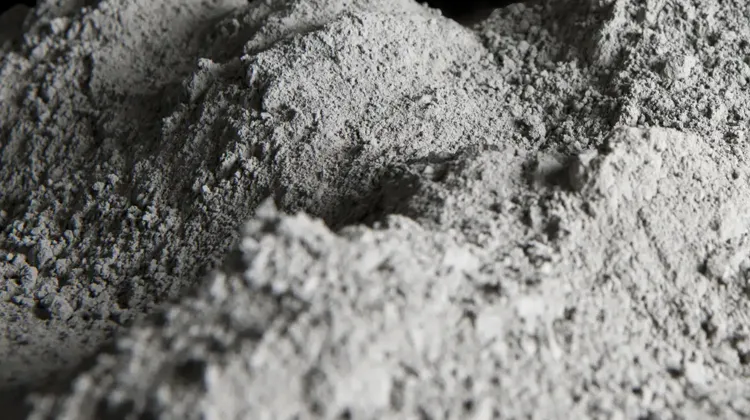
In modern cement manufacturing, gypsum is one of the most important additives used in the final grinding stage. Although the dosage is relatively small—usually between 3% and 5%—its impact on cement performance is extremely significant.
Without gypsum, cement would lose its workability within minutes after contacting water, making transportation, mixing, and concrete placement impossible. Gypsum directly controls cement setting behavior, hydration reaction speed, heat release, and early strength development.
For cement plants, optimizing gypsum type, dosage, and fineness is a critical part of cement quality control and grinding system operation.
This article explains in detail why gypsum is necessary in cement, how it works, the proper addition amount, the consequences of incorrect dosage, and the role of gypsum in modern sustainable cement production.
1. What Is Gypsum?

Gypsum is a naturally occurring sulfate mineral mainly composed of calcium sulfate dihydrate:
CaSO4⋅2H2OCaSO_4·2H_2O
It is one of the most widely used industrial minerals in cement manufacturing. Gypsum is soft, easy to crush, and highly suitable for cement grinding systems.
Besides natural gypsum, many modern cement plants also use industrial by-product gypsum materials, including:
- FGD gypsum from power plant desulfurization systems
- Phosphogypsum from fertilizer production
- Chemical gypsum from industrial processing systems
These recycled gypsum materials help reduce production costs and support environmentally sustainable cement manufacturing.
2. Why Is Gypsum Added to Cement?
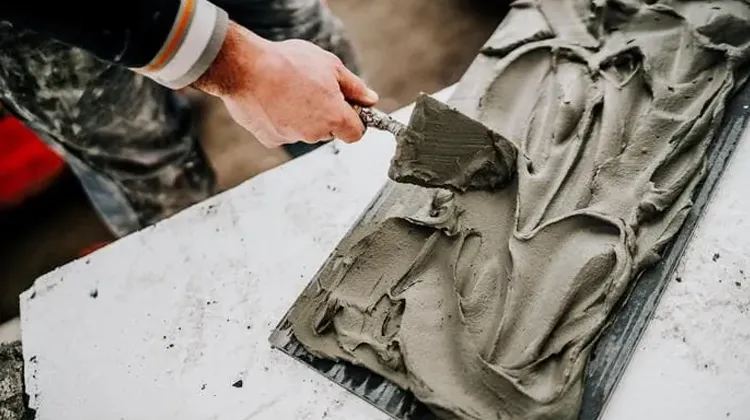
The primary reason for adding gypsum to cement is to prevent flash setting.
In cement clinker, tricalcium aluminate (C₃A) reacts extremely rapidly with water. Without gypsum, this reaction releases heat almost instantly, causing the cement paste to harden within minutes.
This phenomenon is called flash set.
Gypsum acts as a retarder by reacting with C₃A to form ettringite crystals. These crystals create a protective coating around cement particles, slowing the hydration reaction and stabilizing the setting process.
In simple terms, gypsum keeps cement workable long enough for construction operations.
Main Functions of Gypsum in Cement
Prevent Flash Setting
Gypsum prevents immediate hardening after water addition and ensures the cement remains usable during mixing and placement.
Control Setting Time
By slowing down C₃A hydration, gypsum helps cement achieve stable and predictable initial and final setting times.
Improve Workability
Proper gypsum dosage allows cement paste and concrete to maintain plasticity during transportation, pumping, vibration, and finishing.
Reduce Hydration Heat
Gypsum moderates the early hydration reaction and helps reduce excessive heat release in concrete structures.
Improve Strength Development
Controlled hydration contributes to better crystal formation and more uniform strength gain.
3. How Gypsum Works in Cement Hydration
Gypsum mainly functions during the early hydration stage of cement.
When cement contacts water, C₃A begins reacting aggressively and generates large amounts of heat. If uncontrolled, the cement paste rapidly loses fluidity.
At this stage, gypsum supplies sulfate ions that react with C₃A to form ettringite:
C3A+Gypsum+Water→EttringiteC_3A + Gypsum + Water \rightarrow Ettringite
The generated ettringite forms a thin coating around cement particles and slows further hydration reactions.
Hydration process overview:
| Hydration Stage | Role of Gypsum |
|---|---|
| Early hydration | Controls rapid C₃A reaction |
| エトリンガイトの形成 | Delays setting |
| Later hydration | Stabilizes strength growth |
This mechanism is critical for concrete pumping, transportation, and placement stability.
4. When Is Gypsum Added in Cement Manufacturing?
Gypsum is typically added after clinker cooling and before the final grinding stage.
In modern cement plants, clinker and gypsum are fed together into:
- ボールミル
- 立型ローラーミル(VRM)
- Combined grinding systems
Because gypsum is softer than clinker, its grinding behavior differs significantly. Proper feeding proportion and particle size control are essential to maintain stable cement performance.
5. Optimal Gypsum Addition in Cement
The amount of gypsum added must be carefully optimized.
Too little gypsum cannot effectively control hydration, while too much gypsum may cause expansion and durability problems.
Typical gypsum dosage in cement:
| セメントの種類 | Recommended Gypsum Content |
|---|---|
| 普通ポルトランドセメント(OPC) | 3%–4% |
| Rapid Hardening Cement | Around 2.5% |
| Special Cement Types | Depends on formulation |
Excess sulfate may lead to internal expansion and cracking in hardened concrete.
6. What Happens If Cement Contains No Gypsum?
Without gypsum, cement experiences flash setting almost immediately after water addition.
The hydration reaction becomes uncontrollable, generating excessive heat and causing rapid hardening before placement can be completed.
This creates major construction problems:
- Poor workability
- Difficult concrete transportation
- Incomplete compaction
- Weak structural bonding
In practical engineering, cement without gypsum is almost unusable.
7. What Happens If Gypsum Content Is Too Low?
Insufficient gypsum may cause unstable setting behavior.
In some cases, the cement paste may initially stiffen but later regain plasticity. This phenomenon is known as false set.
Although false set differs from flash set, it still negatively affects:
- Concrete workability
- Pumping performance
- Surface finishing quality
Therefore, precise gypsum dosage control is critical in cement production.
8. What Happens If Too Much Gypsum Is Added?
Excessive gypsum can also create serious performance issues.
Although gypsum normally slows hydration, excessive sulfate may trigger abnormal secondary reactions and lead to rapid setting behavior.
Too much gypsum may also cause:
- Internal expansion
- Increased porosity
- Reduced long-term strength
- Concrete cracking
- Durability reduction
Impact of gypsum dosage:
| 石膏含有量 | Cement Performance |
|---|---|
| Too low | Flash set / false set |
| Proper amount | Stable hydration |
| Too high | Expansion & cracking |
9. Effect of Gypsum on Cement Strength

Proper gypsum addition contributes to stable hydration and balanced strength development.
By controlling the early reaction rate, gypsum allows cement crystals to develop more uniformly, improving both compressive and tensile strength.
Different gypsum-based binders also show different strength characteristics.
Gypsum binder strength comparison:
| Gypsum Binder Type | 代表的な用途 | Strength Characteristic |
|---|---|---|
| Building gypsum | Interior materials | Moderate strength |
| High-strength gypsum | Structural products | Higher compressive strength |
| Anhydrite gypsum | Special cement systems | Slow but stable hardening |
10. Types of Gypsum Used in Cement Industry
Modern cement plants use several gypsum sources.
Natural Gypsum
Traditional gypsum material with stable quality and high purity.
FGD Gypsum
Produced by flue gas desulfurization systems in thermal power plants. Widely used due to environmental benefits.
Phosphogypsum
A by-product from phosphate fertilizer production. It has strong recycling potential but requires impurity control.
Gypsum type comparison:
| タイプ | ソース | 特徴 |
|---|---|---|
| Natural gypsum | 鉱業 | Stable performance |
| FGD gypsum | Power plants | Sustainable utilization |
| Phosphogypsum | Fertilizer industry | Low cost & recyclable |
11. How to Select High-Quality Gypsum Retarders
Selecting suitable gypsum materials is important for cement quality stability.
Modern cement laboratories use advanced testing methods to evaluate gypsum performance.
Common Testing Methods
SEM (Scanning Electron Microscopy)
Used to observe crystal morphology and hydration structure development.
MIP (Mercury Intrusion Porosimetry)
Used to analyze pore structure and compactness after hydration.
These methods help engineers optimize setting performance and cement durability.
12. Gypsum in Sustainable Cement Production
Industrial by-product gypsum plays an increasingly important role in low-carbon cement manufacturing.
Using recycled gypsum materials helps:
- Reduce mining activities
- Lower raw material costs
- Minimize industrial waste
- Improve resource recycling efficiency
Phosphogypsum and FGD gypsum are becoming increasingly important in green cement technology and circular economy systems.
13. Summary of Gypsum Functions in Cement
Gypsum performs multiple critical functions in cement manufacturing:
✅ Prevents flash setting
✅ Controls cement setting time
✅ Reduces hydration heat
✅ Extends construction operating time
✅ Improves cement strength and hardness
✅ Reduces excessive water demand
✅ Stabilizes hydration reactions
Without gypsum, modern cement production and concrete construction would not function properly.
結論
Although gypsum is added in relatively small quantities, it is one of the most essential materials in cement manufacturing.
From preventing flash setting to improving workability and stabilizing strength development, gypsum plays a critical role throughout the cement hydration process.
For modern cement plants, optimizing gypsum selection, dosage, and grinding performance is essential for ensuring high-quality cement, stable production, and long-term concrete durability.
FAQ About Gypsum in Cement Production
1. Why is gypsum still needed if cement already contains alumina and silica?
Even though clinker contains reactive compounds like C₃A, it reacts too quickly with water. Gypsum is still required because it specifically regulates early hydration and prevents uncontrollable setting, which raw clinker minerals alone cannot manage.
2. What is the chemical reaction between gypsum and cement clinker?
Gypsum reacts mainly with tricalcium aluminate (C₃A) in the presence of water to form ettringite crystals. This reaction slows down hydration and creates a controlled setting process that is essential for construction operations.
3. Can cement be produced without gypsum in special cases?
In some laboratory or specialty cement systems, alternative retarders may be used, but in standard Portland cement production, gypsum is almost always required to ensure stable setting behavior and safe handling.
4. Why do different cement plants use different types of gypsum?
Different gypsum sources (natural, FGD, phosphogypsum) vary in purity, moisture content, and impurity levels. Cement plants select gypsum based on cost, availability, and desired performance in grinding and hydration control.
5. How does gypsum affect cement grinding efficiency?
Gypsum improves grinding performance by reducing particle agglomeration in the mill. It helps stabilize mill temperature and prevents over-grinding of clinker, leading to more consistent cement fineness.
6. What role does gypsum play in controlling cement heat generation?
Gypsum moderates early hydration reactions, which reduces the peak heat release of cement. This is especially important in mass concrete projects where temperature control is critical to avoid thermal cracking.
7. Can gypsum quality affect final concrete durability?
Yes. Impurities such as chlorides or excessive moisture in gypsum can affect cement hydration stability, which may indirectly influence long-term durability and structural performance of concrete.


 Japanese
  English
  Russian
  Arabic
  Vietnamese
  Spanish
  French
  Portuguese
  Chinese