



Working Principle of Cement Waste Heat Recovery System
The cement waste heat recovery (WHR) power generation system converts low-grade waste heat from exhaust gas discharged from the kiln head and kiln tail in modern dry-process cement production lines into electricity. During operation, waste heat boilers recover heat from 予熱器 exhaust gas and clinker cooler hot air to generate superheated steam and saturated steam, which drive the steam turbine to convert thermal energy into mechanical energy, and further drive the generator to produce electricity for the cement plant’s power consumption.
The system requires no additional fuel and does not change the original cement production process. After doing work, the steam is condensed and returned to the water supply system for recycling, while the exhaust gas is treated by the existing dust collection system. As an independent energy recovery unit, the WHR system can continuously provide stable and clean power for cement plants without affecting normal production.

Basis for Construction of Waste Heat Recovery Power Generation Project
The construction of a cement waste heat recovery (WHR) power generation project is mainly based on the large amount of stable high-temperature waste heat inherently generated during cement production, as well as the cement plant’s demand for reducing energy costs and improving energy efficiency. In modern dry-process cement production lines, continuous waste heat discharged from the kiln head and kiln tail provides a solid technical foundation for the implementation of a WHR power generation system.
Meanwhile, WHR technology has been widely applied in cement plants worldwide and has proven to be mature and reliable. Without additional fuel consumption or any impact on the original production process, the system can continuously supply stable power to the plant, significantly reduce purchased electricity, and bring long-term economic and environmental benefits.
Main Components of Waste Heat Recovery Power Generation System
The cement waste heat recovery (WHR) power generation system is an integrated energy system combining waste heat recovery, energy conversion and power generation. It mainly consists of the following parts:
1. Waste Heat Boiler System (SP Boiler & AQC Boiler)
This is the core heat recovery unit of the whole system, including:
SP boiler for recovering heat from kiln preheater exhaust gas
AQC boiler for recovering heat from clinker cooler hot air
The boilers generate superheated or saturated steam to provide stable heat source for power generation.
2. Steam Turbine Generator System
This system is the core unit for converting thermal energy into electric energy:
- The steam turbine converts thermal energy into mechanical energy
- The generator converts mechanical energy into electricity
According to plant conditions, condensing or extraction-condensing type can be adopted.
3. Condenser & Vacuum System
This system is used to:
- Condense exhaust steam into water
- Maintain low back pressure of the turbine
It mainly includes condenser, vacuum pump and circulating water system.
4. Water Supply & Water Treatment System
To ensure long-term safe operation of boilers and turbine, the system is equipped with:
- Feed water pump system
- Deaerator
- Water treatment system
To supply qualified water to the boilers.
5. Electrical System
Mainly includes:
- Generator grid connection system
- High and low voltage switchgear
- Protection and metering system
For power transmission, distribution and protection.
6. DCS Control System
The whole WHR power plant adopts centralized DCS control:
- Centralized monitoring of boiler, turbine and electrical systems
- Automatic start/stop, interlock protection and alarm functions
- Ensures safe and stable operation of the system
7. Auxiliary Systems
含む:
- Compressed air system
- Lubrication oil system
- Cooling water system
- Fire-fighting and safety systems
To guarantee long-term continuous and stable operation.
Exhaust Gas Flow Process of WHR System
During clinker calcination and cooling, a large amount of high-temperature exhaust gas from the kiln preheater system and hot air from the clinker cooler are continuously discharged. These two gas streams constitute the main heat sources of the WHR power generation system. In order to maximize heat recovery, the kiln exhaust gas is guided to the SP waste heat boiler, and the hot air from the clinker cooler is guided to the AQC waste heat boiler, where sufficient heat exchange is carried out with the heating surfaces to transfer the sensible heat of the gas to the boiler feedwater and generate saturated or superheated steam.
The boiler design fully considers the characteristics of cement plant conditions, such as high dust content and fluctuating operating conditions. Through reasonable arrangement of heating surfaces, gas ducts and soot-blowing and anti-wear measures, both heat transfer efficiency and long-term stable operation are ensured. After heat exchange in the waste heat boilers, the exhaust gas temperature is significantly reduced and the gas resistance is controlled within a reasonable range, so that the original ventilation conditions of the kiln system and clinker cooler are not adversely affected.
The cooled exhaust gas is then sent to the existing dust collection system (such as electrostatic precipitator or bag filter) according to the original cement process, and finally discharged into the atmosphere in compliance with emission standards. The whole exhaust gas process achieves maximum heat recovery while maintaining good compatibility with the original production system, ensuring long-term, safe and stable coordinated operation of both the cement production line and the WHR power plant.
Thermal System Configuration Modes
According to the production line capacity, waste heat resource conditions, and the requirements for power generation efficiency and investment economy, different thermal system configurations can be adopted in cement WHR power generation projects. A proper selection of the thermal system mode can achieve an optimal balance between technical feasibility and economic performance while ensuring stable operation. At present, the most commonly used thermal system modes include: Single Pressure System, Flash Steam System, and Dual Pressure System.

The single pressure system is the most widely used and simplest configuration. In this system, the steam generated by the SP boiler and AQC boiler is collected and supplied to the steam turbine at a uniform pressure level. The system features a simple process, fewer equipment items, easy operation and maintenance, and relatively low investment cost. It is suitable for projects with stable heat source conditions and moderate requirements for system complexity.

The flash steam system is usually applied in projects where the heat source parameters vary significantly or where medium- and low-temperature heat sources are available. In this system, part of the high-temperature water or saturated water is sent to a flash tank to generate low-pressure steam, which is used as supplementary steam to the turbine or integrated into the steam system, thus further recovering medium- and low-grade waste heat. This configuration can improve the overall energy utilization efficiency of the system.

The dual pressure system is a configuration mainly aimed at improving power generation efficiency. It is usually equipped with both high-pressure and low-pressure steam systems to recover waste heat of different grades and to perform staged expansion in the steam turbine. Compared with the single pressure system, the dual pressure system has obvious advantages in energy utilization efficiency, but its system structure is more complex, with higher requirements for equipment investment and control. It is suitable for large-scale production lines with good waste heat conditions.
Main Equipment of Waste Heat Power Generation
In a cement waste heat recovery (WHR) power generation system, the PH boiler (preheater boiler) そして AQC boiler (air quenching cooler boiler) are the core heat exchange equipment. They recover waste heat from the kiln preheater exhaust gas and the clinker cooler hot air respectively, and convert it into steam to drive the turbine generator. Both boilers are specially designed for cement plant conditions and can operate reliably and efficiently under high dust and high abrasion environments.
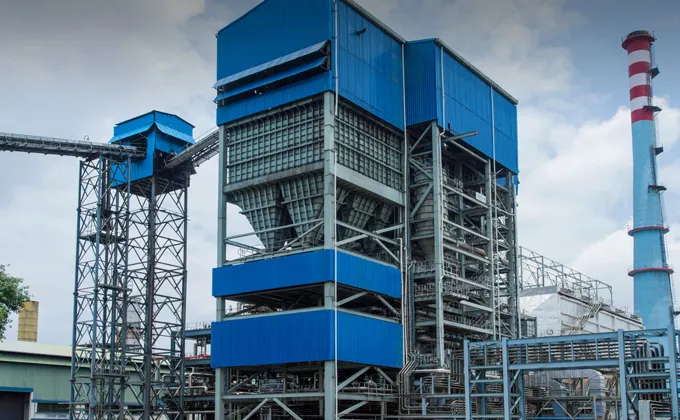
The PH boiler is installed at the outlet of the kiln preheater system and is used to recover the sensible heat from high-temperature kiln exhaust gas. It usually adopts a multi-stage heating surface arrangement, where the flue gas flows through the evaporator, economizer and, if required, superheater sections, transferring heat step by step to the boiler feedwater to generate saturated or superheated steam.
Considering the high dust concentration, hard particles and strong abrasive characteristics of kiln exhaust gas, special attention is paid to anti-wear design, ash accumulation prevention and online soot cleaning. Wear-resistant components and optimized gas velocity control are applied at key areas to extend equipment service life, reduce maintenance workload and ensure stable and reliable long-term operation.

The AQC boiler is installed downstream of the clinker cooler and is used to recover heat from the hot air discharged during the clinker cooling process. This hot air is characterized by high temperature, large flow rate and relatively lower but fluctuating dust content, so the AQC boiler design focuses more on comprehensive optimization of system resistance, heat transfer efficiency and adaptability to varying operating conditions.
The boiler is mainly equipped with evaporator and economizer heating surfaces. By properly organizing the hot air flow path, efficient heat recovery can be achieved without affecting the cooling performance of the clinker cooler and the overall ventilation balance of the system. The recovered heat is converted into steam, forming an important and stable heat source for the WHR power generation system.
Project References
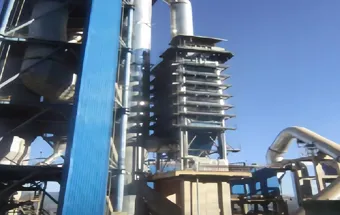 WHR Power Generation Project for Xuan Thanh Cement 12,500 t/d Clinker Production Line, Vietnam
 Technical Upgrade and WHR Power Generation Project for Lafarge Jiangyou Plant Line 7
 Production Line Upgrade and WHR Power Generation Project for Heidelberg Cement Plant
 Waste Heat Recovery Power Plant for 10,000 td Clinker Production Line in the Middle East
The WHR system is designed without changing the original process flow or affecting the ventilation conditions of the kiln and cooler systems. It only recovers waste heat from exhaust gas, which will still be discharged through the existing dust collection system after heat exchange.
The system uses only the waste heat generated during cement production and does not consume any additional fuel, resulting in very low operating costs.
Depending on production line capacity and operating conditions, the WHR system typically covers about 20%–35% of the plant’s total electricity demand, and even more in some well-optimized projects.
The system adopts mature and reliable industrial design with a high level of automation. Daily maintenance mainly involves routine inspection and servicing of boilers, turbine and auxiliary equipment, and the workload is manageable.
The WHR system can be applied to new production lines or installed on existing lines as a retrofit project. The solution will be customized based on site conditions and process parameters.
 Japanese
  English
  Russian
  Arabic
  Vietnamese
  Spanish
  French
  Portuguese
  Chinese