



振動ボールミル
- 容量: 0.1 – 5 T/H
- モーター出力: 1 – 15 kW
- 給餌量: ≤ 25 mm
- 出力粒度: 10 – 100 μm (adjustable)
- 応用: Vibration ball mills are widely used in various industries including mineral processing, building materials, grinding materials, powder metallurgy, power generation, ceramics, refractories, magnetic materials, chemical engineering, and food processing.
What is a Vibration Ball Mill?
A vibration ball mill is a high-efficiency grinding machine that uses high-frequency vibration to achieve rapid and precise particle size reduction. Unlike traditional rotary ball mills that rely on the rotation of the cylinder, a vibration ball mill uses a vibration motor to drive the grinding chamber, causing the media to perform high-frequency impacts within a short stroke. This mechanism enables faster, finer, and more uniform grinding results. When producing fine and ultra-fine powders, the advantages are significant—overall grinding efficiency can be increased by 2–5 times, while energy consumption can be reduced by 20%–30%.
With its compact structure, strong vibration intensity, low energy consumption, low noise, and convenient installation and maintenance, the vibration ball mill is ideal for processing hard, medium-hard, and ultra-fine materials. It is widely used in laboratories, research institutions, and industrial production for grinding various materials such as metallic minerals, non-metallic minerals, chemical powders, ceramic raw materials, and magnetic materials. Thanks to its high efficiency and stable particle size control, it has become a preferred solution for applications requiring ultra-fine or high-purity powders.
Vibrating Ball Mill Structure & Working Principle
The vibration ball mill achieves efficient and precise grinding through its unique structural design and high-frequency three-dimensional vibration technology. Understanding its key components and working principle helps reveal why it delivers exceptional performance in ultra-fine powder production, laboratory research, and high-value material processing.
Structure of Vibration Ball Mill
The vibration ball mill consists of a base frame, body support, soundproof cover, grinding cylinder, vibration exciter, liner, elastic support, grinding media, and motor. The base frame, elastically supported, lifts the body and maintains the flexible connection with the motor. The soundproof cover reduces operational noise. The grinding cylinder holds the grinding media and materials, while the liner protects the cylinder wall and extends equipment life. Elastic supports absorb vibration shocks, the grinding media efficiently pulverize materials, and the motor provides stable power. The compact design allows easy installation and maintenance, suitable for high-frequency, high-efficiency grinding operations.
Working Principle of Vibration Ball Mill
When operating, the vibration ball mill motor drives the exciter through a specialized flexible coupling at high speed, generating strong excitation forces that bring the machine into a predetermined high-frequency vibration state. The vibration energy is transmitted through the mill body to the grinding cylinder, driving the grinding media and materials in multi-directional, compound motion to achieve ultra-fine grinding. The grinding media continuously impact and rub against the materials, with oscillating forces evenly applied to all particles, creating a highly efficient and precise pulverization process.
During the entire operation, the patented elastic support system ensures that the vibration energy is concentrated in the grinding area while effectively absorbing shocks, maintaining high grinding efficiency and significantly extending equipment service life. This three-dimensional vibration grinding technology provides excellent performance for hard, medium-hard, and ultra-fine materials and is especially suitable for new material research, pharmaceutical raw material processing, and high-value fine powder production, making it an ideal choice for modern laboratories and industrial production lines.
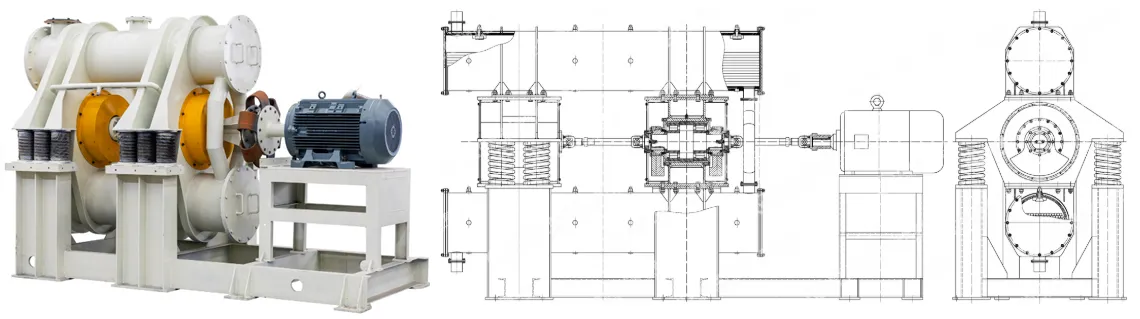

- Advantages of Vibration Ball Mill
The vibration ball mill combines high grinding efficiency, energy saving, and uniform particle size. Its unique 3D vibration design and patented elastic support system ensure precise ultra-fine powder processing, extend equipment life, and offer easy operation, making it ideal for both laboratory research and industrial production.
高い粉砕効率
The vibration ball mill uses high-frequency 3D vibration technology, allowing the grinding media and materials to continuously impact and rub within a short stroke, achieving rapid pulverization and ultra-fine grinding. The uniform and efficient grinding significantly reduces processing time, meeting the requirements of laboratories and industrial production for ultra-fine powders.省エネ
Compared with traditional rotary ball mills, the vibration ball mill can increase efficiency by 2–5 times while reducing energy consumption by 20%–30%, effectively lowering production costs. Optimized vibration transmission ensures that energy is concentrated on the materials, enhancing grinding efficiency.均一な粒子サイズ
High-frequency vibration and multi-directional compound motion apply oscillating forces evenly to all materials, producing stable particle distribution. Fine and ultra-fine powders achieve precise particle size, meeting the requirements of high-value material production.Compact Design & Easy Operation
The compact design occupies minimal space, and installation, maintenance, and operation are convenient. The patented elastic support system and soundproof cover create a quiet and safe working environment while extending equipment life.Low Noise & Wear
Vibration impact is concentrated in the grinding area, with wear mainly occurring on replaceable liners and grinding media, reducing overall equipment wear. The soundproof cover effectively minimizes noise in the operation area, ensuring a comfortable working environment.Wide Application
The vibration ball mill is suitable for metal and non-metal minerals, chemical powders, ceramic raw materials, magnetic materials, and high-value material grinding, meeting the diverse needs of laboratory research, industrial production, and new material development.
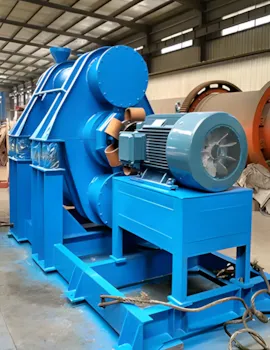
関連製品


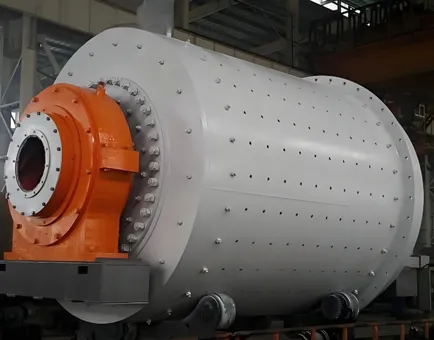
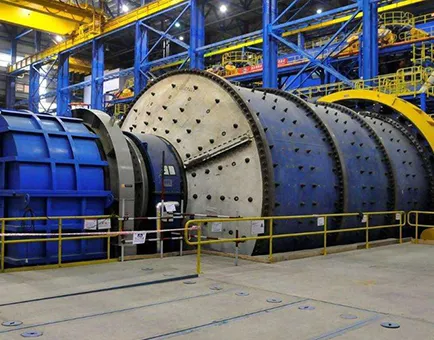

Certainly, you can customize different models based on the material being ground, its specific gravity, production capacity, and material properties.
The lining plates for vibrating ball mills can be made of high-manganese steel, wear-resistant alloys, or rubber. Selecting different materials based on material hardness and grinding requirements protects the grinding cylinder while extending equipment lifespan.
The vibration ball mill is mainly used for dry grinding. Wet materials may require special treatment or modified equipment.
Steel balls, ceramic balls, aluminum balls, or special material grinding media can be selected. The material, size, and filling ratio of the media directly affect grinding efficiency, particle size distribution, and product quality.
Yes. By adjusting vibration frequency, cylinder size, grinding media, and liner materials, grinding efficiency, particle size distribution, and equipment lifespan can be optimized to meet specific production goals.
 Japanese
  English
  Russian
  Arabic
  Vietnamese
  Spanish
  French
  Portuguese
  Chinese