


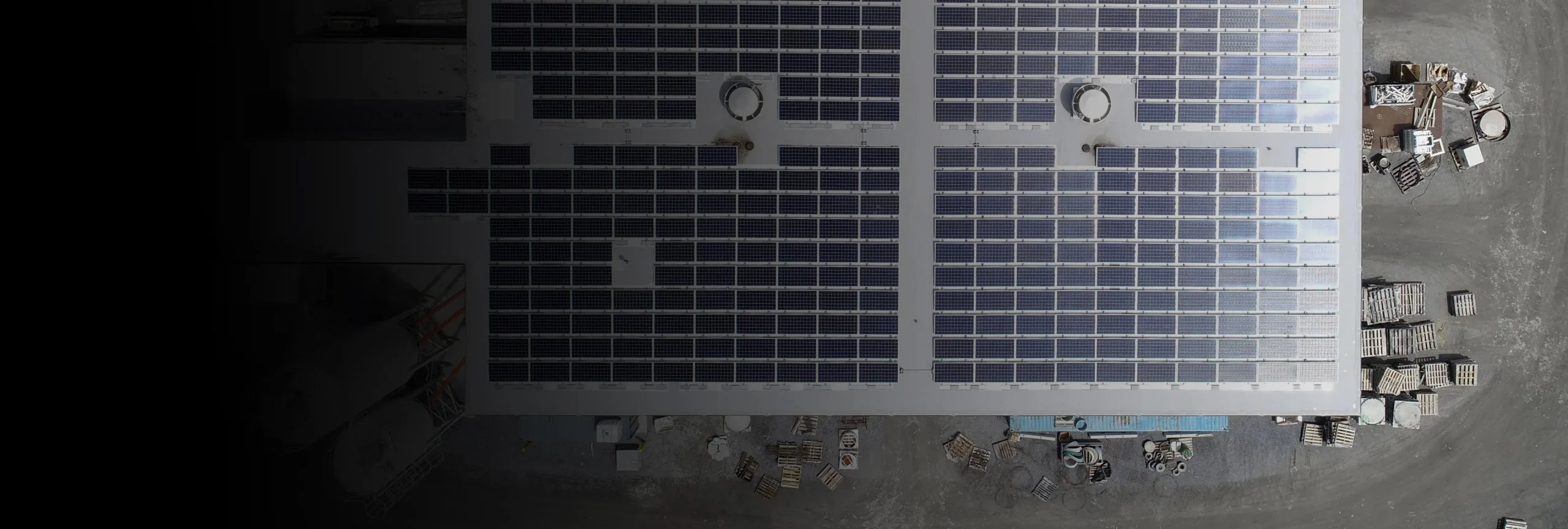
What is an Industrial Solar Power System?
An industrial solar power system is a photovoltaic power generation system installed in cement plants, mining areas and industrial facilities, utilizing rooftops, storage sheds, open land or idle areas. It converts solar energy into electricity through PV modules and supplies power for self-consumption or grid connection, providing a clean and sustainable energy solution for industrial users.
Compared with residential solar systems, industrial solar power systems focus more on long-term reliability, stable operation and seamless integration with existing industrial power supply systems. With proper engineering design and implementation, industrial solar power systems can significantly reduce electricity costs, lower carbon emissions and improve energy independence, making them an important solution for the low-carbon transformation of the cement industry and other energy-intensive industries.

Why Cement Plants Need Solar Power?
The cement industry is a typical energy-intensive industry, where electricity costs account for a significant portion of total production costs. At the same time, cement producers are facing increasingly strict environmental regulations and carbon emission requirements. With rising electricity prices and growing carbon-related costs, the traditional energy structure relying heavily on grid power is putting continuous pressure on profitability.
By installing solar power systems, cement plants can utilize rooftops, storage sheds and idle land for on-site power generation and self-consumption, significantly reducing dependence on grid electricity and stabilizing long-term energy costs. As a clean energy solution, solar power also helps reduce carbon emissions, improve ESG performance and enhance overall competitiveness in the era of low-carbon transition.
Typical Configuration of
an Industrial Solar Power System
A complete industrial solar power system normally consists of the following key subsystems, which work together to ensure safe, stable and efficient power generation:
PV Modules (Solar Panels)
The core power generation units that convert solar energy into DC electricity. High-efficiency and industrial-grade modules are typically selected to ensure long-term reliable performance.Inverters
Convert DC power generated by PV modules into AC power and synchronize it with the plant power network or public grid, with comprehensive protection and monitoring functions.Mounting Structures
Used to fix and support the PV modules. Different structural solutions are applied for rooftops, storage sheds or ground installations to ensure mechanical stability and long-term reliability.DC & AC Cabling System
Responsible for safe power transmission between PV modules, inverters and distribution systems, fully complying with industrial electrical standards.Combiner Boxes and Switchgear
For current collection, protection and distribution, enabling safe isolation and sectional control of the system.Monitoring and Energy Management System
Provides real-time monitoring of system performance, power generation and equipment status, enabling remote supervision, fault diagnosis and operation optimization.Grid Connection and Plant Power Interface System
Connects the solar power system safely to the plant power network or public grid, supporting different operation modes such as self-consumption and surplus power export.
With proper engineering design and system integration, an industrial solar power system can achieve long-term, safe and highly efficient operation even in demanding industrial environments.
Photovoltaic Technical Solutions
Industrial-Scale Full-Scenario PV Integration
Understanding the complex environments of cement plants and mines—characterized by heavy dust and high energy loads—we provide customized, one-stop solar solutions:
C&I Rooftop Solar: Specifically designed for large-scale workshops, raw material silos, and finished product warehouses. We utilize high-strength, anti-corrosion mounting systems that require no roof penetration, ensuring the structural integrity of your facility.
Ground-Mounted Tracking Systems: Ideal for open spaces surrounding factories or reclaimed mining areas. Our smart trackers automatically adjust to the sun’s trajectory, increasing energy yield by 15%-25% compared to fixed-tilt structures.
Solar & WHR Integrated Microgrid: As Lafa International’s core competency, we integrate PV power with your existing Waste Heat Recovery (WHR) systems. Through intelligent grid dispatching, we maximize the energy self-sufficiency of your industrial park.
Specialized Technology for High-Dust Environments
The cement production process presents unique challenges. Our solutions are engineered for durability:
Self-Cleaning Coated Modules: Featuring nano-hydrophobic coatings to minimize dust accumulation and facilitate natural cleaning by rainfall.
Smart O&M System: Real-time monitoring of individual module performance. The system automatically triggers maintenance alerts when dust accumulation impacts efficiency, ensuring optimal Return on Investment (ROI).
Why Choose Lafa as Your Partner?
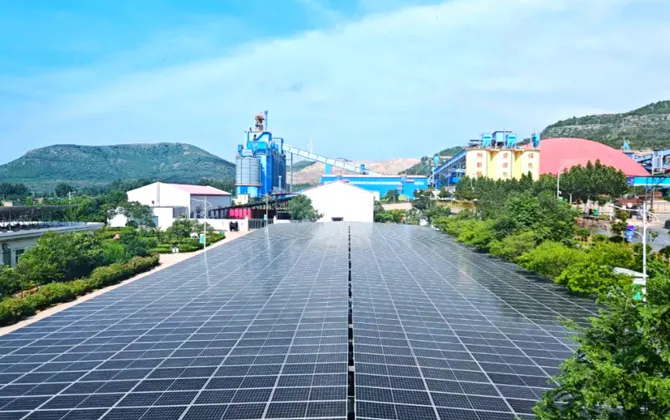

Industrial-Scale PV Integration & Multi-Energy Synergy: Lafa seamlessly fuses advanced photovoltaic technology with the complex energy demands of cement and mining operations. Beyond supplying high-efficiency N-type bifacial modules and smart solar trackers, we specialize in C&I Solar + Storage Microgrid systems tailored for heavy-load industrial profiles. Leveraging our intelligent energy management platform, we logically couple solar power with your existing Waste Heat Recovery (WHR) and diesel generators to achieve multi-energy complementarity and millisecond-level grid-switching. This integration ensures a stable, cost-effective green power supply, even in regions with unstable grid infrastructure.
PV Performance Optimization for Extreme Conditions & Global Delivery: To counter the high-dust, high-temperature, and electromagnetic interference typical of cement production, we have established rigorous PV hardware selection standards. We utilize modules with nano-hydrophobic self-cleaning coatings and string inverters with IP66+ protection to eliminate dust-induced power loss and thermal management issues. Combined with our global engineering network, we provide a turnkey solution—from Solar Resource Assessment (PVSyst simulation) and EPC design to global supply chain logistics. We focus on solving the pain points of rapid degradation and difficult maintenance in industrial scenarios, ensuring a reliable technical foundation for your energy transition.
High-Performance Industrial PV Core Equipment
Superior energy performance begins with high-quality core components. Lafa International integrates global premium supply chains to provide a full-stack hardware portfolio, including modules, inverters, mounting systems, and BESS. By utilizing AI-powered tracking technology and long-life LFP storage, we deliver more than just equipment—we provide the tools to maximize power yield per watt, helping global cement enterprises achieve energy independence and operational efficiency.
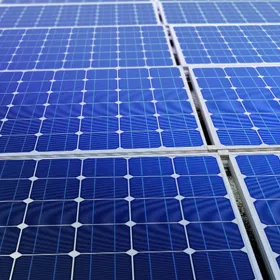
Lafa’s high-efficiency N-Type bifacial modules are specifically engineered for the harsh conditions of heavy industry. By integrating TOPCon technology with bifacial generation, these modules can harvest up to 30% additional power from the backside, significantly optimizing land utilization in the open areas of cement plants. Given the high-dust nature of the construction materials sector, our modules feature a specialized anti-static coating that minimizes dust accumulation and enhances rainwater self-cleaning. Coupled with superior anti-PID performance, they guarantee high energy yields throughout a 25-year operational lifespan.

Our industrial-grade string inverters serve as the “intelligent brain” of the power station, precisely converting unstable DC power into high-quality AC power. To address the fine particulate matter generated during cement production, these inverters feature a fully sealed IP66 dustproof and waterproof design, eliminating external fans to prevent short circuits caused by internal dust ingress. Furthermore, the built-in multi-MPPT technology effectively mitigates power loss caused by partial shading on complex factory rooftops, ensuring maximum power harvesting efficiency at all times.
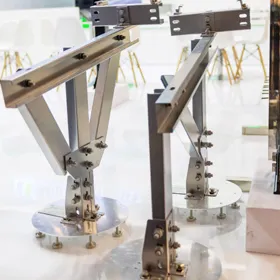
The stability of the mounting structure is the cornerstone of any industrial power plant. Lafa International provides smart tracking systems that utilize AI algorithms to follow the sun’s trajectory in real-time, increasing total annual power generation by approximately 20% compared to fixed structures. All our mounting components undergo high-thickness hot-dip galvanization to resist chemical corrosion common in mining areas and withstand extreme wind loads. This robust structural design provides a secure foundation for photovoltaic applications in the complex geological conditions of cement plants and mines.
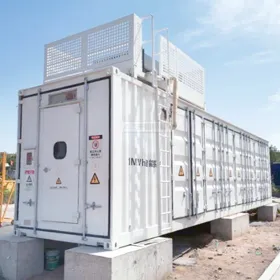
To address the challenges of peak industrial electricity demand and grid instability in certain regions, we offer integrated Lithium Iron Phosphate (LFP) containerized storage systems. These systems feature a modular design, with battery clusters, BMS management systems, and fire suppression units pre-installed in standard containers, significantly shortening the installation cycle for overseas projects. By synchronizing with the PV system, the BESS helps enterprises save substantial costs through peak-shaving and provides emergency backup power to ensure the continuous operation of critical production lines like セメント窯.
Case Studies
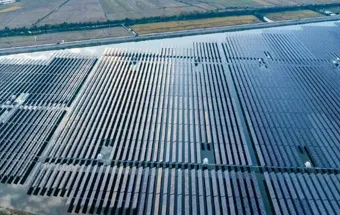 20MW Utility-Scale Ground-Mounted Solar PV EPC Project for Cement Production Base in Kazakhstan
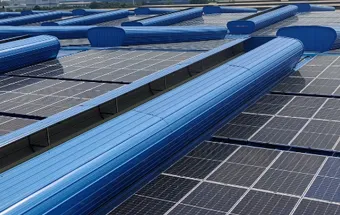 8MW Industrial Rooftop Solar PV Integration for Sustainable Cement Manufacturing in Vietnam
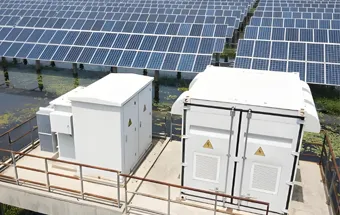 12MWp Industrial Solar PV & Containerized Battery Energy Storage System (BESS) in Saudi Arabia
 5MW Off-Grid Solar Microgrid Power Solution for Mining & Extraction Zones in Eritrea
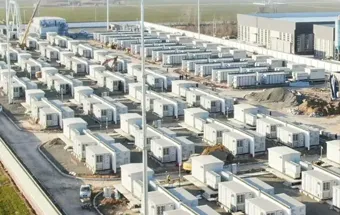 Integrated Solar PV & Waste Heat Recovery (WHR) Multi-Energy Synergy Project for Cement Clinker Lines in Myanmar
Dust accumulation is a significant challenge in the cement industry. Lafa International addresses this through dual strategies: first, we utilize solar modules with nano-hydrophobic self-cleaning coatings that significantly reduce dust adhesion. Second, our smart O&M monitoring system tracks real-time performance. When it detects a power drop caused by dust, it triggers a precise cleaning alert for maintenance crews, ensuring the power plant consistently operates at peak efficiency.
Absolutely, and this is where Lafa International excels. We specialize in “Multi-Energy Synergy.” Through our intelligent Energy Management System (EMS), we deeply integrate solar PV, WHR, and grid power. The system prioritizes the lowest-cost green energy sources and automatically adjusts the power mix based on real-time production line loads. This ensures grid stability while maximizing the reduction of total energy costs per ton of cement.
The ROI period typically ranges from 4 to 7 years, depending on local electricity tariffs, solar irradiance, and government incentives. Since cement plants are energy-intensive and possess vast unused rooftop areas, the self-consumption rate is exceptionally high, leading to significant utility bill savings. Given the 25-year operational lifespan, clients enjoy nearly 20 years of virtually free clean electricity after the initial payback period.
Leveraging our service network across 200+ global clients, Lafa International provides end-to-end EPC services. We have experienced engineering teams in regions like Southeast Asia, Central Asia, and the Middle East to provide site surveys, equipment logistics, installation guidance, and grid connection support. Additionally, our smart cloud platform enables remote diagnostics, offering 24/7 technical response and troubleshooting for our global clients across borders.
For extreme heat, we select N-type high-efficiency modules with low temperature coefficients, which exhibit much lower power degradation than conventional modules in hot climates. Our inverters feature industrial-grade thermal management and IP66 ratings to block sand and withstand high ambient temperatures. All mounting structures and electrical components undergo high-temperature aging tests to ensure maximum reliability in desert or tropical regions.
 Japanese
  English
  Russian
  Arabic
  Vietnamese
  Spanish
  French
  Portuguese
  Chinese