


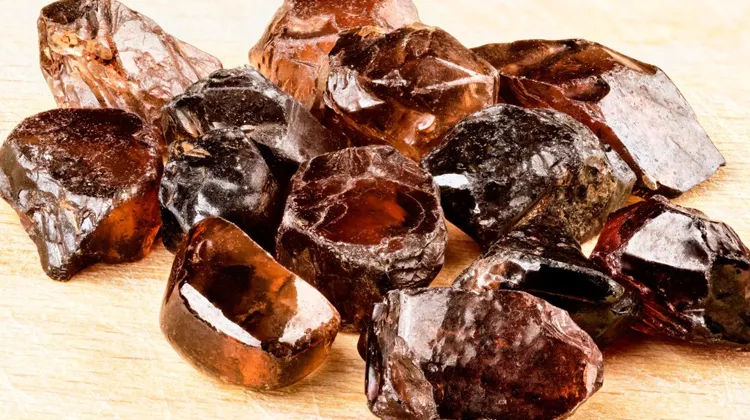
The global interest in zirconium and zircon has increased significantly in recent years, not only because of their industrial importance but also due to broader public curiosity triggered by modern technology and media exposure.
One interesting reason behind this attention is the “Zircon” hypersonic missile system developed by Russia. Although the missile itself has no material connection to the mineral zircon or the metal zirconium, the shared name has created widespread search interest and public curiosity.
This has led many people to explore a deeper question: how can a material name be associated with both advanced military technology and beautiful gemstones at the same time?
The answer lies in the unique dual nature of zirconium-related materials. Zirconium is a high-performance industrial metal used in extreme engineering environments, while zircon is a naturally occurring mineral that plays an important role in both geology and jewelry. Together, they represent a rare combination of scientific utility and natural beauty.
2. Is Zirconium a Metal?
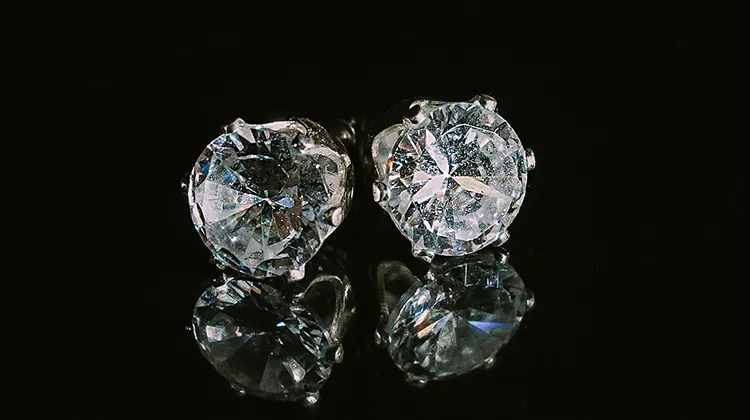
Zirconium is a chemical element classified as a transition metal with atomic number 40. It belongs to a group of metals widely used in modern engineering systems where stability, strength, and resistance to extreme conditions are required.
What makes zirconium particularly valuable is not only its classification as a metal, but the combination of physical behaviors that make it suitable for environments where most metals would degrade or fail.
2.1 Exceptional Corrosion Resistance
Zirconium has one of the highest corrosion resistances among structural metals. It naturally forms a thin, stable oxide layer on its surface, which protects it from further chemical attack.
This property allows it to perform reliably in highly aggressive environments such as strong acids, alkaline solutions, and high-temperature steam systems. In industrial practice, this makes zirconium one of the preferred materials for chemical reactors and processing equipment.
2.2 High Melting Point and Thermal Stability
With a melting point of approximately 1855°C, zirconium can maintain structural integrity under extreme heat conditions. This makes it suitable for applications where materials are continuously exposed to thermal stress, such as energy production systems and industrial furnaces.
Its thermal stability also means that zirconium does not easily deform or lose strength at elevated temperatures, which is critical for long-term industrial reliability.
2.3 Low Neutron Absorption in Nuclear Applications
One of the most important scientific properties of zirconium is its extremely low neutron absorption cross-section. In nuclear reactors, this means zirconium does not interfere significantly with nuclear chain reactions.
As a result, zirconium alloys are used in fuel rod cladding, where they act as a protective barrier between nuclear fuel and the cooling environment. This ensures both safety and efficiency in nuclear power generation.
2.4 Biocompatibility in Medical Use
Zirconium is also highly biocompatible, meaning it does not trigger toxic or adverse reactions in the human body. This makes it ideal for medical implants, dental crowns, and surgical tools.
In dentistry, zirconia ceramics are widely used because they combine strength with a natural tooth-like appearance, providing both functional and aesthetic advantages.
2.5 Mechanical Strength and Alloy Compatibility
Although zirconium is relatively lightweight, it offers strong mechanical performance. It also forms stable alloys with many other metals, allowing engineers to design materials with customized properties such as increased toughness, improved wear resistance, or enhanced thermal performance.
3. Is Zirconium a Rare Metal?
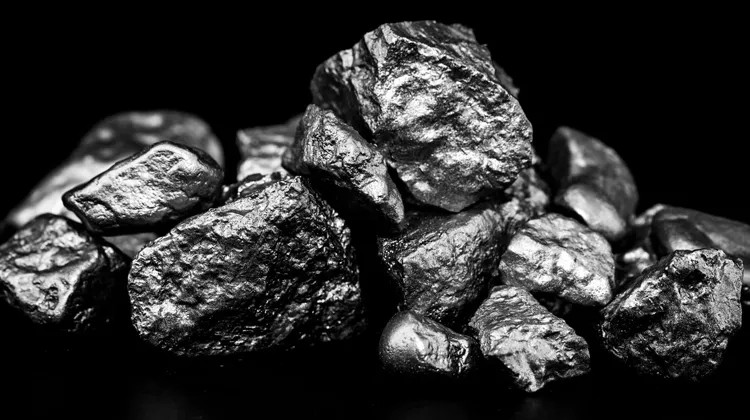
Zirconium is often misunderstood as a rare element, but in reality, it is relatively abundant in the Earth’s crust. Its abundance is comparable to metals like copper and zinc.
3.1 Abundance Does Not Mean Accessibility
Even though zirconium is widely present in nature, it is rarely found in its pure metallic form. Instead, it exists within mineral structures such as zircon and baddeleyite.
These minerals are chemically stable and tightly bound, which makes extraction complex and technically demanding.
3.2 Why Zirconium Products Are Expensive
The cost of zirconium is driven not by scarcity, but by processing difficulty. Extracting pure zirconium metal requires multiple stages of purification, high-temperature reactions, and controlled chemical separation.
This industrial complexity significantly increases production cost, which is why zirconium is considered a high-value engineering material despite its natural abundance.
4. What Is Zirconium Used For?
Zirconium is widely used across industries where materials must perform under extreme mechanical, chemical, or thermal stress.
4.1 Nuclear Energy Systems
In nuclear power plants, zirconium is primarily used in fuel rod cladding. This protective layer ensures that nuclear fuel remains safely contained while allowing efficient heat transfer.
Its low neutron absorption is critical because it allows nuclear reactions to proceed without unnecessary energy loss or instability.
4.2 Aerospace and High-Performance Engineering
In aerospace applications, zirconium-based alloys such as Zircaloy are used in components exposed to high vibration, pressure changes, and thermal cycling.
These materials help improve structural reliability in aircraft systems and jet engines, where failure is not an option.
4.3 Chemical Processing Industry
Zirconium is extensively used in chemical plants because of its ability to resist corrosion from strong acids such as hydrochloric acid and sulfuric acid.
It is commonly found in heat exchangers, reaction vessels, pumps, and piping systems where long-term chemical stability is required.
4.4 Medical and Dental Technology
In medical applications, zirconium-based materials are used for implants and surgical instruments due to their biological compatibility.
Zirconia ceramics are particularly important in dentistry because they combine mechanical strength with aesthetic properties, allowing dental restorations that are both durable and visually natural.
4.5 Ceramics, Refractories, and Heavy Industry
Zirconium dioxide is widely used in high-temperature ceramics and refractory materials. These materials are designed to withstand extreme heat, wear, and mechanical stress.
In heavy industrial environments such as cement production lines, mining systems, and high-temperature kilns, zirconium-based materials are increasingly used to extend equipment lifespan and reduce maintenance frequency.
5. Where Can Zirconium Be Found?
Zirconium is primarily extracted from two minerals: zircon (zirconium silicate) and baddeleyite (zirconium dioxide).
Among them, zircon is the most commercially important source and is commonly found in heavy mineral sand deposits formed by natural geological processes over millions of years.
5.1 Major Producing Countries
Countries with significant zircon resources include Australia, South Africa, India, China, Brazil, the United States, and Indonesia.
These regions play a crucial role in global zirconium supply chains, supporting industries ranging from metallurgy to advanced ceramics.
6. Is Zircon Valuable as a Gemstone?
Zircon is not only an industrial mineral but also a highly valued gemstone in the jewelry industry.
6.1 Optical Beauty and Brilliance
One of the key reasons zircon is used in jewelry is its strong optical brilliance. It has a high refractive index, which allows it to reflect light in a visually striking way, making it attractive in rings, earrings, and pendants.
6.2 Color Diversity in Nature
Natural zircon occurs in a wide range of colors, including blue, golden yellow, reddish brown, and colorless forms. Among these, blue zircon is particularly popular and is often associated with December birthstone traditions.
6.3 Gemstone Sources and Quality
High-quality zircon gemstones are mainly sourced from Cambodia, Sri Lanka, and Myanmar. These regions are known for producing crystals with strong clarity, vivid color saturation, and excellent transparency.
7. How to Distinguish Zircon from Diamond?
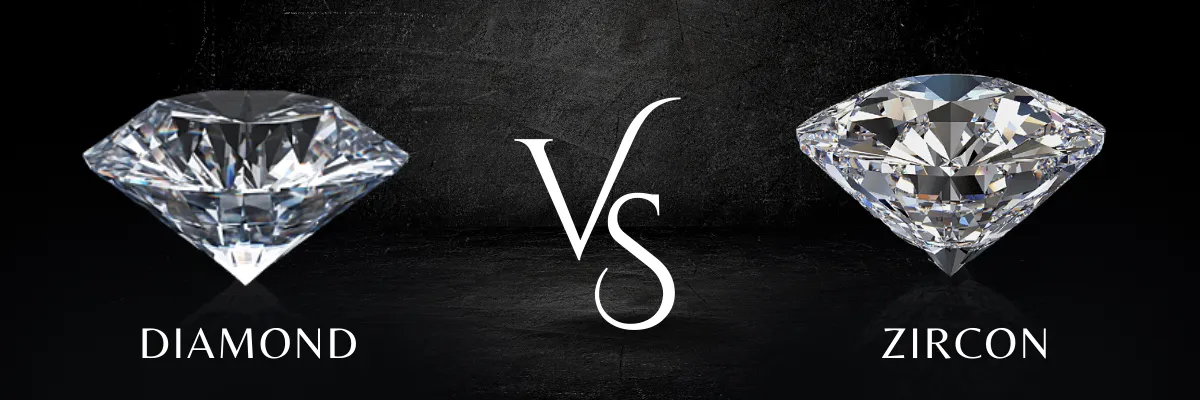
Because of its brilliance, zircon is sometimes mistaken for diamond, especially when colorless. However, their physical properties are fundamentally different.
7.1 Hardness Difference
Diamond is the hardest known natural material, rated 10 on the Mohs scale, while zircon has a hardness of around 7.5. This difference means zircon is more susceptible to scratching and wear over time.
7.2 Light Performance and Refractive Behavior
Diamonds bend light more efficiently than zircon, resulting in sharper brilliance and more intense sparkle. This optical difference is one of the most reliable ways to distinguish them.
7.3 Dispersion and Fire Effect
Diamond exhibits stronger dispersion, meaning it breaks white light into vivid spectral colors more effectively. Zircon also produces fire, but the effect is softer and less intense.
7.4 Surface Appearance
Diamond typically shows an adamantine luster, while zircon tends to display a more glass-like or slightly oily sheen depending on the cut and quality.
7.5 Cubic Zirconia (CZ) Clarification
Cubic zirconia is a synthetic material designed to imitate diamonds. Although it looks visually similar, it is chemically unrelated to natural zircon and has significantly lower durability and value.
8. Conclusão
Zirconium and zircon represent a rare combination of natural science, industrial engineering, and aesthetic value.
Zirconium plays a critical role in high-performance industries such as nuclear energy, aerospace engineering, chemical processing, and heavy industrial manufacturing due to its exceptional stability and resistance properties.
At the same time, zircon highlights the beauty and geological significance of natural minerals, bridging the gap between Earth science and human craftsmanship.
Together, they demonstrate how one material family can serve both extreme industrial environments and refined artistic applications, making zirconium-related materials uniquely important in both science and society.


 Portuguese
  English
  Russian
  Arabic
  Vietnamese
  Spanish
  French
  Japanese
  Chinese