






Kiln Burners for Sale
- Low Primary Air: The low primary air design significantly saves energy and reduces actual power consumption.
- Low NOx and CO Emissions: With low primary air and special rotary kiln burner design, the local flame temperature is reduced, gas recirculation is enhanced, and NOx and CO emissions are minimized.
- Easy Operation and High Flexibility: Flame shape and thermal profile can be flexibly adjusted to optimize clinker quality and solve operational challenges.
- Alternative Fuels Compatibility: Suitable for a wide range of fuels, with broad application flexibility.
- Precise Alignment: Equipped with a professionally designed trolley that supports vertical and horizontal adjustments, ensuring the flame stays centered and extending refractory lining life.
- Low Cost: With advanced technology and our own factory, we maintain high cost-effectiveness to save costs for you.
Working Principle of Cement Burners
Cement burners achieve efficient combustion through precise fuel-air mixing. After entering the burner, fuels such as coal, natural gas, or heavy oil undergo pretreatment and conditioning to ensure their quality and combustibility. The fuel is thoroughly mixed with air through a specially designed air injection system to achieve optimal combustion conditions. The mixed fuel is ignited by an ignition device within the combustion chamber. The thermal energy released during combustion is efficiently transferred through a designed heat exchange system to various sections of the cement production line, such as the kiln and preheater. This optimizes production temperatures and enhances production efficiency.
Additionally, the cement burner incorporates an advanced flue gas treatment system to ensure effective processing of post-combustion exhaust gases, reducing emissions of harmful substances like nitrogen oxides (NOx) and carbon dioxide (CO2). This burner not only complies with international environmental standards, minimizing production’s environmental impact, but also employs a precise automated control system for real-time monitoring of operational parameters including flame shape, combustion temperature, oxygen concentration, and pressure. The system automatically adjusts airflow and fuel supply during combustion to maintain optimal conditions, thereby maximizing combustion efficiency, minimizing energy waste, and extending equipment lifespan.
Rotary Kiln Burner Design
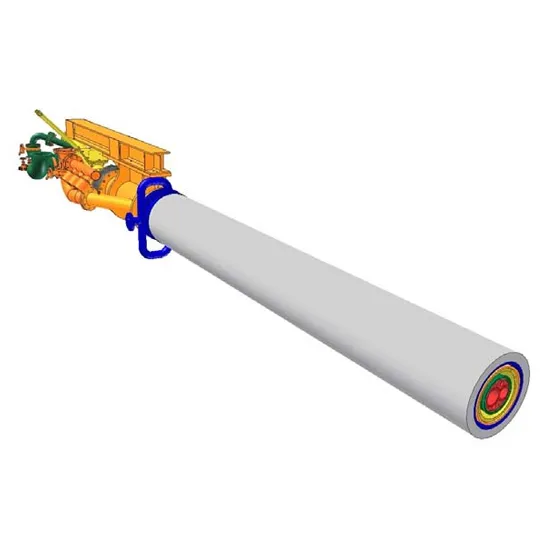
Our cement burners are meticulously engineered using advanced technology and high-temperature resistant materials to ensure efficient combustion and low emissions. Each component is carefully designed to guarantee the stability and reliability of the combustion process.
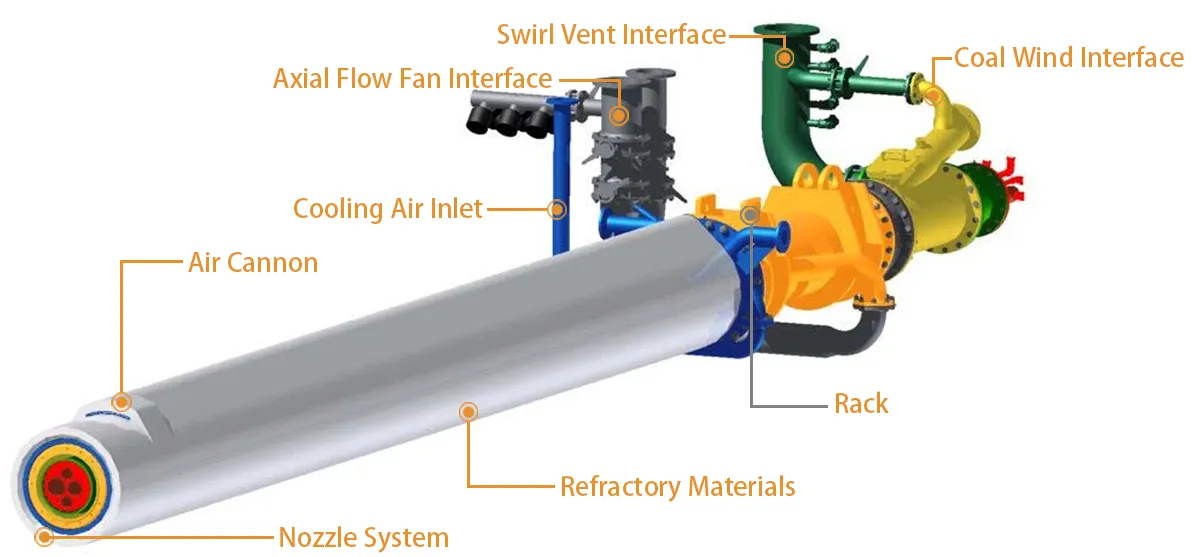
- Air Cannon (Optional): The air cannon periodically cleans accumulated dust and carbon deposits inside the rotary kiln burner using high-pressure air. This ensures unobstructed airflow within the burner, prevents clogging, enhances combustion efficiency, and reduces maintenance requirements.
- Axial Flow Air Interface: The axial flow air interface draws external air into the kiln burner. A fan or blower maintains stable airflow, ensuring thorough mixing of air and fuel. This improves combustion efficiency and stability.
- Coal-Air Interface: The coal-air interface mixes pulverized coal with air before introducing it into the cement burner. This ensures even distribution and complete combustion of coal within the combustion chamber, improving stability and reducing fuel waste.
- Swirl Air Interface: The swirl air interface employs specially designed ducts to induce rotational airflow, increasing the contact area between air and fuel. This promotes thorough mixing, ensures more uniform combustion, enhances thermal efficiency, and reduces pollutant emissions.
- Cooling Air Interface: The cooling air interface introduces external cooling air to lower the temperature of the kiln burner housing and internal components. This prevents equipment damage from overheating and ensures long-term stable operation in high-temperature environments.
- Refractory Materials: Refractory materials surround the kiln burner, primarily preventing excessive temperatures from damaging the rotary kiln burner body. These materials effectively insulate against high heat, protecting the rotary kiln burner from overheating damage, extending equipment lifespan, and reducing maintenance frequency.
- Nozzle System: The nozzle system injects fuel and air into the combustion chamber, ensuring thorough mixing. The nozzle design optimizes fuel distribution, enhances combustion efficiency, minimizes incomplete combustion, and improves thermal energy utilization.
- Frame: The frame supports all kiln burner components, typically constructed from high-strength steel or alloy materials to withstand prolonged high-temperature and high-load operation. Frame stability directly impacts cement burner safety and durability.
Structure of Kiln Burner Nozzle
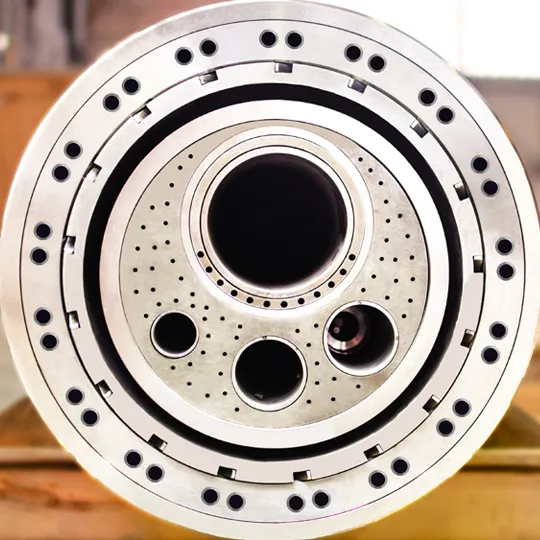
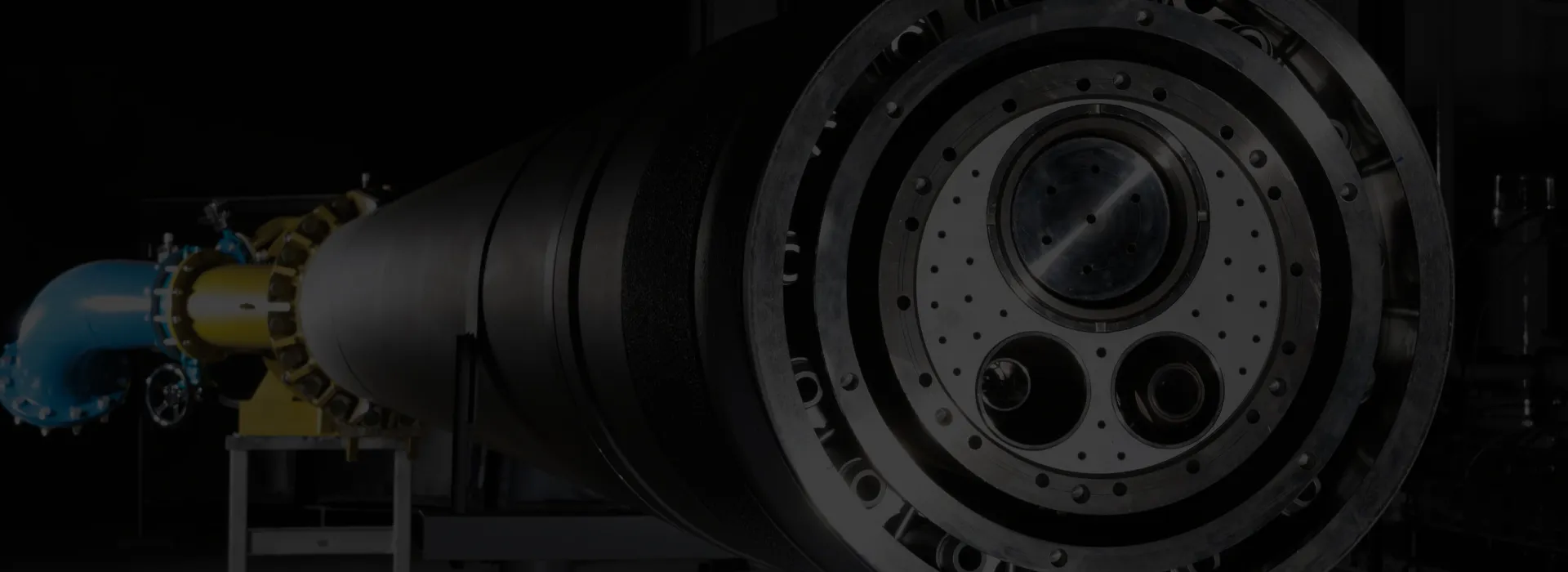
The nozzle is one of the core components of a cement burner, and its design directly impacts combustion efficiency and emission control. We exclusively utilize heat-resistant steel forgings and steel plate materials to avoid the instability and defects inherent in castings that could compromise rotary kiln burner performance. Our nozzle structures feature multiple designs including four-channel, five-channel, and six-channel configurations, enabling flexible customization and selection to meet diverse combustion requirements.
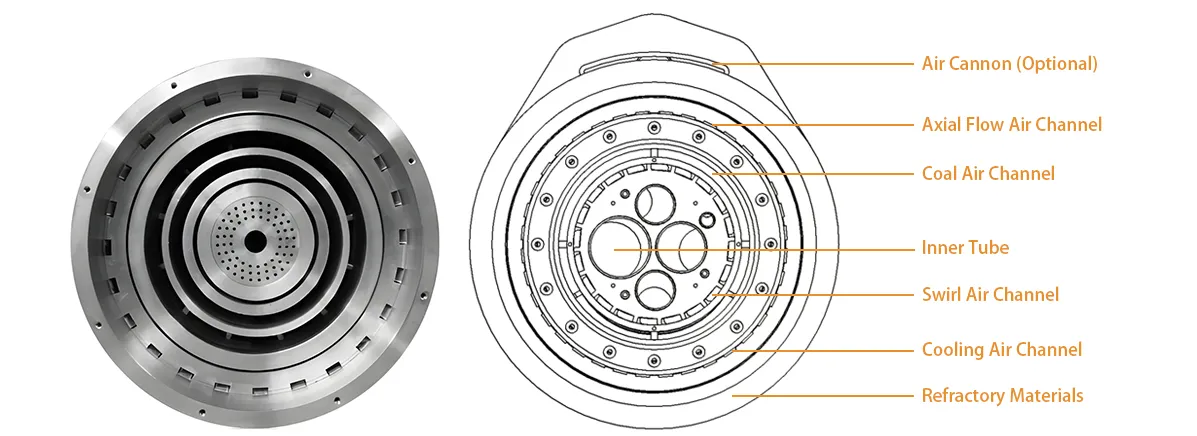
- Axial Air Channel: The axial air channel directs air into the kiln burner, ensuring uniform airflow to facilitate fuel-air mixing and promote efficient combustion.
- Coal Air Channel: The coal air channel mixes pulverized coal with air before feeding it into the combustion chamber, ensuring even coal distribution to enhance combustion efficiency and minimize fuel waste.
- Swirl Air Channel: The swirl air channel directs air into the combustion chamber in a rotating pattern, optimizing fuel-air mixing, improving combustion performance, and reducing temperature inconsistencies.
- Cooling Air Channel: The cooling air channel introduces cold air to lower kiln burner temperatures, preventing overheating damage to equipment and ensuring long-term stable operation.

Suitable for normal operating conditions, it provides a stable fuel-air mixture.

Enhance burner adjustment flexibility and improve combustion efficiency, suitable for high-efficiency combustion requirements.

Further optimize fuel distribution to enhance combustion stability and reduce pollutant emissions.

Customizable to meet specific customer requirements, it allows for more precise adjustment of air and fuel flow in each channel to achieve optimal combustion performance.
Performance Advantages of LaFa Kiln Burners
Our cement kiln burners deliver exceptional performance, offering multiple advantages including efficient combustion, energy savings, reduced consumption, low nitrogen emissions, and environmental protection. From precise flame control to outstanding durability, every design element is engineered to enhance combustion efficiency, lower energy consumption, and minimize emissions—helping you achieve more efficient and eco-friendly production goals.
- Optimal Flame Momentum: Our cement kiln burners achieve outlet wind speeds of 300-340 m/s when paired with fans delivering ≥49 kPa pressure, providing high thrust exceeding 10 N/MW. This ensures uniform fuel-air mixing and promotes efficient combustion. The kiln burner’s advantages are particularly pronounced when using low-calorific-value substandard coal or anthracite, enhancing combustion efficiency and reducing pulverized coal waste.
- Well-defined and robust flame shape: The dual-enveloping design of axial airflow and external swirl airflow enables the kiln burner to not only ignite pulverized coal rapidly but also maintain flame stability. This ensures a well-defined flame shape with high thermal intensity, enhancing combustion efficiency and stability.
- Online Adjustment for Flexibility: The axial expansion structure of the swirl air channel allows real-time nozzle adjustment based on actual operating conditions. This modifies flame shape, offering enhanced flexibility and adaptability to ensure consistently optimal combustion.
- Energy Saving & Consumption Reduction: By reducing primary air consumption, our cement kiln burners decrease fan power consumption by 5%-15%. Simultaneously, they fully utilize high-temperature secondary air to ensure fuel burnout rates exceeding 99%. This design not only boosts combustion efficiency but also recovers lost heat, helping enterprises reduce energy consumption.
- Low-NOx Environmental Protection: Structural optimization and reduced primary air consumption enable superior flame shape control, lowering nitrogen oxide (NOx) emissions by 20%-35%. This design meets increasingly stringent environmental standards, supporting green production.
- Advanced Material Application: The nozzle and head utilize heat-resistant steel, ensuring stable operation at 1200°C for over two years. High-alumina wear-resistant ceramic linings protect vulnerable pipeline sections, effectively preventing erosion from coal dust impact and significantly extending kiln burner lifespan.
Low Primary Air Design for Significant Energy Savings
Our kiln burner features an ultra-low primary air volume, typically only 6-8%. For every 1% reduction in primary air volume, the heat consumption per kilogram of clinker is reduced by 2-2.5 KCal, which is equivalent to saving 0.36-0.45 kg of coal with a calorific value of 5500 KCal per ton of clinker. In a 5000 TPD clinker line, this results in an annual coal saving of approximately 770 tons. The reduction in primary air volume also lowers the actual power consumption of the kiln exhaust and flue gas treatment system fans, leading to substantial energy savings across the entire system.


Three-Fan System for Flexible and Direct Flame Adjustment
Lafa cement burner features a three-fan system, incorporating independent channels for axial air, swirl air, and cooling air. These channels can be adjusted individually or in combination, providing highly flexible flame control. Unlike traditional single-fan systems, this design eliminates the interference between airflow adjustments, ensuring more accurate and efficient flame regulation. This enables you can easily optimize the flame shape and combustion efficiency, resulting in better fuel utilization and reduced emissions for high-performance combustion across various industrial applications.
High-Efficiency Eco-Friendly Kiln Burner
Our cement kiln burners achieve high combustion efficiency and low nitrogen emissions through optimized design, while supporting multiple fuels to deliver more flexible and environmentally friendly combustion solutions tailored to diverse industrial needs.

Our Kiln burner features a low primary air design that significantly reduces the excess air ratio in the firing system and lowers the oxygen content at the kiln tail, effectively suppressing NOx generation. This design also maximizes gas recirculation within the flame, reducing the peak temperature in the initial flame region, further minimizing thermal NOx formation. With lower primary air volume, fuel consumption is reduced, and fuel-based NOx emissions are lowered, while enhancing combustion efficiency and reducing CO emissions.
With this design, you can save 2-3kg of standard coal per ton of clinker. For a 5000TPD production line, this translates to a daily saving of 10 tons of coal, which amounts to 3300 tons of coal saved annually. Based on a coal price of $70 per ton, this results in an annual cost saving of $255,000USD. This energy-saving and emission-reducing design not only boosts production efficiency but also meets environmental standards, helping your business achieve sustainable development.
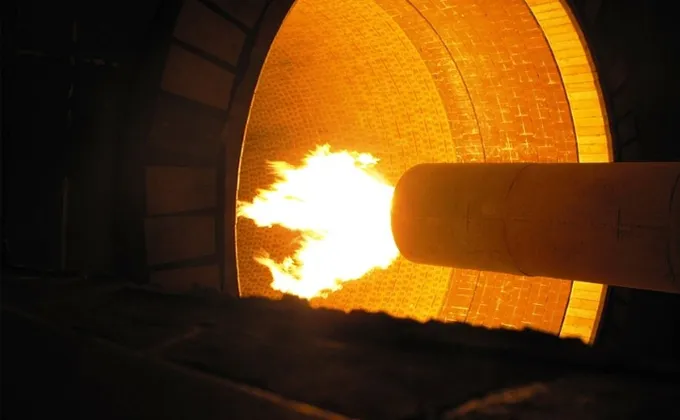
Our cement burner adopts a high-efficiency combustion design based on the sandwich concept, ensuring a more thorough and efficient combustion process. The super-fast axial air jet enhances the mixing of fuel and high-temperature secondary air, improving combustion efficiency. Meanwhile, the high-pressure differential design between axial air and swirl air strengthens the flame’s recirculation, allowing fuel particles that have already started to burn to quickly ignite subsequent fuel particles during the recirculation process, further enhancing combustion.
Suitable for Various Fuels
This cement kiln burner is suitable for a wide range of fuels, including bituminous coal, anthracite, lignite, petroleum coke, heavy oil, and natural gas. It can also efficiently burn sludge, waste tires, agricultural waste (such as rice husks, straw, cotton stalks, etc.), industrial waste oils, and chemical solvents. The ability to use various fuels not only improves resource utilization but also provides businesses with a more flexible and cost-effective energy solution, meeting the diverse needs of industrial applications.
Your Trusted Kiln Burner Supplier
By showcasing key cement kiln burner parameters, comprehensive professional services, and successful customer case studies, you can gain a clear understanding of equipment performance and application value. No matter how diverse your needs may be, we provide tailored solutions to ensure efficient and stable production.
- Especificações
- Serviço
- Kiln Burner Application Case
The following displays key parameters of the rotary kiln burners, providing you with a preliminary understanding of the equipment’s performance. Should you have additional requirements or special operating conditions, we stand ready to provide professional customized solutions.
| Product Name | Model | Design Ability (T / D) | Coal Injection Volume (t / h) | Pulverized Coal Wind Speed (m / s) | External Axial Wind Speed (m / s) | Swirl Wind Speed (m / s) | Vortex Wind Speed (m / s) |
|---|---|---|---|---|---|---|---|
| Energy-saving burner | JL-1200 | 1200 | 3-5 | 25-30 | 350-460 | 220-280 | 140-180 |
| Energy-saving burner | JL-2000 | 2000 | 4-6 | 25-30 | 350-460 | 220-280 | 140-180 |
| Energy-saving burner | JL-2500 | 2500 | 5-8 | 25-30 | 350-460 | 220-280 | 140-180 |
| Energy-saving burner | JL-3000 | 3000 | 6-9 | 25-30 | 350-460 | 220-280 | 140-180 |
| Energy-saving burner | JL-3200 | 3200 | 6-9 | 25-30 | 350-460 | 220-280 | 140-180 |
| Energy-saving burner | JL-4000 | 4000 | 8-12 | 25-30 | 350-460 | 220-280 | 140-180 |
| Energy-saving burner | JL-4500 | 4500 | 9-15 | 25-30 | 350-460 | 220-280 | 140-180 |
| Energy-saving burner | JL-5000 | 5000 | 10-12 | 25-30 | 350-460 | 220-280 | 140-180 |
| Energy-saving burner | JL-6000 | 6000 | 10-18 | 25-30 | 350-460 | 220-280 | 140-180 |
| Energy-saving burner | JL-7000 | 7000 | 12-24 | 25-30 | 350-460 | 220-280 | 140-180 |
| Energy-saving burner | JL-8000 | 8000 | 14-28 | 25-30 | 350-460 | 220-280 | 140-180 |
| Energy-saving burner | JL-10000 | 10000 | 18-30 | 25-30 | 350-460 | 220-280 | 140-180 |
From R&D to installation, we provide you with full-process, one-stop service, ensuring you have an efficient and reliable cement kiln firing system.

- R&D: Our R&D team comprises engineers, technical experts, and industry consultants who stay abreast of trends in the cement and building materials sectors, continuously exploring more efficient and environmentally friendly combustion technologies. Through ongoing research and development, we deliver innovative solutions tailored to diverse fuel characteristics and operational requirements.
- Design: Each rotary kiln burner is not a “standardized product” but a customized design tailored to your production line scale, fuel type, and operating environment. We emphasize structural optimization and meticulous attention to detail, ensuring not only superior performance but also enhanced stability and safety during long-term operation.
- Manufacturing: Equipped with advanced processing machinery and a rigorous quality system, we conduct stringent inspections at every stage—from raw material selection and precision component machining to final assembly. High-quality, wear-resistant, and heat-resistant materials guarantee reliable durability even under demanding conditions.
- Production: We strictly adhere to international standards and process specifications during manufacturing, striving for optimal efficiency, longevity, and safety in every kiln burner. Standardization and precision work in tandem to maintain consistent high quality even during mass production.
- Commissioning: Post-delivery, our technical team conducts on-site commissioning and parameter optimization at your facility. We not only expedite equipment startup but also help identify the optimal balance between combustion efficiency and energy savings.
- Instalação: We provide comprehensive installation support, including on-site engineer guidance, installation training, and post-installation technical services. This ensures smooth equipment commissioning while empowering your team to master operational procedures and enhance overall production efficiency.
Case 1: Production data from a cement plant in Kenya after adopting the Lafa rotary kiln burner. As shown in the table’s actual production figures, the kiln’s operational quality has significantly improved and enhanced following the burner’s implementation. The f-CaO compliance rate of kiln-exiting clinker has remained above 90%, whereas it fell below 90% in the first two months prior to replacement. This demonstrates that the burner facilitates clinker calcination.
| Item | Full Year 2016 | Jan 2017 | Feb 2017 | Mar 2017 | Apr 2017 | May 2017 |
|---|---|---|---|---|---|---|
| Anthracite Blending Ratio (%) | 45.13 | 48.83 | 48.58 | 49.10 | 48.34 | 48.15 |
| Kiln Output (t/h) | 224.36 | 220.32 | 223.76 | 230.63 | 230.04 | 230.18 |
| Clinker f-CaO (%) | 90.51 | 87.60 | 88.57 | 93.94 | 91.11 | 92.16 |
| Clinker 3-day Strength (MPa) | 30.85 | 31.00 | 31.20 | 30.70 | 30.30 | 31.05 |
| Clinker 28-day Strength (MPa) | 56.96 | 57.32 | 57.50 | 57.20 | 56.70 | 57.30 |
| Coal Usage Method | Kiln head using bituminous coal only | Kiln head using bituminous coal only | Kiln head using bituminous coal only | Kiln head using bituminous coal only | Using mixed coal | Using mixed coal |
Case 2: The table shows a cement plant in the UAE adopting Lafa cement kiln burners. Through collaborative exploration and adjustments with the manufacturer, the burners achieved optimal performance. Clinker output stabilized at 6,300 t/d with consistent quality, demonstrating clear advantages over the multi-channel burners previously used.
| Kiln Burner Model | Usage Time | Daily Output (t/d) | Secondary Air Temperature (°C) | Actual Coal Consumption (kg/t) | Comprehensive Power Consumption (kwh/t) | Power Generation (kwh/h) | Clinker 3-day Strength (MPa) | Clinker 28-day Strength (MPa) |
|---|---|---|---|---|---|---|---|---|
| Multi-channel Kiln Burner | July 1 to August 16, 2022 | 6192 | 950~1030 | 950~1030 | 48.002 | 8555 | 31.6 | 56.1 |
| Lafa Kiln Burner | September 6 to November 30, 2022 | 6290 | 980~1060 | 980~1060 | 47.70 | 8900 | 31.9 | 56.3 |
| Lafa Kiln Burner | 2023 | 6297 | 980~1060 | 980~1060 | 47.33 | 8935 | 31.9 | 56.9 |
Testimonials
“After replacing our old cement kiln burners with your new models, the combustion efficiency of our production line has improved, fuel consumption has decreased, and the flame has become more stable. The wear-resistant design and high-temperature materials greatly reduce maintenance work. Your pre-sales, installation, and after-sales services are very professional, ensuring the whole project proceeded smoothly and exceeded our expectations.”
Arif RahmanTechnical Director, Malaysia Cement Works“The customized cement burner solutions provided by your company perfectly match our kiln requirements. The engineering team offered full installation and commissioning guidance, ensuring the equipment quickly reached optimal operating conditions. The high-temperature resistant design and precise parameter control greatly improved fuel burnout while reducing NOx emissions. We are very satisfied with the product performance and the professionalism of your team—an excellent collaboration.”
Ahmed Al-FarsiOperations Manager, Saudi Arabian Cement Ltd.
Produto relacionado

Oferece produção de clínquer confiável e contínua com controle preciso de temperatura.

Aumenta a eficiência da calcinação pré-aquecendo a farinha crua utilizando o calor dos gases residuais.

Resfria o clínquer rapidamente e recupera o calor para melhorar a eficiência geral da produção.

Helps you improve output and reduce power use through high-pressure material grinding.
Proporciona moagem de alta eficiência com menor consumo de energia e fácil manutenção.
Cement Burner Maintenance and Cleaning Guide
Regular maintenance and cleaning of the cement burner not only extends the equipment’s lifespan but also ensures efficient and safe operation.
- Head Cleaning
During kiln shutdown maintenance, thoroughly inspect the burner head, particularly the outlet air ducts. Clear any blockages promptly to ensure even combustion air distribution and stable flame, preventing reduced combustion efficiency due to localized airflow abnormalities. - Oil Gun Atomization Device Cleaning
The ignition oil gun is critical for successful kiln ignition. When atomization performance is suboptimal, promptly disassemble, clean, and maintain the atomization device. Maintaining uniform oil spray significantly improves ignition success rates and ensures stable, reliable combustion. - Inspection of Coal Air Duct Wear-Resistant Layer
During kiln shutdowns, open the coal inlet pipe inspection port to thoroughly examine the wear condition of the internal wear-resistant layer in the coal air duct. This layer serves as a critical barrier protecting cement kiln burner pipe from high temperatures and particle erosion. Timely repair or replacement extends equipment lifespan, reduces maintenance costs, and prevents safety hazards caused by excessive wear.
The cement burner is the heart of the rotary kiln system. It controls flame shape, temperature, and the mixing of fuel and air to ensure efficient clinker production. A high-quality burner not only improves fuel utilization but also reduces emissions and extends the life of the kiln lining.
Prices vary based on burner specifications, compatible fuels, and custom requirements. As a direct manufacturer, we guarantee high cost-effectiveness, helping you save on equipment investment and long-term operating costs.
We provide comprehensive after-sales support, including spare parts supply, technical services, operator training, and on-site guidance. Our experienced engineers ensure smooth cement burner operation to help you achieve your production targets. Our technical team possesses extensive cement plant experience, extending beyond kiln burner operation to assist with process and quality control.
 Portuguese
  English
  Russian
  Arabic
  Vietnamese
  Spanish
  French
  Japanese
  Chinese