




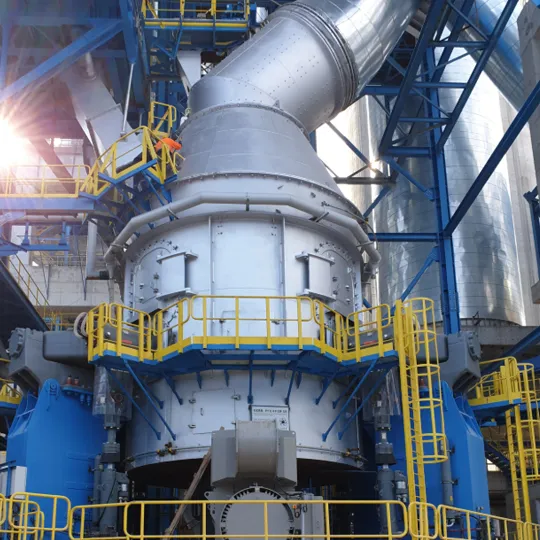


Vertical Roller Mill For Sale
- It can efficiently grind cement raw materials, clinker, slag, pulverized coal, and various non-metallic minerals to meet diverse production requirements.
- High output, consistent quality, lower energy consumption, and reduced maintenance costs.
- Compact footprint, excellent sealing, low noise, environmentally friendly, emissions compliant with international standards.
- Precise control of grinding particles ensures uniform finished particles.
- Provide one-stop support for product selection, installation, and maintenance.
Vertical Roller Mill Working Principle
The working principle of the Vertical Roller Mill involves applying high pressure from the grinding rollers to the rotating grinding table, crushing and grinding materials into fine powder. Raw materials are fed into the center of the grinding disc and move outward under centrifugal force, where they are crushed by the grinding rollers. Simultaneously, hot air streams dry the materials and carry the fine powder into the separator. Qualified products are collected, while coarse particles are returned to the grinding disc for further grinding.
This fully cyclical process operates with high efficiency, delivering advantages such as energy savings, reduced consumption, stable product quality, and a compact footprint.

Professional Vertical Roller Mill Manufacturer
As a leading enterprise in China’s building materials equipment industry, Lafa possesses extensive experience in the R&D and manufacturing of Vertical Roller Mills (VRMs). With independent design and production capabilities, we have successfully developed multiple VRM models. We also maintain strategic partnerships with globally renowned cement equipment suppliers to provide customers with efficient, energy-saving, reliable, and customizable vertical roller mills solutions.
Vertical Roller Mills For Processing Different Materials
Vertical roller mills can be categorized into types such as raw material vertical mills, cement vertical mills, slag vertical mills, and coal vertical mills based on their application fields and processed materials. They are widely applicable for grinding cement raw materials, clinker, slag, and pulverized coal. By configuring different types of vertical roller mills, you can select the most suitable grinding solution according to material characteristics and production requirements.

Specifically designed for grinding cement clinker and certain additives to produce finished cement powder. Characterized by high grinding efficiency, controllable product fineness, and low energy consumption, it serves as the core equipment in modern cement production lines.
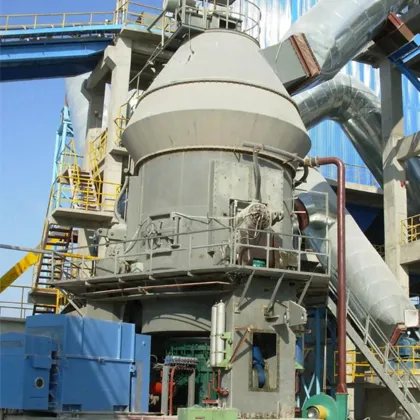
Primarily used for grinding cement production raw materials such as limestone, clay, and iron powder. This equipment simultaneously performs drying and grinding, ensuring uniform and stable raw material composition to provide reliable assurance for clinker calcination.

Applied to pulverized coal preparation systems, this integrated design combines drying, grinding, and classification to produce qualified pulverized coal for stable combustion in rotary kilns or boilers. The equipment features high safety standards and significantly reduces dust emissions.
Features of Vertical Roller Mill
- High grinding efficiency: Material typically remains in the mill for 2 to 4 minutes, achieving a grinding efficiency 165% that of ball mills while reducing power consumption by approximately 30%.
- High drying efficiency: Hot air is injected through annular gaps at high velocity. The large ventilation cross-section within the mill minimizes resistance. Utilizing waste gas from the kiln tail preheater enables drying of materials with 8% moisture content. With a hot blast stove, materials containing 15% to 20% moisture can be dried.
- Simple process flow: Compact layout, minimal footprint, low daily maintenance costs, suitable for outdoor installation, with infrastructure investment amounting to approximately 70% of that for ball mill.
- Environmental Protection: Excellent overall sealing performance, minimal dust generation, low noise levels, and reduced energy consumption create a superior environmental profile. Powder consumption is 20%-30% lower than ball mills. Vertical roller mills achieve 30%-40% greater energy savings compared to ball mills. Noise levels are 20-25 decibels lower than ball mills.
- Fully Automatic Control System: Intelligent adjustment enables swift finished product quality control. Maintenance of hydraulic cylinders, rotation of the swing arm, and replacement of roller shells and liners are significantly simplified, minimizing downtime losses.
Core Advantages of the LAFA Vertical Roller Mill
As a professional manufacturer of vertical roller mills, we focus not only on equipment performance but also deliver efficient grinding, energy savings, environmental protection, and stable operation through structural optimization, intelligent control, and comprehensive service solutions. The following core strengths demonstrate our competitive edge in technology, reliability, and service, providing your production line with more valuable solutions.

Optimized pressure distribution across the grinding disc and rollers ensures uniform force application to materials within the grinding zone, thereby enhancing grinding efficiency.

Using advanced fluid flow simulation software, the internal airflow within the mill is scientifically analyzed and optimized to achieve higher grinding efficiency and operational stability.

The large vertical reducer employs a single-stage bevel gear combined with a two-stage planetary gear system, delivering high transmission accuracy, uniform stress distribution, and robust load-bearing capacity. With a service factor exceeding 2.5, it complies with AGMA standards.

Equipped with a high-precision dynamic separator, it features high efficiency, low pressure drop, and low energy consumption, ensuring uniform particle distribution and consistent quality of the finished product.

Equipped with an advanced automated control platform, it provides real-time monitoring of operating parameters and supports touchscreen operation for ease of use, ensuring continuous and stable equipment operation.

From equipment R&D and project design to manufacturing, installation, commissioning, and final acceptance, we provide end-to-end services to ensure our customers have complete peace of mind.
Vertical Roller Mill Design
Vertical Roller Mill features a compact vertical structure design that highly integrates the grinding table, grinding rollers, drying system, classifier, and conveying system, achieving integrated grinding and drying. Uniform force distribution on the grinding rollers and disc, combined with scientifically optimized airflow channels, ensures thorough material pulverization during grinding with low energy consumption and high efficiency. The built-in dynamic classifier enables precise control of finished product particle size, meeting grinding requirements for diverse materials including cement, clinker, slag, and pulverized coal. The equipment boasts excellent sealing performance to reduce dust emissions, while its soundproofing and vibration-damping design minimizes noise. Combined with an intelligent automated control system, it ensures long-term stable operation.
Through scientific structural design and advanced technology, the VRM provides efficient, energy-saving, environmentally friendly, and reliable solutions for modern cement production lines and industrial grinding systems.

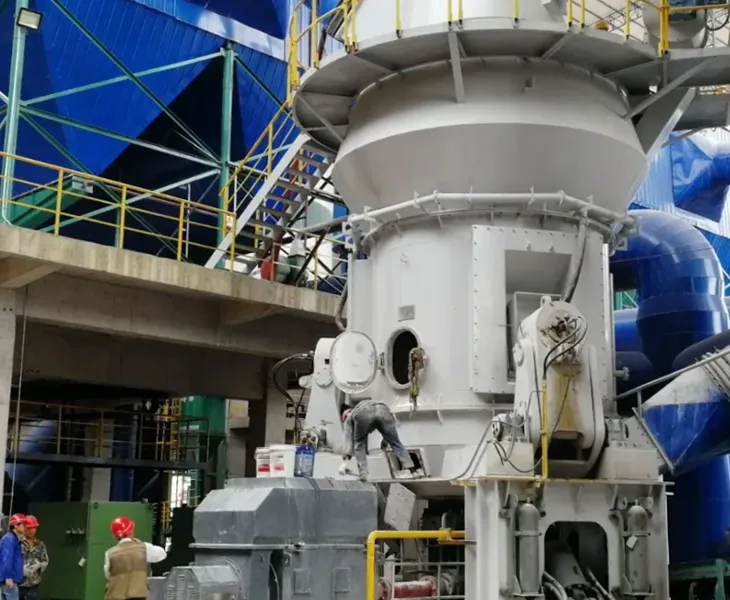
Vertical Roller Mill Operation
The operation of vertical roller mills is characterized by high efficiency, automation, and ease of operation. Through an advanced control system, operators can monitor and adjust key parameters such as grinding pressure, material feed rate, and airflow velocity in real time via a touchscreen interface, ensuring stable equipment operation, consistent product quality, and lower energy consumption. During operation, the vertical mill is also equipped with automatic alarm and protection devices to prevent overloads or abnormal conditions, enhancing safety and reliability. Daily maintenance is designed for simplicity, with key components easily accessible for inspection and replacement. This minimizes downtime and ensures continuous production.
Vertical Roller Mill in Cement Plant


In modern cement production lines, vertical roller mills have become the preferred equipment for grinding cement raw materials, clinker, and slag. Integrating grinding, drying, and classification functions into a single unit, vertical mills significantly simplify the process flow while substantially boosting production efficiency. Their advanced design ensures uniform product fineness, stable chemical composition, and lower energy consumption, helping cement plants reduce production costs and enhance cement quality. Vertical roller mills demonstrate strong adaptability, capable of processing diverse raw materials and materials with varying moisture content. They are widely applied in raw material preparation, clinker grinding, and slag micropowder production.
Furthermore, vertical roller mills feature excellent sealing performance and low-noise operation, meeting cement plants’ requirements for environmental protection and sustainable development. They serve as crucial equipment for achieving green and efficient cement production.
Vertical Roller Mill Parts
Vertical roller mill consists of multiple key components working in concert, including the separator, grinding rollers, grinding table, pressure device, reducer, motor, and housing. Each part plays a vital role in the grinding, drying, and classification processes. Gaining a thorough understanding of the mill’s primary components will help you better select and apply the most suitable grinding equipment.

The grinding rollers maintain tight contact with the grinding disc under hydraulic loading, exerting intense pressure on the material to achieve thorough pulverization. High-hardness wear-resistant roller sleeves ensure extended service life and low maintenance costs. The adjustable pressure system allows the mill to adapt to materials of varying hardness and moisture content, guaranteeing continuous and stable grinding performance.

The grinding table is one of the core working components of the vertical roller mill, typically made of cast steel. Raw materials fall through the feed inlet to the center of the grinding table, where centrifugal force propels them outward into the grinding zone. Its stable rotational motion ensures uniform stress distribution and efficient grinding of the material.

The dynamic classifier located at the top of the vertical mill separates finished powder meeting fineness requirements from coarse particles through high-speed rotation. Fine powder is discharged from the mill with the airflow, while coarse particles are returned to the grinding table for further processing. This high-efficiency classifier not only enhances product quality but also reduces energy consumption, ensuring uniform particle distribution in the final product.

The hydraulic system is primarily used to apply pressure to the grinding rollers while automatically relieving pressure upon encountering hard foreign objects or overload conditions, thereby protecting the equipment from damage. It typically consists of hydraulic cylinders, accumulators, and a hydraulic power unit. Hydraulic system also enables flexible adjustment of grinding force based on material characteristics, making the grinding process more efficient and safer.

Vertical roller mill employs a multi-seal structure and high-efficiency dust collection system to effectively minimize air leakage and dust spillover. Its superior sealing performance reduces heat loss and dust pollution, helping cement plants and power plants meet stringent environmental emission standards.
Professional Production and Service
We provide precision-manufactured vertical grinding equipment and comprehensive technical support to ensure stable operation, minimize failure risks, and deliver efficient, reliable production lines.
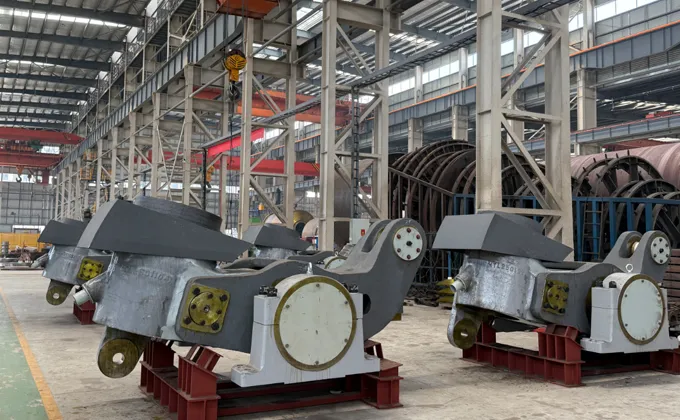
LAFA possesses advanced production facilities and comprehensive manufacturing processes, with strict quality control at every stage—from raw material selection and component machining to complete assembly. The introduction of CNC machining centers, large-scale heat treatment equipment, and automated inspection systems ensures each Vertical Roller Mill delivers high precision, exceptional durability, and outstanding stability. Leveraging extensive manufacturing expertise and proven techniques, we provide customers with high-performance vertical mills and support customized production to meet diverse project requirements.
Flexible Delivery: To align with your project schedule, we offer phased shipment services. You can receive equipment in stages according to your construction timeline, ensuring project continuity while reducing the burden of single-batch storage and transportation. Our comprehensive logistics system and specialized packaging solutions guarantee safe and timely delivery of equipment to your site.

As a professional vertical roller mill supplier, we not only provide the equipment itself but also prioritize delivering comprehensive service support to our customers. From preliminary model selection and design to process planning, through mid-stage installation and commissioning, to post-installation training guidance and after-sales maintenance, we offer timely and professional technical support throughout the entire lifecycle. We also provide value-added services such as spare parts supply, remote monitoring, and system upgrades to help you maintain long-term, efficient operation of your equipment.
Additionally, our comprehensive plant services help identify and eliminate root causes of performance bottlenecks, effectively preventing common issues like extended downtime, hydraulic system failures, lubricant contamination, and roller oil leaks. Through systematic inspection and optimization, you’ll significantly reduce maintenance costs, extend equipment lifespan, and achieve more stable and reliable production.

VRM Specifications & Successful Case Studies
In selecting a vertical roller mill, you should not only focus on technical parameters such as production capacity, fineness, power consumption, and operating pressure, but also understand its performance in real-world applications. By combining detailed product specifications with global customer case studies, we demonstrate the mill’s outstanding performance across various operating conditions, helping you make optimal investment decisions faster.
- Vertical Raw Mill Specifications
- Vertical Cement Mill Specifications
- Vertical Raw Mill for Sale Vietnam
- Slag Vertical Roller Mill for Sale in Saudi Arabia
Raw material vertical mill
specifications and technical parameter table
| Model | Grinding Disc Diameter (mm) | Output (t/h) | Raw Material Moisture | Raw Meal Fineness | Motor Power (kw) |
|---|---|---|---|---|---|
| LVM30/2 | 2500 | 85-100 | <10% | 800/900 | |
| LVM34/3 | 2800 | 130-160 | <10% | 1120/1250 | |
| LVM42/4 | 3400 | 190-240 | <10% | 1800/2000 | |
| LVM44/4 | 3700 | 190-240 | <10% | 2500/2800 | |
| LVM50/4 | 4200 | 240-300 | <10% | R0.008<12% | 3150/3350 |
| LVM53/4 | 4500 | 320-400 | <10% | 3800/4200 | |
| LVM56/4 | 4800 | 400-500 | <10% | 4200/4500 | |
| LVM60/4 | 5100 | 550-670 | <10% | 5000/5400 | |
| LVM65/6 | 5600 | 600-730 | <10% | 5600/6000 |
Cement clinker pre-powder vertical mill
specifications and technical parameter table
| Model | Grinding Disc Diameter (mm) | Output (t/h) | Raw Material Moisture | Product Specific Surface Area | Potência do motor |
|---|---|---|---|---|---|
| LVM24/2P | 1900 | 35-45 | ≤2% | 220-260m²/kg (R0.08≤15%) | 560 |
| LVM26/2P | 2000 | 42-55 | ≤2% | 220-260m²/kg (R0.08≤15%) | 630 |
| LVM30/2P | 2500 | 60-75 | ≤2% | 220-260m²/kg (R0.08≤15%) | 900 |
| LVM34/3P | 2800 | 90-110 | ≤2% | 220-260m²/kg (R0.08≤15%) | 1400 |
| LVM35/3P | 2800 | 130-160 | ≤2% | 220-260m²/kg (R0.08≤15%) | 2000 |
| LVM42/4P | 3400 | 160-200 | ≤2% | 220-260m²/kg (R0.08≤15%) | 2500 |
| LVM44/4P | 3700 | 190-240 | ≤2% | 220-260m²/kg (R0.08≤15%) | 3000 |
| LVM45/4P | 3700 | 240-300 | ≤2% | 220-260m²/kg (R0.08≤15%) | 3800 |
| LVM53/4P | 4500 | 300-380 | ≤2% | 220-260m²/kg (R0.08≤15%) | 4800 |
| HLM56/4P | 4800 | 330-420 | ≤2% | 220-260m²/kg (R0.08≤15%) | 5300 |
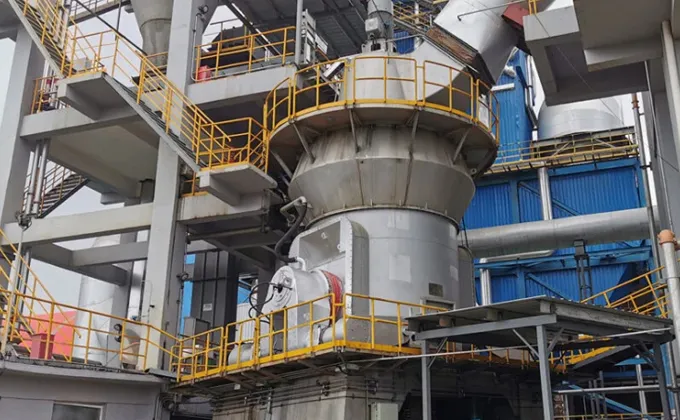
Vietnam Cement Plant – Raw Material Vertical Mill Retrofit Project
Background: The existing ball mill system at this Vietnamese cement plant operated inefficiently, particularly during the rainy season. High raw material moisture levels frequently caused uneven grinding and equipment shutdowns, severely disrupting production continuity.
Solution: We designed and installed a Vertical Raw Mill equipped with a high-efficiency drying unit and a fully automated control system, ensuring stable operation even under high humidity conditions.
Results: Following the upgrade, the system successfully completes grinding even with raw material moisture as high as 12%. Finished product fineness variation has been reduced to ±1%, energy consumption decreased by 15%, overall production capacity increased by 20%, and clinker calcination stability has significantly improved.

Middle Eastern Cement Group – Granulated Blast Furnace Slag Micropowder Production Line
Background: Based in Saudi Arabia, the group sought to utilize blast furnace slag—a byproduct from local steel mills—to produce high-quality slag micropowder. However, their existing ball mills failed to meet fineness and output requirements, limiting market expansion.
Solution: We supplied a Slag Vertical Roller Mill system equipped with a high-precision dynamic classifier and online particle size monitoring to ensure product quality.
Results: Post-commissioning, the slag powder maintained a stable specific surface area of 420 m²/kg. The produced S95-grade slag powder achieved international quality certification, with market demand exceeding supply. The client reduced annual clinker usage, saving over $2 million in fuel costs while generating substantial value-added revenue from by-products.
Testimonials
“Our old ball mill could no longer meet production capacity and environmental requirements, and the excessive emissions were a major headache. After upgrading to the Clinker Vertical Mill, production capacity increased by 20%, while dust emissions dropped to 30mg/Nm³, fully complying with environmental regulations. We are highly satisfied with your company’s technology and service.”
Dawit TesfayeEritrea Cement Enterprises“Previously, our coal pulverizing process frequently suffered from clogging due to high moisture content, causing boiler shutdowns. Since adopting the Coal Vertical Mill manufactured by LAFA, operations have been exceptionally stable. Coal fineness fully meets specifications, and boiler efficiency has increased by 12%. This equipment has saved us substantial maintenance and downtime costs.”
Aibek NurgaliyevA power plant in Kazakhstan
Produto relacionado

Allows you to reduce raw materials to the required size for smoother downstream processing.

Proporciona um desempenho de moagem estável e eficiente para cimento, mineração e outros materiais.

Helps you improve output and reduce power use through high-pressure material grinding.

Oferece produção de clínquer confiável e contínua com controle preciso de temperatura.

Aumenta a eficiência da calcinação pré-aquecendo a farinha crua utilizando o calor dos gases residuais.
Key Factors to Consider Before Buying a Vertical Roller Mill
Before investing in a Vertical Roller Mill , it is crucial to thoroughly evaluate equipment parameters and the application environment. Whether you plan to use it for cement raw materials, clinker, slag, or pulverized coal preparation, proper selection can significantly boost production capacity, reduce energy consumption, and ensure long-term stable operation. The following points will help you make a more scientific and reliable decision when purchasing a VRM.
- Production Capacity and Fineness Requirements: Determine output (t/h) and product fineness based on production scale to avoid undercapacity or excessive energy consumption.
- Material Characteristics: Different raw materials (cement raw materials, clinker, slag, coal) impose distinct demands on grinding systems; select specially designed vertical mills accordingly.
- Energy Consumption and Operating Costs: Focus on specific power consumption (kWh/t) and system energy efficiency; energy-saving designs reduce long-term operational expenses.
- Equipment Reliability and Serviceability: Verify the lifespan of critical components (gearboxes, grinding rollers, classifiers), spare part replacement cycles, and maintenance accessibility.
- Automation and Control Systems: Advanced automation enables real-time monitoring, fault alerts, and remote adjustments, reducing labor costs.
- Environmental Compliance and Emission Standards: Verify sealing integrity, dust collection systems, and noise control meet local environmental regulations.
- After-Sales Service and Technical Support: Ensure the supplier provides installation, commissioning, training, spare parts supply, and remote technical support.
- Investment and Payback Period: Calculate the payback period by comprehensively considering purchase costs, operating expenses, energy savings, and capacity enhancements.
The Vertical Roller Mill is a highly efficient vertical grinding equipment that integrates grinding, drying, and classification functions. It crushes materials through grinding rollers while utilizing a classifier to control the fineness of the finished product. This mill is capable of grinding cement raw materials, clinker, slag, coal, and other non-metallic minerals.
Vertical roller mill pricing depends on the model, production capacity, grinding material, automation control system configuration, and customization requirements. Prices typically range from hundreds of thousands to millions of dollars. We recommend that customers first provide specific production requirements, material type, output volume, and fineness specifications so we can design the most suitable solution and provide an accurate quotation. Additionally, we offer phased delivery, installation and commissioning, and comprehensive technical support to ensure stable equipment operation and optimal return on investment.
The maintenance cycle for vertical roller mills depends on operating load and material characteristics. Generally, daily maintenance involves inspecting the lubrication system and checking wear on grinding rollers and table, performed daily or per shift. Intermediate maintenance recommends inspecting reducers, bearings, classifiers, and electrical control systems every 3–6 months. Comprehensive overhauls are typically conducted every 1–2 years to replace wear parts and perform system calibration. Proper maintenance not only extends equipment lifespan but also maintains grinding efficiency and product quality. For instance, a power plant in Kazakhstan achieved 98% uptime for its coal vertical roller mill through regular maintenance, effectively reducing the risk of failure-related downtime.
 Portuguese
  English
  Russian
  Arabic
  Vietnamese
  Spanish
  French
  Japanese
  Chinese