



Working Principle of the Clinker Cooler
The clinker cooler operates by conveying high-temperature clinker from the rotary kiln to the cooler via a powerful forced-air cooling system. Cooling air rapidly reduces the clinker temperature, facilitating efficient gas-solid heat exchange between the clinker and the cooling air. After initial cooling, the cooler’s secondary and tertiary air systems further heat the air to achieve deeper cooling of the clinker. By precisely controlling air flow and temperature, the cooler effectively optimizes cooling rates to ensure clinker quality and grindability.
During cooling, the clinker cooler also employs waste heat recovery technology, utilizing the high-temperature air for waste heat power generation or combustion systems. This reduces fuel consumption and enhances overall energy efficiency. The cooled clinker is discharged at a temperature suitable for subsequent processing, providing ideal raw material for cement grinding or storage.

The Function of the Clinker Cooler
- Enhancing Clinker Quality and Grindability
The clinker cooler rapidly cools clinker to control its crystallization process. During rapid cooling, clinker particles undergo incomplete crystallization, resulting in a glassy phase in some areas and finer crystalline structures in others. This enhances cement strength. The cooled clinker not only achieves superior quality but also exhibits a finer grain structure, thereby increasing cement strength grades.
- Optimizing Cooling Rate to Enhance Grinding Performance
Rapid cooling induces thermal stress and micro-cracks within clinker particles, making them easier to grind. The clinker cooler precisely controls cooling rates, optimizing the cooling process. This facilitates finer grinding of cooled clinker in subsequent stages, improving cement grindability and boosting overall production efficiency.
- Elevating Secondary and Tertiary Air Temperatures to Reduce Fuel Consumption
The clinker cooler’s design enables effective reheating of secondary and tertiary air streams for reuse as combustion air. This not only boosts thermal efficiency within the combustion system but also lowers fuel consumption in the calcination process. Consequently, production costs decrease while positively contributing to environmental sustainability goals.
- Waste Heat Recovery for Power Generation and Coal Grinding Drying
The clinker cooler employs advanced waste heat recovery technology, utilizing the heated waste air generated during cooling for waste heat power generation or coal grinding drying. This effective waste heat utilization reduces reliance on external energy sources and enhances production energy efficiency.
- Cooling Clinker to Optimal Temperature for Smooth Subsequent Processing
The clinker cooler precisely controls cooling temperatures to reduce clinker to a low-temperature range suitable for conveying, storage, and cement grinding. This minimizes heat loss during cement production and ensures clinker quality during subsequent processing stages, maintaining stable operation across the entire production line.
Types of Clinker Cooler
There are various types of clinker coolers, each with its unique structure and application advantages. Understanding the different types of clinker coolers can help you select the most suitable equipment based on your specific production requirements.

Through the grate structure, cooling air passes vertically through the clinker, achieving efficient cooling suitable for large-scale production lines.

Specifically designed for rotary kilns, it rapidly cools clinker and recovers waste heat to optimize energy utilization.

Featuring a cross-bar structure, it offers diverse airflow directions and high cooling efficiency, making it suitable for large-scale production.

The reciprocating grate bed evenly cools clinker with excellent cooling efficiency, making it suitable for medium to large-scale production lines.
Structural Components of the Clinker Cooler
In cement production, the cement cooler is a critical piece of equipment for ensuring efficient clinker cooling. By understanding the structural components of the clinker cooler, you will gain a clearer picture of how each part works together to enhance cooling efficiency and optimize the production process.
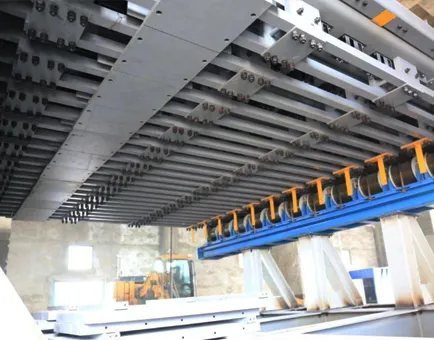
- Upper and Lower Shells: The upper and lower shells of the clinker cooler form the primary structural framework, providing support and protection. The upper shell is typically constructed from high-temperature and corrosion-resistant steel, ensuring the cooler’s stability and longevity in high-temperature environments. The lower shell handles the collection and discharge of cooled clinker, designed with full consideration for load-bearing capacity and wear resistance to guarantee long-term stable operation.
- Grate Hydraulic Drive System: The grate hydraulic drive system is the core propulsion component of the grate cooler, controlling the movement of the grate. This system drives the grate’s horizontal or vertical motion via hydraulic cylinders, ensuring uniform clinker distribution. By regulating the grate’s speed and angle, it adjusts cooling duration and effectiveness. This system enables precise control, optimizing the cooling process and enhancing efficiency.
- Grate Bed Support Assembly: The grate bed support assembly sustains the grate bed and ensures stable operation in high-temperature environments. Constructed from heat-resistant and wear-resistant materials, its design prioritizes load-bearing capacity and long-term stability. This assembly prevents tilting or displacement of the grate bed during operation, guaranteeing consistent cooling performance.
- Automatic Lubrication System: The clinker cooler is equipped with an automatic lubrication system to ensure proper lubrication of all moving components. This system periodically supplies lubricating oil to the hydraulic system, drive shafts, and other critical parts, reducing friction and wear to extend equipment lifespan while lowering maintenance costs. Automated lubrication also enhances operational efficiency and safety.
- Roller Crusher: The roller crusher is positioned in the middle section of the grate bed, tasked with crushing clinker entering the cooler. It employs roller compression to ensure uniform and effective fragmentation of clinker particles, thereby enhancing cooling efficiency and reducing equipment load.
- Cooling Fan: The cooling fan is a critical component of the clinker cooler, responsible for delivering continuous cooling air. Through a powerful air delivery system, the fan blows air vertically into the clinker bed, creating a strong airflow that carries away heat from the clinker and rapidly lowers its temperature. The cooling fan provides varying airflow volumes based on cooling requirements, ensuring stable and efficient cooling performance while adapting to different production conditions.
Key Features and Advantages
of the Lafa Cement Clinker Cooler
Lafa cement clinker cooler delivers efficient and stable cooling solutions through its advanced technical design and meticulously engineered structural advantages.
- Modular design for adaptability to kiln systems of all scales: Our cement clinker cooler features a modular design that can be flexibly configured for production lines of varying sizes, meeting diverse requirements.
- Grate bed roller crusher arrangement: Features a unique mid-section roller crusher design within the grate bed to enhance cooling efficiency and reduce equipment load.
- Leak-free design eliminates additional conveying equipment: The grate bed design prevents material leakage, eliminating the need for extra conveying equipment and simplifying system structure.
- High thermal efficiency: Optimized airflow and heat exchange design maximize thermal energy recovery while reducing energy consumption.
- High Conveying Efficiency: The clinker grate cooler’s conveying system is rationally designed to ensure efficient and rapid clinker transport, boosting production efficiency.
- Low Wear, Easy Maintenance: Utilizes wear-resistant materials to ensure low equipment wear and ease of maintenance, reducing long-term operating costs.
- Pre-assembled Modules, Shortened Installation Time: Modular design with factory pre-assembly reduces on-site installation and commissioning time, accelerating production startup.
Clinker Cooler Operation
Before operating the clinker cooler, a comprehensive inspection must be conducted to ensure all components—including the electrical system, hydraulic system, and cooling fans—are functioning properly. During startup, activate the cooling fans first to ensure cooling air flows uniformly through the clinker bed, initiating heat removal. Next, adjust the grate speed to guarantee sufficient residence time for clinker cooling while continuously monitoring system temperature, airflow, and pressure to maintain all parameters within optimal ranges.
After production concludes, sequentially shut down the cooling fan and grate bed, followed by the electrical and hydraulic systems. At this stage, inspect the waste heat recovery system to ensure efficient recovery and utilization of hot gases. Finally, clean and inspect the equipment to maintain continuous, stable operation and prevent issues during subsequent use.

How to Reduce the Discharge
Temperature of the Clinker Cooler


Lafa’s clinker cooler employs advanced design and technology to effectively reduce clinker discharge temperature. By optimizing cooling air volume and precisely controlling grate speed, the cooler maximizes cooling efficiency, rapidly cooling high-temperature clinker to the ideal temperature. Our cement clinker coolers feature high-efficiency fans and innovative gas-solid heat exchange technology, ensuring cooling air uniformly permeates the clinker bed to rapidly dissipate heat. This effectively lowers discharge temperatures and enhances production stability.
Additionally, our cement cooler’s waste heat recovery system delivers exceptional thermal energy utilization. By capturing waste heat from the cooling process and applying it to other production stages—such as power generation or coal grinding drying—it not only reduces energy consumption but also maintains low-temperature air within the cooler, further controlling clinker discharge temperature. These efficient designs and technologies ensure our clinker coolers deliver robust performance and reliability in lowering discharge temperatures.
Requirements for Clinker Coolers
in New Dry Process Cement Production Lines
The new dry-process cement production line imposes higher demands on clinker coolers, encompassing cooling efficiency, thermal energy recovery, and auxiliary functions. With its advanced design, the Lafa cooler meets these requirements and enhances the overall performance of the production line.
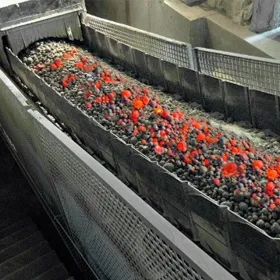
The core requirement for clinker coolers in new dry-process cement production lines is high-efficiency cooling. Clinker discharged from the rotary kiln typically ranges between 1350°C and 1400°C, and the cooler must rapidly reduce its temperature to near room temperature (approximately 65°C). This rapid cooling not only effectively prevents clinker overheating but also ensures optimal physical properties during subsequent grinding processes, thereby enhancing cement quality.

To ensure smooth transport of cooled clinker to storage or subsequent production stages, modern cement plants require coolers equipped with efficient conveying systems. Our clinker coolers utilize trough conveyor designs, offering robust load-bearing capacity and stability. This enables seamless transport of large clinker volumes under high-temperature conditions, preventing production bottlenecks caused by conveying inefficiencies.

In modern cement production lines, heat recovery is crucial for enhancing efficiency and reducing energy consumption. Lafa cement clinker coolers recycle hot air generated during cooling through the circulation of secondary air (from the rotary kiln) and tertiary air (from the calciner), thereby decreasing reliance on external energy sources. This waste heat recovery not only lowers fuel costs but also supplies essential thermal energy to other processes, improving overall energy utilization.

Our clinker coolers incorporate multiple auxiliary functions, such as coal mill drying and waste heat power generation. The waste heat recovery system converts heat generated during cooling into electricity for other production line equipment, further boosting energy efficiency. Additionally, waste heat can be utilized in coal mill drying systems to reduce coal powder moisture content, thereby optimizing combustion efficiency.
Why Choose Lafa Clinker Coolers?
Choose Lafa clinker coolers and enjoy highly efficient, energy-saving equipment along with comprehensive professional services. Our advanced technology, low-energy consumption design, and full after-sales support will help you boost production efficiency and reduce operating costs.

As a specialized manufacturer of cement equipment, Lafa possesses advanced production lines and a rigorous quality control system. Our clinker coolers utilize high-quality materials and innovative designs to withstand high temperatures and heavy loads, ensuring stable equipment operation. Each cooler undergoes precision manufacturing and stringent testing to guarantee efficiency and reliability under diverse complex operating conditions.
Additionally, our cement clinker coolers incorporate enhanced sealing and bearing systems, delivering high availability and leak-free sealing even under the most demanding process conditions. The equipment features high thermal efficiency and low power consumption, helping customers significantly reduce production costs. Through superior cooling distribution at low pressure, the coolers enable the use of smaller fans, further enhancing energy savings and achieving a reduction of 1kWh per ton of energy consumption. Designed for low wear and easy maintenance, the coolers reduce servicing frequency and equipment downtime, boosting production efficiency.

Lafa not only delivers highly efficient and reliable equipment but also provides comprehensive after-sales support. Our professional team assists with installation and commissioning, ensuring each cement clinker cooler is ready for seamless production. During operation, we offer long-term technical consultation and maintenance services to resolve any production issues, keeping equipment in optimal working condition.
Additionally, our conveying and ventilation units come with a 5-year warranty, providing continuous assurance for your equipment. We are committed to tailoring optimized solutions for each customer to address real-world production challenges. By choosing Lafa, you gain not only high-quality equipment but also comprehensive technical support and optimization services from our expert team, ensuring your production line operates efficiently, energy-effectively, and reliably.
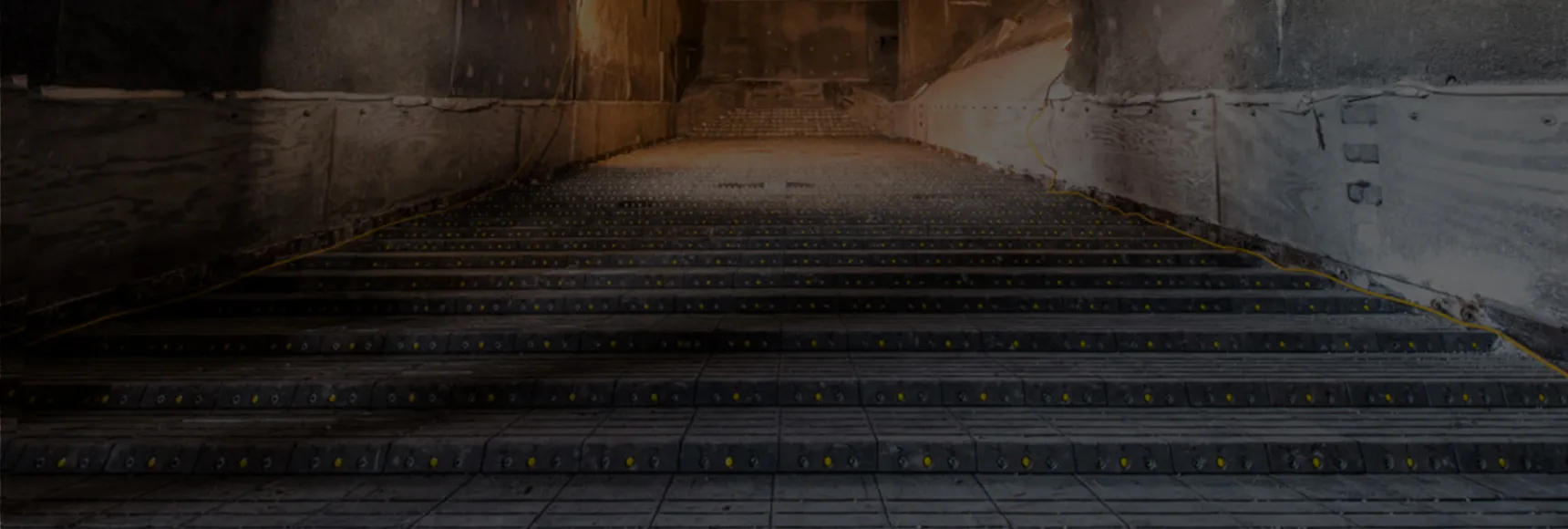
Global EPC Project Experience: Enhancing Cement Production Line Efficiency and Performance
We have participated in numerous international EPC projects, leveraging our extensive experience and technical expertise to deliver comprehensive solutions for our clients. Whether undertaking major overhauls of clinker coolers, technical upgrades of production lines, or new construction projects, we remain committed to optimizing designs, enhancing production efficiency, and ensuring timely project delivery. Explore our successful case studies for global clients to help you achieve production optimization and enhancement.
- Myanmar Project
- Laos Project
- North Korea Project
Clinker Cooler Overhaul for Myanmar Dandoma TTM Cement Co., Ltd. 5000T/D Line
We were responsible for the clinker cooler overhaul of the 5000T/D cement production line at Myanmar Dandoma TTM Cement Co., Ltd.. The project involved a comprehensive inspection, upgrade, and modification of the existing cooling equipment to ensure efficient operation and extend its lifespan. With our technical support, the project successfully enhanced cooling efficiency, reduced energy consumption, and significantly lowered operating costs for the client.
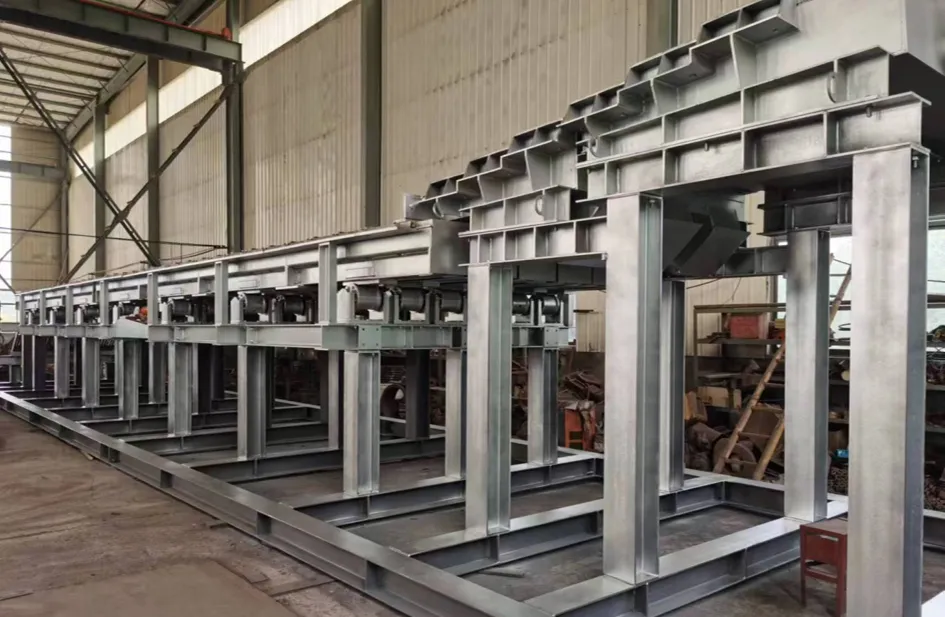


Technical Modification Project for 3200T/D Clinker Production Line at Laos Nantong Cement Co., Ltd.
For the 3200T/D clinker production line at Laos Nantong Cement Co., Ltd., we provided a comprehensive solution for the technical modification of the production line. The project included equipment updates, system optimization, and performance improvements. Through advanced technologies and equipment upgrades, we increased the overall operational efficiency of the production line while successfully reducing energy consumption and boosting output.

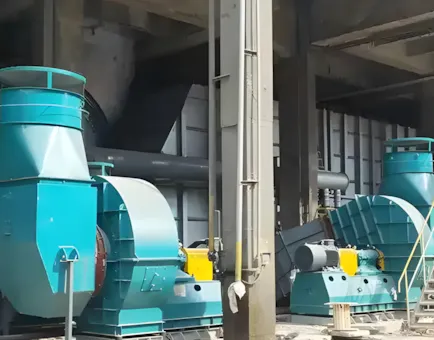

New Construction Project for 1800T/D Clinker Production Line at North Korea Cooperation Cement Industrial Co., Ltd.
We were responsible for the design, construction, and commissioning of the 1800T/D clinker production line at North Korea Cooperation Cement Industrial Co., Ltd.. By optimizing the design and ensuring efficient implementation, we successfully completed the project on schedule. The new production line met the expected production capacity and environmental standards, providing the client with stable and reliable equipment for ongoing production.


Produto relacionado

Oferece produção de clínquer confiável e contínua com controle preciso de temperatura.
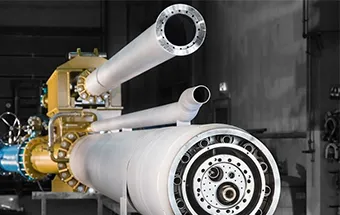
Garante uma formação de chama estável e eficiência de combustível para o seu sistema de forno rotativo.

Aumenta a eficiência da calcinação pré-aquecendo a farinha crua utilizando o calor dos gases residuais.

Proporciona um desempenho de moagem estável e eficiente para cimento, mineração e outros materiais.

Helps you improve output and reduce power use through high-pressure material grinding.
Maintenance Essentials and Inspection Guide for Clinker Coolers
To ensure efficient operation and extend the service life of clinker coolers, regular inspections and maintenance are crucial. Below are key maintenance points for each critical component of clinker coolers, helping you quickly understand how to perform effective upkeep to ensure stable operation under high-load conditions.
- Lubrication System: Regularly inspect lubrication lines for unobstructed flow and proper sealing, ensuring oil quality remains optimal. When changing lubricants, flush lines thoroughly between different oil grades to prevent contamination and damage.
- Bearings: Periodically monitor bearing oil temperature to prevent overheating. Excessive heat may indicate improper oil volume—adjust levels promptly to avoid failure.
- Fan: Inspect the fan for abnormal vibration, as this may indicate equipment failure. Address promptly to ensure normal operation.
- Crusher: Check the wear condition of the crusher rollers and verify the normal operation of the motor, reducer, and bearings to prevent equipment shutdown due to wear or malfunction.
- Screens and Bolts: Verify that lubrication lines for grate plates and bolts are unobstructed and sealed. Ensure oil quality is satisfactory to prevent equipment damage from inadequate lubrication.
- Support Rollers and Guide Rails: Periodically inspect support roller bearings and seals. Check wear on support rollers and guide rails to ensure smooth equipment operation.
- Partition Plate Seals: Inspect seals on partition plates for integrity and prevent leakage. Replace seals promptly if necessary.
- Slider Shaft Inspection: Inspect the slide shaft for air leaks or dust accumulation. Ensure the slide shaft remains perpendicular to the moving frame’s axis to prevent operational disruptions.
- Refractory Lining: Check the refractory lining for cracks or damage to prevent high-temperature damage to the equipment.
- Other Inspections: Verify the proper functioning of the airlock valve, impact plate, valve plate, and crusher grate bars. Ensure no excessive wear exists to guarantee efficient operation.
Yes. As a professional cement equipment supplier, we design customized solutions based on your kiln size, layout, fuel type, heat recovery needs, and production targets.
Consider production capacity, clinker temperature, heat recovery rate, ventilation efficiency, wear resistance, and compatibility with your rotary kiln system. We can help evaluate and recommend the best model.
Yes. We provide full technical support, including installation guidance, on-site commissioning, operator training, and long-term service assistance.
Yes. We supply original spare parts including grate plates, cooler fans, bearings, and crusher components, along with remote and onsite troubleshooting services.
Yes. Our coolers generate stable hot air that can be used for WHR systems or as drying air for the coal mill, improving overall plant efficiency.
 Portuguese
  English
  Russian
  Arabic
  Vietnamese
  Spanish
  French
  Japanese
  Chinese