


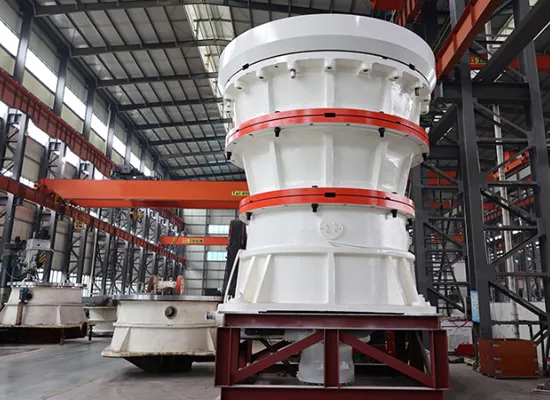
Gyratory Crusher for Sale
- Capacidade: 500-5000 t/h
- Tamanho máximo de alimentação: 350-1200 mm
- Product Size: 50-300 mm
- Potência do motor: 200-1500 kW
- Taxa de esmagamento: 6-8
- Velocidade de rotação: 50-100 rpm
- Aplicativo: Gyratory crushers are widely used for primary crushing in mining, cement, and aggregate production lines, ideal for continuous high-capacity crushing of large and hard materials such as iron ore, copper ore, and limestone.
What Is a Gyratory Crusher?
A gyratory crusher is a heavy-duty primary crushing machine designed for large-scale material processing in mining, cement plants, and high-capacity aggregate production lines. It is mainly used to crush large, hard, and abrasive materials at the first stage of the crushing process, serving as a core piece of equipment in high-throughput crushing systems.
In practical applications, gyratory crushers are valued for their high capacity, continuous operation, and suitability for automated production systems. They are especially preferred in projects that require stable long-term operation and high productivity. Compared with other primary crushers, a gyratory crusher helps reduce downtime, improve overall plant efficiency, and deliver consistent feed material to downstream secondary and tertiary crushing equipment.
Gyratory Crusher Working Principle
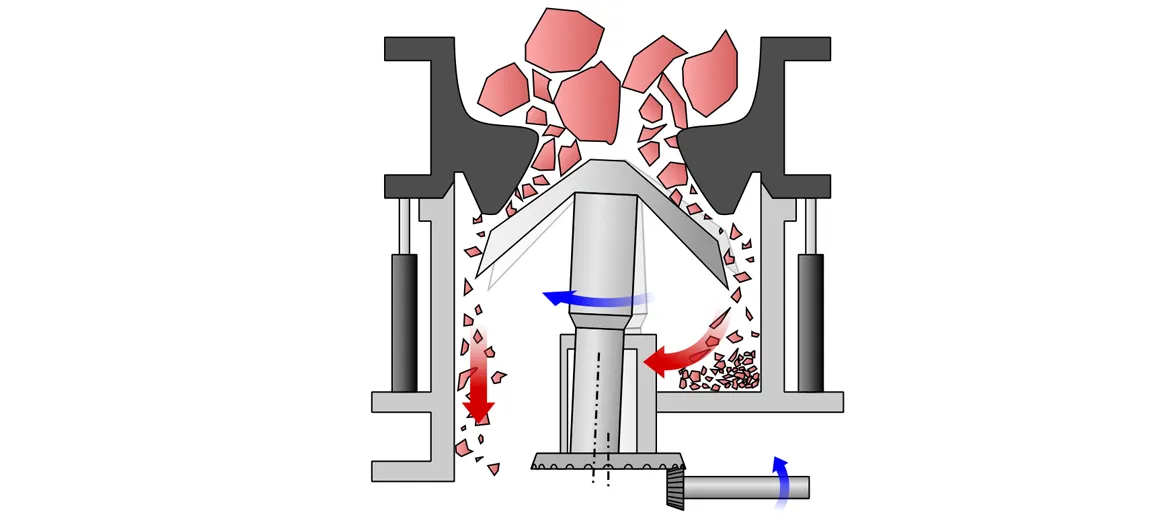
A gyratory crusher operates based on the principle of continuous compressive crushing, specifically designed for high-capacity and heavy-duty applications. Material is fed into the crusher from the top and enters the crushing chamber, where it is compressed between a fixed outer liner (concave) and a moving inner crushing element (mantle). Unlike intermittent crushing equipment, the gyratory crusher maintains continuous feeding and crushing, making it well suited for primary crushing in mining, cement, and aggregate production lines.
During operation, the inner crushing element performs a cyclic oscillating motion around the main shaft, continuously changing the crushing gap within the chamber. Large feed material is gradually reduced in size through repeated compression and shear forces rather than a single impact. This layered and progressive crushing process improves material utilization inside the chamber, reduces peak stress on the equipment, and contributes to more consistent product size distribution.
As crushing continues, the processed material moves downward under gravity and is discharged smoothly from the bottom of the crusher once it reaches the preset discharge opening. By adjusting key structural parameters, the crusher can achieve stable output while maintaining precise control over the final product size. Overall, this continuous crushing and automatic discharge mechanism enables gyratory crushers to deliver high throughput, low energy consumption, and reliable long-term operation, while providing uniform feed for downstream crushing stages.

- Gyratory Crusher Parts
- Advantages of Gyratory Crusher
The stable and efficient operation of a gyratory crusher depends on the precise coordination of its key components. Each critical part plays an important role under continuous heavy-duty operating conditions, directly affecting crushing performance, reliability, and service life.
Spider: The spider is located at the top of the gyratory crusher and supports the main shaft while withstanding heavy loads from the crushing process. It also helps guide material evenly into the crushing chamber, contributing to overall structural stability.
Crushing Chamber: The crushing chamber is formed by the concave liner and the mantle. Its design directly affects crushing efficiency, capacity, and product size distribution. A well-designed chamber enables continuous and stable crushing performance.
Crushing Head (Mantle): The crushing head, or mantle, is the main crushing component that directly compresses the material against the concave liner. Its wear resistance plays a critical role in crushing performance and operating costs.
Main Shaft: The main shaft supports the crushing head and transmits crushing forces during operation. High strength and rigidity are essential to ensure stable performance under heavy-duty conditions.
Spindle Positioning System: The spindle positioning system ensures accurate alignment and stable movement of the main shaft. It helps maintain consistent crusher settings, resulting in uniform product size and reliable operation.
Hydraulic Cylinder: The hydraulic cylinder is used for shaft adjustment and overload protection. It responds quickly to abnormal conditions, protecting critical components and improving overall safety and reliability.
By selecting high-quality gyratory crusher spare parts and following proper maintenance practices, you can maximize equipment uptime, reduce maintenance costs, and maintain consistent crushing performance.

Designed for heavy-duty primary crushing, gyratory crushers are widely used in mining, cement, and large-scale aggregate production lines. With continuous crushing capability and robust construction, they deliver stable performance, high efficiency, and long-term operational reliability under demanding conditions.
High Capacity for Continuous Operation
Gyratory crushers operate with continuous feed and compressive crushing, making them ideal for high-capacity production lines that require uninterrupted operation.Stable Crushing Process with Smooth Operation
The uniform crushing action reduces vibration and impact loads, resulting in smoother operation and improved machine stability over long service periods.Suitable for Large and Hard Materials
Featuring a large feed opening and heavy-duty structure, gyratory crushers can efficiently handle large-size and high-hardness materials such as iron ore, limestone, and other hard rocks.Uniform Product Size for Downstream Processing
The layered crushing mechanism produces consistent product size distribution, providing stable feed conditions for secondary and tertiary crushers.Durable Wear Parts and Extended Maintenance Intervals
Key wear components are manufactured from high-quality, wear-resistant materials, ensuring longer service life and reduced downtime in heavy-load applications.Hydraulic Adjustment and Overload Protection
Equipped with hydraulic systems, gyratory crushers allow easy adjustment and provide effective overload protection, enhancing safety and adaptability to varying operating conditions.
Produtos relacionados


The gyratory crusher price is mainly influenced by crusher size, capacity, crushing chamber configuration, liner material, and hydraulic system options. Project-specific customization may also affect the final quotation.
Gyratory crusher sizes are typically defined by feed opening, mantle diameter, and capacity, covering large-feed and high-throughput primary crushing applications. The suitable size depends on site conditions and production requirements.
Choosing the right gyratory crusher size depends on maximum feed size, material hardness, required capacity, and downstream processing needs. Proper sizing ensures stable operation and optimized efficiency.
Replacement intervals depend on operating conditions, material abrasiveness, and wear part quality. High-quality gyratory crusher parts help extend service life and reduce downtime.
Yes. Gyratory crushers can be customized in terms of size, liner design, hydraulic systems, and automation features to meet specific project requirements.
 Portuguese
  English
  Russian
  Arabic
  Vietnamese
  Spanish
  French
  Japanese
  Chinese