



Hematita is one of the most common and important iron oxide minerals found in nature. Because of its high iron content and wide industrial applications, hematite has been used for centuries in iron production, pigments, construction materials, and mineral processing industries.
Today, hematite continues to play an important role in mining, cement manufacturing, metallurgy, and heavy industry. Understanding its properties and industrial value is essential for companies involved in cement production lines, mineral processing plants, and mining equipment manufacturing.
O que é hematita?

Hematite is a natural iron oxide mineral with the chemical composition: Fe2O3
It is considered one of the most important iron ores in the world because its theoretical iron content can reach nearly: 70% iron content
The name “hematite” comes from the Greek word “haimatites,” meaning “blood.” Ancient people often referred to hematite as “blood stone” because the mineral produces a reddish powder when scratched or ground.
Hematite can appear in several colors, including steel gray, silver black, reddish brown, and dark red. Different forms of hematite develop under different geological conditions, which is why the mineral may look completely different depending on where it is found.
Because hematite is abundant, stable, and rich in iron, it has become a critical raw material in steelmaking, cement manufacturing, pigment production, and mineral beneficiation industries.
Physical Properties of Hematite
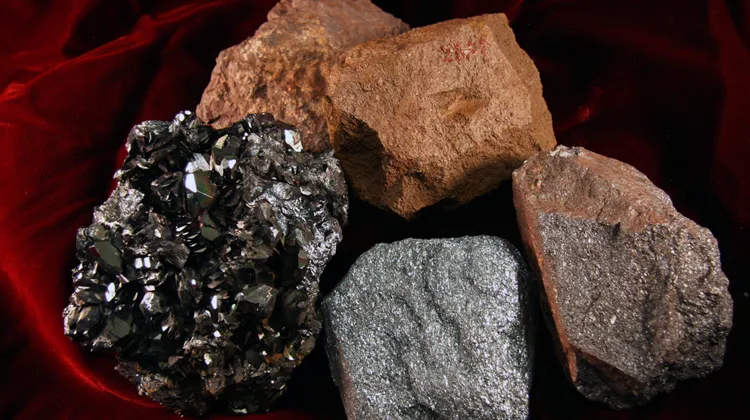
One reason hematite is widely used in industrial applications is its stable physical and chemical properties.
Chemical Composition and Crystal Structure
Hematite mainly consists of iron oxide and belongs to the trigonal crystal system. Its crystal structure gives the mineral strong thermal stability and durability, which makes it suitable for high-temperature industrial environments such as cement kilns and metallurgical furnaces.
Color and Appearance
The appearance of hematite varies significantly depending on its purity and crystal form. Some specimens appear metallic and reflective, while others look earthy and dull.
Common colors include:
- Steel gray
- Iron black
- Silver gray
- Reddish brown
- Dark red
Some polished hematite surfaces even resemble mirrors because of their metallic luster.
Crystal Habits and Mineral Forms
Hematite occurs in many natural forms, including:
- Crystalline masses
- Platy structures
- Scaly formations
- Kidney-shaped aggregates
- Botryoidal forms
- Oolitic structures
These different forms affect how hematite is processed and used in industrial production.
For example, fine-grained hematite may require more advanced beneficiation technology, while massive hematite can often be processed more easily.
Hardness, Density and Identification Features
Hematite has a hardness of approximately 5.5 to 6.5 on the Mohs scale, making it relatively durable compared to many other industrial minerals.
Its specific gravity is about 5.26, which gives the mineral a noticeably heavy feel.
One of the most important identification features of hematite is its cherry-red streak. Even when the mineral surface appears silver or black, rubbing hematite against an unglazed porcelain plate usually produces a reddish streak, which helps distinguish it from similar minerals.
Distribution of Hematite Around the World
Hematita is widely distributed across the globe and can be found in sedimentary, metamorphic, and igneous rocks.
Large hematite deposits exist in countries such as China, Austrália, Canadá, Sweden, France, e Estados Unidos.
Australia and Brazil are currently among the world’s leading exporters of hematite iron ore due to their large reserves and high-grade deposits.
Some of the most famous hematite mining regions include:
- Lake Superior region in North America
- Clinton iron ore district in the United States
- Krivoy Rog iron basin in Eastern Europe
- Minas Gerais in Brazil
These regions have supplied iron ore to global steel and industrial markets for decades.
Classification of Hematite

Different geological environments can produce different types of hematite. Based on mineral structure and formation conditions, hematite is commonly divided into several categories.
Kidney Hematite
Kidney hematite forms layered masses with smooth rounded surfaces that resemble kidneys or grape clusters.
This type of hematite usually has a metallic appearance but is generally non-magnetic. Because of its attractive surface texture, kidney hematite is sometimes collected as a decorative mineral specimen.
Micaceous Hematite
Micaceous hematite consists of extremely fine flaky crystals formed through sedimentary metamorphism.
Its layered structure resembles mica, which is why it is called “micaceous” hematite. This variety is commonly used in industrial materials and protective coatings because the flaky particles help improve corrosion resistance.
Specularite
Specularite, also known as specular hematite, is one of the most visually distinctive forms of hematite.
It usually appears steel gray to iron black and has a bright metallic luster. Its reflective surface can sparkle like a mirror under light.
Some specularite deposits contain magnetite inclusions, which may increase their magnetic properties. Because of its unique appearance, specularite is valued not only in industry but also among mineral collectors.
How Hematite Is Processed

Raw hematite ore usually requires beneficiation before it can be used efficiently in industrial applications.
The processing method depends on ore grade, particle size, impurity content, and the final industrial purpose.
Hematite Beneficiation Methods
Several mineral processing technologies are commonly used to improve hematite ore quality.
Separação por gravidade
Gravity separation uses differences in mineral density to separate hematite from gangue minerals. This method is often suitable for coarse hematite particles.
Flutuação
Flotation technology is used when hematite particles are very fine or closely associated with impurities. Chemical reagents help separate valuable minerals from unwanted materials.
Strong Magnetic Separation
Although hematite is only weakly magnetic, high-intensity magnetic separators can still effectively recover iron minerals from ore.
Magnetization Roasting
In some processing plants, hematite ore undergoes magnetization roasting to convert weakly magnetic minerals into stronger magnetic forms that are easier to separate.
Hematite Processing Equipment
Modern hematite processing plants typically use a combination of crushing, grinding, screening, and separation equipment.
Os equipamentos comuns incluem:
- Britadores de mandíbula para britagem primária
- moinhos de bolas for grinding
- moinhos de rolos verticais for fine powder processing
- Magnetic separators for beneficiation
- fornos rotativos for thermal processing
- Belt conveyors for material transportation
Efficient processing equipment is especially important in large cement plants and mining operations because it directly affects energy consumption, production efficiency, and final product quality.
Hematite in the Cement Industry
In modern cement manufacturing, hematite plays an important role as a corrective raw material.
Cement plants carefully control the chemical composition of raw meal before clinker production. Since iron oxide is one of the key components required during clinker formation, hematite is often added to balance the iron content of the raw mix.
In many cement production lines, adding hematite can help improve kiln performance and stabilize clinker quality. Iron oxide also helps reduce the temperature required for clinker formation, which may contribute to lower fuel consumption and improved thermal efficiency.
In addition to ordinary Portland cement production, hematite is also used in colored cement manufacturing because of its natural red pigment properties.
As environmental regulations become stricter and cement producers focus more on energy efficiency and carbon reduction, high-quality raw materials such as hematite are becoming increasingly important in modern cement plants.
Uses of Hematite
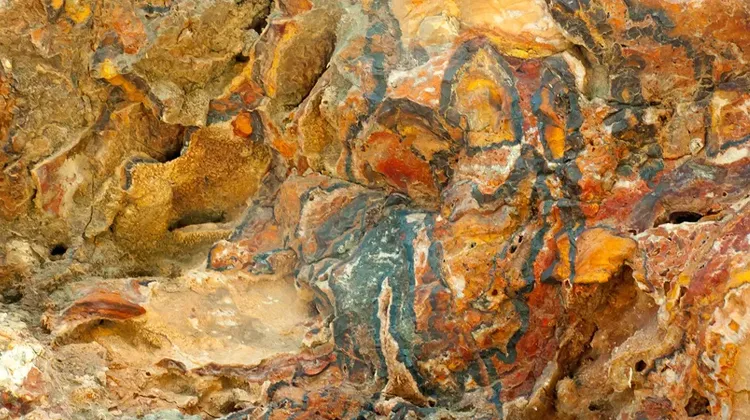
Although hematite is best known as an iron ore, its applications extend far beyond mining and metallurgy.
Hematite in Spiritual and Historical Traditions
For centuries, hematite has been associated with protection, courage, and strength.
In ancient Europe, warriors sometimes carried hematite as a protective stone before battles. Ancient Egyptians also used hematite in religious ceremonies and burial practices because they believed the mineral could protect the dead in the afterlife.
Today, hematite is still widely used in bracelets, pendants, and spiritual jewelry. Many people believe the stone can absorb negative energy and improve emotional balance.
Medical Applications of Hematite
After calcination and processing, hematite can be used to produce a traditional mineral medicine known as “Red Ocher.”
Historically, it has been used in traditional medicine to help:
- promote blood circulation
- reduce bleeding
- relieve dizziness
- ease vomiting and asthma symptoms
However, improper or excessive use may create health risks. Pregnant women and individuals with certain digestive conditions are generally advised to avoid long-term consumption.
Hematite in Pigment Manufacturing
One of the oldest uses of hematite is the production of red iron oxide pigments.
After being processed into fine powder, hematite produces a stable red color with excellent resistance to sunlight, moisture, and chemical changes. Because the material is inexpensive and naturally abundant, it has long been used in paints, ceramics, coatings, plastics, and construction materials.
Historically, hematite pigments appeared in cave paintings, ancient murals, burial decorations, and traditional Chinese lacquerware.
Today, red iron oxide pigments derived from hematite are still widely used in:
- anti-rust paints
- industrial coatings
- building materials
- plastic products
- cosmetics such as lipstick and nail polish
Hematite in Jewelry and Accessories
Since the Victorian era, hematite has been used in decorative jewelry and fashion accessories.
Its metallic appearance and dark reflective surface make it particularly popular in men’s accessories such as cufflinks, tie clips, rings, and watch decorations.
Modern jewelers also use polished hematite in necklaces, carvings, and faceted gemstone designs.
Mineral Collection Value
Well-formed hematite crystals and polished mineral specimens are highly appreciated by mineral collectors.
Because hematite can develop unique crystal structures and bright metallic surfaces, many professional geologists and amateur collectors consider it an attractive display mineral.
High-quality specimens are often sold in mineral exhibitions and collector markets worldwide.
Hematite vs Magnetite
Hematite and magnetite are both important iron ores, but they differ in several ways.
| Item | Hematita | Magnetita |
|---|---|---|
| Fórmula química | Fe₂O₃ | Fe₃O₄ |
| Iron Content | Up to 70% | Up to 72.4% |
| Magnetismo | Fraco | Strong |
| Cor | Red-brown or silver-black | Black |
| Processing Difficulty | Relatively easier | More complex |
Magnetite generally contains slightly more iron, but hematite is often preferred because it is easier to process and more widely available.
Why Hematite Matters in Modern Industry
As global demand for steel, infrastructure, and construction materials continues to grow, hematite remains one of the most valuable industrial minerals in the world.
In mining and cement industries, efficient hematite processing directly affects production cost, energy efficiency, and final product quality. Modern cement plants especially rely on stable iron-bearing raw materials to maintain clinker quality and improve kiln operation.
For companies involved in cement equipment manufacturing, mineral processing systems, and industrial machinery exports, understanding hematite and its industrial applications is increasingly important in today’s competitive global market.
Conclusão
Hematita has played an important role in human civilization for thousands of years. From ancient pigments and protective stones to modern cement plants and steel mills, hematite continues to be one of the most valuable iron oxide minerals in the world.
Its high iron content, stable properties, and broad industrial applications make it essential in mining, metallurgy, cement manufacturing, pigments, jewelry, and mineral processing industries.
As industrial technology continues to develop, the demand for efficient hematite processing equipment and high-quality raw materials is expected to remain strong for many years to come.


 Portuguese
  English
  Russian
  Arabic
  Vietnamese
  Spanish
  French
  Japanese
  Chinese