


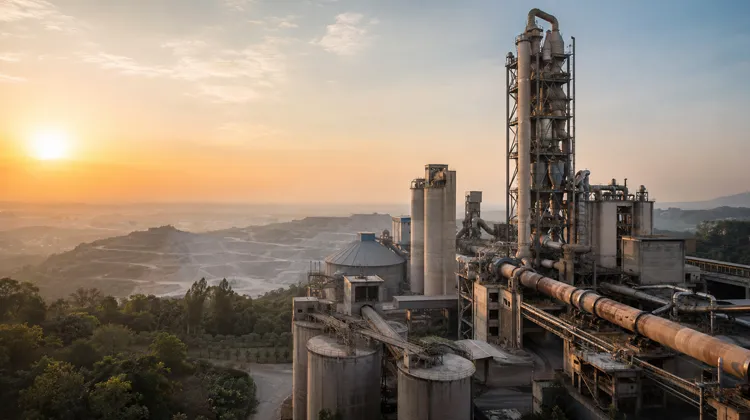
Cement remains one of the essential materials behind housing, transport networks, industrial facilities, energy projects, and urban infrastructure. Because cement is heavy and costly to transport over long distances, national production levels are closely connected to local construction activity, infrastructure investment, industrial development, and regional trade conditions.
Asia continues to dominate global cement production. China remains by far the largest producer, while India is one of the most important growth markets. Vietnam and Türkiye have strong positions in clinker and cement exports, while the United States, Indonesia, Brazil, Iran, Russia, and Saudi Arabia are also important producers in their respective regions.
This article reviews the top cement producing countries in the world and explains what their market characteristics mean for cement plant equipment, process optimization, and modernization projects.
Top Cement Producing Countries at a Glance
The figures below are approximate recent full-year industry estimates. Rankings may vary slightly depending on whether a source measures cement, clinker, or a broader product category, and whether it uses calendar-year or fiscal-year data.
| Rank | Country | Approximate Annual Cement Production | Market Characteristic |
|---|---|---|---|
| 1 | 中国 | 1.9 billion tonnes | The world’s largest cement market, increasingly focused on modernization and efficiency |
| 2 | インド | 450 million tonnes | Strong infrastructure and housing demand, with active capacity expansion |
| 3 | Vietnam | 120 million tonnes | Major producer with a strong clinker and cement export position |
| 4 | アメリカ合衆国 | 90 million tonnes | Stable domestic demand and high expectations for reliability and compliance |
| 5 | Türkiye | 85 million tonnes | Strong regional supply base and export access to multiple markets |
| 6 | Indonesia | 65 million tonnes | Large long-term demand potential supported by population and infrastructure |
| 7 | ブラジル | 63 million tonnes | One of Latin America’s most important cement markets |
| 8 | Iran | Around 60 million tonnes | Significant clinker production capacity and regional supply capability |
| 9 | ロシア | Around 57 million tonnes | Primarily driven by domestic construction and infrastructure demand |
| 10 | Saudi Arabia | 50–60 million tonnes | Large projects and urban development support cement demand |
1. China: The World’s Largest Cement Producer
China has been the largest cement producing country in the world for many years. Large-scale urban development, transport infrastructure, real estate construction, and industrial investment created an enormous cement production base.
Today, the Chinese cement industry is gradually shifting from rapid capacity growth toward capacity replacement, digitalization, energy efficiency, alternative fuel use, and environmental upgrades. This creates ongoing demand for high-efficiency separators, cement grinding optimization, intelligent control systems, low-NOx combustion solutions, dust collection equipment, and plant modernization projects.
China’s importance is not limited to production volume. It also has a major influence on global cement technology, equipment manufacturing, and supply chains.
2. India: One of the Fastest-Growing Major Cement Markets

India is the second-largest cement producer in the world and one of the most important markets for future growth. Population growth, urbanization, housing development, highways, railways, airports, ports, and industrial investment continue to support long-term cement demand.
Unlike some mature markets, India is still combining capacity expansion with industry consolidation. Major producers are building clinker lines, grinding units, and logistics facilities while placing greater emphasis on fuel cost, raw material efficiency, and stable production.
For cement equipment suppliers, the Indian market often values throughput, long-term reliability, maintenance access, spare-parts support, and energy consumption. Rotary kiln auxiliary equipment, bucket elevators, pneumatic conveying systems, air classifiers, and automation solutions designed for high-temperature, dusty, continuous-duty conditions can offer clear value.
3. Vietnam: A Major Cement and Clinker Exporter
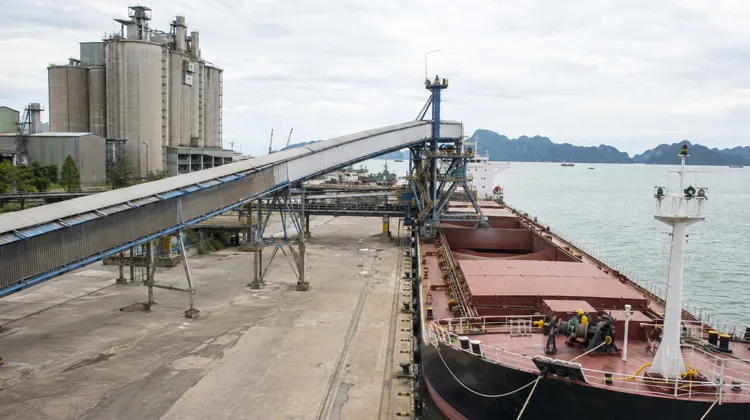
Vietnam produces less cement than China and India, but it has a highly influential position in international clinker and cement trade. Strong production capacity, port infrastructure, and export-oriented supply chains have made Vietnam an important supplier to markets in Asia, Oceania, Africa, and beyond.
Vietnamese cement plants must serve domestic construction demand while also meeting the commercial and quality requirements of export markets. As a result, production stability, port loading efficiency, bulk material handling, and dust control during ship loading are especially important.
For export-oriented cement plants, reducing clinker cost, improving grinding efficiency, minimizing material loss during loading, and maintaining consistent product quality are key priorities for equipment upgrades.
4. United States: Reliability, Efficiency, and Environmental Compliance
The United States is one of the world’s leading cement producers. Demand is supported by infrastructure renewal, highways and bridges, housing, data centers, manufacturing investment, and energy-related construction.
The U.S. cement industry places strong emphasis on equipment reliability, workplace safety, environmental compliance, and maintenance efficiency. Many plants have operated for decades, so modernization, spare-parts replacement, capacity recovery, and emissions-control upgrades remain important opportunities.
In this market, solutions that reduce unplanned downtime, improve conveying reliability, lower dust emissions, and simplify maintenance can be more valuable than capacity increases alone. High-efficiency dust collectors, clinker cooler upgrades, wear-resistant conveying components, cement mill optimization, and condition-monitoring systems are all relevant areas.
5. Türkiye: A Regional Cement Production and Export Hub
Türkiye has a well-developed cement industry that serves domestic construction demand and supplies nearby export markets by sea and land. Its location connects Europe, the Middle East, North Africa, and Black Sea markets.
Export activity makes production cost, fuel efficiency, product consistency, and port logistics especially important. Reliable clinker production, combustion systems that can adapt to different fuels, durable bulk material handling equipment, and efficient ship-loading solutions all contribute to competitiveness.
6. Indonesia: An Important Southeast Asian Production and Consumption Market
Indonesia has a large population, a wide geographic area, and ongoing infrastructure and housing demand. Its cement industry must serve markets across many islands, which creates additional requirements for storage, marine logistics, bulk loading, and distribution.
Cement plants in this environment need more than a stable production line. They also need efficient clinker storage, bulk ship loading, bagging and dispatch systems, and equipment designed for humid, hot, and coastal conditions. Corrosion-resistant structures, enclosed conveying, and effective dust sealing can be particularly valuable.
7. Brazil, Iran, Russia, and Saudi Arabia: Important Regional Producers
Brazil is one of Latin America’s largest cement markets, with demand influenced by infrastructure, industrial investment, and housing construction. Iran has significant clinker production capability and plays a role in regional supply. Russia’s market is mainly linked to domestic construction and infrastructure. Saudi Arabia is supported by major urban development, industrial zones, transport projects, and long-term construction programs.
These markets have different growth patterns, but plant operators often share similar priorities: reducing fuel and power consumption, improving equipment availability, minimizing dust and material loss, and adapting production lines to local raw materials, fuels, and climate conditions.
How Is the Global Cement Production Landscape Changing?
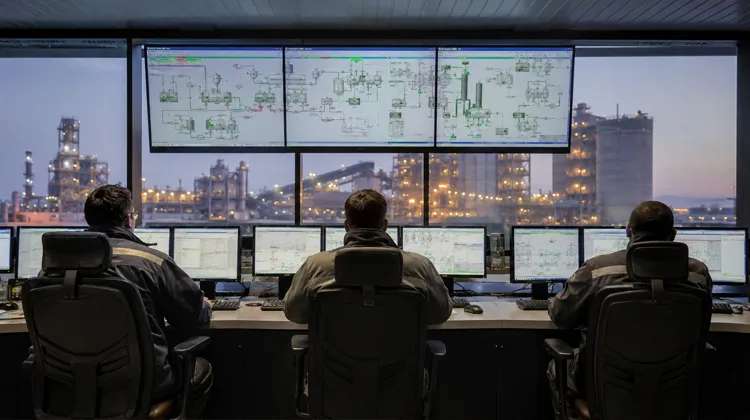
The global cement industry is no longer defined only by which country produces the most cement. As energy costs, construction demand, and environmental requirements change, cement producers are increasingly focused on operating efficiency and total lifecycle cost.
Mature markets are moving from greenfield construction toward plant upgrades, including high-efficiency grinding, low-resistance conveying, automation, dust collection improvements, and wear-part replacement. At the same time, India, Southeast Asia, the Middle East, and parts of Africa continue to offer opportunities for new production lines and capacity expansion.
Lower-clinker cement, alternative fuels, waste heat recovery, carbon reduction technologies, and digital process control are also shaping future equipment selection. Cement plants increasingly need integrated solutions that improve output stability, reduce energy use, support environmental performance, and simplify maintenance.
What Do Cement Production Rankings Mean for Equipment Buyers?
A country’s cement production volume and market structure affect the priorities behind equipment purchasing decisions.
In fast-growing markets, buyers often focus on project speed, equipment delivery time, capacity, and complete-line compatibility. In mature markets, the main concern is usually return on investment from modernization, shutdown duration, energy savings, and spare-parts support. In export-oriented markets, clinker storage, ship loading, bulk dispatch, and port dust collection become particularly important.
For this reason, cement plant equipment should be selected not only by rated capacity. Raw material properties, fuel type, existing process layout, climate conditions, maintenance capability, logistics requirements, and local environmental rules should all be considered.
結論
China, India, Vietnam, the United States, Türkiye, and Indonesia form a major part of the global cement production landscape. China remains the clear production leader, India continues to stand out as a major growth market, and Vietnam and Türkiye play important roles in clinker and cement exports.
As the industry shifts toward more efficient, lower-carbon, and digitally managed operations, cement plants are changing how they evaluate equipment. Lower energy consumption, stable operation, reduced dust emissions, and easier maintenance will remain essential objectives for cement projects around the world.
よくある質問
Which country produces the most cement in the world?
China is the world’s largest cement producer by a significant margin.
Why is India an important cement market?
India has a growing population, ongoing urbanization, and major investment in housing and infrastructure. These factors continue to support cement demand and capacity growth.
Why is Vietnam important in the global cement industry?
Vietnam has substantial cement production capacity and is also a major exporter of cement and clinker to international markets.
Does the country with the highest cement production always export the most cement?
No. Cement is expensive to transport over long distances, so much of the world’s production is consumed domestically. Export capacity also depends on ports, logistics, domestic demand, production cost, and trade conditions.


 Japanese
  English
  Russian
  Arabic
  Vietnamese
  Spanish
  French
  Portuguese
  Chinese