



In modern cement production, the rotary kiln is not only the core equipment for clinker burning, but also the component that operates under the most severe thermal, chemical, and mechanical conditions in the entire production line. As the first and most critical protective barrier, the refractory lining directly determines the kiln’s operational stability, campaign life, and overall maintenance cost. For this reason, scientific and well-engineered refractory selection is a key technical topic for every cement plant.
This article explains the principles of refractory lining selection for cement rotary kilns from the perspective of operating conditions, kiln zone characteristics, material performance, and long-term operational reliability.
1. Why Refractory Lining Selection Is So Critical

During long-term operation, the refractory lining inside a cement rotary kiln is exposed not only to extremely high temperatures, often exceeding 1400°C, but also to severe chemical attack from alkalis, sulfur compounds, and clinker liquid phases. At the same time, the lining must withstand continuous mechanical abrasion from moving clinker and raw materials, as well as structural stress caused by kiln rotation.
In addition, modern cement plants increasingly operate under unstable conditions, including frequent kiln start-stop cycles and the use of alternative fuels. These factors result in repeated and sometimes violent temperature fluctuations, which generate strong thermal stress inside the refractory structure. If the refractory material is not properly selected, this combined stress environment will quickly lead to spalling, cracking, and premature lining failure.
From a lifecycle cost perspective, improper refractory selection often causes much higher losses than the initial saving in material cost. Unplanned shutdowns, reduced kiln availability, and frequent relining operations usually represent a far greater economic burden than the price difference between low-grade and well-matched refractory products.
2. Operating Conditions of Different Kiln Zones and Their Impact on Refractory Performance
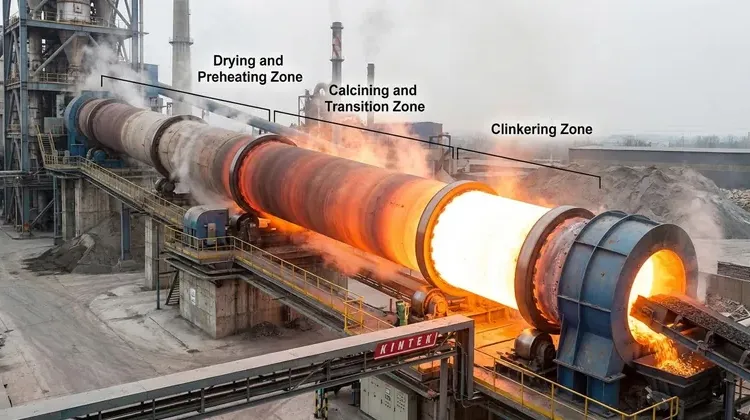
2.1 Preheating Zone and Transition Zone
In the preheating and transition zones, the absolute temperature is lower than in the burning zone, but the operating environment is characterized by frequent and sometimes sharp temperature fluctuations. These zones are also the areas where volatile components such as alkalis, sulfur, and chlorine tend to circulate and concentrate, which creates a persistent chemical attack on the refractory lining.
Under such conditions, the most critical requirement for refractory materials is not simply high refractoriness, but rather stable structural behavior under repeated thermal shock. If the lining material has insufficient thermal shock resistance, even a brick with high cold crushing strength and high refractoriness can fail prematurely due to continuous spalling and cracking.
2.2 Burning Zone
The burning zone is the heart of the cement rotary kiln and operates under the most severe service conditions. Temperatures in this zone typically remain above 1400°C for long periods, and a significant amount of liquid phase is present in the clinker. This liquid phase, together with aggressive alkali compounds, creates extremely strong chemical corrosion on the refractory lining.
At the same time, the refractory must also resist mechanical stress and abrasion caused by the movement of clinker and the rotation of the kiln shell. In addition, the ability of the refractory to support and maintain a stable kiln coating is often decisive for its service life. A poorly selected material may survive at high temperature in laboratory tests, but in real operation it can fail quickly due to unstable coating formation and local overheating.
2.3 Cooling Zone
Although the temperature in the cooling zone is lower than in the burning zone, the refractory lining there faces a different but equally challenging problem: severe thermal shock combined with continuous mechanical wear. During the clinker cooling process and under fluctuating operating conditions, the lining surface is repeatedly subjected to rapid heating and cooling cycles.
If the refractory material does not have sufficient resistance to thermal shock and internal crack propagation, these repeated stress cycles will gradually destroy its internal structure, leading to premature failure even if the material has good abrasion resistance. Therefore, structural stability and thermal shock resistance are usually more important in this zone than pure high-temperature strength.
3. Performance Characteristics of Common Refractory Materials for Cement Rotary Kilns

The most commonly used refractory materials in cement kilns include high alumina bricks, magnesia spinel bricks, magnesia chrome bricks, and various types of basic refractory castables. Each of these materials has its own specific advantages in terms of chemical composition, microstructure, and high-temperature performance, which makes them suitable for different kiln zones.
For example, high alumina bricks are widely used in preheating and some transition zones due to their balanced performance and relatively good cost efficiency. Magnesia spinel bricks, on the other hand, are increasingly used in burning zones and high-load transition zones because of their excellent high-temperature volume stability and corrosion resistance. Magnesia chrome bricks offer outstanding performance in extremely aggressive environments, although their application is restricted in many regions due to environmental considerations.
4. Core Principles of Refractory Lining Selection from an Engineering Perspective
4.1 Selection Must Be Based on Real Operating Conditions, Not Only on Material Price
In many projects, an overemphasis on initial purchase price leads to inappropriate material choices. Although low-cost refractories may reduce the initial investment, they often result in much shorter campaign life and more frequent shutdowns. From an engineering and management point of view, refractory selection should be evaluated based on overall operational cost per ton of clinker, rather than on the unit price of the material alone.
4.2 Temperature Level and Chemical Environment Must Be Fully Considered Together
Different cement plants use different raw materials, fuels, and alternative fuel ratios, which results in very different kiln atmospheres and chemical attack conditions. If these factors are ignored and a “one-size-fits-all” solution is applied, serious performance problems are very likely to appear in actual operation. Therefore, proper refractory selection must be supported by a careful analysis of raw meal chemistry, alkali content, and volatile circulation behavior.
4.3 Thermal Shock Resistance and Structural Reliability Are Becoming Increasingly Important
With the increasing demand for flexible kiln operation and the growing use of alternative fuels, kiln operating conditions are becoming more unstable than ever before. Under these circumstances, high hot strength alone is no longer sufficient. Many refractory failures today are not caused by melting or chemical destruction, but by structural fatigue and spalling induced by repeated thermal stress.
4.4 Selection Should Be Evaluated from a Full Lifecycle Cost Perspective
Different refractory materials require different installation methods, maintenance strategies, and shutdown times. Some high-performance materials may have a higher unit price, but if they can significantly extend kiln campaign life and reduce the number of shutdowns, they often provide much better overall economic performance. Therefore, a truly professional selection strategy must consider not only material properties, but also installation feasibility and long-term maintenance cost.
5. Common Types of Refractory Materials and Their Advantages and Limitations
In practical cement kiln operation, there is no such thing as a “universal” refractory material suitable for all zones and all operating conditions. Each type of refractory has its own strengths in certain performance aspects, as well as its inherent limitations. A rational selection strategy must therefore be based on a clear understanding of the characteristics and application boundaries of each major refractory type.
5.1 High Alumina Bricks

High alumina bricks are one of the most widely used and historically proven refractory materials in the cement industry. Their main advantages include stable raw material supply, mature manufacturing technology, and relatively good cost performance. In preheating zones and some moderate-load transition zones, high alumina bricks can still provide reliable and economical service.
From a performance point of view, high alumina bricks offer good cold crushing strength and reasonable abrasion resistance. However, their resistance to alkali attack and their high-temperature volume stability are limited compared with basic refractories. Under conditions with high alkali load or frequent temperature fluctuations, they tend to suffer from structural degradation and spalling. For this reason, high alumina bricks are more suitable as an economical solution for medium and low load areas rather than for extreme zones such as the burning zone.
5.2 Magnesia Spinel Bricks
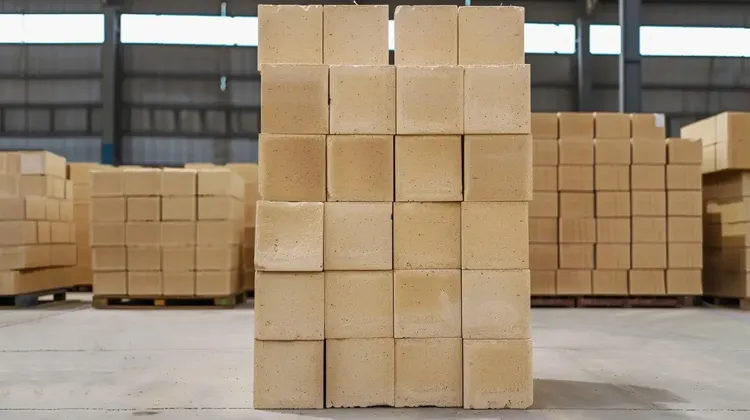
Magnesia spinel bricks have become the mainstream choice for burning zones and high-load transition zones in modern cement rotary kilns. By introducing the spinel phase into a magnesia matrix, these materials achieve a much better balance between thermal shock resistance, high-temperature structural stability, and corrosion resistance.
In real kiln operation, magnesia spinel bricks can withstand long-term service at temperatures above 1400°C while maintaining good resistance to alkali and clinker liquid phase attack. In addition, they usually support the formation of a stable kiln coating, which further protects the lining from excessive thermal and chemical load. Their main disadvantages are higher material cost and higher sensitivity to installation quality and operating stability. Nevertheless, from a lifecycle cost perspective, they are often one of the most cost-effective solutions for the burning zone.
5.3 Magnesia Chrome Bricks
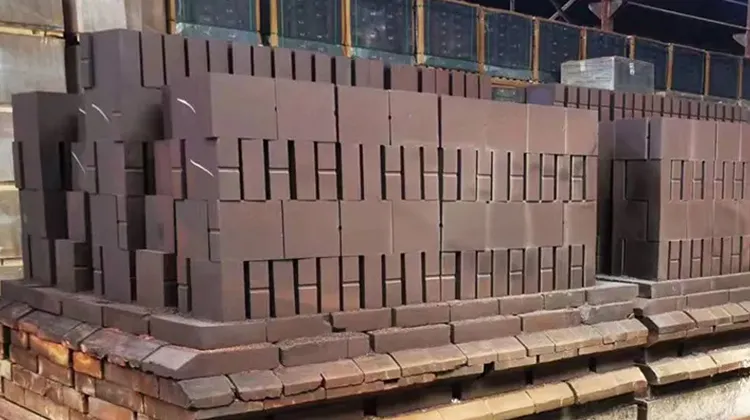
Magnesia chrome bricks are well known for their outstanding high-temperature performance and exceptional resistance to chemical corrosion. In extremely aggressive environments with high temperature, high alkali content, and a large amount of liquid phase, they often show very stable and reliable service behavior. For certain production lines with particularly difficult raw material conditions, they still represent a technically irreplaceable solution.
However, due to increasing environmental regulations worldwide, the chromium content in these materials raises concerns during production, use, and disposal. As a result, their application is restricted in many regions. In modern kiln design, magnesia chrome bricks are therefore usually reserved for very specific and critical zones where alternative materials cannot provide sufficient reliability.
5.4 Basic Refractory Castables
With the development of installation technology, various types of basic refractory castables are being used more and more widely in cement kilns, especially in areas with complex structures such as the cooler zone, tertiary air duct, and kiln hood, where brick installation is difficult or inefficient.
High-quality basic castables can offer excellent overall performance in terms of abrasion resistance, corrosion resistance, and monolithic structural integrity. However, compared with brick linings, castables are much more sensitive to installation quality and dry-out procedures. Improper mixing, placing, or heating-up can easily lead to cracking and early damage. Therefore, when choosing a castable solution, material properties, installation capability, and site management level must be evaluated as a complete system.
5.5 Engineering Trade-offs Between Different Material Types
From an engineering perspective, there is no absolute “best” refractory material, only the “most suitable” one for a given operating condition. High alumina bricks emphasize economy, magnesia spinel bricks emphasize balanced performance and stability, magnesia chrome bricks emphasize reliability under extreme conditions, and basic castables offer unique advantages in complex structures and installation flexibility.
A truly mature refractory lining concept is therefore usually based on a rational combination of different materials rather than on a single-material approach.
6.結論
In summary, refractory lining selection for cement rotary kilns is a systematic engineering task that must be based on a deep understanding of real operating conditions and long-term production goals. Only by applying a zone-specific and condition-oriented selection strategy can cement producers achieve both stable kiln operation and optimal refractory cost performance.
If you are planning a new cement production line or upgrading an existing rotary kiln, Lafa would be glad to provide you with a customized and professional refractory lining solution based on your specific operating conditions.


 Japanese
  English
  Russian
  Arabic
  Vietnamese
  Spanish
  French
  Portuguese
  Chinese