


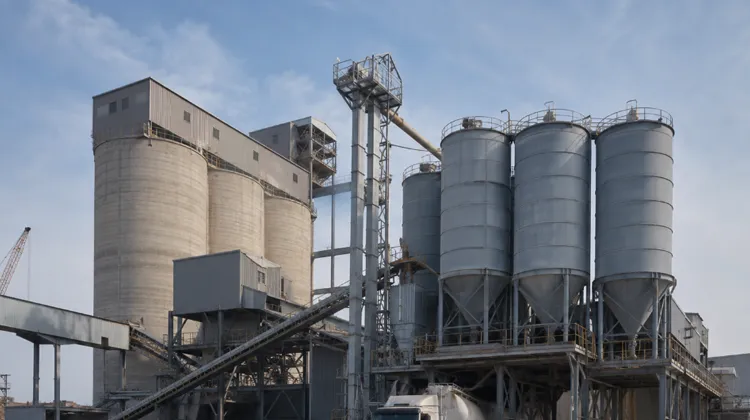
When developing a cement grinding plant, slag grinding station, or GGBFS production line, the finished-product storage system has a direct impact on investment, construction time, and long-term operation.
Reinforced concrete silos are commonly selected for large and permanent storage, while welded steel silos offer advantages in construction speed, initial cost control, and phased expansion. The better choice depends on the conditions of the project.
Why Is Silo Selection Important?

After cement or slag powder leaves the grinding and separation system, it must be stored before being delivered to packing machines or bulk loading equipment.
A properly designed silo system allows the mill to continue operating even when packing or dispatch demand changes. It also supports the separate storage of different cement grades.
The selection should consider not only total capacity, but also capacity per silo, product turnover, discharge design, packing capacity, and future expansion.
What Is a Reinforced Concrete Cement Silo?
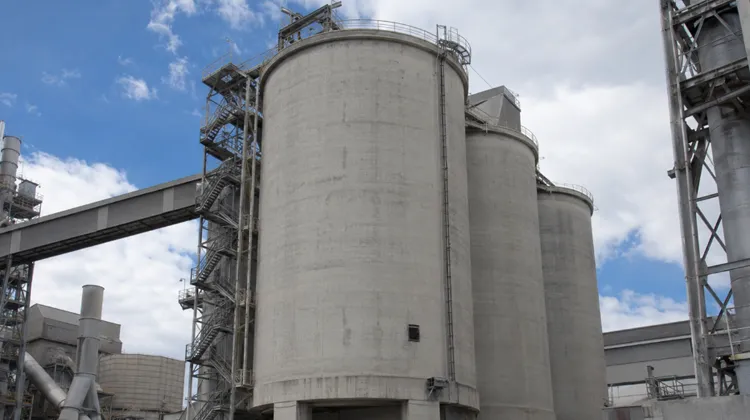
A reinforced concrete silo is normally constructed on site using slipforms, jumpforms, or conventional formwork. Its high stiffness and thermal mass make it suitable for large, permanent cement storage facilities.
The thick concrete wall responds more slowly to daily temperature changes than a thin steel shell. In humid climates or locations with large day-to-night temperature differences, this can help reduce the possibility of localized condensation and cement lump formation.
A concrete silo is not maintenance-free. Roof leakage, wall cracks, construction joints, and internal wear must still be inspected and repaired when necessary.
What Is a Welded Steel Cement Silo?
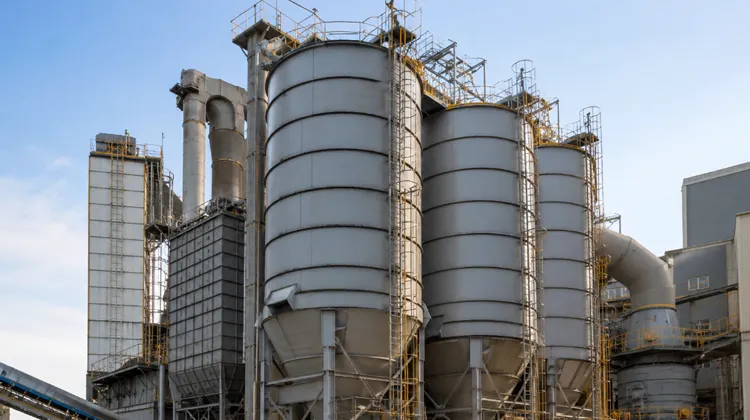
A welded steel silo uses steel plate as the main shell material. Components can be prepared in a factory and transported to the site for assembly and welding.
The lighter shell and high level of prefabrication normally allow faster installation than a large concrete silo. Welded steel silos are commonly used for small and medium grinding plants, fast-track projects, and phased expansion.
Their maintenance requirements include corrosion protection, coating inspection, weld inspection, and monitoring for localized deformation. Because steel transfers heat quickly, condensation control may require additional attention.
A field-welded silo is also different from a bolted silo and is not normally intended for frequent dismantling or relocation.
Reinforced Concrete Silo vs Welded Steel Silo
| 要素 | Reinforced Concrete Silo | Welded Steel Silo |
|---|---|---|
| Typical use | Large and permanent storage | Small or medium storage and phased projects |
| Construction time | Longer because of concrete placing and curing | Generally faster because components can be prefabricated |
| Initial investment | Higher early civil investment | Often easier to control for smaller projects |
| Thermal behavior | Slower temperature changes | Thin steel shell responds quickly to ambient temperature |
| Corrosion management | Focuses on cracking, leakage, and concrete durability | Requires protective coatings and corrosion inspection |
| Expansion | Alteration of an integrated structure can be difficult | Additional independent silos can be installed more easily |
| Main maintenance | Cracks, joints, leakage, and spalling | Coatings, corrosion, welds, and deformation |
Why Do So Many Articles Recommend Steel Silos?
Steel silos have several genuine advantages. Their components can be prefabricated, site erection is generally faster, and less high-level concrete formwork is required.
For a small or medium grinding plant that must start production quickly, these benefits can be important.
However, many online comparisons are written by steel silo suppliers. They may emphasize purchase price and installation speed while giving less attention to corrosion protection, condensation control, recoating, and long-term maintenance.
A valid comparison should use the same usable capacity, design life, foundation scope, discharge system, and environmental conditions. Comparing only the shell price can produce a misleading result.
Are Welded Steel Silos Made Entirely of Steel?

Usually not.
The term “welded steel silo” normally refers to the material of the main cylindrical shell. Most installations still require a reinforced concrete foundation and may also include concrete ring beams, columns, floors, or underground discharge galleries.
A typical hybrid arrangement may include:
- A welded steel upper shell;
- A reinforced concrete raft or piled foundation;
- A concrete ring foundation;
- A steel or concrete hopper;
- Underground air slides or conveying routes.
This combination uses the erection speed of steel while taking advantage of reinforced concrete for foundations and load transfer.
Why Are Steel and Concrete Often Combined?
Structural Load Transfer
When the silo is full, most of the load comes from the stored cement or slag powder. Concrete foundations, ring beams, and supports transfer these loads safely into the ground.
Integration of Discharge Equipment
The lower silo area may contain aeration boxes, air slides, valves, and conveyors. Concrete platforms or underground galleries can provide a stable layout for this equipment.
Reliable discharge, however, depends mainly on silo geometry, outlet arrangement, aeration, and material condition—not simply on whether the bottom is steel or concrete.
Moisture and Corrosion Management
Areas close to the ground are more exposed to rainwater, drainage problems, and groundwater. Concrete foundations can reduce the amount of steel directly exposed to these conditions, although waterproofing, drainage, and crack control are still necessary.
Which Silo Is Better for a Cement Grinding Plant?
Choose Reinforced Concrete When:
A concrete silo is usually worth considering when the plant requires high storage capacity, continuous long-term operation, and a clearly defined final production plan.
It can also be suitable for humid regions, locations with large daily temperature changes, and projects with experienced local civil contractors.
Choose Welded Steel When:
A welded steel silo may be more attractive when storage demand is moderate, commissioning time is critical, the initial budget is limited, or capacity will be added in phases.
Independent steel silos can also provide flexible storage for special cement, fly ash, slag powder, and other lower-volume products.
Consider a Hybrid Storage System
Some plants use a large concrete silo for the main cement grade and smaller steel silos for GGBFS, fly ash, or specialty cement.
This arrangement combines high-volume storage with greater flexibility for multiple products.
よくある質問
Is a steel silo always cheaper than a concrete silo?
No. Steel silos often have an initial cost advantage for small and medium projects. Large concrete multi-cell silos may provide better economies of scale. Foundations, coatings, transport, erection, and discharge equipment must be included.
Can a concrete silo completely prevent condensation?
No. Concrete moderates temperature changes, but roof leakage, humid air, or poor ventilation can still cause moisture and cement lump formation.
Does a steel silo require no concrete work?
Usually, it still requires a reinforced concrete foundation. Depending on the design, concrete floors, ring beams, columns, or underground galleries may also be used.
Can a welded steel silo be relocated?
Normally, relocation is not practical. The shell would need to be cut, rebuilt, and reinspected. Bolted silos are more suitable when dismantling and relocation are required.
Which type has the longer service life?
Service life depends on design, construction quality, environmental exposure, and maintenance. Concrete silos require crack and leakage control, while steel silos require corrosion protection and regular coating inspections.
Which silo is suitable for a GGBFS plant?
Large, permanent GGBFS plants should normally evaluate reinforced concrete storage. Smaller or phased projects can use welded steel silos when moisture protection, corrosion control, aeration, and discharge are properly designed.
結論
Reinforced concrete silos are often better suited to large cement and slag grinding plants that require long-term operation, high storage capacity, and stable internal temperature conditions.
Welded steel silos are attractive for projects that prioritize faster construction, moderate storage capacity, phased investment, and flexible expansion.
The final decision should consider storage capacity, mill output, construction schedule, ground conditions, climate, maintenance requirements, and future development—not only the initial silo quotation.


 Japanese
  English
  Russian
  Arabic
  Vietnamese
  Spanish
  French
  Portuguese
  Chinese