



1. Beneficiation: How to Recover Platinum from Gold, Copper, and Nickel Ores
Platinum is one of the rarest and most valuable precious metals in the world. It is widely used in automotive catalytic converters, electronics, chemical catalysts, and jewelry manufacturing. As global industrial demand continues to grow, the recovery of platinum group metals (PGMs) has become increasingly important.
Unlike gold or silver, platinum rarely occurs as a single mineral deposit. Instead, it is often associated with gold, copper, and nickel ores. Efficient platinum beneficiation and mineral processing technologies are therefore essential for recovering platinum from complex ore deposits.
This article provides a comprehensive overview of:
Types of platinum deposits
Platinum ore beneficiation processes
How platinum is recovered from gold, copper, and nickel ores
Key equipment used in platinum ore processing
2. What Is Platinum Beneficiation

Platinum beneficiation refers to the mineral processing methods used to separate and concentrate platinum group metals (PGMs) from raw ore before metallurgical refining. Because platinum is rarely found in pure form and usually occurs in very low concentrations, beneficiation is essential for improving the economic value of platinum-bearing ores.
In many deposits, platinum occurs together with metals such as nickel, copper, and gold, often associated with sulfide minerals. The goal of platinum ore beneficiation is to increase the concentration of platinum-bearing minerals while removing waste rock and gangue materials.
Platinum group metals include:
プラチナ(Pt)
パラジウム(Pd)
ロジウム(Rh)
イリジウム(Ir)
ルテニウム(Ru)
オスミウム(Os)
Since PGM grades in natural ores are often extremely low, efficient beneficiation plays a crucial role in modern platinum mining. By upgrading the ore before smelting, mining operations can improve platinum recovery, reduce processing costs, and increase the efficiency of downstream refining processes.
In industrial mining, platinum beneficiation is a key step between ore extraction and metal refining, forming the foundation of efficient platinum production.
3. Major Types of Platinum Deposits
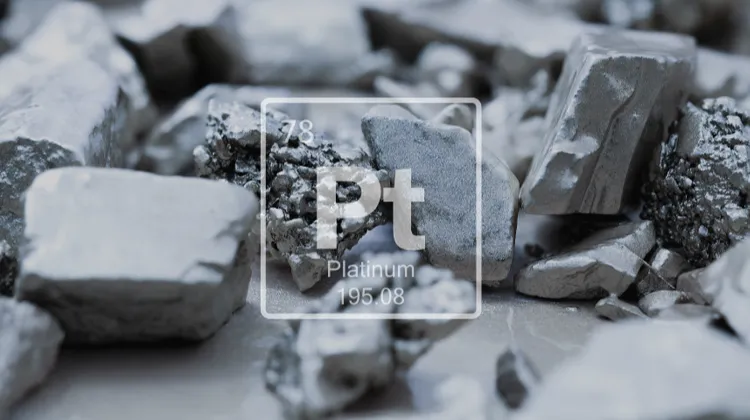
Platinum occurs in several geological environments, and understanding the different types of platinum deposits is essential for selecting the appropriate mining and beneficiation methods. In general, platinum resources can be classified into three major deposit types based on their formation and mineral composition.
3.1 Placer Platinum Deposits
Placer platinum deposits are formed through the weathering and erosion of primary platinum-bearing rocks. Due to its high density and chemical stability, platinum can accumulate in river sediments, alluvial deposits, and coastal sands.
These deposits are similar to placer gold deposits and typically contain coarse platinum particles mixed with sand and gravel. Because of the simple mineral composition, placer platinum is often recovered using gravity separation methods.
3.2 Vein Platinum Deposits
Vein platinum deposits occur when platinum-bearing minerals are concentrated within mineralized veins or fractures in host rocks. These deposits often contain associated minerals such as chromite, sulfides, and other metallic elements.
Compared with placer deposits, vein-type platinum ores usually have a more complex mineral structure and require more advanced mineral processing methods to recover valuable metals.
3.3 Copper-Nickel Sulfide Deposits
Copper-nickel sulfide deposits are the most important global source of platinum group metals (PGMs). In these deposits, platinum commonly occurs together with copper and nickel sulfide minerals.
Large-scale platinum production often comes from these deposits, where platinum is recovered as a by-product during copper and nickel mining operations. Famous examples include the Bushveld Complex in South Africa and the Norilsk mining district in Russia.
4. Beneficiation Processes for Different Platinum Ores
Different types of platinum ores require different beneficiation processes depending on their mineral composition, particle size distribution, and geological formation. Selecting an appropriate processing method is essential for achieving efficient platinum recovery and improving the overall economic value of the ore.
In platinum mining and mineral processing, beneficiation methods are designed to separate platinum-bearing minerals from gangue materials and concentrate valuable metals before metallurgical refining. The most common techniques used in platinum ore processing include gravity separation, froth flotation, and combined beneficiation processes.
The specific process flow varies according to the type of platinum deposit.
4.1 Placer Platinum Ore Processing
Placer platinum deposits usually occur in river sediments, alluvial deposits, or coastal sands, where platinum particles accumulate due to their high density.
Because the mineral composition is relatively simple and platinum particles are often coarse, gravity separation is the most widely used processing method for placer platinum mining.
The typical beneficiation process includes:
Ore → Screening → Rough Separation → Concentration → Impurity Removal
Screening removes oversized materials and debris. During rough separation, heavy platinum particles are separated from lighter sand and gravel using density differences. The concentrate is then further upgraded to obtain a higher-grade platinum product.
This processing method is widely used because it is efficient, cost-effective, and environmentally friendly for alluvial platinum recovery.
4.2 Vein Platinum Ore Beneficiation
Vein-type platinum deposits usually contain complex mineral structures and multiple associated minerals, including chromite, sulfides, and other metallic elements.
Due to this complexity, the beneficiation process often requires combined mineral processing methods to achieve effective separation.
For oxidized platinum ores, a gravity separation and flotation combined process is often applied to improve metal recovery. For sulfide platinum ores, froth flotation is generally the most effective technique for separating platinum-bearing minerals from gangue materials.
These processes allow valuable platinum minerals to be concentrated into a smaller volume of material suitable for further metallurgical treatment.
4.3 Copper-Nickel Sulfide Ore Processing
Copper-nickel sulfide deposits represent the most important global source of platinum group metals (PGMs). In these deposits, platinum typically occurs together with copper and nickel sulfide minerals.
In industrial mining operations, platinum is usually recovered as a by-product of copper and nickel beneficiation processes.
The typical processing route includes:
Ore → Crushing → Grinding → Bulk Flotation → Copper-Nickel Separation → Concentrate Treatment
During flotation, copper and nickel sulfide minerals are first recovered as a bulk concentrate. Platinum group metals are enriched within this concentrate and later extracted during smelting and refining stages.
This integrated processing approach allows mining companies to recover multiple valuable metals simultaneously while maximizing resource utilization.
5. Recovering Platinum from Gold Ores

Although platinum is more commonly associated with copper and nickel deposits, it can also occur in certain gold-bearing ore deposits. In these cases, platinum may exist together with gold in sulfide minerals, natural alloys, or complex metallic mineral assemblages.
Recovering platinum from gold ores usually requires careful mineral processing because platinum minerals are often present in very low concentrations and may be finely distributed within the ore.
The typical beneficiation process for gold ores containing platinum includes:
Ore → Crushing → Grinding → Gravity Separation → Flotation → Smelting
During the initial stage, large ore blocks are reduced in size through crushing to prepare them for further processing. The ore is then finely ground so that platinum-bearing minerals can be liberated from the surrounding rock.
Gravity separation may be used to recover coarse platinum particles or heavy metallic minerals. In cases where platinum is closely associated with sulfide minerals, flotation is often applied to concentrate valuable components into a sulfide-rich concentrate.
After beneficiation, the concentrate is sent to metallurgical processing where both gold and platinum group metals can be recovered through smelting and refining.
Recovering platinum as a by-product from gold ore processing can significantly improve the overall economic value of the mining operation, especially when platinum prices are high in global markets.
6. Core Platinum Beneficiation Steps and Important Equipment
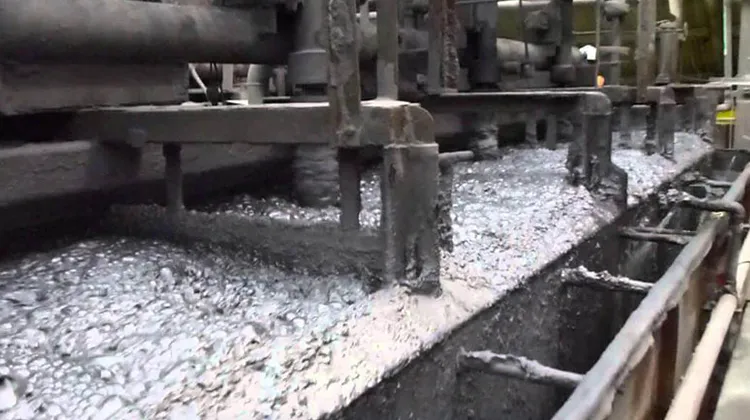
Efficient platinum recovery depends on a series of well-designed mineral processing stages. In platinum ore beneficiation plants, different types of equipment are used to gradually reduce ore size, liberate valuable minerals, and concentrate platinum group metals.
The main steps in platinum ore processing typically include crushing, milling, flotation, and gravity separation, each playing an important role in improving platinum recovery.
6.1 破砕設備
Crushing is the first stage of platinum ore processing. Its main purpose is to reduce large ore blocks into smaller particles suitable for further grinding and mineral separation.
Common crushing equipment used in platinum beneficiation plants includes:
ジョークラッシャー
コーンクラッシャー
衝撃式破砕機
These machines break down raw ore and prepare it for the next stage of mineral processing.
6.2 Milling Equipment
Milling, also known as grinding, is one of the most critical steps in platinum beneficiation. The goal of this stage is to grind the ore into fine particles so that platinum-bearing minerals can be fully liberated from the surrounding rock.
Common milling equipment includes:
Proper grinding size control is essential because insufficient liberation can reduce platinum recovery during later processing stages.
6.3 Froth Flotation Equipment
Froth flotation is one of the most widely used methods for recovering platinum group metals from sulfide ores. This process separates valuable minerals from gangue by utilizing differences in surface properties.
During flotation, operators must carefully control several parameters, including:
pH value
温度
Flotation reagents such as collectors and frothers
Common flotation equipment used in platinum beneficiation plants includes:
SF flotation machines
BF flotation machines
XEF aerated mechanical flotation cells
These flotation systems allow platinum-bearing minerals to attach to air bubbles and rise to the surface as concentrate.
6.4 Gravity Separation Equipment
Gravity separation is particularly effective for recovering coarse platinum particles, especially in placer deposits and some vein-type ores.
Common gravity separation equipment includes:
Spiral chutes
振動テーブル
Jig machines
These devices separate minerals based on density differences, allowing heavy platinum particles to be concentrated efficiently.
7. Key Factors That Improve Platinum Recovery

Maximizing platinum recovery requires careful attention to several key factors throughout the beneficiation process. Efficient recovery depends not only on the mineral processing equipment and techniques used but also on the ore characteristics, operational parameters, and process design.
7.1 Ore Mineralogy
理解する mineralogical characteristics of the ore is essential. Platinum may occur in sulfide minerals, oxides, or native metallic form, often at very low concentrations. Detailed mineralogy studies help determine:
The most suitable processing methods
Liberation size for grinding
The optimal combination of gravity separation and flotation
Accurate mineralogical analysis ensures that valuable platinum-bearing minerals are efficiently separated from gangue.
7.2 Grinding Size Control
Proper grinding size is critical for liberation of platinum minerals. Over-grinding can produce ultra-fine particles that are difficult to recover in flotation, while under-grinding leaves valuable minerals locked in the ore. Controlling particle size directly affects platinum recovery rates and concentrate quality.
7.3 Flotation Reagent Optimization
Flotation reagents, including collectors, frothers, and modifiers, play a key role in platinum recovery. Selecting the right reagent type and dosage ensures that platinum-bearing minerals attach to air bubbles effectively, enhancing recovery and reducing losses to tailings.
7.4 Process Design and Circuit Optimization
A well-designed beneficiation circuit that balances crushing, grinding, gravity separation, and flotation is essential for high recovery rates. Optimizing process flow, residence time, and equipment configuration allows mining operations to maximize platinum yield while minimizing processing costs.
7.5 Operational Control and Monitoring
Consistent monitoring of key parameters such as pH, temperature, slurry density, and reagent concentration ensures stable flotation performance. Proper operational control minimizes metal loss, improves concentrate grade, and increases the overall efficiency of platinum beneficiation.
8.結論
As global demand for precious metals continues to increase, recovering platinum from gold, copper, and nickel ores has become increasingly important. Different types of platinum deposits require different beneficiation methods, including gravity separation for placer ores, combined processes for vein ores, and flotation for copper-nickel sulfide ores.
By using advanced crushing, milling, flotation, and gravity separation equipment, mining operations can significantly improve platinum recovery rates and overall resource efficiency.
Selecting the right mineral processing equipment and designing an optimized beneficiation process are the keys to successful platinum extraction.
9. FAQs About Platinum Beneficiation
9.1 What is platinum beneficiation?
Platinum beneficiation is the process of separating and concentrating platinum group metals (PGMs) from raw ore. It involves crushing, grinding, gravity separation, and flotation to produce a high-grade concentrate suitable for smelting and refining.
9.2 How is platinum recovered from gold, copper, and nickel ores?
Platinum is often found alongside gold, copper, and nickel in sulfide or oxide ores. Recovery typically involves crushing, milling, gravity separation, and flotation, followed by metallurgical refining. In some cases, platinum is recovered as a by-product of copper or nickel processing.
9.3 What are the main types of platinum deposits?
The three main types of platinum deposits are:
Placer platinum deposits – coarse platinum particles in river sediments or alluvial deposits.
Vein platinum deposits – platinum minerals in veins, often associated with chromite or sulfides.
Copper-nickel sulfide deposits – the most important source of PGMs, where platinum is recovered as a by-product.
9.4 Which beneficiation methods are commonly used for platinum ores?
Common methods include:
重力分離 for coarse platinum particles
Froth flotation for sulfide or finely disseminated platinum
Combined gravity and flotation for complex ores
These methods ensure maximum recovery of platinum group metals while reducing waste.
9.5 What factors affect platinum recovery in beneficiation?
Key factors include:
Ore mineralogy – platinum occurrence and mineral associations
粉砕サイズ – proper liberation of minerals
Flotation reagent optimization – correct collectors and frothers
Process design and operational control – optimizing equipment and circuit efficiency
Careful control of these factors can significantly improve platinum recovery rates and concentrate quality.


 Japanese
  English
  Russian
  Arabic
  Vietnamese
  Spanish
  French
  Portuguese
  Chinese