


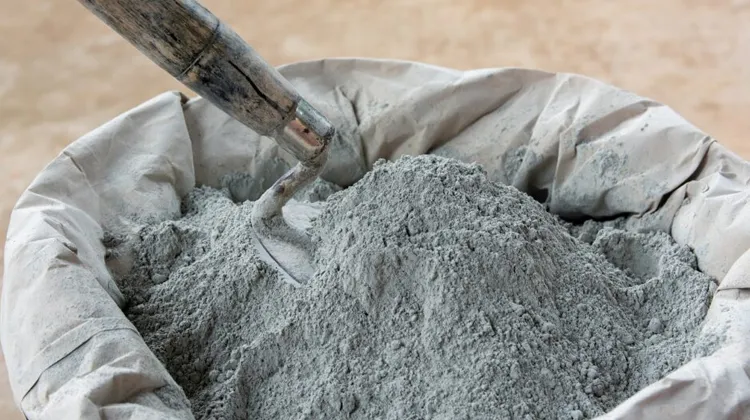
A Complete and In-Depth Guide to the Modern Dry Process Cement Production
Cement is one of the most important basic materials in modern infrastructure construction. Almost all large-scale projects, such as buildings, highways, bridges, ports, power plants, and industrial facilities, rely heavily on cement. However, behind every bag of cement is a highly complex and continuous industrial manufacturing system.
In today’s cement industry, most cement is produced using the modern dry process cement production technology, which is characterized by high efficiency, low energy consumption, a high level of automation, and excellent environmental performance. This process has become the global standard for new cement plants and plant upgrades.
In this article, we will explain in detail how cement is made in a cement plant, from raw material mining to the final cement product.
1. Overview of the Cement Manufacturing Process

A modern dry process cement production line is not just a collection of machines, but a highly integrated industrial system that combines mining, crushing, grinding, pyro-processing, cooling, cement finishing, and automatic control into one continuous production flow.
From the moment limestone is taken out of the quarry to the moment finished cement is shipped to the customer, the material passes through many tightly connected process stages. Each stage directly affects product quality, energy consumption, operating stability, and overall production cost.
In general, the cement manufacturing process can be divided into the following main steps:
Raw material mining and crushing
Raw material preblending and proportioning
Raw meal grinding and homogenization
Preheating and calcining
Clinker burning in the rotary kiln
Clinker cooling and heat recovery
Cement grinding, storage, and packing
2. Raw Material Mining and Crushing: The First Step of Cement Production
The most important raw material for cement production is 石灰岩, which usually accounts for more than 80% of the total raw mix. In addition, clay, shale, iron ore, or other corrective materials are used to adjust the chemical composition of the raw meal.
These raw materials are first mined from quarries. After blasting and loading, the limestone blocks are often very large, sometimes exceeding one meter in size. Obviously, such large stones cannot be used directly in the grinding system, so they must be processed by a crushing system first.
In a cement plant, the raw materials normally go through one or two stages of crushing using equipment such as jaw crushers, hammer crushers, or impact crushers. The purpose of crushing is not to make the material very fine, but to reduce it to a size suitable for transportation and grinding, typically below 25–75 mm, which helps improve the efficiency and reliability of the downstream processes.
3. Raw Material Preblending and Proportioning: The Key to Stable Quality
Natural raw materials always show fluctuations in chemical composition depending on the mining location and geological conditions. If these fluctuations are not controlled, they will directly cause unstable kiln operation and inconsistent clinker quality.
For this reason, modern cement plants use a preblending system with stacker and reclaimer. The crushed limestone and other raw materials are stacked in layers by the stacker and then reclaimed in a cross-section method. This process achieves a physical homogenization of the material and significantly reduces chemical composition variations.
After preblending, the materials are fed into a weighing and proportioning system. Based on the raw mix design calculated by the laboratory, the system accurately controls the feeding rate of each material, ensuring that the mixed raw materials entering the grinding system always have a stable and correct chemical composition.
4. Raw Meal Grinding and Homogenization: Creating Ideal Conditions for Burning

The proportioned raw materials are then sent to the raw meal grinding system, where they are finely ground, usually by a vertical roller mill or a high-efficiency ball mill system.
The purpose of this grinding process is to produce a fine and chemically uniform raw meal powder. Only when the material is ground to a sufficiently fine and homogeneous state can the complex chemical reactions in the kiln be completed within a limited residence time.
After grinding, the raw meal is not sent directly to the kiln system. Instead, it is stored in a raw meal homogenization silo, where compressed air or mechanical systems are used to further mix and stabilize the material. This step plays a crucial role in ensuring long-term stable kiln operation and consistent clinker quality.
5. Preheating and Calcining: The Core Energy-Saving Technology of Modern Cement Plants
The homogenized raw meal is fed into a multi-stage cyclone preheater and calciner system, where it comes into full heat exchange with the hot exhaust gas from the rotary kiln.
As the material moves downward through the cyclones, its temperature gradually increases to about 800–900°C. In the calciner, most of the limestone is already decomposed through the reaction CaCO₃ → CaO + CO₂.
By completing more than 90% of the decomposition before the material enters the rotary kiln, the system can significantly reduce the heat load of the kiln, shorten the kiln length, lower fuel consumption, and greatly improve the overall thermal efficiency of the plant.
6. Clinker Burning in the Rotary Kiln: The Heart of Cement Production

After preheating and calcining, the material enters the 回転窯, where it is exposed to temperatures of about 1400–1450°C and undergoes a series of complex physical and chemical reactions.
The rotary kiln is a large, slowly rotating steel cylinder lined with refractory bricks. The material enters from the kiln inlet and gradually moves toward the kiln outlet under the combined effect of rotation and inclination, while being heated by a powerful flame.
During this process, the main clinker minerals, such as alite (C₃S) and belite (C₂S), are formed. These minerals are responsible for the strength and performance of cement. Therefore, the operating stability of the rotary kiln, the accuracy of temperature control, and the performance of the combustion system have a decisive influence on clinker quality.
7. Clinker Cooling and Heat Recovery: Improving Energy Efficiency
The hot clinker discharged from the kiln has a temperature of more than 1300°C and must be cooled rapidly. Modern cement plants usually use a 4th generation grate cooler for this purpose.
In the cooler, cold air is blown from below the grate, and the clinker is cooled to below 100°C within a few minutes. At the same time, the heated air is reused as secondary air and tertiary air for combustion in the kiln and calciner.
This process not only improves the overall energy efficiency of the plant but also helps stabilize the clinker mineral structure, which is beneficial to cement quality.
8. Cement Grinding, Storage, and Packing: From Clinker to Final Product

After cooling, the clinker is mixed with a certain amount of gypsum and other additives, such as slag, fly ash, or limestone, depending on the required cement type.
The mixture is then ground in the cement grinding system to the required fineness and specific surface area. After grinding, the finished cement is transported to cement silos for storage.
From there, the cement can be shipped in bulk or packed into bags using automatic packing machines and loading systems.
9. Automation and Environmental Protection Systems in Modern Cement Plants
A modern cement plant is not only a production facility, but also a highly integrated automation and environmental protection system. It is typically equipped with:
DCS central control system
High-efficiency bag filters or electrostatic precipitators
Kiln tail flue gas denitration (De-NOx) system
Waste heat recovery power generation system
Solid waste co-processing system
These systems allow cement plants to achieve stable operation, low emissions, reduced energy consumption, and green manufacturing.
10. Conclusion: The Importance of Choosing the Right Cement Plant Partner
Cement production is a capital-intensive, technology-intensive, and highly systematic industrial process. Whether you are building a new cement plant or upgrading an existing one, choosing an experienced and reliable engineering and equipment partner is one of the most important factors for project success.


 Japanese
  English
  Russian
  Arabic
  Vietnamese
  Spanish
  French
  Portuguese
  Chinese