



In industrial production, solid fuels have long been used as reliable energy sources for high-temperature processes, particularly in cement manufacturing, building materials, metallurgy, and other thermal industries.
Among these fuels, Charcoal そして 石炭 are two commonly used carbon-based materials. While they may appear similar in basic function, their origins, physical structures, combustion behavior, and environmental characteristics differ significantly.
These differences influence not only energy output, but also combustion stability, residue formation, emission characteristics, and the long-term operating conditions of industrial systems.
A clear understanding of the distinctions between charcoal and coal helps provide a more comprehensive view of how different solid fuels perform in industrial applications.
What Is Charcoal?

Charcoal is a solid fuel produced by heating biomass materials—such as wood, bamboo, or agricultural residues—under low-oxygen or oxygen-free conditions. This process, known as 炭化, removes moisture and volatile compounds while increasing the proportion of fixed carbon.
Unlike fossil fuels, charcoal is produced through a controlled industrial process. As a result, its quality and composition can be managed more consistently when production parameters are properly maintained.
Source and Formation Process
The raw materials for charcoal are typically derived from renewable biomass sources. During carbonization, the biomass is gradually heated in a kiln or carbonization furnace. As temperature rises, water and volatile organic components are released, leaving behind a carbon-rich solid material.
Because this process is controlled, charcoal production allows for adjustment of factors such as temperature, residence time, and feedstock type. These factors directly influence the final fuel characteristics, including fixed carbon content, ash level, and combustion behavior.
Appearance and Physical Characteristics
Charcoal is usually black in color with a matte surface and a relatively fragile texture. Internally, it has a porous structure, which results in low bulk density and light weight.
From an industrial perspective, this porous structure allows air to penetrate the fuel more easily during combustion. As a result, charcoal generally ignites quickly and burns in a more uniform manner compared with denser fuels.
What Is Coal?

Coal is a naturally occurring fossil fuel formed from ancient plant matter over millions of years under geological heat and pressure. Depending on the degree of carbonization, coal is commonly classified as lignite, bituminous coal, or anthracite.
Coal has been used as a primary industrial fuel for centuries and remains a major energy source in many heavy industries.
Source and Formation Process
Unlike charcoal, coal formation is entirely natural and cannot be controlled or replicated industrially. Its properties are determined by geological conditions, which vary significantly from one mining region to another.
As a result, coal from different sources may show considerable variation in ash content, sulfur levels, moisture, and calorific value. These variations often require careful evaluation before use in industrial systems.
Appearance and Physical Characteristics
Coal is typically black or dark brown and has a dense, compact structure. It is mechanically strong and resistant to breakage, making it suitable for long-distance transportation and bulk handling.
The high density of coal allows for efficient storage and transport in large volumes, which has historically contributed to its widespread industrial use.
Charcoal vs Coal: Key Differences Overview
Although charcoal and coal are both carbon-based solid fuels, the similarities largely end at their basic function of heat generation. From an industrial perspective, their differences extend into material origin, internal structure, combustion behavior, and operational impact on equipment.
Understanding these distinctions is important because fuel characteristics influence not only energy output, but also residue formation, emission profiles, and long-term system stability. The following comparison highlights the most relevant differences between charcoal and coal in industrial applications.
Core Differences at a Glance
| 側面 | Charcoal | 石炭 |
|---|---|---|
| Raw material | Biomass such as wood or agricultural residues | Fossilized plant matter |
| Renewability | Renewable when sourced responsibly | Non-renewable |
| Internal structure | Porous and lightweight | Dense and compact |
| Ash content | Generally low | Generally higher |
| Impurity level | Low sulfur and mineral content | Varies widely by source |
| Environmental profile | Cleaner combustion characteristics | Emissions depend on coal quality |
How These Differences Affect Industrial Performance
Raw material and renewability
Charcoal is produced from biomass through a controlled carbonization process, which allows for greater consistency in composition when production parameters are well managed. Coal, in contrast, is extracted from geological deposits, and its properties are largely determined by mining location and seam characteristics. This fundamental difference affects fuel predictability and quality control.
Internal structure and combustion behavior
The porous structure of charcoal promotes faster ignition and more uniform combustion, as air can easily penetrate the fuel particles. Coal’s dense structure requires finer grinding and more precise air–fuel mixing to achieve efficient combustion, particularly in large-scale systems.
Ash content and residue management
Lower ash content in charcoal generally results in less solid residue during combustion. This can reduce deposit buildup, simplify ash handling, and lower the frequency of cleaning and maintenance. Coal, especially when high in ash or mineral impurities, tends to generate more residue that must be managed throughout the system.
Impurities and emission characteristics
Charcoal typically contains minimal sulfur and trace metals, leading to lower sulfur oxide emissions during combustion. Coal quality varies significantly, and higher sulfur or mineral content may increase the load on emission control systems and influence regulatory compliance strategies.
Overall operational impact
Taken together, these differences mean that charcoal is often associated with cleaner combustion and simpler downstream treatment, while coal offers higher energy density and established supply infrastructure. The choice between the two fuels can therefore influence not only energy performance, but also system design considerations and long-term operating conditions.
Energy Content and Calorific Value
In terms of laboratory-measured calorific value, certain types of coal—especially anthracite—can exhibit higher energy density than charcoal. However, industrial performance depends on more than numerical heat values alone.
Charcoal typically provides a stable and responsive combustion profile, which can be advantageous in processes requiring precise temperature control. Coal, on the other hand, is often favored in high-capacity, continuous operations where consistent energy supply and cost efficiency are critical.
Combustion Characteristics: Flame, Smoke, and Ash
Combustion behavior plays a central role in how a fuel interacts with industrial equipment. The table below highlights common differences observed during combustion.
| Combustion Aspect | Charcoal | 石炭 |
|---|---|---|
| Flame behavior | Stable, low visible flame | Strong visible flame |
| Smoke generation | 低い | より高い |
| Ash residue | 低い | より高い |
Higher ash content and smoke generation can contribute to deposit formation, reduced heat transfer efficiency, and increased cleaning or maintenance requirements over time.
Main Industrial Uses of Charcoal and Coal
Uses of Charcoal

Charcoal is widely used in applications where fuel purity and clean combustion are important. Typical uses include:
Metallurgical processes requiring low sulfur and low ash input
Partial or alternative fuel use in cement kilns
Production of activated carbon and chemical materials
Industrial heating processes sensitive to smoke and odor
Its relatively clean combustion makes it suitable for environments with stricter emission considerations.
Uses of Coal
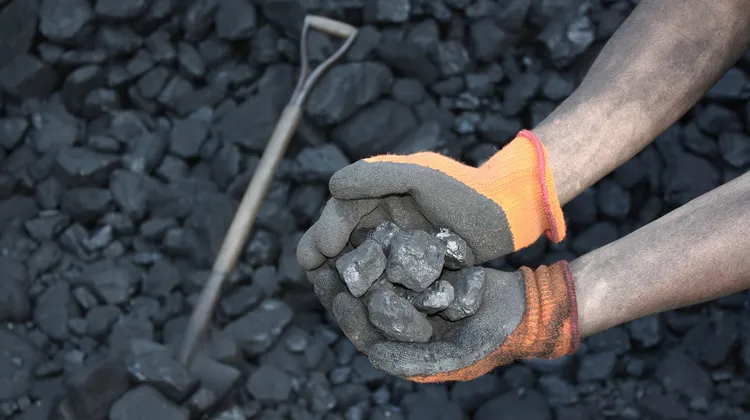
Coal remains a foundational energy source in many heavy industries, including:
Cement rotary kilns as a primary fuel
Thermal power generation
Steel and metallurgical production
Industrial boilers and material processing lines
Its established supply chains and high energy density continue to support its widespread use.
Environmental Impact: Emissions and Sustainability
From an environmental perspective, charcoal is derived from biomass and is often considered part of a shorter carbon cycle. When produced responsibly, it can contribute to lower net carbon emissions.
Coal, as a fossil fuel, releases carbon that has been stored underground for millions of years. Its combustion typically produces higher levels of carbon dioxide, sulfur oxides, and particulate matter, often requiring additional emission control systems to meet regulatory standards.
Mining / Production Methods and Safety Considerations
Charcoal production is centered on controlled thermal processing. Safety considerations mainly involve high-temperature operation and gas management during carbonization.
Coal extraction involves underground or open-pit mining, which introduces additional safety risks such as gas accumulation, dust exposure, and structural instability. These risks necessitate comprehensive safety management practices.
Transportation, Storage, and Density
Charcoal has low bulk density and occupies more volume per unit of energy, which can increase transportation requirements. However, it is generally less prone to spontaneous combustion.
Coal’s higher density allows for efficient bulk transport and storage. At the same time, coal stockpiles require careful management to prevent self-heating, dust emissions, and moisture-related issues.
Odor and Operational Safety
During combustion, charcoal typically produces minimal odor and fewer harmful gases, making it more suitable for semi-enclosed industrial environments.
Coal combustion can generate noticeable odors and gases such as carbon monoxide and sulfur compounds, which require adequate ventilation and monitoring to ensure safe operation.
Industrial Equipment Perspective: Production and Combustion Systems for Charcoal and Coal
From an industrial equipment perspective, charcoal and coal are not simply interchangeable fuels. Their differences in physical structure, combustion behavior, and impurity content place distinct demands on production systems, fuel handling equipment, and combustion technologies. As a result, industrial installations designed for one fuel often require modifications to efficiently accommodate the other.
Charcoal Production and Combustion Equipment
Charcoal production is centered on the carbonization process, in which biomass is converted into a carbon-rich solid under controlled thermal conditions. Typical equipment includes carbonization kilns or rotary carbonization furnaces, along with cooling, screening, and dust collection systems. Because the process involves high temperatures and combustible gases, precise temperature control and effective gas management are essential for stable and safe operation.
In combustion applications, charcoal’s low density and porous structure influence fuel handling and burner design. Feeding systems must account for its relatively fragile nature to minimize breakage and dust generation. Charcoal burners and combustion chambers are generally designed to promote uniform air distribution, allowing the fuel to burn steadily and completely. Due to its low ash content, downstream ash handling systems are usually simpler, and deposition-related issues within the combustion zone are less pronounced.
Coal Preparation and Combustion Equipment
Coal-based systems typically involve more extensive fuel preparation infrastructure. Raw coal is commonly processed through crushing and milling systems to achieve the required particle size for efficient combustion. These systems must be designed with attention to mechanical wear, energy consumption, and safety considerations such as explosion prevention.
Coal combustion equipment, including burners and rotary kilns, is designed to manage higher ash content and variable fuel quality. As a result, coal-fired systems often incorporate robust ash handling, dust collection, and emission control units. The integration of these subsystems is critical to maintaining stable operation and meeting environmental requirements, especially when coal quality fluctuates.
Equipment Design Implications
The contrast between charcoal and coal highlights an important principle in industrial system design: fuel characteristics directly shape equipment configuration and operational strategy. Charcoal-based systems tend to prioritize combustion uniformity, dust control, and efficient handling of lightweight materials. Coal-based systems, by comparison, emphasize durability, safety, and the management of solid residues and emissions.
Industrial installations capable of accommodating both fuels must balance these differing requirements through flexible feeding systems, adaptable burners, and appropriately sized emission control equipment. Such flexibility can enhance operational resilience, particularly in environments where fuel availability or regulatory conditions may change over time.
結論
Charcoal and coal are both established solid fuels with distinct characteristics shaped by their origins and physical properties. Coal continues to serve as a major energy source in traditional heavy industries, while charcoal plays an increasingly important role in applications emphasizing cleaner combustion and renewable resources.
Understanding the differences between these fuels provides valuable insight into how fuel choice influences industrial processes, equipment performance, and environmental outcomes.


 Japanese
  English
  Russian
  Arabic
  Vietnamese
  Spanish
  French
  Portuguese
  Chinese