



Cement production is a continuous, high-temperature, dust-intensive, and energy-demanding process. From limestone crushing and raw meal preparation to clinker burning, cement grinding, storage, and dispatch, instability in any section can affect output, energy use, product quality, and equipment life.
The purpose of cement plant automation is not simply to reduce manual work. It is to create a stable operating loop between process data, equipment condition, and production decisions. With reliable control systems, online instruments, equipment monitoring, and production data analysis, cement plants can identify deviations earlier, control critical parameters more consistently, and build a stronger foundation for energy savings, capacity improvement, and quality management.
What Is Cement Plant Automation?
Cement plant automation uses sensors, field instruments, PLCs, DCS platforms, industrial communication networks, control software, and data systems to monitor, interlock, regulate, and optimize cement production.
A complete cement plant automation system may cover:
- Crushing, conveying, stacking, and reclaiming;
- Raw material proportioning, raw grinding, and homogenization;
- 予熱器, calciner, and 回転窯 control;
- Clinker cooling, conveying, and clinker storage;
- Cement grinding, classification, additive dosing, and finished-cement storage;
- Packing, bulk truck loading, ship loading, and dispatch management;
- Dust collection, fans, air compressors, and utility equipment;
- Alarms, interlocks, trend analysis, reporting, and maintenance data.
Automation can be implemented in phases. Existing cement plants do not always need to replace every control system at once. A practical upgrade can begin with the process section that creates the largest production loss, energy waste, or operating risk.
What Problems Can Cement Plant Automation Solve?
1. Reducing Process Variation and Stabilizing Output

Temperature, pressure, flow, material level, oxygen concentration, and equipment load change continuously during cement production. Manual adjustments based only on operator experience can create response delays and inconsistent results.
An automated control system collects field data continuously and adjusts feed rate, airflow, fuel flow, mill load, or equipment start-stop sequences according to defined process logic. This helps reduce major fluctuations and supports more stable operation of the rotary kiln, cement mill, and material handling system.
2. Reducing Specific Energy Consumption
Rotary kilns, fans, grinding mills, and air compressors are among the major energy consumers in a cement plant. Automation helps teams compare power and fuel consumption under different operating conditions and avoid unnecessary idle running, excessive airflow, or inefficient equipment combinations.
For example, variable-speed fan control, stable mill feeding, optimized separator speed, and continuous kiln combustion monitoring can reduce energy consumption while maintaining product quality.
3. Improving Cement Quality Control
Automation does not replace laboratory testing, but it helps plants identify quality deviations more quickly. Online analyzers, belt scales, proportioning systems, level sensors, and laboratory data interfaces can give production teams faster visibility into raw material chemistry, raw meal ratios, clinker quality, and cement performance.
When raw material composition or cement fineness begins to move outside the expected range, the system can issue an alarm and allow operators to take corrective action before the deviation becomes a larger quality issue.
4. Improving Equipment Reliability and Reducing Unplanned Downtime
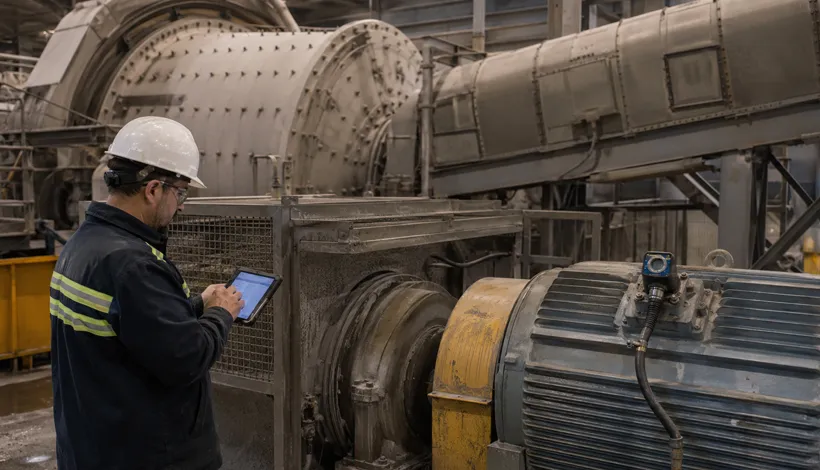
Many cement plants lose capacity not because the main machine is undersized, but because of conveyor blockages, abnormal bearing temperature, motor overload, dust collector failure, uncontrolled material level, or wear in critical components.
By monitoring vibration, temperature, current, pressure, and speed, an automation system can identify changes in equipment condition. When these signals are linked to alarm logic and preventive maintenance planning, plant teams can address developing problems before they cause an unexpected shutdown.
Which Cement Plant Areas Benefit Most from Automation?
| Process Area | Automation Focus | Main Benefit |
|---|---|---|
| Crushing and conveying | Material level, belt scales, blockage detection, equipment interlocks | Stable feed and fewer blockages |
| 生食の準備 | Automatic proportioning, mill load, separator control | Consistent raw meal quality and lower grinding power |
| Preheater and calciner | Temperature, pressure, oxygen, feed, and fuel control | Better calcination efficiency and kiln stability |
| 回転窯 | Kiln speed, fuel flow, airflow, burning-zone temperature | Stable clinker quality and lower heat consumption |
| Clinker cooler | Material bed depth, cooling airflow, grate speed | Improved cooling and heat recovery |
| Cement grinding | Feed rate, mill load, separator speed, product fineness | Higher output and more consistent cement quality |
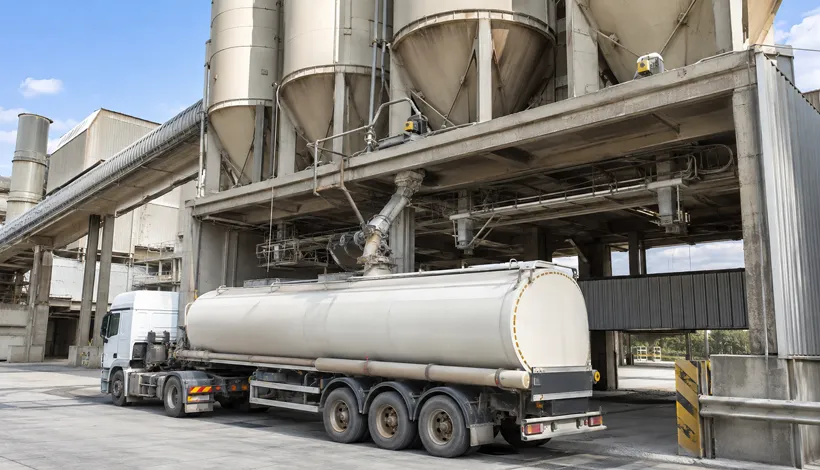
| Storage and dispatch | Level monitoring, bulk loading, packing, and weighing | Fewer loading errors, delays, and dispatch bottlenecks |
| Dust collection and utilities | Fan control, pressure drop, emissions, and power monitoring | Better environmental performance and reliability |
Core Components of a Cement Plant Automation System
Field Instruments and Sensors
Reliable field data is the foundation of automation. Common devices include temperature, pressure, flow, level, vibration, current, speed, and gas-analysis instruments. In high-temperature and dusty cement plant conditions, installation location, temperature resistance, dust protection, and maintenance access are especially important.
PLC, DCS, and Control Panels
PLCs are commonly used for individual machine control, conveyor interlocks, packing systems, and local retrofit projects. A DCS is more suitable for centralized monitoring, continuous process control, alarm management, and historical data collection across an entire cement production line.
In many projects, PLC and DCS systems work together. The key requirement is not the name of the platform, but whether the control logic, communication protocol, failure protection, and maintenance approach meet the plant’s operating needs.
SCADA, Operator Stations, and Data Platforms
SCADA systems and operator stations allow teams to view the process flow, equipment status, alarms, and trend curves from the control room. Historical reports can be used to analyze production, energy consumption, downtime, fault types, and quality variation.
A broader data platform can connect production, laboratory, maintenance, energy management, and dispatch information so that different departments can work from the same operational picture.
Advanced Optimization and Predictive Maintenance
Once a cement plant has stable basic control and reliable data collection, it can gradually introduce advanced process control, energy optimization, equipment health diagnostics, and predictive maintenance.
These tools can identify when kiln operation is moving away from an efficient range, estimate maintenance needs for critical equipment, and provide adjustment recommendations. Their value depends on accurate data and disciplined field execution; they cannot replace stable process management or sound maintenance practices.
New Cement Plants vs. Automation Retrofits
A new cement plant can plan its control architecture, instrumentation, communication network, interlocks, and control room layout from the beginning. This makes it easier to integrate equipment and leave interfaces for future expansion or digital upgrades.
For an existing cement plant, automation modernization should begin with an assessment of the current control system, wiring, instruments, equipment condition, and available shutdown window. A phased approach is often more practical: first improve critical conveying lines and interlocks, then upgrade mill or kiln controls, and finally connect the plant to a unified monitoring and data platform.
This reduces the risk of a large one-time shutdown and allows operating and maintenance teams to adapt step by step.
How to Plan a Cement Plant Automation Project
An effective automation project starts with diagnosing the operating problem, not with purchasing a control cabinet or software package.
First, define the project target. Is the priority to increase daily output, reduce power consumption, stabilize clinker quality, reduce unplanned downtime, or improve packing and bulk dispatch efficiency? Then collect current production data, fault records, energy data, process flow diagrams, and the existing instrument list.
During the engineering stage, confirm the critical measurement points, control loops, interlock scope, communication methods, control room requirements, and interfaces with existing equipment. For continuous production lines, the project should also include a shutdown and cutover plan, commissioning plan, operator training, and emergency fallback procedure.
What Information Is Needed for a Cement Automation Project?
When requesting an automation system or plant modernization solution, prepare the following information where possible:
- Existing process flow diagram and equipment layout;
- Current control system brand, model, and communication protocols;
- Main equipment list and motor power;
- Instrument list, site photos, and fault records;
- Production output, energy use, quality data, and key operating problems;
- Required control, alarm, reporting, or remote-monitoring functions;
- Available shutdown period and implementation constraints;
- Local electrical, safety, and environmental requirements.
This information helps engineers define the project scope and avoid interface, communication, or control-logic mismatches between new and existing equipment.
結論
The value of cement plant automation is not measured by the number of screens or the complexity of software. Its value comes from making production more visible, controllable, and easier to improve over time.
From raw material proportioning to finished cement dispatch, automation can help reduce process variation, lower energy consumption, improve equipment reliability, and create a stronger base for future capacity expansion and lower-carbon operation.
よくある質問
Can cement plant automation completely replace operators?
No. Automation systems handle continuous monitoring, repetitive control, and alarm functions, but experienced operators are still needed to interpret complex conditions, confirm root causes, and make production decisions.
Can an old cement plant be upgraded with automation?
Yes. Many plants begin with conveyor interlocks, critical instruments, mill control, or kiln control, then gradually integrate these systems into a unified monitoring and data platform.
What is the difference between PLC and DCS in a cement plant?
PLCs are commonly used for individual machines or local equipment control and are flexible for discrete operations. DCS platforms are better suited to centralized monitoring and continuous process control across a complete production line. Many cement plants use both.


 Japanese
  English
  Russian
  Arabic
  Vietnamese
  Spanish
  French
  Portuguese
  Chinese