


Introduction: Rising Global Copper Demand and Resource Transition
Copper is a critical metal for modern industry and the global energy transition. It plays an essential role in power transmission, electric vehicles, renewable energy systems, battery storage, and infrastructure development.
As global electrification accelerates, copper demand continues to rise steadily. However, high-grade and easily accessible copper sulfide deposits are gradually being depleted. Many large sulfide copper mines are facing declining ore grades, deeper mining operations, and increasing production costs.
In this context, the development of copper oxide ore resources has become increasingly important for:
Alleviating copper supply shortages
Extending mine life
Improving overall resource utilization
Stabilizing global copper production
Understanding ore characteristics and mineralogical behavior is the key to improving copper recovery rates and processing efficiency.
1. What Is Copper Oxide Ore?
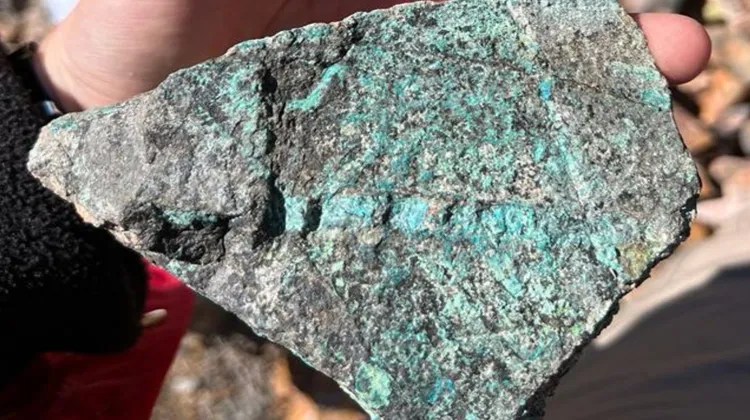
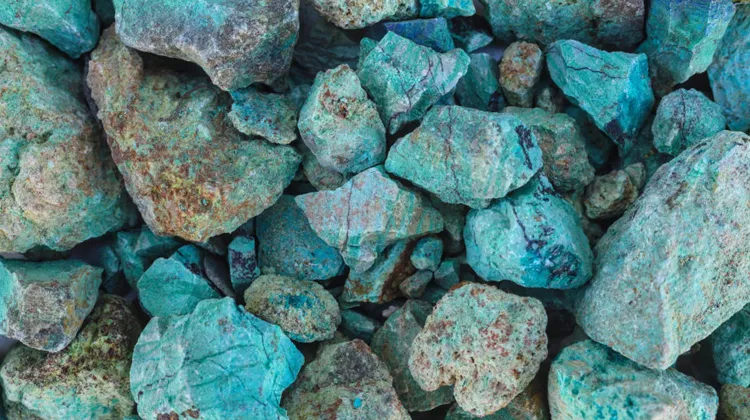
Copper oxide ore is a type of copper-bearing mineral resource in which copper exists primarily in oxidized chemical forms rather than sulfide forms. In these ores, copper is commonly present as oxides, carbonates, silicates, or sulfates formed through natural oxidation processes.
Unlike primary sulfide copper deposits, copper oxide ore typically develops in the upper weathered zone of a mineral deposit, often referred to as the oxidation zone or supergene enrichment zone.
Formation of Copper Oxide Ore
Copper oxide ore forms when sulfide minerals such as chalcopyrite or bornite are exposed to oxygen, water, and carbon dioxide over long geological periods.
The transformation process generally involves:
Oxidation of sulfide minerals
Dissolution of copper ions
Migration of copper-bearing solutions
Re-precipitation as secondary oxide minerals
This natural chemical alteration process is known as supergene oxidation. It significantly changes the mineralogical structure and surface chemistry of the original deposit.
Because of this formation mechanism, copper oxide ores are usually found:
Near the Earth’s surface
In arid or semi-arid climates
Above primary sulfide ore bodies
In open-pit mining environments
Chemical Forms of Copper in Oxide Ores
Copper in oxide deposits may occur in several chemical states, including:
Cu²⁺ in carbonate minerals
Cu²⁺ in silicate structures
Cu⁺ in oxide minerals
Dissolved copper ions in secondary sulfate zones
These different chemical states strongly influence leaching behavior, solubility, and metallurgical recovery methods.
From a metallurgical perspective, copper oxide ore is generally classified based on:
Total copper content (TCu)
Acid-soluble copper (ASCu)
Combined copper ratio
Water-soluble copper
These classifications are important for evaluating heap leaching potential and hydrometallurgical processing feasibility.
Physical and Surface Properties
Copper oxide ores differ significantly from sulfide ores in surface chemistry.
Typical physical and surface characteristics include:
Strong hydrophilicity
Poor natural floatability
High surface reactivity
Tendency to form slimes
Easy dissolution in acidic environments
These properties make oxide ores more suitable for acid leaching processes in many cases, especially for low-grade deposits.
Industrial Classification of Copper Oxide Ores
In mining practice, copper oxide ores are often grouped into:
High-grade direct shipping oxide ore
Medium-grade flotation oxide ore
Low-grade heap leaching ore
Mixed oxide-sulfide transitional ore
This classification helps determine whether the ore is better suited for:
Froth flotation
Acid leaching
SX-EW processing
Combined beneficiation flowsheets
Economic and Strategic Importance
Copper oxide ores are strategically important because:
They are typically located near the surface, reducing stripping costs
They allow early-stage production in open-pit mining
They can be economically processed through heap leaching
They extend the operational life of sulfide copper mines
In many large copper-producing countries, oxide ore mining plays a crucial role in maintaining annual copper output, especially when sulfide grades decline.
Key Differences Between Copper Oxide and Copper Sulfide Ore
| 特徴 | Copper Oxide Ore | Copper Sulfide Ore |
|---|---|---|
| Chemical form | Oxides, carbonates, silicates | Sulfides |
| Formation zone | Near-surface oxidation zone | Primary deep mineralization |
| Floatability | Generally poor | Naturally floatable |
| Leaching behavior | Easily acid-soluble | Requires bioleaching or pressure oxidation |
| Processing route | Heap leaching / SX-EW / modified flotation | Conventional flotation + smelting |
This distinction is critical for mine planning, cost modeling, and processing plant design.
2. Characteristics of Copper Oxide Ores
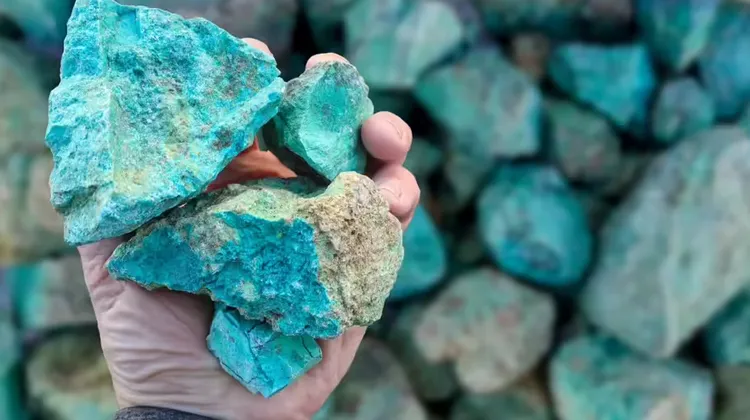
Copper oxide ores possess a range of geological, mineralogical, and metallurgical characteristics that distinguish them from primary sulfide deposits. These features not only determine the economic value of the ore but also directly influence the selection of beneficiation and hydrometallurgical processes. The following characteristics are particularly significant.
2.1 Mineralogical Diversity and Secondary Alteration
Copper oxide ores typically exhibit considerable mineralogical diversity due to their formation through long-term weathering and supergene alteration. Within a single deposit, multiple copper-bearing oxide minerals may coexist alongside residual sulfide phases and various alteration products. This secondary transformation often leads to irregular mineral boundaries and complex intergrowth textures. As a result, copper may not be uniformly distributed but instead concentrated in localized enrichment zones or fracture-controlled pathways. Such heterogeneity complicates mineral liberation during grinding and requires careful mineralogical evaluation before process design.
2.2 Variable Copper Grade and Chemical Speciation
A defining characteristic of copper oxide ores is the variability of copper grade and chemical form. Unlike many primary sulfide ores that display relatively consistent grade distribution, oxide zones may show significant vertical and lateral fluctuations in copper concentration. In addition, copper can occur in multiple chemical states within the same ore body, including acid-soluble copper, water-soluble copper, and structurally bound copper. This variation directly affects metallurgical performance, particularly in flotation response and leaching efficiency. Therefore, detailed chemical analysis and copper speciation studies are essential during feasibility assessments.
2.3 Porous Texture and Mechanical Properties
From a physical standpoint, copper oxide ores frequently exhibit porous and partially weathered textures. These structural features are a consequence of sulfide mineral oxidation and subsequent dissolution processes, which may leave void spaces and weakened rock matrices. In some deposits, the ore is relatively soft and friable, facilitating crushing and heap permeability during leaching operations. However, other deposits may contain zones of higher hardness or significant clay content, leading to challenges in grinding control and slurry rheology. The mechanical variability of oxide ore bodies therefore requires adaptive comminution strategies.
2.4 Surface Chemistry and Hydrophilicity
The surface properties of copper oxide minerals differ fundamentally from those of sulfide minerals. Oxide minerals generally possess hydrophilic surfaces due to hydroxylation and exposure of reactive metal ion sites. This characteristic reduces their natural affinity for conventional sulfide flotation collectors and makes them highly sensitive to pulp chemistry conditions such as pH and ionic strength. Surface reactivity may also vary depending on the degree of alteration and exposure history. As a result, copper oxide ores often demand precise chemical conditioning to achieve acceptable recovery levels.
2.5 Association with Reactive Gangue Minerals
Copper oxide deposits are frequently hosted in carbonate or silicate rock formations and may contain substantial quantities of iron oxides, manganese oxides, and clay minerals. These gangue components significantly influence metallurgical behavior. Carbonate minerals, for instance, can increase acid consumption during leaching operations, while iron and manganese oxides may adsorb reagents during flotation and reduce selectivity. Clay minerals can increase slurry viscosity and promote slime coating on copper particles, thereby lowering recovery efficiency. The interaction between copper minerals and gangue phases is therefore a critical factor in process optimization.
2.6 Metallurgical Variability and Processing Sensitivity
Perhaps the most challenging characteristic of copper oxide ores is their metallurgical variability. Even within the same deposit, different ore blocks may respond differently to identical processing conditions. Some oxide ores dissolve rapidly under acidic conditions and are well suited to heap leaching, while others exhibit slow dissolution rates due to encapsulation within silicate matrices or strong mineral bonding. Similarly, flotation recovery may vary widely depending on the degree of copper liberation and surface alteration. This unpredictability underscores the importance of pilot testing and geometallurgical modeling before full-scale plant operation.
まとめ
In essence, copper oxide ores are defined by mineralogical complexity, irregular grade distribution, reactive surface chemistry, and strong interaction with diverse gangue minerals. These characteristics collectively make oxide ores more technically demanding than many sulfide systems, yet they also offer flexible processing opportunities when properly characterized and engineered.
3. Global Distribution of Copper Oxide Ores

Copper oxide deposits are widely distributed in major copper-producing countries, including:
チリ
ペルー
Democratic Republic of Congo
アメリカ合衆国
オーストラリア
中国
In porphyry copper systems, oxide ores are typically located in the upper oxidation zone above primary sulfide mineralization.
Many open-pit mines initially exploit oxide ore zones due to their near-surface occurrence and lower stripping costs. As sulfide resources decline, the proportion of oxide ore processing is increasing worldwide.
4. Main Copper Oxide Minerals and Their Floatability
The flotation behavior of copper oxide ores is strongly influenced by the type of copper-bearing minerals present. Unlike sulfide minerals, which naturally respond to conventional collectors, oxide copper minerals exhibit highly variable surface properties. Their floatability depends on mineral structure, degree of hydration, solubility, and ability to react with sulfidizing agents.
Understanding the differences between major oxide minerals is essential for predicting copper recovery and selecting an appropriate beneficiation strategy.
4.1 Malachite
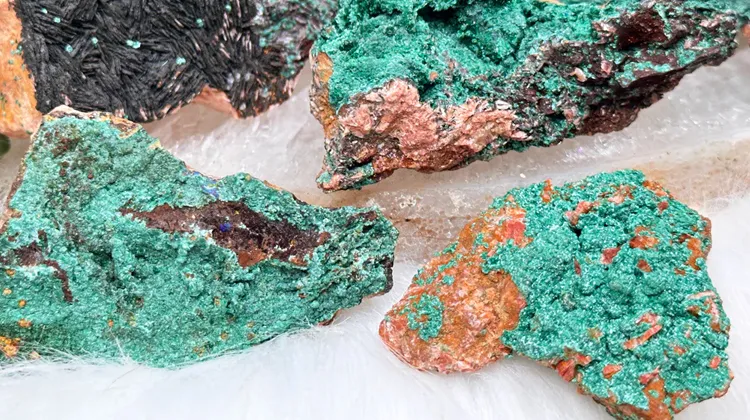
Malachite is one of the most common copper carbonate minerals found in oxidized copper deposits. It forms through the weathering of primary sulfide minerals and is widely distributed in near-surface zones.
In flotation systems, malachite shows relatively good response after surface conditioning. It can form a reactive surface layer under controlled chemical conditions, which enhances collector adsorption and improves hydrophobicity. However, recovery is highly sensitive to pH value and reagent dosage. Over-conditioning may reduce selectivity.
Because of its relatively stable structure and moderate reactivity, malachite-bearing ores are generally considered more amenable to flotation compared with other oxide types.
4.2 Azurite

Azurite is another copper carbonate mineral commonly associated with malachite. Although chemically similar, its flotation kinetics may differ slightly due to crystal structure variations.
Azurite typically responds well to fatty acid collectors under appropriate pulp conditions. However, it may partially alter during grinding, which can influence reagent consumption. In mixed carbonate systems, its flotation behavior is closely linked to sulfidization efficiency and pulp chemistry stability.
4.3 Cuprite

Cuprite is a copper oxide mineral with relatively high copper content. It often forms under strong oxidation conditions and may occur in massive or fine-grained forms.
From a flotation perspective, cuprite can achieve moderate recovery when properly conditioned. Its surface can be chemically activated, allowing collector adsorption. However, fine cuprite particles may be prone to slime coating, particularly when associated with iron oxides or clay minerals, which can reduce flotation selectivity.
4.4 Chrysocolla
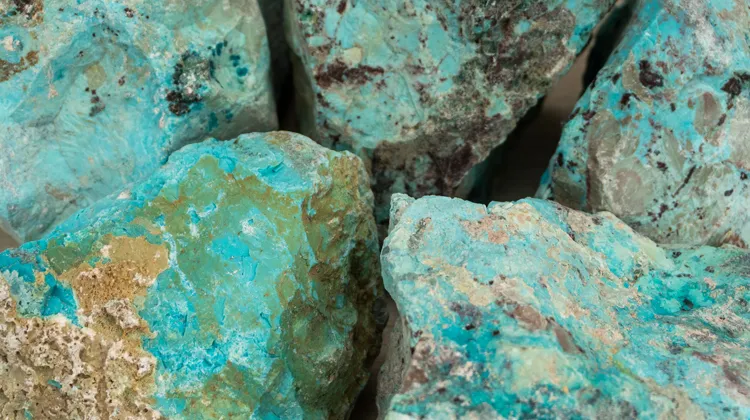
Chrysocolla is a hydrated copper silicate mineral widely recognized as one of the most difficult copper oxide minerals to float. In this mineral, copper is incorporated within a silicate framework, limiting surface reactivity.
Its strong hydrophilic nature reduces collector adsorption efficiency, and sulfidization reactions are often incomplete or unstable. As a result, flotation recovery of chrysocolla is typically low and highly variable. In many operations, chrysocolla-rich ores are more suitable for acid leaching rather than flotation concentration.
4.5 Brochantite
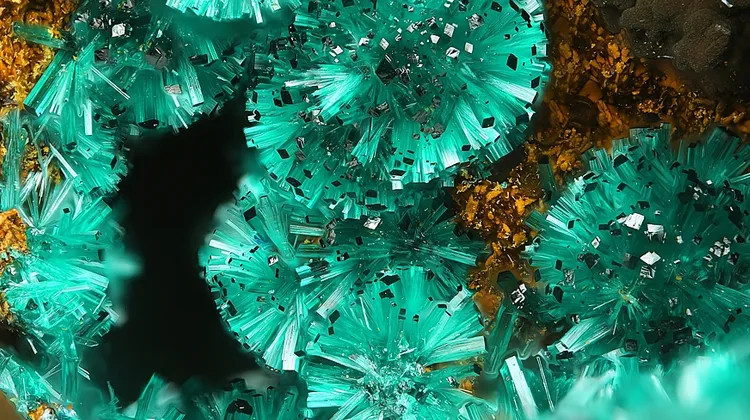
Brochantite is a secondary copper sulfate mineral commonly found in arid oxidation environments. Although it contains copper, its flotation performance is generally weaker than carbonate minerals.
Partial dissolution during pulp preparation may alter chemical equilibrium and affect reagent performance. Recovery is possible under controlled conditions but often remains moderate.
4.6 Chalcanthite
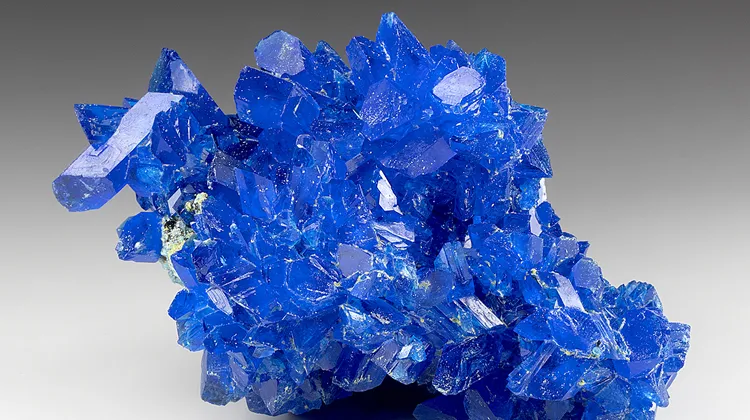
Chalcanthite is a highly soluble copper sulfate mineral. Because it dissolves rapidly in water, it cannot be effectively recovered through conventional flotation.
Instead, it increases dissolved copper concentration in the pulp, which may influence reagent consumption and reduce flotation selectivity. Ores containing significant chalcanthite are typically more suitable for hydrometallurgical processing routes.
Comparative Overview of Floatability Mechanisms
To better illustrate the differences between major copper oxide minerals, the following table summarizes their structural characteristics and flotation behavior:
| Mineral | Mineral Type | Surface Reactivity | Dissolution Behavior | Typical Floatability | Processing Suitability |
|---|---|---|---|---|---|
| マラカイト | Carbonate | 中程度から高い | Slight | Good (with conditioning) | 浮選 |
| アズライト | Carbonate | 適度 | Slight | Moderate to good | 浮選 |
| キュプライト | Oxide | Reactive | 低い | 適度 | 浮選 |
| Chrysocolla | Silicate | 低い | ミニマル | 貧しい | Leaching preferred |
| Brochantite | Sulfate | 適度 | Partial | Moderate to low | Selective treatment |
| Chalcanthite | Soluble sulfate | Low stability | 高い | Very poor | Leaching |
Key Factors Affecting Floatability
In practice, floatability differences among copper oxide minerals are influenced by several technical factors:
Degree of surface hydration
Availability of active copper sites
Mineral solubility in pulp
Association with gangue minerals
Particle size and liberation degree
Carbonate and simple oxide minerals generally show better response under controlled chemical conditions, while silicate and highly soluble sulfate minerals present greater recovery challenges.
5. Factors Affecting the Beneficiation of Copper Oxide Ore
The beneficiation performance of copper oxide ore is influenced by multiple geological, mineralogical, and operational factors. Due to the inherent variability of oxide deposits, recovery rates can differ significantly even within the same mine. Understanding these influencing factors is essential for improving flotation efficiency, reducing reagent consumption, and stabilizing plant performance.
5.1 Mineral Composition and Copper Distribution
The overall mineral composition of the ore body plays a decisive role in beneficiation efficiency. Ores dominated by carbonate and simple oxide minerals generally respond better to flotation compared with silicate-rich or highly soluble sulfate ores.
In addition to mineral type, the distribution pattern of copper within the ore significantly affects recovery. When copper minerals are finely disseminated or intergrown with gangue, incomplete liberation may occur even after grinding. Conversely, coarse and well-liberated particles typically show improved flotation performance.
Variations in copper occurrence—such as free particles versus structurally bound copper—directly impact metallurgical response and process selection.
5.2 Degree of Liberation and Grinding Size
Grinding size is one of the most critical operational parameters in copper oxide beneficiation. Insufficient grinding may result in poor mineral liberation, while excessive grinding can generate large quantities of ultra-fine particles.
Fine slimes often:
Reduce flotation selectivity
Increase reagent consumption
Promote entrainment of gangue minerals
Lower concentrate grade
Optimizing particle size distribution is therefore essential to balancing recovery and concentrate quality. Laboratory grinding tests and mineral liberation analysis are typically required to determine the optimal grind size.
5.3 Pulp Chemistry and pH Control
Copper oxide flotation is highly sensitive to pulp chemical conditions. Parameters such as pH value, ionic strength, and dissolved metal ion concentration can significantly influence collector adsorption and mineral surface reactions.
Improper pH control may lead to:
Weak sulfidization reactions
Excessive hydroxylation of mineral surfaces
Reduced collector efficiency
Activation of unwanted gangue minerals
Stable pulp chemistry is particularly important in mixed oxide systems where soluble copper salts may alter electrochemical equilibrium.
5.4 Reagent Type and Dosage
The choice and dosage of flotation reagents strongly affect copper recovery. Copper oxide minerals generally require specific reagent systems compared to sulfide ores.
Key reagent-related factors include:
Efficiency of sulfidizing agents
Selectivity of collectors
Compatibility with depressants
Resistance to reagent adsorption by gangue minerals
Overdosing may cause reagent wastage and reduced selectivity, while underdosing may lead to poor hydrophobic surface formation. Careful reagent optimization through bench-scale testing is essential.
5.5 Gangue Mineral Interference
Gangue minerals can significantly interfere with copper recovery. Carbonate minerals may consume acid or alter pulp pH, while iron and manganese oxides may adsorb collectors and reduce effective dosage.
Clay minerals are particularly problematic because they:
Increase slurry viscosity
Cause slime coating
Reduce flotation bubble-particle attachment efficiency
High gangue content often requires additional process control measures to maintain acceptable recovery rates.
5.6 Ore Variability and Geometallurgical Factors
Copper oxide deposits frequently display strong spatial variability in mineral composition, hardness, and copper solubility. As a result, different ore blocks may respond differently to identical processing conditions.
Geometallurgical mapping and ore blending strategies are therefore crucial for stabilizing plant feed characteristics. Without proper ore control, recovery rates may fluctuate significantly, leading to unstable concentrate grade and increased operating costs.
Summary of Key Influencing Factors
The following table provides a concise overview of major factors affecting copper oxide ore beneficiation:
| 要素 | Main Impact on Beneficiation | Potential Operational Risk |
|---|---|---|
| Mineral type | Determines floatability | Low recovery of refractory minerals |
| Liberation degree | Affects separation efficiency | Copper loss in tailings |
| 粉砕サイズ | Influences slime generation | Reduced concentrate grade |
| Pulp pH and chemistry | Controls surface reactions | Poor selectivity |
| Reagent system | Determines hydrophobicity formation | High reagent consumption |
| Gangue content | Interferes with flotation | Increased processing cost |
| Ore variability | Causes performance fluctuation | 不安定なプラント運転 |
6. Processing and Treatment Methods for Copper Oxide Ore
Copper oxide ores require specialized processing methods due to their distinct mineralogical and surface chemical characteristics. Unlike sulfide copper ores, which are readily treated by conventional flotation, oxide ores often demand modified flotation systems, hydrometallurgical treatment, or combined processing routes.
The selection of a suitable treatment method depends on copper mineral type, grade, gangue composition, and economic considerations.
6.1 Flotation of Copper Oxide Ore
Flotation remains one of the most widely used beneficiation methods for copper oxide ores, particularly when carbonate and simple oxide minerals are dominant.
Process Principle
Because oxide minerals do not naturally respond to conventional sulfide collectors, flotation typically requires surface modification. Chemical conditioning alters the mineral surface to improve collector adsorption and create hydrophobic behavior.
The general flotation flow includes:
粉砕と研磨
Pulp conditioning
Collector addition
Rougher and cleaner flotation stages
Suitable Ore Types
Flotation is most effective for:
Malachite-dominant ores
Cuprite-bearing ores
Mixed oxide-sulfide ores
利点
Produces higher-grade concentrate
Compatible with existing flotation plants
Lower acid consumption compared to leaching
制限事項
Lower recovery for silicate-rich ores
Sensitive to pulp chemistry
Higher reagent consumption in complex ores
Flotation is often chosen when ore grade is moderate to high and mineral liberation is achievable through grinding.
6.2 Acid Leaching and Hydrometallurgical Treatment
For ores that are difficult to float—especially silicate-rich or highly oxidized deposits—acid leaching is often the preferred method.
Process Principle
In acid leaching, copper is dissolved into solution using sulfuric acid. The dissolved copper ions are then recovered through solvent extraction and electrowinning (SX-EW), producing high-purity cathode copper.
Typical hydrometallurgical flow:
粉砕
Heap leaching or agitation leaching
Solvent extraction (SX)
Electrowinning (EW)
Suitable Ore Types
Chrysocolla-bearing ores
Low-grade oxide ores
Highly weathered deposits
Ores with fine copper dissemination
利点
Effective for low-grade ores
Lower energy requirement compared to grinding-intensive flotation
Produces LME-grade cathode copper directly
制限事項
High acid consumption in carbonate-rich ores
Slower processing cycle (especially heap leaching)
Requires water management and environmental control
Hydrometallurgical processing has become increasingly important as high-grade sulfide resources decline globally.
6.3 Combined Flotation–Leaching Process
In many deposits, copper oxide ore occurs as a mixed system containing both floatable and refractory minerals. In such cases, a combined beneficiation route is adopted.
Process Concept
Flotation is used to recover easily floatable copper minerals.
Tailings or middlings are subjected to leaching to extract remaining copper.
This hybrid approach maximizes total copper recovery while controlling operating costs.
アプリケーションシナリオ
Mixed oxide-sulfide ores
Ores with variable mineral distribution
Medium-grade deposits requiring high recovery
利点
Higher overall recovery
Flexible adaptation to ore variability
Improved economic efficiency
This method is commonly applied in large-scale copper beneficiation plants where maximizing resource utilization is critical.
6.4 Direct Reduction or Specialized Chemical Treatment
In certain complex oxide deposits, alternative methods such as reduction roasting or chemical extraction are considered.
These processes aim to:
Alter mineral structure
Improve metal liberation
Enhance downstream recovery
However, due to higher capital and operating costs, they are typically used only when conventional flotation and leaching are ineffective.
Comparison of Major Processing Methods
The following table summarizes the main characteristics of copper oxide ore treatment methods:
| Processing Method | Suitable Ore Type | Copper Grade Range | Recovery Potential | Capital Cost | Processing Speed |
|---|---|---|---|---|---|
| 浮選 | Carbonate & simple oxide ores | Medium–High | Moderate–High | 中くらい | Fast |
| Acid Leaching (SX-EW) | Low-grade & silicate-rich ores | Low–Medium | 適度 | Medium–High | Slow–Moderate |
| Flotation + Leaching | Mixed ores | 中くらい | 高い | より高い | 適度 |
| Chemical/Reduction Treatment | Refractory ores | 変数 | Case-dependent | 高い | 変数 |
7. Strategic Importance of Developing Copper Oxide Resources
As global copper demand increases and sulfide resources decline:
Copper oxide ores serve as critical supplementary resources
Improved recovery rates enhance economic value
Advanced beneficiation technologies extend mine life
Efficient development of copper oxide resources is essential for ensuring long-term copper supply sustainability.
結論
Copper oxide ores are playing an increasingly important role in the global copper industry. Although their complex mineralogy and hydrophilic surface properties make beneficiation challenging, optimized flotation and hydrometallurgical technologies can achieve satisfactory recovery rates.
Future improvements in mineralogical analysis, reagent development, and process optimization will further enhance the economic value of copper oxide deposits.


 Japanese
  English
  Russian
  Arabic
  Vietnamese
  Spanish
  French
  Portuguese
  Chinese