



Every year, billions of tons of iron ore are mined worldwide to support global steel production. As the essential raw material for steel, iron ore plays a crucial role in infrastructure, construction, transportation, and heavy industry.
With increasing demand for high-grade iron ore and stricter environmental standards, understanding different iron ore types, global production trends, price fluctuations, and processing technologies has become more important than ever.
This article provides a complete overview of iron ore — from mineral types to extraction methods and processing plant solutions.
What Is Iron Ore?
Iron Ore Definition
鉄鉱石 is a naturally occurring rock or mineral that contains iron (Fe) in concentrations high enough to be commercially mined and processed into metallic iron. In simple terms, iron ore is the primary raw material used to produce iron and steel, which are essential for construction, machinery, and industrial infrastructure.
Most iron ore contains iron in the form of oxides, carbonates, or hydroxides. Before it can be used as metal, iron ore must undergo crushing, grinding, beneficiation, and smelting to remove impurities and increase the iron content.
What Is Iron Ore Made Of?
Iron ore is mainly composed of iron-bearing minerals along with impurities such as silica, alumina, phosphorus, and sulfur. The most common iron minerals are:
ヘマタイト(Fe₂O₃) – a red-brown iron oxide, widely mined, can often be used as direct shipping ore (DSO).
磁鉄鉱(Fe₃O₄) – a black magnetic oxide, high-grade but requires fine grinding and magnetic separation.
Limonite (FeO(OH)·nH₂O) – a yellow-brown hydrated iron oxide, usually lower grade and requires drying before processing.
Siderite (FeCO₃) – an iron carbonate, lower iron content and needs roasting before smelting.
の iron content (iron grade) typically ranges from 30% to over 70%, depending on the ore type and deposit. High-grade iron ores generally require less beneficiation and have higher market value.
How Is Iron Ore Formed?
Iron ore deposits formed over millions to billions of years through various geological processes. The most important formation mechanisms include:
Banded Iron Formation (BIF)
Ancient oceans contained dissolved iron. When oxygen levels increased, iron reacted and precipitated as iron oxides, forming layered sedimentary rock known as banded iron formations. These BIFs are the source of most large hematite deposits today.Weathering and Supergene Enrichment
In tropical and subtropical regions, natural weathering processes concentrated iron and formed high-grade hematite deposits near the surface.
These processes explain why iron ore is commonly found in large sedimentary basins and ancient continental shields 世界中で。.
Where Is Iron Ore Found?
Iron ore is widely distributed globally, but commercial mining in large quantities occurs primarily in:
オーストラリア – home to massive high-grade hematite deposits.
ブラジル – major exporter of both hematite and magnetite ores.
中国 – both mining and domestic consumption are high.
インド – rich in hematite reserves, mainly used for steel production.
ロシア – significant magnetite and hematite deposits.
Australia and Brazil dominate global iron ore exports due to their large high-grade deposits and efficient mining infrastructure.
What Is Iron Ore Used For?
Over 90% of iron ore is used to produce steel, which is essential for:
Buildings and construction
Bridges and railways
Automobiles and ships
Machinery and industrial equipment
Energy and power infrastructure
In addition to steelmaking, iron ore also has secondary uses:
セメント製造, as an iron corrective material
Iron powder production for various industrial applications
Heavy industrial components and castings
Why Iron Ore Processing Is Necessary
Raw iron ore cannot be used directly in most industrial applications. Before smelting, it must undergo a series of processing steps to increase the iron content (Fe%) and remove impurities. These steps include:
粉砕 – reducing the size of the raw ore for easier handling and subsequent grinding.
研削 – turning ore fragments into fine particles to liberate iron minerals from waste rock.
Beneficiation – concentrating iron content using magnetic separation, gravity separation, or flotation methods.
Pelletizing or Sintering – forming small agglomerated pellets or sinter cakes suitable for blast furnace feeding.
The purpose of iron ore processing is to improve blast furnace efficiency, reduce emissions, and produce high-quality iron concentrate. Efficient equipment and optimized processing lines play a critical role in achieving stable production capacity and maintaining high concentrate grades.
Iron Ore Price Trends
Iron ore prices are commonly benchmarked against 62% Fe fines.
Key Factors That Influence Iron Ore Prices
Global steel demand
Infrastructure investment
Supply chain disruptions
Freight and shipping costs
Environmental policies
Geopolitical risks
In recent years, iron ore prices have fluctuated roughly between:
80 – 150 USD per ton (62% Fe benchmark)
Higher-grade iron ore (65% Fe and above) usually trades at a premium due to improved blast furnace efficiency and lower emissions.
For mining companies, increasing concentrate grade through efficient crushing and beneficiation directly improves profitability.
4 Main Types of Iron Ore
Iron ore is not a uniform material. It occurs in several mineral forms, each with unique chemical composition, iron content, physical properties, and processing requirements. The four main types of commercially mined iron ore are magnetite, hematite, limonite, and siderite. Understanding these differences is crucial for mining operations, steel producers, and engineers designing processing plants.
磁鉄鉱(Fe₃O₄)

Magnetite is an iron oxide mineral with the chemical formula Fe₃O₄ and is considered one of the highest-grade iron ores available. Its iron content can reach up to 72%, making it highly valuable for premium steel production. One of its distinguishing characteristics is its strong magnetic property, which enables efficient separation from waste rock using magnetic separation methods.
Geologically, magnetite is typically formed in igneous and metamorphic environments, occurring in large, massive deposits suitable for open-pit mining. Although the iron content is high, magnetite often contains silica and other impurities interlocked with the iron minerals. Fine grinding is generally required before magnetic separation to produce a high-grade concentrate.
Magnetite processing involves multi-stage crushing, fine grinding, and magnetic separation. While this process requires significant energy, the resulting concentrate is of high purity, making magnetite ideal for blast furnaces or pellet production.
ヘマタイト(Fe₂O₃)
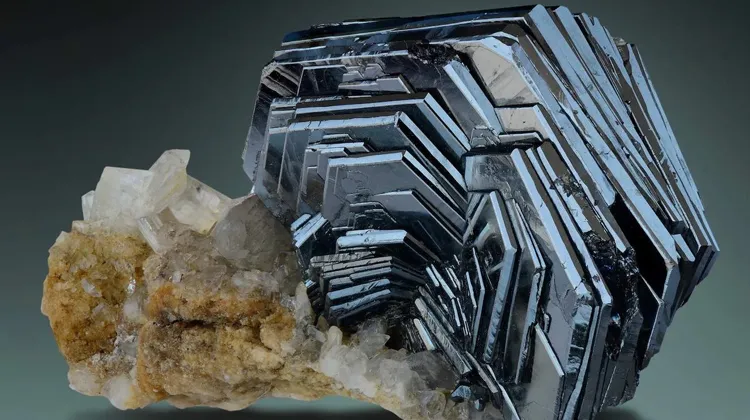
Hematite is the most widely mined iron ore worldwide, with the chemical formula Fe₂O₃ and iron content ranging between 60–70%. Its reddish-brown color distinguishes it from magnetite. Hematite is weakly magnetic or non-magnetic, which influences beneficiation methods.
High-grade hematite deposits can sometimes be used directly after crushing and screening, known as Direct Shipping Ore (DSO). Lower-grade hematite requires beneficiation through gravity separation or flotation. Hematite commonly forms in sedimentary environments such as ancient banded iron formations, and major producers include Brazil, Australia, India, and South Africa.
Compared to magnetite, hematite is easier to process and less energy-intensive, making it highly favored in steel production.
Limonite (FeO(OH)·nH₂O)

Limonite is a hydrated iron oxide formed by the weathering of other iron minerals. Its iron content typically ranges from 55–65%, and it appears yellow-brown with a porous texture. High moisture content and impurities make limonite more challenging to process than magnetite or hematite.
Limonite deposits are usually found near the surface, especially in tropical and subtropical regions. Beneficiation may involve drying, multi-stage crushing, and gravity separation to improve iron grade. Despite its lower iron content, limonite is used in steelmaking and sometimes in cement production where high-grade ores are unavailable.
Siderite (FeCO₃)

Siderite is an iron carbonate mineral with about 48% iron content. Gray to brown in color, it contains carbon dioxide within its structure, which requires roasting before magnetic separation. Siderite is less commonly used in large-scale steel production due to additional processing requirements, including crushing, screening, and thermal treatment.
Siderite deposits are usually sedimentary and sometimes associated with coal or shale layers. Proper processing ensures that even this lower-grade ore can contribute to regional iron supply.
Comparative Table of Iron Ore Types
| Iron Ore Type | 化学式 | Iron Content (Fe%) | 色 | Magnetic Properties | Hardness (Mohs) | Typical Processing Method | 工業用途 |
|---|---|---|---|---|---|---|---|
| 磁鉄鉱 | Fe₃O₄ | Up to 72% | Black/Dark Gray | Strongly magnetic | 5.5–6.5 | Crushing → Grinding → Magnetic Separation | Premium steel concentrate, pellets |
| 赤鉄鉱 | Fe₂O₃ | 60–70% | Red/Brown | Weak/Non-magnetic | 5–6 | Crushing → Screening → Gravity Separation/Flotation | Direct shipping ore, steel production |
| Limonite | FeO(OH)·nH₂O | 55–65% | Yellow-Brown | Non-magnetic | 4–5 | Drying → Multi-stage Crushing → Gravity Separation | Steelmaking, cement correction |
| Siderite | FeCO₃ | ~48% | Gray/Brown | Non-magnetic | 3.5–4.5 | Crushing → Roasting → Magnetic Separation | Regional iron supply, small-scale steel |
主なポイント
磁鉄鉱: Highest iron content, energy-intensive beneficiation, ideal for high-grade steel and pellets.
赤鉄鉱: Widely mined, easier to process, often used as DSO, lower energy cost than magnetite.
Limonite: Lower-grade, high moisture, requires drying and beneficiation, used when higher-grade ores are unavailable.
Siderite: Lowest iron content, requires roasting, suitable for regional supply, less common globally.
Understanding these four main types of iron ore allows mining operators and plant designers to choose appropriate crushing, grinding, and beneficiation systems, optimizing energy use, concentrate quality, and overall project profitability.
How to Get Iron from Iron Ore?
Extracting iron from iron ore is a multi-step process that transforms raw minerals into usable iron for steelmaking and other industrial applications. The method used depends on the type of iron ore, its iron content, and the desired form of iron. The main industrial processes include blast furnace smelting そして direct reduced iron (DRI) production, both of which rely on high-quality iron ore and efficient beneficiation.
1. Crushing and Grinding
The first step in iron extraction is reducing the size of the ore. Large rocks mined from open-pit or underground operations are broken down into smaller fragments using jaw crushers and cone crushers. After primary and secondary crushing, the ore is further ground into fine particles using ボールミル または 立型ローラーミル.
This step is crucial because the efficiency of subsequent beneficiation methods depends on the particle size. Finer particles allow better separation of iron minerals from gangue, improving concentrate grade and overall process efficiency. Crushing and grinding also prepare the ore for pelletizing or sintering, which is essential for smooth blast furnace operation.
2. Beneficiation
After crushing and grinding, iron ore typically undergoes 選鉱 to increase the iron content (Fe%) and remove impurities such as silica, alumina, phosphorus, and sulfur. Beneficiation methods vary depending on the ore type:
磁気分離: Used for magnetite and some limonite ores, exploiting their magnetic properties to separate iron minerals from waste rock.
重力分離: Suitable for high-density ores like hematite and limonite, using hydrocyclones, shaking tables, or jigs to concentrate iron.
浮選: Applied for low-grade ores, where chemicals selectively bind to iron particles, allowing separation from silica and other impurities.
Proper beneficiation increases iron concentrate quality and reduces energy consumption in the smelting process.
3. Pelletizing or Sintering
Iron concentrates are often too fine for direct use in a blast furnace. Therefore, they are agglomerated into pellets or sinter:
Pelletizing: Fine iron particles are mixed with binders and rolled into small balls (6–16 mm), then fired at high temperature.
Sintering: Fine ore is heated just below melting point to form porous masses suitable for furnace use.
Agglomeration improves permeability in the blast furnace, ensuring efficient gas flow, uniform temperature, and high-quality molten iron.
4. Smelting — Blast Furnace Method
The traditional method to get iron from iron ore is smelting in a blast furnace:
Iron ore (pellets or sinter) is layered with coke (carbon source) and 石灰岩 (flux).
Hot air is blown into the furnace, generating carbon monoxide (CO).
Carbon monoxide reduces iron oxides into metallic iron according to chemical reactions like:
Fe2O3+3CO→2Fe+3CO2Fe_2O_3 + 3CO → 2Fe + 3CO_2
Molten iron collects at the bottom of the furnace, while impurities form slag on top, which is removed.
The resulting molten iron can then be cast or further processed into steel using converters or electric arc furnaces.
5. Direct Reduced Iron (DRI) Process
An alternative to the blast furnace is direct reduced iron production, which uses natural gas or coal as reducing agents at lower temperatures:
Iron ore pellets or lumps are fed into a shaft furnace.
Gases such as CO and H₂ reduce the iron oxides directly to solid iron, called sponge iron.
DRI is particularly useful for regions without access to coking coal or where energy efficiency and environmental considerations are priorities.
DRI can be used directly in electric arc furnaces or melted for steel production, offering flexibility in modern iron and steel plants.
6. Post-Processing and Refining
After smelting or DRI production, iron may undergo additional processes to adjust chemical composition and remove impurities:
Desulfurization: Removes sulfur to prevent steel brittleness.
Dephosphorization: Reduces phosphorus content, improving steel strength.
Alloying: Adding elements such as chromium, nickel, or manganese to create specific steel grades.
These steps ensure the final iron or steel product meets industrial specifications for construction, machinery, transportation, and infrastructure applications.
Summary of Iron Extraction Steps
| Step | Purpose | Typical Equipment | 注記 |
|---|---|---|---|
| Crushing & Grinding | Reduce ore size for better beneficiation | Jaw crusher, cone crusher, ball mill, vertical roller mill | Prepares ore for separation and agglomeration |
| Beneficiation | Increase Fe% and remove impurities | Magnetic separators, gravity separators, flotation cells | Improves concentrate grade and furnace efficiency |
| Pelletizing/Sintering | Form iron concentrate into furnace-ready shapes | Pelletizing discs, rotary kilns, sinter machines | Improves blast furnace permeability |
| Smelting (Blast Furnace) | Convert iron oxides to molten iron | Blast furnace, hot air blast system | Uses coke and flux to reduce iron |
| Direct Reduced Iron (DRI) | Reduce iron oxides to solid sponge iron | Shaft furnace | Alternative to blast furnace; energy efficient |
| Post-Processing | Refine iron/steel quality | Desulfurization, alloying units | Produces industrial-grade iron and steel |
Iron Ore Processing Plant Equipment
An efficient iron ore processing plant relies on specialized equipment designed to transform raw iron ore into high-quality concentrate suitable for steelmaking. The choice of machinery depends on the type of ore, its iron content, and the production capacity of the plant. Selecting the right equipment not only improves operational efficiency but also reduces energy consumption, maintenance costs, and downtime.
Iron ore processing generally involves several major stages: crushing, grinding, beneficiation, pelletizing or sintering, and sometimes roasting. Each stage requires specific equipment that is optimized for the ore type being processed.
1. Crushing Equipment
The first step in any iron ore processing plant is primary and secondary crushing. Large rocks from the mine are reduced in size to allow further processing and beneficiation. Common crushing equipment includes:
Jaw Crushers: Used for primary crushing of large rocks into smaller, manageable pieces.
Cone Crushers: Used for secondary or tertiary crushing, producing finer, more uniform particle sizes.
Impact Crushers: Sometimes used for softer iron ores to achieve desired particle size distribution.
Proper crushing ensures that the downstream grinding and separation processes operate efficiently.
2. Grinding Equipment
After crushing, iron ore typically requires fine grinding to liberate iron minerals from gangue materials. Grinding equipment includes:
Ball Mills: Rotating cylindrical mills that use steel balls to grind ore into fine particles.
Vertical Roller Mills (VRM): Energy-efficient mills that grind ore and reduce particle size while lowering energy consumption.
Rod Mills: Sometimes used for ores that require less fine grinding.
Fine grinding prepares the ore for magnetic separation, gravity concentration, or flotation, depending on the ore type.
3. Beneficiation Equipment
Beneficiation increases the iron content and removes impurities. Equipment selection is largely based on ore mineralogy:
Magnetic Separators: Used for magnetite and some limonite ores, exploiting magnetic properties to separate iron minerals.
Gravity Separation Machines: Shaking tables, spiral concentrators, and jigs concentrate hematite and other high-density ores.
Flotation Cells: Used for low-grade ores where chemical reagents separate iron minerals from silica and other impurities.
Choosing the right beneficiation equipment maximizes concentrate grade and recovery rate.
4. Pelletizing and Sintering Equipment
Fine iron concentrate is often too small for blast furnace use, so it must be agglomerated:
Pelletizing Discs / Balling Drums: Fine iron particles are rolled into small pellets with binders.
Rotary Kilns: Fired at high temperature to harden pellets.
Sinter Machines: Heat fine iron ore along with flux and coke breeze to form sinter cakes for furnace use.
Agglomeration improves permeability and efficiency in blast furnaces, reducing energy consumption and increasing iron yield.
5. Roasting Equipment (for specific ores)
Certain ores, such as siderite or some limonite types, require thermal treatment before magnetic separation:
Rotary Kilns: Heat ore to drive off CO₂ or moisture, converting it into a more magnetic or dense form.
Fluidized Bed Roasters: Offer efficient and uniform heating for finer ores.
Roasting improves beneficiation efficiency and concentrate quality.
6. Ancillary Equipment
An iron ore processing plant also relies on several auxiliary machines to ensure smooth operation:
Vibrating Screens: For size separation after crushing or grinding.
Conveyors and Feeders: To move materials between stages.
Thickeners and Filters: For dewatering concentrates or tailings.
Dust Collectors and Environmental Systems: To maintain safe and compliant operations.
These supporting machines are critical for reducing downtime, maintaining consistent feed rates, and ensuring environmental compliance.
7. Equipment Selection Considerations
When designing an iron ore processing plant, operators must consider:
Ore Type and Mineralogy – Determines whether magnetic separation, gravity, or flotation is required.
生産能力 – Higher throughput requires larger crushers, mills, and separators.
エネルギー効率 – Vertical roller mills and modern magnetic separators can reduce energy consumption.
Maintenance and Reliability – Robust equipment ensures consistent production and minimizes operational costs.
Final Product Specifications – Pellet size, concentrate grade, and moisture content affect equipment choice.
Choosing the correct combination of equipment is crucial to maximize yield, maintain product quality, and ensure profitability.
結論
Iron ore remains the backbone of global steel production and industrial development.
Understanding iron ore types, production trends, price fluctuations, and extraction processes helps mining operators design efficient processing plants and improve profitability.
If you are planning an iron ore crushing plant or beneficiation system, customized equipment selection and plant design are essential for long-term performance.
Contact us to discuss your iron ore processing requirements and explore tailored solutions for your project.


 Japanese
  English
  Russian
  Arabic
  Vietnamese
  Spanish
  French
  Portuguese
  Chinese