



In recent years, the global market for small britadores de mandíbula has experienced continuous and structurally driven growth across mining, construction, and construction waste recycling industries.
Unlike traditional interpretations that view small jaw crushers as simply “smaller and cheaper alternatives” to large crushing plants, the reality is that they represent a fundamental shift in how material processing systems are designed and deployed.
The increasing demand for compact crushing equipment is not only related to cost considerations. It is closely connected to broader changes in project organization, environmental regulations, logistics optimization, and investment behavior in industrial sectors.
To understand the pricing structure of small jaw crushers and the reasons behind their rising popularity, it is necessary to examine the issue from three interconnected perspectives: engineering logic, industrial application trends, and economic decision-making models.
1. The Real Position of a Small Jaw Crusher in Industrial Systems
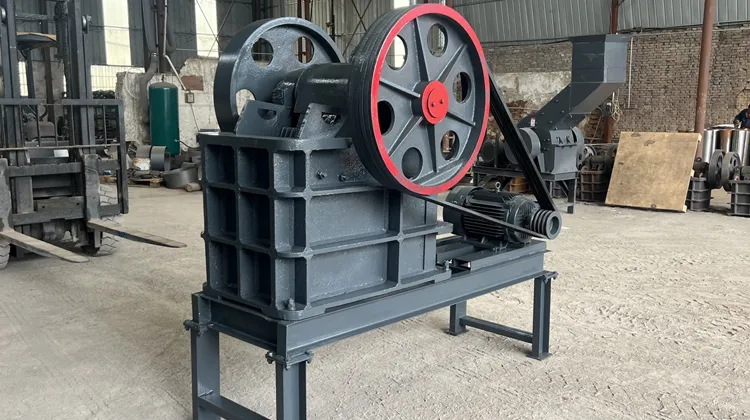
A small jaw crusher is a primary crushing machine designed to reduce large rocks or construction waste into smaller, manageable sizes through compressive force between a fixed jaw plate and a moving jaw plate.
However, its industrial role goes far beyond a simple size reduction function.
In a complete crushing production line, the jaw crusher is typically responsible for the first-stage processing of raw materials. This stage is critical because it determines the stability, efficiency, and downstream load of the entire system.
In real-world applications, the machine must be able to handle a wide range of materials, including high-hardness rocks such as granite and basalt, as well as irregular construction waste containing concrete, bricks, and embedded steel fragments.
This means that the equipment must be structurally robust, mechanically stable, and operationally predictable under harsh working conditions.
Because of this, small jaw crushers remain one of the most essential pieces of equipment in mining and aggregate production systems, despite decades of technological evolution in the industry.
2. Why the Global Demand for Small Jaw Crushers Is Increasing
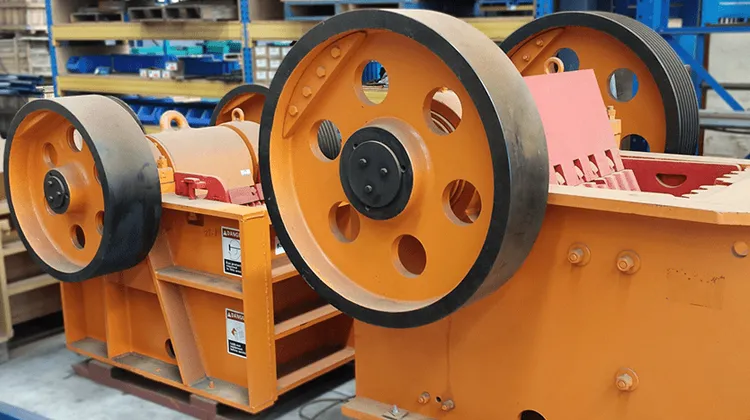
2.1 Structural Shift in Engineering Project Models
One of the most significant factors driving market demand is the transformation of global engineering project structures.
In the past, mining and aggregate production were typically organized around large centralized facilities designed for continuous high-volume output.
However, modern infrastructure development has shifted toward more distributed project structures, characterized by:
- Shorter project cycles
- Smaller and geographically dispersed construction sites
- Increased demand for temporary production setups
- Higher transportation costs for raw materials
In this new environment, large fixed crushing plants often become inefficient due to their installation complexity, long setup time, and high infrastructure requirements.
Small jaw crushers, on the other hand, offer a more flexible deployment model. They can be installed relatively quickly, operated in limited space conditions, and adapted to different working environments with minimal infrastructure requirements.
As a result, they are increasingly viewed as “mobile production units” rather than traditional stationary equipment.
2.2 Construction Waste Recycling as a Structural Industry Driver
Another major factor influencing demand is the global expansion of construction waste recycling policies.
In many regions, construction waste is no longer treated as disposable material but as a recoverable resource within a circular economy framework.
This shift has fundamentally changed how demolition materials are processed.
Instead of transporting waste materials to centralized processing plants, small jaw crushers enable on-site crushing operations. This allows concrete blocks, bricks, and mixed demolition waste to be directly converted into reusable aggregates.
From an economic perspective, this approach significantly reduces transportation costs, minimizes handling steps, and increases the overall efficiency of material reuse.
As a result, small jaw crushers have become a key enabling technology in modern recycling-oriented construction workflows.
2.3 Investment Behavior Shift Toward Risk-Controlled Equipment Selection
The third major driver is the evolution of investment strategies in mining and construction-related industries.
Rather than focusing exclusively on maximum production capacity, modern investors increasingly prioritize:
- Controlled initial capital expenditure
- Predictable operational costs
- Faster return on investment cycles
- Reduced financial exposure to market volatility
Small jaw crushers align well with these investment priorities because they offer a more gradual and scalable entry into production operations.
Instead of requiring large upfront capital investment, they allow operators to start with manageable production capacity and expand gradually based on market demand.
This flexibility significantly reduces financial risk, particularly in emerging markets and small-to-medium mining operations.
3. Why Small Jaw Crusher Prices Vary So Widely
One of the most common questions in the market is why small jaw crusher prices can vary so significantly between different suppliers and configurations.
The answer lies in the fact that “small jaw crusher” is not a single standardized product category, but rather a broad range of engineering solutions with different structural and performance levels.
3.1 Capacity and Structural Engineering Define Base Cost
The first and most fundamental pricing factor is production capacity, which directly determines the structural design of the equipment.
Higher-capacity machines require:
- Reinforced frame structures to withstand greater mechanical stress
- Larger feed openings to accommodate bigger material sizes
- More powerful drive systems to maintain crushing efficiency
- Enhanced wear-resistant components for extended service life
These engineering requirements significantly increase manufacturing complexity and cost.
Therefore, price differences are not arbitrary; they reflect fundamentally different levels of mechanical capability and design strength.
3.2 Material Quality Determines Lifecycle Economics
In crushing equipment, wear and mechanical fatigue are unavoidable operational realities.
Key components such as jaw plates, bearings, eccentric shafts, and structural frames directly influence equipment longevity and maintenance frequency.
Higher-quality materials typically result in:
- Longer operational lifespan of critical components
- Reduced frequency of unplanned downtime
- Lower long-term maintenance costs
- Improved stability under continuous operation
Although such machines may require higher initial investment, they often provide superior total cost efficiency over their lifecycle.
3.3 Mobility Systems Transform Equipment into Integrated Engineering Units
The introduction of mobile configurations has significantly increased the complexity and cost of small jaw crushers.
A mobile crushing system is no longer a single machine but an integrated engineering platform that includes:
- A chassis system designed for mobility across different terrains
- Material feeding and conveying systems for continuous operation
- Power systems, either diesel or electric, depending on application
- Integrated electrical control systems for coordinated operation
This transformation from “single equipment” to “system-based solution” is one of the key reasons behind price variations in the market.
3.4 Automation and Intelligent Control Systems Add Operational Value
Modern small jaw crushers are increasingly equipped with automation technologies that improve operational efficiency and reduce manual intervention.
These systems may include:
- Automatic lubrication systems to ensure consistent mechanical performance
- Real-time monitoring of operational parameters
- Fault detection and predictive maintenance alerts
- Remote operation and control capabilities
While these features do not directly increase crushing capacity, they significantly enhance equipment reliability, reduce downtime risk, and improve overall operational efficiency.
From a commercial perspective, this transforms the machine from a purely mechanical tool into a managed production asset.
4. Why Chinese Manufacturers Dominate the Global Supply Chain
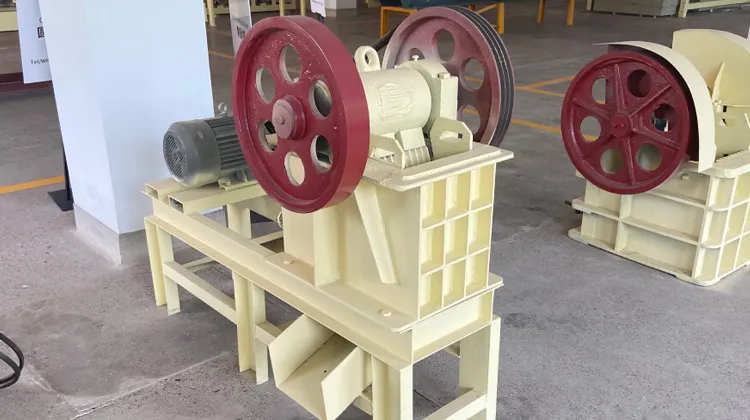
The growing presence of Chinese small jaw crushers in global markets is not solely driven by price competitiveness.
Instead, it is the result of a comprehensive industrial ecosystem that integrates manufacturing flexibility, supply chain maturity, and application adaptability.
Chinese manufacturers typically offer:
- High customization capability based on different ore types and working conditions
- Shorter production and delivery cycles due to mature industrial supply chains
- Strong spare parts availability, reducing operational downtime risks
- Extensive engineering experience across diverse international project environments
These combined advantages make Chinese equipment particularly attractive to international buyers who prioritize operational reliability and project continuity.
5. Equipment Selection Should Be Based on Application Logic, Not Price Alone
In practical engineering scenarios, selecting a small jaw crusher solely based on price often leads to inefficient or costly long-term outcomes.
A more rational selection approach considers:
- Material hardness and composition
- Required production capacity and continuity
- Site mobility requirements
- Maintenance accessibility
- Expected project duration and scalability needs
Proper equipment matching ensures not only higher production efficiency but also improved long-term economic performance.
Perguntas frequentes
What industries commonly use small jaw crushers?
They are widely used in mining, aggregate production, construction, and construction waste recycling industries.
Why do small jaw crusher prices vary so much?
Because different models represent different engineering levels in capacity, structure, materials, mobility systems, and automation integration.
Are mobile jaw crushers worth investing in?
Yes, especially for projects that require flexible deployment, on-site processing, and reduced material transportation costs.


 Portuguese
  English
  Russian
  Arabic
  Vietnamese
  Spanish
  French
  Japanese
  Chinese