



1. Introdução
In the construction industry, the terms concrete e cement are often used interchangeably. However, this is a common misconception. While they are closely related, they are not the same material.
Understanding the difference between concrete and cement is essential not only for engineers and contractors, but also for global buyers who are sourcing cement production lines or concrete batching equipment. Choosing the wrong system can lead to costly mistakes and inefficient operations.
In this guide, we will explain the differences between cement and concrete in terms of composition, manufacturing process, applications, curing methods, and classifications, helping you make more informed technical and purchasing decisions.
2. What is Cement?

Cement is a fine powder that acts as a binding material in construction. It is primarily produced from limestone, clay, and other minerals that are processed at very high temperatures.
When water is added, cement undergoes a chemical reaction known as hydration, which allows it to harden and bind other materials together.
2.1 Key Features of Cement:
- It is made mainly from limestone and mineral components
- It exists in powder form before use
- It functions as a binder or adhesive
- It comes in different types, such as Ordinary Portland Cement (OPC) and rapid hardening cement
In simple terms: Cement is the “glue” in construction materials
3. What is Concrete?

Concrete is a composite construction material made by mixing cement with water, sand (fine aggregates), and gravel or crushed stone (coarse aggregates).
Unlike cement, concrete is the final building material used in structural applications. Once mixed and poured, it hardens into a strong and durable solid.
3.1 Key Features of Concrete:
- Alta resistência à compressão
- Excellent durability and long service life
- High plasticity before setting, allowing flexible shaping
- Widely used in infrastructure such as buildings, roads, bridges, and dams
In simple terms: Concrete is the finished structural material
4. Key Differences Between Cement and Concrete
While the basic distinction between cement and concrete is widely known, many users searching for “concrete vs cement” are actually looking for deeper, practical differences that affect performance, cost, and real-world applications.
This section focuses on advanced and practical differences, helping engineers, contractors, and buyers better understand how these materials behave in real projects.
4.1 Performance in Real Construction Conditions
One of the most critical differences lies in real-world performance.
Cement alone is not designed to handle structural stress. It is prone to shrinkage and cracking when exposed to environmental changes such as temperature fluctuations or moisture loss.
Concrete, however, is engineered for durability. The inclusion of aggregates allows it to resist environmental stress and maintain long-term stability.
4.2 Structural Behavior and Strength Mechanism
The strength of a material depends on how it distributes internal stress.
Cement paste has a relatively weak internal structure and tends to fail under load.
Concrete, by contrast, benefits from a composite structure where aggregates form a rigid framework, and cement binds them together.
Key Performance Comparison
| Aspecto | Cimento | Concrete |
|---|---|---|
| Structural role | Not load-bearing | Fully load-bearing |
| Crack resistance | Baixo | Alto |
| Shrinkage tendency | Alto | Controlled |
| Durabilidade a longo prazo | Limitado | Excelente |
| Suitable for structures | No | Yes |
4.3 Scalability in Industrial Production
Cement production is a large-scale industrial process that requires significant investment, continuous operation, and specialized equipment.
Concrete production is more flexible. It can be carried out in batching plants or directly on-site, making it adaptable to different project sizes and locations.
Production and Logistics Comparison
| Aspecto | Cement Production | Concrete Production |
|---|---|---|
| Production type | Centralized | Decentralized |
| Equipment scale | Grandes instalações industriais | Flexible batching systems |
| Production location | Fixed factory | On-site or plant-based |
| Delivery method | Bulk transport | Ready-mix delivery |
| Time sensitivity | Baixo | Alto |
4.4 Sensitivity to Mix Design
Cement quality is determined during manufacturing and remains relatively stable.
Concrete performance, however, is highly dependent on mix design. Even small variations in water-cement ratio or aggregate grading can significantly affect final performance.
4.5 Transportation and Time Constraints
Cement is easy to store and transport as a dry material, allowing long-distance logistics without immediate time pressure.
Concrete has a limited working time after mixing. It must be delivered and poured quickly before setting begins, making logistics and scheduling critical.
Handling and Workability Comparison
| Aspecto | Cimento | Concrete |
|---|---|---|
| Storage condition | Dry storage | Cannot be stored after mixing |
| Transport flexibility | Alto | Limited time window |
| Workability duration | Long | Short (requires immediate use) |
| On-site dependency | Baixo | Alto |
4.6 Environmental and Sustainability Impact
Cement production is energy-intensive and contributes significantly to CO₂ emissions due to high-temperature clinker production.
Concrete, while still dependent on cement, can be optimized by using supplementary materials such as fly ash or slag, reducing environmental impact.
4.7 Flexibility in Application
Cement has limited standalone applications and is mainly used as a binding component.
Concrete offers extensive flexibility. It can be molded into complex shapes, reinforced with steel, and adapted for different environmental conditions.
Resumo
Rather than viewing cement vs concrete as a simple definition difference, it is more useful to understand their roles in practice:
- Cement is a standardized industrial material
- Concrete is a custom-engineered construction solution
This distinction is essential for making the right decisions in construction, production, and equipment investment.
5. Manufacturing Process Difference
Understanding the difference between the cement manufacturing process e o concrete production process is essential for both engineers and equipment buyers.
Although both materials are closely related, their production methods are fundamentally different in terms of complexity, scale, and technology.
5.1 Cement Manufacturing Process
Cement is produced through a high-temperature industrial process that transforms raw materials into clinker and then into fine powder.
The typical steps include:
- Raw material extraction – limestone and clay are mined from quarries
- Crushing and pre-homogenization – raw materials are crushed and blended for consistency
- Raw meal preparation – materials are ground into fine powder
- Preheating and calcination – chemical decomposition begins in the preheater
- Clinker production (≈1450°C) – materials are burned in a rotary kiln to form clinker
- Moagem – clinker is ground with gypsum into cement
- Packaging and storage – final product is stored or packed for distribution
This process is energy-intensive and requires large-scale equipment such as rotary kilns and grinding mills.
Common search intent covered: cement manufacturing process step by step / how cement is made
5.2 Concrete Production Process
Concrete is produced by mixing materials in precise proportions, either in a batching plant or directly at the construction site.
The typical steps include:
- Aggregate preparation – sand and gravel are screened and stored
- Accurate weighing – materials are measured using automated (PLC) systems
- Mixing – all components are mixed for 60–120 seconds to ensure uniformity
- Transportation – concrete is delivered via mixer trucks
- Pouring and placement – concrete is poured into molds or structures
- Curing – the material hardens and gains strength over time
This process focuses on precision and timing rather than high-temperature transformation.
Common search intent covered: concrete production process / how concrete is made
Cement vs Concrete Production Comparison
| Aspecto | Cement Manufacturing | Concrete Production |
|---|---|---|
| Process type | Thermal & chemical | Physical mixing |
| Temperature | Very high (~1450°C) | Ambient |
| Production scale | Grandes instalações industriais | Flexible (plant or on-site) |
| Equipamento | Kiln, mill, preheater | Batching plant, mixer |
| Time sensitivity | Baixo | High (must be used quickly) |
| Consumo de energia | Muito alto | Moderado |
6. Applications in Construction
6.1 Role of Cement
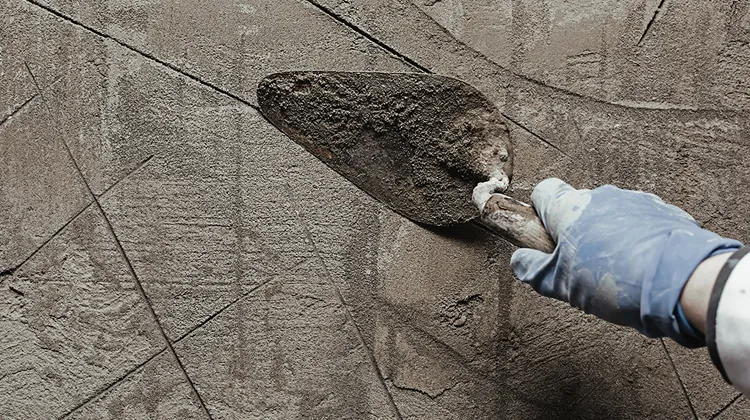
Cement mainly serves as a agente ligante that holds aggregates together.
Different types of cement are used to meet specific engineering requirements:
- Rapid hardening cement for faster construction
- Low heat cement for large-scale structures to reduce cracking
6.2 Role of Concrete

Concrete is used as the primary structural material in construction projects.
It is commonly applied in:
- Fundamentos
- Beams and columns
- Estradas e pontes
- Industrial structures
Concrete provides the strength, stability, and durability required for modern infrastructure.
7. Curing Differences
Curing is a critical process that affects the final strength and durability of materials.
7.1 Purpose of Curing:
- Cement: to ensure proper hydration reaction
- Concrete: to prevent cracking and improve bonding strength
7.2 Curing Time:
Cement:
- Initial setting time: 1–3 hours
- Final setting time: 3–6 hours
- Typical curing period: 3–7 days
Concrete:
- Initial setting time: 4–8 hours
- Final setting time: 8–12 hours
- Standard curing time: at least 7 days (14 days recommended for better performance)
7.3 Curing Methods:
Cement:
- Covered with wet cloth or kept moist
Concrete:
- Water spraying
- Application of curing compounds
- Thermal insulation in cold environments
Proper curing significantly improves the strength and lifespan of concrete structures.
8. Advantages of Concrete Over Cement
Concrete offers several advantages compared to using cement alone:
- Much higher compressive strength
- Better resistance to weather and corrosion
- Greater flexibility in shaping complex structures
- More cost-effective due to the use of aggregates
- Lower long-term maintenance costs
These advantages make concrete the preferred material for large-scale construction projects.
9. Types of Cement and Concrete
9.1 Types of Concrete:
- Prestressed Concrete
- High Performance Concrete (HPC)
9.2 Types of Cement:
By composition:
- Cimento Portland Comum (OPC)
- Portland Slag Cement (PSC)
- Fly Ash Cement
- Pozzolanic Cement
By strength grade:
- 32.5
- 42.5
- 52.5
- Rapid hardening (R type)
10. Why Are Cement and Concrete Often Confused?
There are several reasons for this confusion:
- The terms are often misused in everyday language
- Cement is a key ingredient of concrete
- Non-professionals may not understand the technical differences
For example, many people refer to a “concrete floor” as a “cement floor,” which is technically incorrect.
11. Equipment Perspective
Understanding the difference between cement and concrete is especially important when selecting industrial equipment.
11.1 Cement Equipment:
- forno rotativo
- Fábrica de cimento
- Packing machine
11.2 Concrete Equipment:
- Concrete batching plant
- Concrete mixer
Selecting the correct system ensures efficiency, cost control, and product quality.
12. How to Choose the Right Equipment
When choosing between cement and concrete production systems, consider the following factors:
- Final product (cement or concrete)
- Required production capacity
- Level of automation
- Availability of raw materials
- Environmental and regulatory requirements
Making the right choice can significantly improve operational efficiency and return on investment.
13. Conclusion
Cement is an essential ingredient, while concrete is the final construction material used in structures.
Understanding this fundamental difference will help you avoid costly mistakes, improve engineering decisions, and choose the right equipment for your business.
FAQ: Concrete vs Cement
1. Can cement be used without making concrete?
Yes, cement can be used on its own, but only in limited applications such as grouting, patching, or as part of mortar. However, using cement alone for structural purposes is not recommended because it lacks strength and durability compared to concrete.
2. Why does concrete last longer than cement-based materials?
Concrete lasts longer because it includes aggregates that improve internal stability and reduce shrinkage. These aggregates help distribute stress more evenly, making concrete more resistant to cracking, weathering, and long-term wear.
3. Is ready-mix concrete better than site-mixed concrete?
Ready-mix concrete is generally more consistent in quality because it is produced in controlled batching plants with precise measurements. However, site-mixed concrete can be more flexible for small projects or remote locations where transportation is difficult.
4. What happens if too much cement is used in concrete?
Using too much cement in concrete can actually reduce performance. It may increase shrinkage, lead to cracking, and raise costs without significantly improving strength. Proper mix design is more important than simply adding more cement.
5. How does the water-cement ratio affect concrete quality?
The water-cement ratio is one of the most critical factors in concrete performance. Too much water reduces strength and durability, while too little water makes the mix difficult to work with. Maintaining the right balance is essential for achieving optimal results.
6. What is the difference between mortar and concrete?
Mortar is a mixture of cement, water, and fine sand, while concrete includes both fine and coarse aggregates. Mortar is mainly used for bonding bricks or blocks, whereas concrete is used for structural construction.
7. Can concrete be recycled?
Yes, concrete can be recycled and reused as aggregate for new construction projects. This makes it a more sustainable material compared to many alternatives and helps reduce construction waste.
8. Which material is more environmentally friendly: cement or concrete?
Concrete can be more environmentally friendly when optimized properly, especially if supplementary materials like fly ash or slag are used to reduce cement content. Cement production itself has a higher carbon footprint due to energy-intensive processes.
9. How do you choose between a cement plant and a concrete batching plant?
The choice depends on your business model. Cement plants are suitable for large-scale, long-term industrial production, while concrete batching plants are better for localized supply and faster project-based returns.
10. What are the most common mistakes when working with concrete?
Some common mistakes include improper mix ratios, insufficient curing, poor timing during pouring, and lack of


 Portuguese
  English
  Russian
  Arabic
  Vietnamese
  Spanish
  French
  Japanese
  Chinese