



In modern industries such as cement, metallurgy, power generation, chemical processing, mining, and waste treatment, high-temperature equipment forms the core of the entire production system. Without a reliable refractory lining system, the operational stability, service life, and energy efficiency of these installations would be severely compromised.
Within any refractory system, refractory cement plays a fundamental role. It is not only the bonding material that holds the refractory structure together, but also a critical factor that directly influences kiln campaign life, thermal efficiency, maintenance frequency, and total operating cost.
From rotary kilns and preheaters to calciners, boilers, incinerators, and various industrial furnaces, refractory cement is the invisible but essential foundation of long-term stable operation.
1. What Is Refractory Cement? — Understanding Its Material Nature and Engineering Function
Refractory cement is a special type of high-temperature bonding material, typically based on calcium aluminate, high-alumina minerals, or other heat-resistant binder systems. Unlike ordinary Portland cement, which is designed for ambient-temperature construction, refractory cement is engineered specifically for high-temperature service conditions.
In practical engineering, refractory cement is rarely used as a standalone structural material. Instead, it serves as the key binder in:
Refractory castables
Refractory repair materials
High-temperature mortars and gunning mixes
Its unique value lies in the fact that, after installation, the refractory lining does not weaken with rising temperature. On the contrary, through ceramic bonding and sintering reactions, the structure becomes mechanically stronger and more stable at operating temperature.
From an engineering perspective, refractory cement is the critical bridge between design performance and real service performance.
2. Material Composition and Working Mechanism of Refractory Cement

From a materials science point of view, most refractory cements belong to the calcium aluminate cement (CAC) system. Their main mineral phases typically include:
CA, CA₂, C₁₂A₇ and related calcium aluminate compounds
High-purity alumina and other special refractory mineral components
During installation and curing at ambient temperature, refractory cement develops its initial strength through hydration reactions, allowing the castable or lining structure to be safely demolded and heated up.
As the temperature increases during drying and commissioning, a series of transformations occur inside the material:
Dehydration of hydrates
Solid-state reactions
Crystal phase transformation and sintering densification
Once the temperature exceeds approximately 800–1200°C, a stable ceramic bonding structure is formed. This explains why refractory cement-based systems gain strength instead of losing it at high temperatures, which is the fundamental difference from ordinary cement.
3. Key Performance Advantages of Refractory Cement
Refractory cement is indispensable in high-temperature industrial systems because it meets several extremely demanding requirements at the same time.
First, it offers exceptional temperature resistance. Depending on the formulation and alumina content, different grades of refractory cement can withstand continuous service temperatures of 1300°C, 1500°C, or even above 1800°C.
Second, it provides excellent mechanical stability at elevated temperatures. While conventional cement rapidly loses strength above a few hundred degrees, refractory cement systems develop a stronger and more stable ceramic-bonded structure during operation.
Third, it shows outstanding thermal shock resistance, which is critical for cement kilns and furnaces that are frequently exposed to start-stop cycles and rapid temperature fluctuations.
Finally, refractory cement-based systems demonstrate strong resistance to chemical attack and mechanical abrasion, especially in high-alkali, high-sulfur, high-chlorine, and high-dust-load environments.
4. Typical Applications in Cement and Heavy Industries
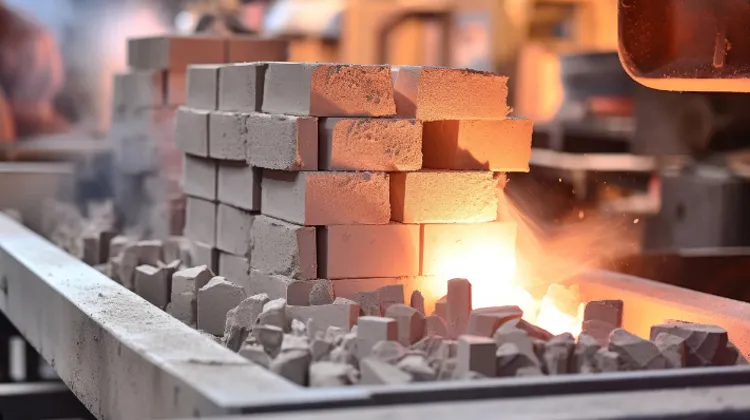
In a modern cement production line, refractory cement is involved in almost every high-temperature section.
In the forno rotativo system, it is used in:
Castable linings
Kiln hood and burning zone repair areas
Transition zones and high-wear sections
In the preheater and calciner system, it is widely applied in:
Cyclone cones and riser ducts
Calciner linings
Tertiary air ducts and high-temperature gas ducts
In the cooler and waste heat recovery system, it is used in:
High-temperature zones of grate coolers
Waste heat boilers and hot air ducts
High-temperature dust collection and gas treatment systems
In metallurgy, power generation, chemical processing, and waste treatment industries, almost all:
Industrial furnaces
Incinerators
Boiler systems
High-temperature reactors
depend on refractory systems that are fundamentally bonded by refractory cement.
5. The Engineering Relationship Between Refractory Cement and Refractory Castable Systems

In real projects, engineers do not simply “buy refractory cement.” Instead, they select a complete refractory castable or precast lining system, within which refractory cement plays the role of the core binding skeleton.
From a technical point of view:
Refractory cement = the core that determines bonding strength and high-temperature performance
Aggregates and powders = the components that determine wear resistance, corrosion resistance, and volume stability
Together, they define the lining’s:
Service life
Failure mode
Maintenance frequency
Total lifecycle cost
Therefore, the selection of refractory cement is, in essence, an integral part of the overall refractory system engineering design.
6. How to Select the Right Refractory Cement for Cement Plants and EPC Projects
In engineering practice, selecting refractory cement is far more complex than simply choosing a product with a high temperature rating.
First, the thermal profile of each application area must be carefully analyzed, including peak temperature, fluctuation frequency, and risk of local overheating.
Second, the process atmosphere and material chemistry must be evaluated. High alkali, high sulfur, high chlorine, or reducing atmospheres impose very different demands on refractory systems.
Third, the installation method and project schedule must be considered. Monolithic casting, gunning, or emergency repair all require different setting behavior and early strength characteristics.
Finally, decisions should be made based on total lifecycle cost, not just initial material price.
7. The Strategic Value of Refractory Cement in Modern Cement Industry Development
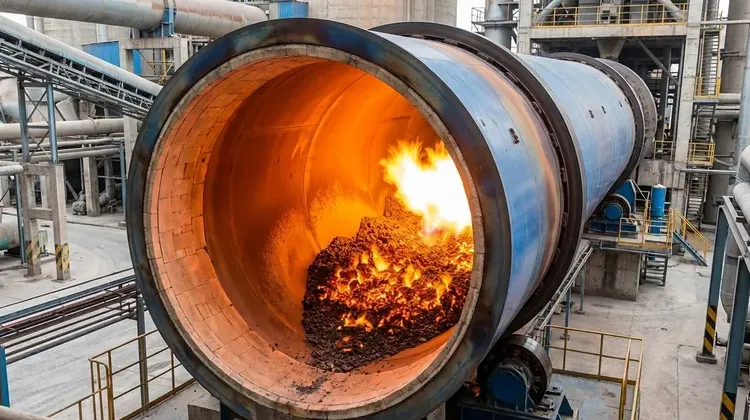
As the cement industry continues to move toward larger production lines, higher energy efficiency, alternative fuels, and co-processing of waste materials, kiln operating conditions are becoming increasingly complex and severe.
In this context, high-performance refractory cement is no longer just an auxiliary material. It has become:
A key factor in extending kiln campaign life
An important tool for reducing unplanned shutdowns
A critical support for controlling specific heat consumption per ton of clinker
From a strategic perspective, the reliability of the refractory system is now part of the core competitiveness of a modern cement plant.
8. Conclusion: Refractory Cement — The Invisible Foundation of High-Temperature Systems
Although refractory cement is not as visible as rotary kilns, roller presses, or classifiers, it is one of the most fundamental material technologies supporting safe and stable high-temperature operation.
For cement producers, EPC contractors, and industrial investors, a correct understanding and proper selection of refractory cement systems often means:
Longer continuous operation cycles
Lower maintenance risks
More stable production rhythm
Better-controlled total operating costs


 Portuguese
  English
  Russian
  Arabic
  Vietnamese
  Spanish
  French
  Japanese
  Chinese