


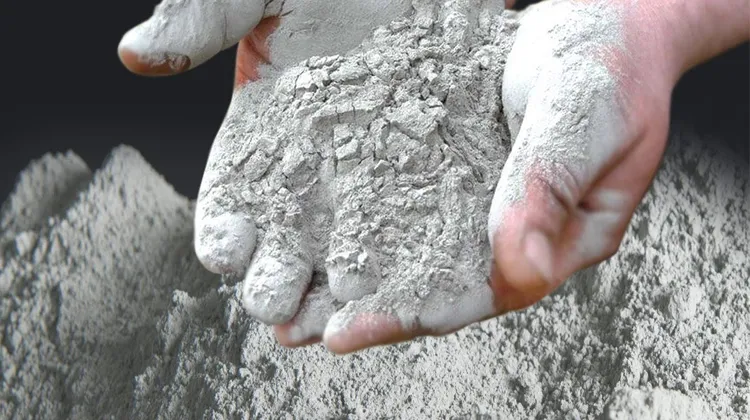
As global infrastructure projects continue to grow in scale, controlling temperature in concrete structures has become increasingly important. Traditional cement can generate a significant amount of heat during hydration, which may lead to internal stress and cracking, especially in large-volume concrete. To address this issue, low heat cement has been developed as a specialized material designed to reduce thermal stress and improve structural durability.
In practical construction environments, the heat generated during cement hydration does not dissipate evenly. This creates temperature differences between the interior and exterior of concrete structures, which can result in cracking. Low heat cement is specifically engineered to minimize this risk by reducing the overall heat of hydration and slowing down the reaction process.
1. What Is Low Heat Cement?

Low heat cement, also known as Low Heat Portland Cement (LHPC), is a specially engineered type of cement designed to minimize the amount of heat released during the hydration process. In cement chemistry, the term “low heat” refers to a reduced heat of hydration, which is the heat generated when cement reacts with water and begins to harden. This property is particularly important in large-scale construction, where temperature control inside concrete structures plays a critical role.
In conventional cement, hydration occurs relatively quickly, releasing a large amount of heat in a short period of time. While this is beneficial for early strength development, it can create serious challenges in mass concrete applications. When large volumes of concrete are poured, the heat generated inside the structure cannot dissipate easily. This leads to a temperature difference between the interior and the surface, which creates thermal stress. If this stress exceeds the tensile strength of the concrete, cracks may form.
Low heat cement is specifically developed to address this problem by slowing down the hydration reaction and reducing the total heat output. As a result, temperature rise within the concrete is more gradual and controlled. This significantly lowers the risk of thermal cracking and improves the overall durability of the structure.
From a materials engineering perspective, low heat cement is not simply “weaker” or “slower” cement. Instead, it is optimized for long-term performance rather than rapid early strength. While its initial strength gain may be slower compared to ordinary Portland cement, its later-age strength development is stable and reliable. This makes it particularly suitable for projects where structural integrity over time is more important than early construction speed.
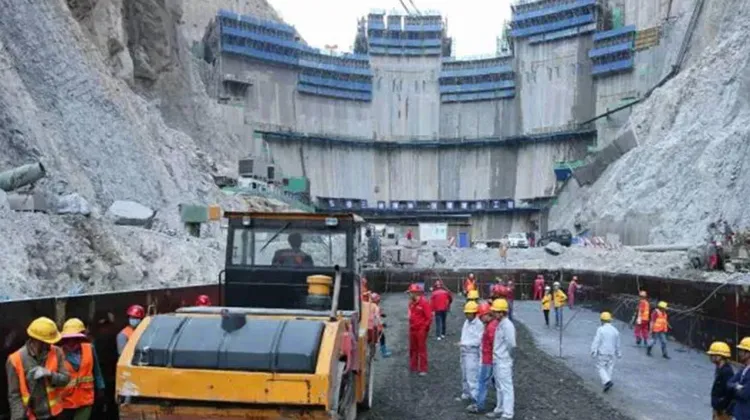
Because of these characteristics, low heat cement is widely used in mass concrete structures such as dams, large foundations, nuclear power plant bases, and other critical infrastructure projects where temperature control is essential.
2. How Is Low Heat Cement Manufactured?
The manufacturing process of low heat cement is broadly similar to that of ordinary Portland cement, but it requires more precise control at each stage to achieve reduced heat of hydration. The key lies in optimizing raw material composition, clinker formation, and grinding conditions. The process can be understood through the following stages:
Raw Material Selection and Proportioning
The production of low heat cement begins with the careful selection and proportioning of raw materials such as limestone, clay, and iron-bearing components. At this stage, the chemical composition of the raw mix is strictly controlled to ensure that the final clinker will have the desired mineral balance.
Unlike conventional cement production, the formulation is adjusted to limit compounds that contribute to high heat generation. This requires accurate batching, homogenization, and continuous monitoring, as even small variations in raw material ratios can affect the performance of the final product.
Clinker Composition Adjustment
A defining feature of low heat cement manufacturing is the deliberate modification of clinker mineral composition. In ordinary Portland cement, tricalcium silicate (C₃S) and tricalcium aluminate (C₃A) are present in higher amounts and are responsible for rapid hydration and heat release.
In low heat cement, the content of these compounds is reduced, while the proportion of dicalcium silicate (C₂S) is increased. Since C₂S hydrates more slowly and releases less heat, this adjustment significantly lowers the overall heat of hydration and allows for better temperature control in concrete.
Clinker Production in Forno rotativo
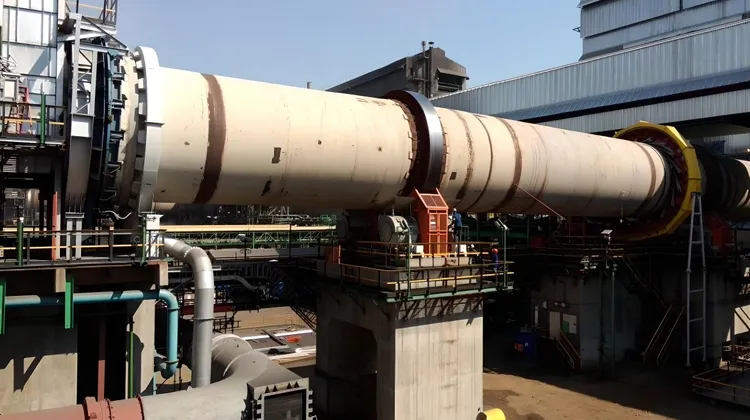
After homogenization, the raw mix is fed into a rotary kiln, where it is heated to high temperatures to form clinker. This stage is critical because the temperature profile and residence time directly influence the formation of clinker minerals.
For low heat cement, kiln operation must be carefully optimized to ensure the correct phase composition. Modern rotary kiln systems with advanced control technologies are often used to maintain stable conditions, improve energy efficiency, and ensure consistent product quality.
Clinker Cooling and Handling
Once clinker is discharged from the kiln, it is rapidly cooled to stabilize its mineral structure. Proper cooling is essential to preserve the desired proportions of C₂S and other phases that contribute to low heat performance.
Efficient clinker coolers not only improve product quality but also help recover heat energy, which can be reused in the production process, contributing to overall energy efficiency.
Grinding and Final Cement Production
The cooled clinker is then ground together with gypsum and, in some cases, supplementary materials to produce the final cement. Grinding plays a crucial role in determining the hydration rate and performance of the cement.
In low heat cement production, grinding fineness is carefully controlled. Excessively fine grinding may increase the hydration rate and partially offset the low heat benefits. Therefore, manufacturers aim for an optimal balance between particle size distribution and performance requirements.
Modern cement grinding systems, such as closed-circuit mills, are widely used to ensure consistent quality, improve efficiency, and reduce energy consumption.
Quality Control and Process Optimization
Throughout the entire manufacturing process, strict quality control measures are applied to ensure that the final product meets the required standards for low heat cement. This includes monitoring chemical composition, mineral phases, fineness, and performance characteristics.
Advanced process control systems and automation technologies are increasingly used in modern cement plants to improve consistency, reduce human error, and optimize production efficiency. These improvements are especially important for low heat cement, where performance depends heavily on precise control at every stage.
3. Main Features and Properties of Low Heat Cement
Low heat of hydration
One of the most defining characteristics of low heat cement is its significantly reduced heat of hydration, which can be more than 30% lower than that of ordinary Portland cement of the same strength grade. This helps control temperature rise within concrete and reduces the risk of thermal cracking.
características de desenvolvimento de força
Low heat cement typically shows slower early strength development because of its reduced reaction rate. However, this does not mean weaker performance overall. In fact, its long-term strength development is often very stable, and the strength at 28 days and even 90 days can match or exceed that of conventional cement.
Improved durability
Because low heat cement reduces internal cracking, it contributes to a denser and more uniform concrete structure. This results in better resistance to water penetration, chemical attack, and environmental stress, making it suitable for long-term infrastructure projects.
Better temperature control
Another important property is its lower adiabatic temperature rise, which is typically 5–10°C lower than that of medium heat or ordinary cement. This makes it highly effective in applications where temperature control is critical.
4. Applications of Low Heat Cement

Estruturas de concreto maciço
Low heat cement is widely used in mass concrete applications such as large foundations and thick slabs. In these structures, controlling internal temperature is essential to prevent cracking and ensure structural integrity.
Dam construction and hydraulic engineering
In large dam projects, the volume of concrete is enormous, and heat buildup can become a serious issue. Low heat cement is often the preferred choice because it helps maintain temperature stability and reduces the risk of structural damage.
Nuclear power plants and critical infrastructure
Projects such as nuclear power plant foundations and heavy bridge piers require strict control over temperature and long-term durability. Low heat cement provides the necessary performance to meet these demanding conditions.
Marine and water-related structures
Due to its improved durability and resistance to environmental stress, low heat cement is also suitable for marine structures, including ports and seawalls, where long-term exposure to water is a concern.
5. Future Trends and Industry Implications
As construction projects become larger and more complex, the demand for materials that can improve durability and reduce environmental impact continues to grow. Low heat cement is gaining increasing attention as a solution that addresses both structural performance and sustainability.
From a production perspective, this trend places higher demands on cement manufacturing equipment and process control. Advanced kiln systems, efficient grinding technologies, and optimized production lines are becoming essential to meet the strict requirements of low heat cement production.
For cement equipment manufacturers, understanding these evolving needs is not only important for technical development but also represents a valuable opportunity to expand in the global market.
Conclusão
Low heat cement plays a crucial role in modern construction, particularly in projects where temperature control and long-term durability are essential. By carefully adjusting raw materials, optimizing production processes, and utilizing advanced equipment, manufacturers can produce high-quality low heat cement that meets the demands of large-scale infrastructure.
As the industry continues to move toward more sustainable and efficient practices, low heat cement will remain an important material for balancing performance, durability, and environmental responsibility.
FAQs About Low Heat Cement
1. What is the difference between low heat cement and ordinary Portland cement?
The main difference lies in the amount of heat generated during hydration. Low heat cement produces less heat, making it suitable for mass concrete, while ordinary cement develops strength faster but generates more heat.
2. Is low heat cement more expensive than regular cement?
Low heat cement can be slightly more expensive due to stricter production requirements. However, it may reduce overall project costs by minimizing cracking and maintenance needs.
3. Can low heat cement be used in hot climates?
Yes, low heat cement is well-suited for hot climates. Its slower heat release helps reduce thermal stress and lowers the risk of cracking in concrete structures.
4. How long does low heat cement take to gain strength?
Low heat cement develops strength more slowly in the early stages. However, its strength continues to increase over time and can reach similar or higher levels compared to ordinary cement.
5. What equipment is used to produce low heat cement?
Low heat cement is produced using standard cement equipment such as rotary kilns, grinding mills, and clinker coolers, with more precise process control to ensure proper composition.


 Portuguese
  English
  Russian
  Arabic
  Vietnamese
  Spanish
  French
  Japanese
  Chinese