



1. Introdução
Galena is a lead sulfide mineral (PbS) and represents the most important and widely used source of commercial lead in the global mining and metallurgical industries. The majority of the world’s lead resources occur in the form of galena, making it a critical raw material for energy storage, construction, chemical, and radiation-shielding applications.
The use of galena dates back more than two thousand years. In AD 77, the Roman naturalist Pliny the Elder described galena and its smelting methods in his writings. Because galena has a relatively low melting point and is easy to smelt, it became one of the earliest metal ores exploited by human civilization and played an essential role in early industry, construction, and military applications.
Despite its industrial value, galena is also considered a potentially hazardous mineral due to its lead content. During crushing, grinding, beneficiation, and smelting, galena can release lead-bearing dust and fumes if not properly controlled. Long-term exposure may cause serious health problems and environmental contamination. Therefore, modern galena processing must strictly follow safety, environmental, and regulatory standards.
2. Physical and Chemical Properties of Galena
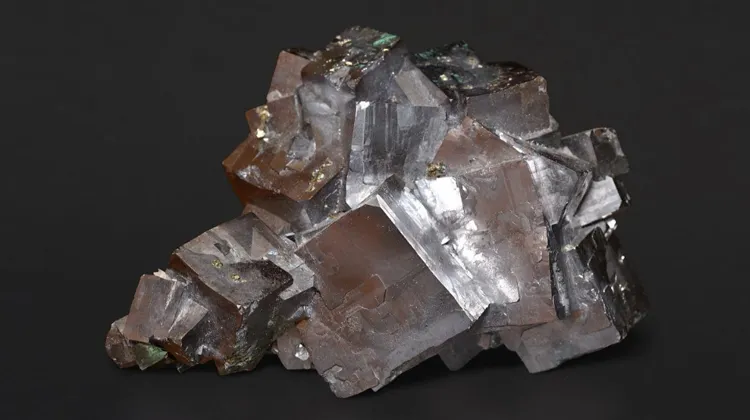
The physical and chemical properties of galena determine not only its geological identification but also its behavior during crushing, grinding, beneficiation, and smelting. Understanding these properties is essential for designing efficient processing flows and selecting appropriate equipment.
2.1 Crystal Structure and Visual Characteristics
Galena crystallizes in the isometric (cubic) crystal system, most commonly forming cubes, stepped cubes, or intergrown cubic aggregates. One of its most distinctive features is its perfect cubic cleavage, meaning it breaks cleanly along three mutually perpendicular planes.
This structural property has important industrial implications. During crushing and grinding, galena tends to fracture predictably along cleavage planes, which helps achieve effective mineral liberation at relatively coarse particle sizes. Compared with minerals that fracture irregularly, galena is generally easier to separate from gangue minerals during flotation.
Visually, galena exhibits a strong metallic luster and a lead-gray to silver-gray color. Fresh fracture surfaces are bright and reflective, although prolonged exposure to air may result in slight dulling due to surface oxidation.
2.2 Density and Specific Gravity
One of the most diagnostic properties of galena is its exceptionally high specific gravity, typically ranging from 7.4 to 7.6, which is significantly higher than most associated gangue minerals such as quartz or calcite.
This high density:
Makes galena easily recognizable in hand specimens
Contributes to its favorable behavior in gravity-assisted separation processes
Influences slurry behavior during flotation and thickening
In mineral processing plants, density differences between galena and gangue minerals play a supporting role in classification, sedimentation, and dewatering operations.
2.3 Hardness and Mechanical Behavior
Galena has a Mohs hardness of approximately 2.5, making it a relatively soft mineral. This low hardness means it can be scratched with a fingernail or a copper coin.
From a processing standpoint, this softness translates into:
Lower energy consumption during crushing and grinding
Reduced wear on liners and grinding media
Faster achievement of target particle size
However, the softness of galena also requires careful control of grinding conditions. Excessive grinding may generate fine lead-bearing particles, increasing the risk of dust formation and reducing flotation selectivity.
2.4 Chemical Composition and Variability
Chemically, galena consists primarily of lead sulfide (PbS), with a theoretical lead content of approximately 86.6%. This high lead concentration makes galena the most economically significant lead ore mineral.
In natural deposits, galena rarely occurs in a chemically pure form. It commonly contains:
Prata, often in solid solution, forming argentiferous galena
Minor amounts of copper, zinc, antimony, or bismuth
These trace elements can significantly affect the economic value of the ore. In particular, silver-rich galena ores are highly sought after, as silver can be recovered during smelting and refining, providing an important secondary revenue stream.
2.5 Chemical Stability and Reactivity
Under normal surface conditions, galena is chemically stable and relatively insoluble in water, which is why intact galena crystals pose limited immediate risk. However, during crushing, grinding, and smelting, the increased surface area and elevated temperatures can promote chemical reactions that release lead into dust, fumes, or process water.
This dual nature—stable in situ but hazardous when processed—makes galena a mineral that requires controlled industrial handling and strict environmental management.
3. How Is Galena Formed?

The formation of galena is closely tied to hydrothermal activity and metal transport within the Earth’s crust. Unlike minerals that crystallize directly from molten magma, galena typically forms when dissolved metals precipitate from circulating fluids under suitable physical and chemical conditions.
3.1 Hydrothermal Origin of Galena
Most galena deposits originate from low- to medium-temperature hydrothermal fluids. These fluids may be derived from:
Cooling magmatic systems
Deep-seated basinal brines
Metamorphic dehydration reactions
As these fluids migrate through faults, fractures, and porous rock units, they transport lead in solution. When conditions such as temperature, pressure, pH, or sulfur concentration change, lead combines with sulfur and precipitates as lead sulfide, forming galena.
3.2 Geological Environments Favorable for Galena Formation
Galena commonly forms in several geological settings:
Hydrothermal vein environments
Galena fills fractures and faults as veins, often accompanied by sphalerite, chalcopyrite, and pyrite. These deposits are structurally controlled and can extend to significant depths.Contact metamorphic zones
Where intrusive igneous bodies interact with carbonate or sedimentary rocks, chemical reactions create favorable conditions for galena deposition.Sedimentary basin systems
In large sedimentary basins, metal-rich fluids may migrate over long distances before depositing galena in permeable host rocks.
3.3 Major Deposit Types
From an economic geology perspective, galena is most commonly found in:
Hydrothermal lead-zinc deposits
These deposits form the backbone of global lead production and are often mined on a large scale.SEDEX (Sedimentary Exhalative) deposits
Typically large, stratiform deposits formed on or near the seafloor, known for their size and consistency.MVT (Mississippi Valley-Type) deposits
Hosted in carbonate rocks and characterized by relatively simple mineralogy and favorable metallurgy.Metamorphically modified and supergene-enriched deposits
Where original galena has been upgraded by later geological processes.
3.4 Key Factors Controlling Galena Mineralization
The formation and distribution of galena are controlled by several interacting factors:
Availability and source of lead
Supply of sulfur
Fluid pathways such as faults and fractures
Chemical conditions that favor sulfide precipitation
Understanding these controls is essential for mineral exploration, mine planning, and long-term resource evaluation.
3.5 Implications for Mining and Processing
The geological characteristics of galena deposits directly influence:
Ore body shape and mining method selection
Mineral associations and processing complexity
Flotation behavior and metallurgical performance
Deposits with well-liberated galena and simple mineralogy are generally easier and more cost-effective to process, while complex polymetallic deposits require more advanced beneficiation strategies.
4. Where Is Galena Found?

Galena is widely distributed around the world and occurs in many regions with favorable geological conditions for hydrothermal mineralization.
4.1 Major Primary Lead Mines
Some well-known galena-rich mines include:
Lucky Friday Mine (USA)
A major lead-silver mine known for high-grade galena ores.Broken Hill Mine (Australia)
A world-class polymetallic deposit containing significant lead, zinc, and silver resources.
4.2 Galena in Polymetallic Deposits
In modern mining operations, galena is often recovered as part of polymetallic ore systems, where lead is produced alongside zinc, copper, and silver. This integrated recovery approach improves overall project economics.
4.3 Historical Mining Regions
Historically important galena-producing regions include:
O Peak District in the United Kingdom
O Missouri Lead Belt in the United States
These areas played a crucial role in early industrial development.
5. Applications and Uses of Galena

The applications of galena are closely linked to the industrial uses of metallic lead and associated by-product metals. As industrial technology has evolved, the utilization of galena has shifted from simple lead extraction to large-scale, standardized, and highly regulated industrial applications.
5.1 Historical Applications
Historically, galena was the primary and often the only source of lead. Because of its relatively simple smelting process, it was widely used long before modern metallurgical science developed. Traditional applications included:
Lead smelting and casting, used to produce pipes, sheets, weights, and construction components
Early energy storage systems, which later evolved into modern lead-acid batteries
Lead-based pigments and paints, valued for their opacity and durability (now largely restricted due to toxicity)
Military and defense applications, including bullets, shot, and protective components
These early uses laid the foundation for the modern lead industry, although many historical applications have since been replaced or restricted due to health and environmental concerns.
5.2 Modern Industrial Applications
In today’s industrial landscape, galena-derived lead is used in fewer but far more critical and large-scale applications, where its physical properties cannot be easily substituted.
Lead-Acid Battery Manufacturing
Aproximadamente 80% of global lead production is used in lead-acid batteries. These batteries remain essential for:
Automotive starting, lighting, and ignition (SLI) systems
Backup power for telecommunications and data centers
Sistemas de armazenamento de energia renovável
The reliability, recyclability, and cost-effectiveness of lead-acid batteries continue to drive strong demand for galena as a raw material.
Radiation Shielding and Protection
Lead’s high density and atomic number make it extremely effective at absorbing radiation. Galena-derived lead is widely used in:
Medical imaging rooms (X-ray, CT, and nuclear medicine facilities)
Nuclear power plants and research laboratories
Industrial radiation inspection and testing equipment
Construction and Industrial Materials
In specialized construction applications, lead is used in:
High-density concrete and cement formulations
Vibration and sound insulation systems
Corrosion-resistant linings in chemical plants
Precious Metal Recovery
Many galena ores contain economically significant silver content. During smelting, silver can be recovered as a valuable by-product, often contributing substantially to the overall profitability of a mining project.
6. Galena Ore Dressing and Smelting
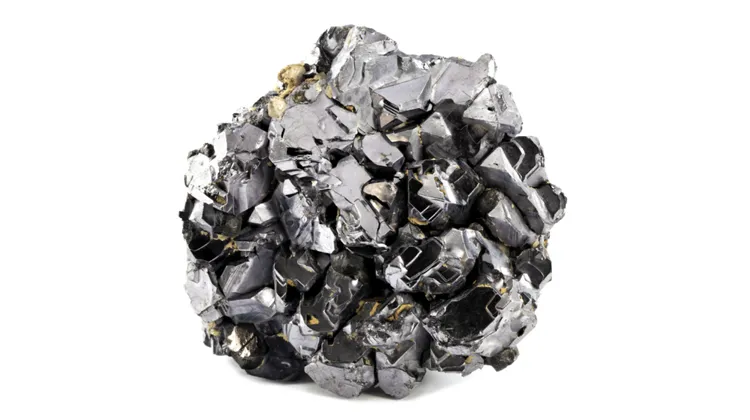
Galena processing is a multi-stage industrial operation that requires careful coordination between mining methods, mineral processing technology, and metallurgical systems.
6.1 Mining Methods
Galena deposits are typically extracted using hard-rock mining techniques, selected based on ore body geometry, depth, and grade. Common methods include:
Underground mining for deep or vein-type deposits
Open-pit mining for near-surface or large, disseminated ore bodies
Efficient mining practices are critical to controlling dilution and ensuring stable feed quality for downstream processing.
6.2 Crushing and Grinding
After extraction, run-of-mine galena ore must be reduced to an appropriate particle size to liberate lead minerals from gangue.
Primary and secondary crushing
Britadores de mandíbula e britadores de cone are commonly used to handle large ore fragments and reduce them to manageable sizes.Fine grinding
moinhos de bolas ou vertical grinding mills further reduce the particle size to achieve sufficient mineral liberation, which is essential for effective flotation.
Proper control of grinding fineness is critical. Over-grinding can increase energy consumption and reduce flotation efficiency, while under-grinding can result in poor lead recovery.
6.3 Flotation Beneficiation
A flutuação é a most widely used and technically mature beneficiation method for galena ores.
During flotation:
Specific reagents are added to selectively enhance the hydrophobicity of galena particles
Air bubbles are introduced, allowing galena to attach and float to the surface
Gangue minerals remain in the slurry and are removed as tailings
Flotation performance directly affects concentrate grade and recovery rate, making reagent selection, equipment quality, and process control essential.
6.4 Concentrate Treatment and Smelting
The flotation concentrate undergoes:
Dewatering and drying, reducing moisture content for efficient transport and smelting
Pyrometallurgical smelting, where lead sulfide is converted into metallic lead
Modern smelting processes also allow for:
Recovery of silver and other valuable metals
Capture and treatment of sulfur-containing off-gases
6.5 Importance of Process Design and Equipment Selection
A well-designed galena processing plant balances:
High recovery rates
Stable long-term operation
Baixo consumo de energia
Compliance with environmental standards
This makes equipment selection and process optimization a decisive factor in the overall success of galena mining projects.
7. Safety Considerations: Is Galena Toxic or Dangerous?
While galena is chemically stable under natural conditions, its industrial handling and processing present significant health and environmental risks that must be actively managed.
7.1 Occupational Health Risks
During crushing, grinding, flotation, and smelting, galena can generate lead-containing dust and fumes. These pollutants may enter the human body through inhalation or skin contact.
Long-term or high-level exposure can result in:
Damage to the nervous system, including cognitive and motor impairment
Kidney dysfunction and bone disorders
Cardiovascular health issues
Chronic exposure is associated with lead poisoning, which is irreversible and requires strict prevention rather than treatment.
7.2 Environmental Risks
Galena processing can pose environmental challenges if not properly controlled:
Air pollution from dust and smelting emissions
Water contamination from lead-bearing wastewater
Soil and groundwater pollution from improperly managed tailings
Environmental incidents not only cause ecological damage but can also result in severe legal and financial consequences for mining operators.
7.3 Modern Safety and Environmental Management Measures
To mitigate these risks, modern galena operations must implement comprehensive control systems, including:
Enclosed crushing and grinding systems to minimize dust emissions
High-efficiency dust collectors and flue-gas purification systems
Wastewater treatment and recycling circuits to prevent heavy-metal discharge
Impermeable tailings storage facilities with long-term monitoring
Mine closure and land rehabilitation programs to restore ecosystems
Compliance with international environmental and occupational safety standards is now a fundamental requirement for sustainable galena development.
8. Conclusão
Galena is one of the most important mineral resources in modern industry, providing the primary source of lead for energy storage, construction, chemical processing, and radiation protection. Its value extends beyond lead production to the recovery of associated precious and base metals.
By combining advanced processing technology, properly selected equipment, and strict environmental and safety management, galena resources can be utilized efficiently, safely, and sustainably in today’s mining and industrial landscape.


 Portuguese
  English
  Russian
  Arabic
  Vietnamese
  Spanish
  French
  Japanese
  Chinese