


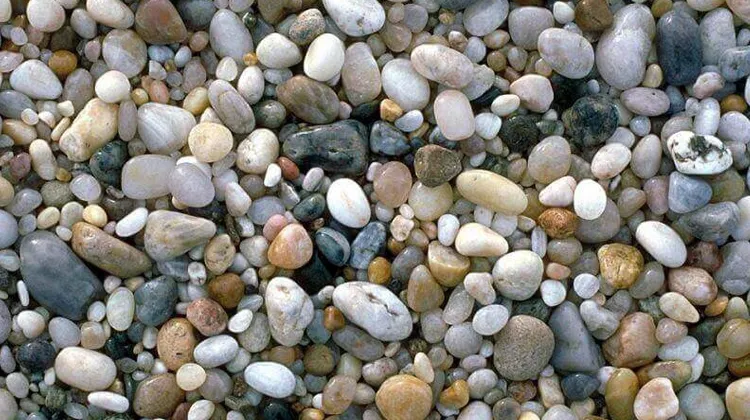
With the continuous growth of global infrastructure construction, the demand for high-quality construction aggregates and manufactured sand is increasing rapidly. Natural river sand resources are becoming increasingly scarce due to environmental protection policies, mining restrictions, and excessive exploitation. As a result, manufactured sand has gradually become the mainstream material in modern construction projects.
Among all raw materials used for artificial sand production, pebbles are considered one of the best choices because of their high hardness, excellent wear resistance, stable chemical properties, and wide availability.
Today, pebble manufactured sand is widely used in:
- Cement plants
- Commercial concrete batching plants
- Highway and railway construction
- Bridge engineering
- Airport runway projects
- Hydropower stations
- Urban infrastructure
- High-rise building foundations
Compared with natural sand, pebble sand offers more stable quality, controllable particle size, and better long-term supply stability.
So, how is sand made from pebbles? What equipment is required? What are the advantages of a pebble sand production line?
This article will provide a complete introduction to the pebble sand making process, production equipment, advantages, applications, and investment prospects.
What Is Pebble?
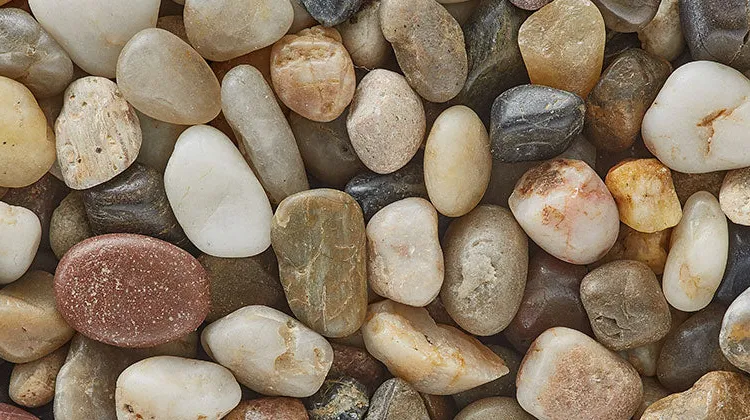
Pebbles are naturally formed stones created through long-term extrusion, friction, and erosion by river water and geological movement. After years of natural polishing, pebbles usually have smooth surfaces, high hardness, and strong compression resistance.
Because of these excellent physical properties, pebbles are widely used in aggregate production and artificial sand manufacturing.
Physical Characteristics of Pebbles
High Hardness and Wear Resistance
The main chemical component of pebbles is silicon dioxide (SiO₂), and the Mohs hardness is approximately 7.
This high hardness allows pebbles to maintain excellent wear resistance during crushing and sand making processes.
As a result, pebble manufactured sand has:
- Alta resistência à compressão
- Boa durabilidade
- Stable particle shape
- Excellent concrete performance
These characteristics make pebble sand highly suitable for large-scale engineering projects.
Stable Chemical Properties
Pebbles have stable chemical compositions and strong resistance to weathering and corrosion.
Even under harsh outdoor conditions, pebble aggregates can maintain long-term structural stability.
This is particularly important for:
- Pontes
- Rodovias
- Railway engineering
- Hydropower projects
- Cement concrete production
Rich Natural Resources
Pebbles are widely distributed in:
- Riverbeds
- Mining areas
- Mountain regions
- Gravel deposits
Because of their abundant reserves and easy availability, pebbles have become one of the most economical materials for manufactured sand production.
Applications of Pebbles

Pebbles are widely used as construction aggregates and raw materials in many industries.
Construction Industry
Pebble manufactured sand is commonly used in:
- Commercial concrete
- Edifícios altos
- Prefabricated construction
- Cement products
Transportation Infrastructure
Pebbles are also important materials for:
- Rodovias
- Ferrovias
- Pontes
- Airport runways
The high strength of pebble sand improves the durability and stability of infrastructure projects.
Hydropower and Water Conservancy Projects
Because of their wear resistance and stability, pebbles are widely used in:
- Dam construction
- Water conservancy engineering
- Hydropower stations
The Complete Pebble Sand Making Process

The process of making sand from pebbles usually includes five major stages:
- Primary Crushing
- Medium Crushing
- Fine Crushing and Sand Shaping
- Screening
- Sand Washing
Each stage plays an important role in ensuring high-quality finished manufactured sand.
Step 1: Primary Crushing
Main Equipment: Britador de mandíbulas
Large pebbles are first transported into a jaw crusher for coarse crushing.
The jaw crusher is designed to process large raw materials ranging from 125 mm to 1200 mm.
Through extrusion crushing, large pebbles are broken into medium-sized stones suitable for further processing.
Functions of Jaw Crusher
- Reduce large pebble size
- Improve downstream crushing efficiency
- Prepare materials for secondary crushing
- Ensure stable feeding capacity
Advantages of Jaw Crusher
Simple Structure
The machine structure is compact and easy to maintain.
Easy Replacement of Wear Parts
Jaw plates and liners can be replaced conveniently, reducing downtime.
Low Energy Consumption
Compared with traditional crushing equipment, jaw crushers consume less power.
Strong Crushing Capacity
Jaw crushers can process high-hardness materials continuously and efficiently.
Because of these advantages, jaw crushers are widely used in cement plants, mining operations, and aggregate production lines.
Step 2: Medium Crushing
Main Equipment: Toothed Roll Crusher
After coarse crushing, the material enters a toothed roll crusher for medium crushing.
This stage helps improve the overall crushing efficiency while reducing operating costs.
Functions of Toothed Roll Crusher
- Further reduce material size
- Produce more uniform particles
- Control discharge size between 2 mm and 10 mm
- Reduce oversized materials
Advantages of Toothed Roll Crusher
Uniform Finished Product Size
The finished material has more consistent particle grading.
Low Needle-Like Particle Content
This helps improve concrete quality and aggregate performance.
Convenient Installation
The machine structure is relatively simple and easy to install.
High Crushing Efficiency
The toothed roll crusher performs well in medium crushing applications.
This equipment is suitable for aggregate production lines requiring uniform discharge sizes.
Step 3: Fine Crushing and Sand Shaping
Main Equipment: Pebble Sand Making Machine
Fine crushing and sand shaping are the core stages of the entire pebble sand production line.
Common sand making equipment includes:
- HVI Sand Making Machine
- VSI Sand Making Machine
- Britador de impacto de eixo vertical
Functions of Sand Making Machine
The pebble sand making machine performs several important tasks:
- Fine crushing
- Sand shaping
- Particle optimization
- Crack elimination inside materials
- Improvement of finished sand quality
After shaping, the manufactured sand has better particle size distribution and grain shape, making it more suitable for high-grade concrete production.
Advantages of Pebble Sand Making Machine
High Automation Level
Modern sand making machines support intelligent control systems and automated operation.
Economia de energia
Compared with traditional equipment, modern VSI crushers can save more than 30% energy.
Excellent Finished Sand Shape
The finished sand has:
- Uniform particle size
- Better grading
- Cubical shape
- Lower flake content
Strong Environmental Adaptability
The equipment can operate efficiently under harsh industrial environments.
Low Maintenance Cost
Wear-resistant materials significantly reduce spare part consumption.
Because of these advantages, VSI sand making machines are widely used in cement equipment projects and aggregate production plants worldwide.
Step 4: Screening
Main Equipment: Vibrating Screen
After sand making, the materials enter a vibrating screen for classification.
Different mesh sizes separate materials into various finished sand specifications.
Functions of Vibrating Screen
- Separate materials by particle size
- Improve finished product quality
- Return oversized materials for re-crushing
- Improve production efficiency
Advantages of Vibrating Screen
High Screening Efficiency
The screen inclination angle is usually around 18°, improving screening performance.
Self-Lubricating System
This helps reduce maintenance frequency.
Rubber Protective Layers
Key machine parts are protected with rubber coatings to improve durability.
Stable Long-Term Operation
Vibrating screens can operate continuously with low failure rates.
Step 5: Sand Washing
Main Equipment: Sand Washing Machine
The final stage of pebble sand production is sand washing.
Sand washing machines remove dust, soil, and impurities from manufactured sand.
Functions of Sand Washing Machine
- Improve sand cleanliness
- Remove impurities
- Enhance concrete quality
- Increase market value of finished sand
Clean sand is especially important for high-standard construction projects.
Advantages of Sand Washing Machine
Simple Structure
The equipment is easy to operate and maintain.
Low Fine Sand Loss
The washing process minimizes the loss of fine particles.
Large Processing Capacity
Suitable for medium and large-scale sand production lines.
Low Operating Cost
Efficient washing systems help reduce water and energy consumption.
Advantages of Pebble Sand Production Line
High Production Efficiency
Modern automated production lines support stable continuous operation and high output.
Excellent Finished Sand Quality
Pebble manufactured sand has:
- Uniform particle size
- Excellent grain shape
- Alta resistência à compressão
- Classificação estável
These properties meet modern building material standards.
Low Operating and Maintenance Costs
Wear-resistant equipment reduces maintenance frequency and operating expenses.
Proteção Ambiental
Modern sand making plants can be equipped with:
- Sistemas de coleta de poeira
- Noise reduction equipment
- Wastewater recycling systems
This helps meet environmental protection requirements and sustainable production standards.
Applications of Pebble Manufactured Sand
Pebble manufactured sand is widely used in:
- Cement plants
- Commercial concrete batching plants
- Highway engineering
- Railway construction
- Bridge engineering
- Airport runway construction
- Urban infrastructure projects
- Dry mortar production
As global construction demand continues to grow, the market demand for manufactured sand is also increasing rapidly.
Market Trends and Investment Value
Artificial Sand Has Become the Mainstream Choice
With the gradual depletion of natural river sand resources, manufactured sand has become the preferred material in the modern construction industry.
Many countries are strengthening environmental regulations and restricting excessive natural sand mining.
This trend is creating huge opportunities for manufactured sand production projects.
Broad Investment Prospects
Pebble sand production lines offer several advantages for investors:
- Stable raw material supply
- High market demand
- Strong profitability potential
- Long equipment lifespan
- Low long-term operating costs
As infrastructure projects continue expanding worldwide, pebble sand making plants will maintain strong market competitiveness.
Conclusão
Pebble sand making is an efficient and profitable solution for producing high-quality manufactured sand.
Because pebbles have high hardness, stable chemical properties, and excellent wear resistance, they are ideal raw materials for artificial sand production.
A complete pebble sand production line usually includes:
- Britador de mandíbulas
- Britador de rolos dentados
- VSI Sand Making Machine
- Tela vibratória
- Sand Washing Machine
Through scientific equipment configuration and optimized production processes, manufacturers can build efficient, environmentally friendly, and high-capacity sand production plants.
With the continuous growth of global infrastructure construction and the decreasing availability of natural sand resources, pebble manufactured sand will continue to play an increasingly important role in the future of the cement, construction, and aggregate industries.
Perguntas frequentes
1. Can pebbles be used to make manufactured sand?
Yes. Pebbles are one of the best raw materials for manufactured sand because of their high hardness, excellent wear resistance, and stable chemical properties.
2. What equipment is needed for pebble sand making?
Common equipment includes jaw crushers, toothed roll crushers, VSI sand making machines, vibrating screens, and sand washing machines.
3. Why is pebble manufactured sand popular in construction?
Pebble manufactured sand has high strength, good particle shape, stable quality, and excellent durability, making it suitable for concrete, highways, railways, and large infrastructure projects.


 Portuguese
  English
  Russian
  Arabic
  Vietnamese
  Spanish
  French
  Japanese
  Chinese