



In a cement clinker production line, the preheater cyclone is one of the most important heat exchange and separation units in the dry-process cement kiln system. It allows raw meal powder to contact hot kiln gas, recover heat, and separate solid particles from the gas stream.
Inside the cyclone, the dip tube, also known as the vortex finder or inner tube, is a key component that affects gas flow, separation efficiency, pressure drop, heat exchange performance, and operating stability.
When a cement plant faces lower preheater efficiency, abnormal cyclone pressure drop, higher dust carryover, increased kiln ID fan load, or serious internal wear, the dip tube is often one of the first parts that should be checked. Although it is not the largest component in the preheater system, it directly influences the flow pattern inside the cyclone.
Understanding the function of dip tube in preheater cyclone helps cement plants diagnose operating problems and helps equipment buyers choose the right cyclone preheater spare parts for maintenance or upgrade projects.
What Is a Dip Tube in a Preheater Cyclone?
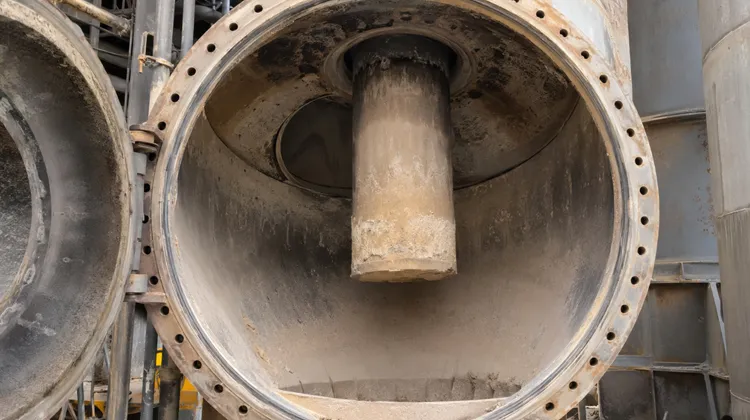
A dip tube is a cylindrical component installed at the central gas outlet of a cyclone. It extends downward from the top of the cyclone into the cyclone body.
When hot gas and raw meal enter the cyclone, they form a rotating flow. Heavier raw meal particles are pushed toward the cyclone wall by centrifugal force and move downward into the discharge pipe. The cleaned gas moves upward through the central area and leaves the cyclone through the dip tube.
In simple terms, the dip tube guides the gas out of the cyclone through a stable central outlet and helps reduce the amount of raw meal carried away by the gas stream.
In a cement preheater system, dip tubes are used in different cyclone stages. Under high-temperature, high-dust, and high-wear conditions, the material, shape, and installation condition of the dip tube have a direct impact on system performance.
Main Function of Dip Tube in Preheater Cyclone
1. Guiding Stable Gas Flow
The gas inside a cyclone does not move in a straight line. It rotates at high speed. The first function of the dip tube is to provide a stable central outlet for the gas after particle separation.
Without a properly designed dip tube, gas flow near the cyclone top may become unstable. Some dust-loaded gas may leave the cyclone before separation is complete. This reduces separation efficiency and increases dust loading in downstream equipment.
A suitable dip tube helps create a clearer gas path and supports a more stable flow structure between the outer vortex and inner vortex.
2. Improving Separation Efficiency
One of the main tasks of a preheater cyclone is to separate raw meal from the gas stream. The length, diameter, and position of the dip tube affect vortex strength and the effective separation space inside the cyclone.
If the dip tube is too short, gas may enter the outlet too early, causing particle short-circuiting and dust carryover. If the dip tube is too long, it may increase resistance and disturb the lower flow field.
A well-designed dip tube can reduce fine raw meal carryover, improve material recovery, and support better cyclone separation efficiency.
3. Reducing Dust Carryover
Dust carryover in a cement preheater system can create several problems. It increases the dust load of downstream cyclones or dust collectors, raises system pressure drop, increases fan power consumption, and may reduce thermal efficiency.
The dip tube helps reduce the chance that unseparated raw meal enters the outlet pipe directly. This is especially important for high-capacity production lines, high gas velocity systems, or plants using very fine raw meal.
If a cement plant finds higher dust concentration at the preheater outlet or lower cyclone separation efficiency, the dip tube should be inspected for wear, deformation, falling parts, or eccentric installation.
4. Stabilizing Cyclone Pressure Drop
Cyclone pressure drop is an important operating indicator in a cement preheater. Since the dip tube influences the gas outlet resistance, it also affects cyclone pressure drop.
Poor dip tube design or serious wear may cause local resistance, uneven gas flow, or lower separation efficiency. The result may be abnormal pressure fluctuation, higher kiln ID fan load, and poor kiln ventilation.
In practice, dip tube design must balance separation efficiency and pressure loss. Higher separation efficiency is useful, but if resistance becomes too high, fan power consumption will increase.
5. Supporting Heat Exchange Efficiency
Preheater heat exchange depends on good contact between hot gas and raw meal. If cyclone separation is poor, part of the raw meal may be carried away, and the gas-solid contact condition becomes unstable.
By improving gas-solid separation and gas flow organization, the dip tube indirectly supports stable heat exchange efficiency. In a cement kiln preheater system, this can affect raw meal temperature, calcination rate, kiln heat consumption, and system stability.
How Dip Tube Design Affects Cyclone Performance
Dip tube performance depends not only on material selection, but also on geometry and installation position.
| Design Factor | Effect on Operation |
|---|---|
| Dip tube length | Affects gas short-circuiting, separation space, and pressure drop |
| Dip tube diameter | Affects outlet velocity, resistance, and separation efficiency |
| Lower end position | Affects inner and outer vortex structure |
| Wall thickness and material | Affects wear resistance, heat resistance, and service life |
| Installation concentricity | Affects gas distribution and local wear |
| Shape and structure | Affects flow resistance and particle separation path |
In real projects, the dip tube should be designed according to cyclone size, gas volume, dust concentration, raw meal fineness, temperature, and system resistance. Copying the same dimensions from another production line may not be suitable for the actual working conditions.
Common Problems of Dip Tube in Cement Preheater
Because the dip tube works in high temperature, high dust concentration, and high-velocity gas flow, it may suffer from wear, deformation, burning damage, cracking, or falling.
Common problems include:
| Problem | Possible Impact |
|---|---|
| Worn dip tube wall | Lower separation efficiency and higher dust carryover |
| Deformation | Uneven gas flow and abnormal pressure drop |
| Falling or broken dip tube | Serious loss of cyclone separation function |
| Burning damage | Lower structural strength in high-temperature areas |
| Eccentric installation | Faster local wear and pressure fluctuation |
| Coating or build-up | Reduced effective flow area and higher pressure drop |
If these problems are not corrected, they can affect preheater thermal efficiency, kiln ventilation, dust collector load, and the stability of the whole cement production line.
Signs That a Dip Tube May Need Inspection
The inside of a cyclone is not easy to observe during normal operation, but operating data can help identify possible dip tube problems.
A dip tube should be inspected during shutdown if the plant notices:
| Operating Sign | Possible Relation |
|---|---|
| Abnormal cyclone pressure drop | Deformation, build-up, or partial blockage |
| Higher dust at preheater outlet | Lower separation efficiency or dip tube wear |
| Increased kiln ID fan load | Higher system resistance |
| Poor raw meal preheating | Unstable gas-solid separation and heat exchange |
| Unstable material discharge | Abnormal flow field inside the cyclone |
| Abnormal cyclone temperature distribution | Gas bypass or uneven flow |
| Unusual refractory wear | Eccentric dip tube or poor flow distribution |
These symptoms may not be caused only by the dip tube, but the dip tube is an important component to check.
Material Selection for Dip Tube
A preheater dip tube must withstand hot gas, dust erosion, chemical corrosion, and thermal stress. Material selection is therefore very important.
Common material options include:
| Material Option | Recurso |
|---|---|
| Heat-resistant steel | Suitable for high-temperature areas with good structural strength |
| Wear-resistant steel | Suitable for strong dust erosion conditions |
| Heat- and wear-resistant alloy | Balances high-temperature strength and wear resistance |
| Ceramic or wear lining protection | Used in local high-wear areas |
| Segmented structure | Easier for installation, transport, and replacement |
Material selection should not be based only on price. If heat resistance is not enough, the dip tube may deform or burn. If wear resistance is not enough, service life may be shortened in high-dust or high-velocity conditions.
Dip Tube Maintenance and Replacement
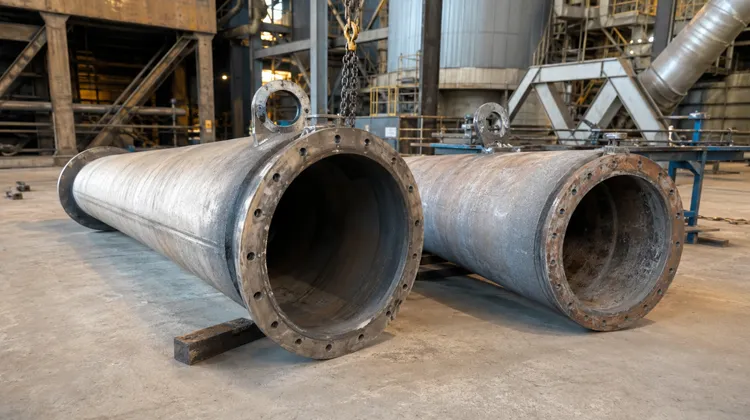
To keep the preheater system stable, the dip tube should be included in the cement plant’s regular maintenance plan.
Important inspection items include:
| Maintenance Item | Descrição |
|---|---|
| Visual inspection | Check wear, cracks, burning damage, and deformation |
| Thickness measurement | Judge whether replacement is needed |
| Concentricity check | Make sure installation position is correct |
| Connection inspection | Prevent loosening, cracking, or falling |
| Build-up cleaning | Keep effective flow area open |
| Material review | Improve material based on actual wear condition |
When replacing a dip tube, it is better to review actual operating data instead of simply copying the old part. If the original design has long-term problems such as high pressure drop, serious dust carryover, or fast wear, the structure or material can be optimized during maintenance.
How to Choose Dip Tube Spare Parts
For cement equipment buyers, choosing preheater cyclone dip tube spare parts requires accurate operating and dimensional information.
Useful information includes:
| Information Needed | Propósito |
|---|---|
| Cyclone stage and model | Confirms installation position and dimensions |
| Production line capacity | Helps estimate gas flow and load |
| Operating temperature | Supports material selection |
| Dust concentration and raw meal properties | Helps judge wear resistance requirement |
| Original drawing or measured dimensions | Ensures spare part matching |
| Existing operating problem | Helps decide whether design optimization is needed |
| Installation method | Confirms segmented, flanged, or suspended structure |
If original drawings are not available, site measurements, photos, shutdown inspection records, and operating data can help confirm the correct spare part. For international projects, clear dimension confirmation and material communication are especially important to reduce installation problems.
Perguntas frequentes
1. What is the main function of a dip tube in a preheater cyclone?
The main function is to guide the central gas flow out of the cyclone and reduce raw meal carryover, improving gas-solid separation efficiency.
2. Does a longer dip tube always improve separation efficiency?
No. A longer dip tube may increase pressure drop or disturb the internal flow field. The right length depends on gas flow, cyclone structure, and operating conditions.
3. Why does a dip tube wear out quickly?
Common reasons include high dust concentration, high gas velocity, material erosion, eccentric installation, unsuitable material, or abnormal local flow.
4. Can dip tube damage increase preheater pressure drop?
Yes. Deformation, coating, eccentric installation, or partial blockage can increase or destabilize cyclone pressure drop.
5. When should a cement plant replace the dip tube?
Replacement should be considered when the dip tube has serious wear, deformation, burning damage, cracks, falling risk, or clear impact on separation efficiency and pressure drop.
Conclusão
The dip tube is an important internal component in a cement preheater cyclone. It is not just a gas outlet pipe. It organizes internal gas flow, reduces dust carryover, improves gas-solid separation, and helps maintain reasonable pressure drop and stable heat exchange.
For a cement preheater cyclone, dip tube length, diameter, material, installation position, and wear condition all affect preheater performance. If a cement plant experiences abnormal pressure drop, increased dust carryover, lower preheater efficiency, or higher kiln ID fan load, the dip tube should be checked carefully.
In new cement production lines, preheater upgrades, or spare parts procurement projects, choosing the right dip tube design and heat- and wear-resistant material can extend service life, reduce maintenance cost, and improve the stability of the cement kiln system.


 Portuguese
  English
  Russian
  Arabic
  Vietnamese
  Spanish
  French
  Japanese
  Chinese