


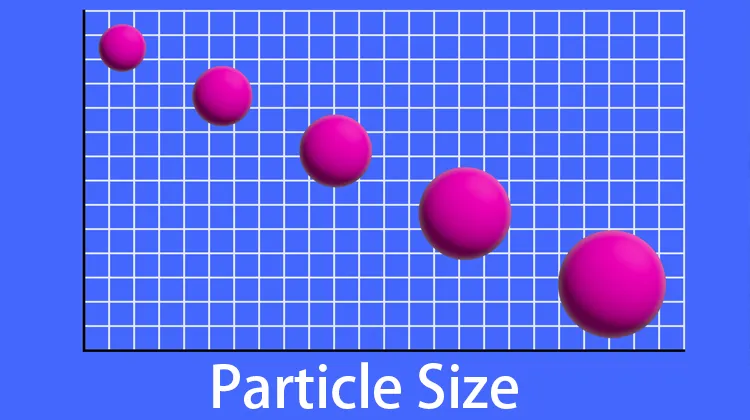
Why Particle Size Controls Cement Quality, Grinding Efficiency, Energy Consumption, and Production Profitability
In the modern cement industry, mining operations, aggregate processing plants, and powder manufacturing sectors, most companies tend to focus heavily on equipment capacity, automation systems, production output, and investment cost. While these factors are certainly important, one of the most influential variables in the entire production process is often underestimated:
Tamanho da partícula
Particle size is far more than a laboratory parameter or a simple technical specification. It directly influences how materials behave during crushing, grinding, classification, transportation, hydration, and final application. In cement manufacturing, even small changes in particle size distribution can significantly impact cement strength, grinding efficiency, energy consumption, setting time, and long-term durability.
Today, particle size optimization has become one of the core technologies behind high-performance cement plants and energy-efficient grinding systems.
Whether you are operating:
- A cement manufacturing plant
- A clinker grinding station
- A mining processing facility
- A limestone crushing line
- A slag grinding production line
understanding particle size can dramatically improve production efficiency, reduce operating costs, and enhance final product quality.
This article explains everything you need to know about:
- Tamanho da partícula
- Mesh and Micron conversion
- Size Reduction
- Particle Size Distribution (PSD)
- Fineness Modulus
- Cement grinding optimization
- Crushing and pulverizing systems
- Smart cement plant technologies
while also helping your website target high-value Google SEO keywords related to cement equipment and industrial grinding systems.
What Is Particle Size?
Particle Size refers to the physical dimensions of individual particles within a material or powder. In industrial processing, particle size is one of the most important factors affecting how materials react, flow, compact, hydrate, and perform during manufacturing and final application.
In cement production, particle size affects nearly every stage of the process, including:
- Grinding efficiency
- Cement hydration rate
- Compressive strength development
- Powder flowability
- Packing density
- Dust generation
- Product consistency
- Consumo de energia
A properly controlled particle size can improve product quality while reducing operational costs and energy usage.
How Is Particle Size Measured?
Particle size can be measured using several different methods depending on the material type and industrial application.
The most common particle size measurement methods include:
1. Sieving Method
The sieving method uses mesh screens with different opening sizes to separate particles according to diameter. This method is commonly used for aggregates, sand, crushed stone, and coarse powders.
It is widely used in:
- Cement plants
- Operações de mineração
- Aggregate production
- Construction material testing
2. Sedimentation Method
The sedimentation method measures particle size based on how quickly particles settle in a liquid. Smaller particles settle more slowly than larger particles.
This technique is frequently used for:
- Fine cement powders
- Clay materials
- Mineral fillers
- Industrial slurry analysis
3. Equivalent Volume Method
Advanced laser particle analyzers often calculate an equivalent particle diameter based on particle volume or surface area.
This method is highly accurate and commonly used in:
- Modern cement laboratories
- Ultra-fine grinding systems
- Automated PSD monitoring systems
Common Units Used for Particle Size
Particle size is typically expressed using three major units:
| Unidade | Descrição |
|---|---|
| Malha | Number of openings per square inch of screen |
| Micron (μm) | Metric measurement unit |
| Millimeter (mm) | Used for larger particles and aggregates |
Each unit is important in different stages of cement manufacturing and mining operations.
What Is Mesh?
Mesh refers to the number of openings per square inch in a screening surface.
The relationship between mesh number and particle size is inverse:
- Higher mesh number = smaller openings
- Smaller openings = finer particles
Por exemplo:
| Mesh Size | Typical Material Size |
|---|---|
| 4 Mesh | Crushed rock |
| 20 Mesh | Coarse granules |
| 100 Mesh | Fine powder |
| 325 Mesh | Ultra-fine powder |
Mesh size remains one of the most commonly used standards in mining, crushing, and grinding industries because it provides a simple way to classify powder fineness.
What Is a Micron?
A micron, also called a micrometer, is a metric unit used to measure extremely small particles.
1 Micron = 0.001 Millimeter
Microns are commonly used in:
- Fabricação de cimento
- Mineral powder processing
- Fly ash production
- Slag grinding systems
- Ultra-fine powder industries
Modern cement particles are typically extremely fine:
- Approximately 95% of cement particles are smaller than 45 microns
- Average cement particle size is around 15 microns
This extremely fine particle structure helps cement hydrate efficiently and develop strength.
Mesh to Micron Conversion
In industrial grinding systems, operators frequently need to convert mesh size into microns.
A commonly used approximation formula is:
Mesh × Aperture (Micron) ≈ 15000
Exemplos incluem:
| Malha | Approximate Micron Size |
|---|---|
| 100 Mesh | 150 μm |
| 200 Mesh | 75 μm |
| 325 Mesh | 45 μm |
Actual conversion values may vary depending on:
- U.S. Sieving Standards
- Tyler Mesh Standards
- Material shape and particle distribution
Understanding mesh-to-micron conversion is essential when selecting crushing and grinding equipment.
What Is Size Reduction?
Size Reduction refers to the industrial process of reducing large materials into smaller particles through mechanical force.
In cement and mining industries, size reduction is critical because smaller particles provide:
- Larger surface area
- Faster chemical reaction
- Better grinding efficiency
- Improved material handling
- Higher cement activity
Without efficient size reduction systems, modern cement production would not be economically viable.
The Three Main Stages of Size Reduction
1. Crushing
Crushing is the first stage of size reduction, where large rocks or raw materials are broken into smaller pieces.
Typical crushing size range:
0–4 Mesh
Common crushing equipment includes:
- Britadores de mandíbula
- Hammer Crushers
- Britadores de impacto
- Britadores de cone
Crushing systems are designed to prepare raw materials for further grinding processes.
2. Grinding
Grinding reduces materials into finer particles suitable for industrial processing.
Typical grinding range:
5–25 Mesh
Os equipamentos de moagem mais comuns incluem:
- Moinhos de bolas
- Rod Mills
- Vertical Roller Mills
Grinding is one of the most energy-intensive processes in cement manufacturing.
3. Pulverizing
Pulverizing refers to ultra-fine grinding processes that produce extremely fine powders.
Typical pulverizing range:
Above 25 Mesh
Industrial systems may produce:
- 325 Mesh powder
- 600 Mesh powder
- 1250 Mesh ultra-fine powder
Pulverizing is widely used in:
- Cement production
- Slag grinding
- Mineral fillers
- Chemical powders
- Industrial coatings
Why Particle Size Matters So Much in Cement Production
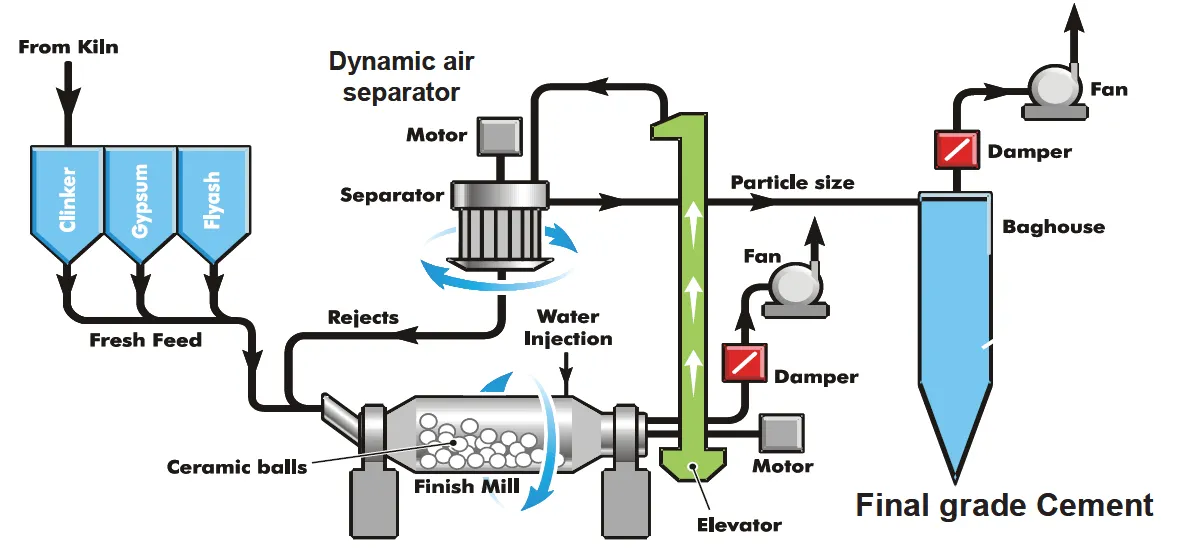
Many people assume that finer cement automatically means better cement quality. However, this is not entirely true.
The real key factor is not simply finer particles, but rather:
Particle Size Distribution (PSD)
A scientifically optimized PSD provides better overall performance than excessively fine grinding.
What Is Particle Size Distribution (PSD)?
Particle Size Distribution describes the percentage of particles within different size ranges inside a powder system.
PSD strongly influences:
- Cement hydration rate
- Water demand
- Packing density
- Void ratio
- Concrete strength
- Flowability
An optimized PSD allows smaller particles to fill the gaps between larger particles, resulting in a denser and stronger final product.
Surprising Facts About Particle Size
1. Finer Grinding Can Increase Energy Consumption Dramatically
In many cement plants, grinding systems account for more than 60% of total electrical energy consumption.
Over-grinding materials may cause:
- Excessive power usage
- Increased circulating load
- Lower mill efficiency
- Faster wear on grinding media
- Higher maintenance costs
Modern cement plants focus on balancing fineness with grinding efficiency rather than pursuing ultra-fine powder at any cost.
2. Optimized PSD Can Improve Cement Strength by More Than 20%
Research and industrial experience have shown that optimizing particle size distribution alone can significantly improve:
- Early strength development
- resistência à compressão
- Cement activity
- Concrete durability
without changing clinker chemistry.
This is one reason why high-efficiency separators and intelligent classification systems are becoming standard in modern grinding plants.
3. Ultra-Fine Particles May Cause Long-Term Performance Problems
Although ultra-fine cement particles can improve short-term strength, they may also create issues such as:
- Excessive hydration heat
- Increased shrinkage
- Internal microcracking
- Durabilidade reduzida a longo prazo
This is why modern cement engineering focuses on scientific particle size control rather than simply producing finer powders.
What Is Fineness Modulus?

Fineness Modulus (F.M.) is an index used to describe the overall coarseness or fineness of aggregate materials.
It is calculated through sieve analysis and helps engineers evaluate sand grading quality.
Fineness modulus plays an important role in:
- Concrete mix design
- Aggregate selection
- Construction material quality control
Coarse Aggregate vs Fine Aggregate
Different industries define coarse and fine aggregates differently.
In Cement Concrete Industry
- Materials larger than 4.75 mm are considered coarse aggregate
- Materials smaller than 4.75 mm are considered fine aggregate
In Asphalt Mixtures
The dividing line is typically:
2.36 mm
In Sand and Gravel Industry
The dividing line is commonly:
2 mm
Classification of Sand by Fineness Modulus
| Tipo de areia | Fineness Modulus |
|---|---|
| Areia grossa | 3.1 – 3.7 |
| Areia média | 2.3 – 3.0 |
| Areia fina | 1.6 – 2.2 |
| Super Fine Sand | 0.7 – 1.5 |
Different fineness modulus values directly affect:
- Concrete workability
- Water demand
- Pumping performance
- Cement consumption
- Final strength
Cement Particle Size Requirements
Modern cement products generally require:
- 95% of particles smaller than 45 microns
- Average particle size around 15 microns
Proper particle size control improves:
- Cement hydration
- Desenvolvimento de força
- Grinding efficiency
- Product consistency
The Relationship Between Particle Size and Cement Equipment
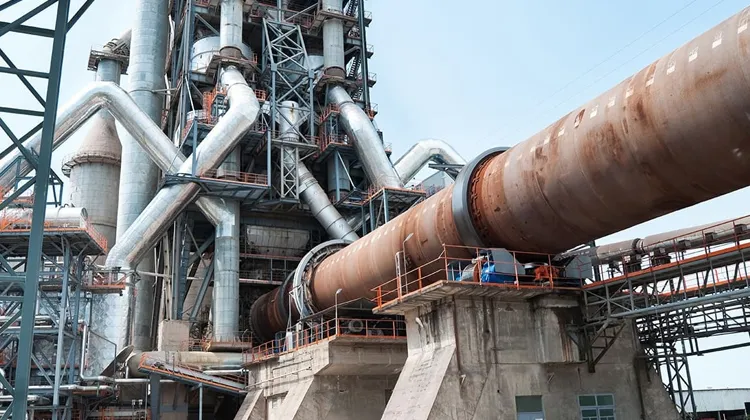
Virtually every major cement machine is designed to control or optimize particle size.
Key equipment includes:
| Equipamento | Main Particle Size Function |
|---|---|
| Triturador | Redução primária de tamanho |
| Moinho de bolas | Final grinding |
| Moinho de rolos vertical | PSD optimization |
| Air Classifier | Precision separation |
| Forno rotativo | Clinker mineral formation |
Modern grinding systems are built around achieving the ideal PSD while minimizing energy consumption.
How to Optimize Particle Size in Cement Plants
1. Use High-Efficiency Separators
Modern separators improve:
- Powder classification accuracy
- Grinding efficiency
- Energy savings
- Product consistency
2. Upgrade to Vertical Roller Mills
Compared with traditional ball mills, vertical roller mills provide:
- Lower power consumption
- More uniform PSD
- Maior capacidade de produção
- Better drying capability
3. Implement Online PSD Monitoring Systems
Advanced cement plants now use:
- Laser Particle Analyzers
- Real-Time PSD Monitoring
- AI-Based Process Control
to optimize grinding operations automatically.
4. Optimize Grinding Media
Grinding media size and grading significantly affect:
- Impact force
- Grinding efficiency
- Final product fineness
- Mill productivity
Proper media selection can reduce energy costs while improving product quality.
Particle Size and Environmental Sustainability
Particle size optimization is not only about production efficiency. It also plays a major role in environmental performance.
Optimized PSD can help reduce:
- Dust emissions
- Electrical consumption
- CO₂ emissions
- Equipment vibration
- Process instability
As global environmental regulations become stricter, efficient grinding systems are becoming increasingly important.
Future Trends: Intelligent Particle Size Control
The future of cement manufacturing is moving toward:
Fábricas de cimento inteligentes
Artificial intelligence and automation technologies are helping manufacturers achieve:
- Automatic particle analysis
- Intelligent separator control
- Real-time grinding optimization
- Predictive maintenance
- Lower operating costs
Particle size is no longer just a laboratory metric. It is becoming one of the most important competitive advantages in modern cement production.
Conclusão
Understanding concepts such as:
- Tamanho da partícula
- Malha
- Micron
- Size Reduction
- Distribuição do tamanho das partículas
- Fineness Modulus
is essential for professionals working in:
- Fabricação de cimento
- Operações de mineração
- Aggregate processing
- Industrial grinding systems
- Construction material production
Proper particle size control can help companies:
- Improve cement quality
- Reduce energy consumption
- Increase grinding efficiency
- Extend equipment lifespan
- Lower production costs
- Improve market competitiveness
In modern industrial manufacturing: Controlling particle size means controlling product quality, production efficiency, and profitability.
If you are looking for:
- Moinhos de bolas
- Vertical Roller Mills
- Crushers
- Fornos rotativos
- Air Classifiers
- Complete Cement Production Lines
our engineering team can provide customized cement equipment solutions designed for high efficiency, low energy consumption, and optimized particle size control.


 Portuguese
  English
  Russian
  Arabic
  Vietnamese
  Spanish
  French
  Japanese
  Chinese