


1. Introduction: Why Charcoal Briquettes Are Becoming a Global Energy Solution
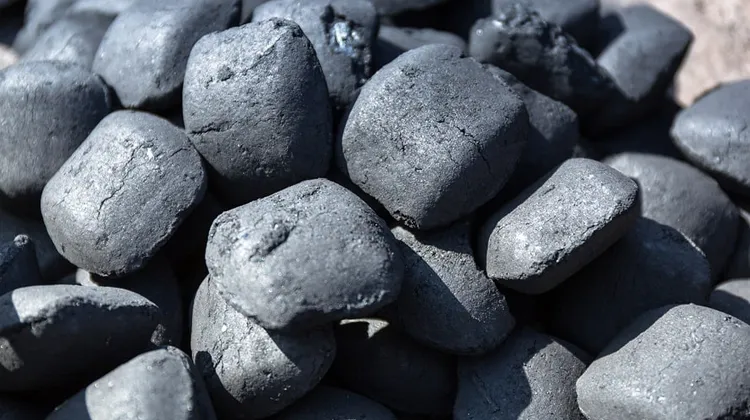
With the global shift toward cleaner and more efficient energy sources, charcoal briquettes have emerged as one of the most widely used biomass solid fuels in both domestic and industrial applications.
They are especially popular in Africa, the Middle East, Southeast Asia, and South America, where they are widely used for BBQ cooking, heating systems, and small industrial combustion applications.
Compared with traditional lump charcoal, briquettes provide:
- Higher energy efficiency
- More stable combustion performance
- Lower smoke emission
- Easier packaging and transportation
Popular Google search terms include:
how to make charcoal briquettes, charcoal briquette production process, charcoal briquette machine, biomass briquette manufacturing.
2. Composition of Charcoal Briquettes
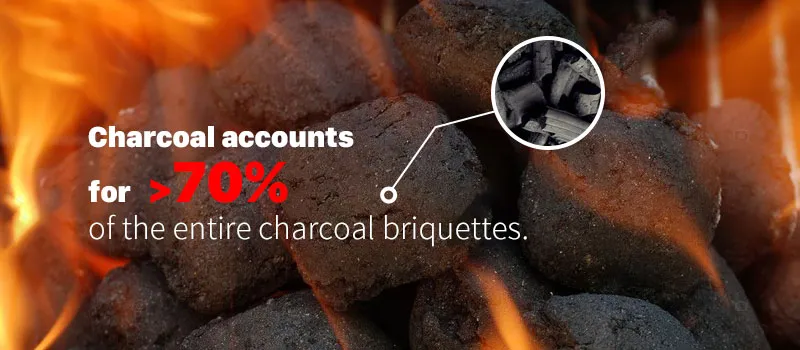
Charcoal briquettes are not simply compressed charcoal dust. They are engineered fuel products composed of multiple functional materials.
2.1 Charcoal (Main Energy Source)
Charcoal is the primary component, typically accounting for more than 70% of the mixture.
It is produced from wood, coconut shells, or agricultural waste through high-temperature carbonization.
There are two main types:
- Black charcoal: easy ignition, faster burning
- White charcoal: higher density, longer burning time, lower smoke
2.2 Binder (Structural Material)
Binders are essential for forming solid briquettes from loose charcoal powder.
The most commonly used binder is cassava starch, due to its strong bonding performance under heat and pressure.
Typical ratio: 5%–7%
Alternative binders include recycled paper pulp and gum Arabic.
2.3 Combustion Accelerants
Accelerants improve ignition speed and combustion intensity.
Industrial nitrates are sometimes used, while sawdust is a low-cost and widely available alternative, typically accounting for 10%–20% of the mixture.
2.4 White Ash (Burning Regulator)
White ash plays an important role in combustion control.
It extends burning duration, helps users monitor combustion stages through color changes, and improves structural stability during handling and transport.
Typical ratio: 2%–3%
2.5 Industrial Formula Example
- Charcoal powder: 70%–80%
- Binder: 5%–7%
- Sawdust or accelerant: 10%–20%
- White ash additives: 2%–3%
3. Advantages of Charcoal Briquettes
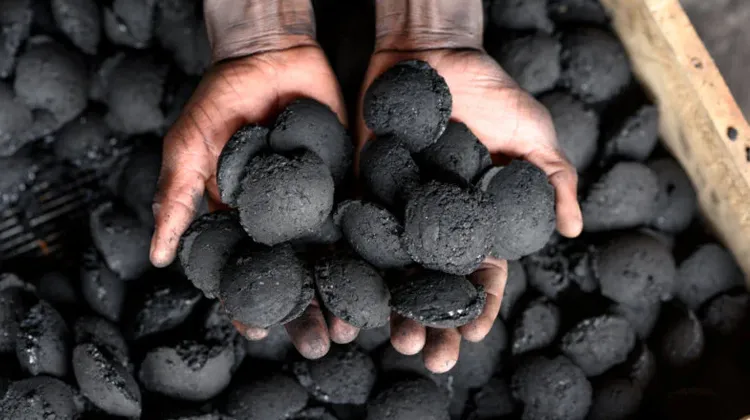
Charcoal briquettes offer significant advantages over traditional fuels.
They provide higher calorific value, ensuring more heat output per unit weight.
Their combustion process is stable and consistent, making them suitable for BBQ and industrial applications.
They also produce less smoke and odor, making them more environmentally friendly.
In addition, their uniform shape improves packaging efficiency and reduces transportation costs.
4. Industrial Production Process of Charcoal Briquettes

The production of charcoal briquettes is not a simple mechanical compression process, but a fully standardized industrial biomass processing system. Each stage directly affects product density, combustion efficiency, smoke emission, and export quality.
In modern industrial plants, a complete charcoal briquette production line is used to ensure continuous and stable output.
The entire process consists of five key stages: carbonization, crushing, moisture conditioning, briquetting, and final drying.
Carbonization Process – The Foundation of Fuel Quality
Carbonization is the most critical stage in the entire production chain, as it determines the fundamental energy quality of the final product.
Raw biomass materials such as wood, coconut shells, or agricultural waste are processed in a rotary carbonization kiln at temperatures between 450–510°C under oxygen-limited conditions.
During this process:
- Moisture is completely removed
- Volatile compounds such as tar and gas are released
- Organic structures are decomposed
- High-carbon charcoal is formed
Poor carbonization results in excessive smoke and incomplete combustion, while over-carbonization reduces yield and increases material brittleness.
Advanced production systems often integrate waste gas recovery units, allowing combustible gases to be reused as energy, significantly reducing production costs.
Crushing & Screening Process – Controlling Particle Structure
After carbonization, charcoal is crushed into fine powder using britadores de martelo ou roller crushers.
The material is reduced to a particle size below 5mm, ensuring uniformity for briquetting.
This stage is not only about size reduction but also about structural optimization:
- Oversized particles reduce compaction efficiency
- Excessively fine powder increases dust and affects airflow
- Uniform particle size improves briquette density and strength
Industrial systems often include vibrating screening machines to ensure consistent particle distribution.
Moisture Conditioning & Pre-Drying – Ensuring Stable Forming
Moisture content plays a critical role in briquette formation.
The material is adjusted to approximately 12%–15% moisture content before entering the briquetting stage.
If moisture is too high:
- Briquettes may crack or explode during compression
- Drying time increases significantly
If moisture is too low:
- Binder activation becomes inefficient
- Briquette strength decreases
This process is typically controlled using rotary dryers or hot air drying systems.
Briquetting Process – The Core Manufacturing Stage
This is the most important stage in the entire production line.
Prepared charcoal powder, binder, and additives are fed into a charcoal briquette machine for high-pressure compression.
Common equipment types include:
- Screw extrusion briquette machines
- Hydraulic briquette presses
- Mechanical stamping machines
Under high pressure, the material undergoes structural transformation:
- Particles are rearranged and compacted
- Binder forms a solid bonding structure
- Internal voids are eliminated
- High-density briquettes are formed
Key influencing factors include pressure stability, feed uniformity, mold precision, and moisture balance.
This stage directly determines:
Product density
Burning duration
resistência mecânica
Export quality grade
Final Drying Process – Ensuring Storage Stability
Freshly formed briquettes still contain residual moisture and must undergo secondary drying.
They are heated at 120–140°C for 3–4 hours, reducing moisture content below 5%.
Esse processo melhora:
- Structural hardness
- Transport resistance
- Storage stability
- Combustion consistency
Common equipment includes mesh belt dryers and hot air circulation systems.
After drying, briquettes are ready for automatic packaging and export shipment.
5. Environmental Benefits
Charcoal briquette production is considered a clean biomass process.
It generates no solid waste, produces no wastewater, and emits minimal gas, most of which can be recycled as energy.
Only water vapor is released, making it a sustainable industrial solution.
6. Conclusão
Although charcoal briquette production is technically straightforward, it requires strict control of raw material ratios, carbonization temperature, and moisture levels.
For industrial-scale production, selecting a reliable briquette machine supplier and a complete production line solution is essential for stable output and export success.
FAQ – Charcoal Briquettes Production
1. How much does a charcoal briquette production line cost?
The investment cost of a charcoal briquette production line varies depending on production capacity, automation level, and equipment configuration. Small semi-automatic systems are suitable for pilot production or small businesses, while fully automated industrial lines include carbonization systems, crushing units, drying systems, and briquetting machines.
From a long-term perspective, larger production capacities generally result in lower unit production costs, making automated systems more attractive for export-oriented manufacturers.
2. What are the most common problems in charcoal briquette production?
Common issues in production include inconsistent briquette strength, unstable burning performance, and product cracking during handling or transportation.
These problems are usually not caused by a single machine but by multiple factors such as uneven particle size, improper moisture control, incorrect binder ratio, or unstable machine pressure.
Therefore, system integration and process coordination are more important than individual machine performance.
3. What quality requirements are needed for export markets?
Export markets typically focus on several key quality factors.
Moisture stability is essential because it directly affects transportation durability and storage conditions. Burning performance is also critical, including consistent heat output, burning duration, and low smoke emission.
In addition, mechanical strength is important to ensure briquettes do not break during long-distance shipping.
4. Why do briquettes from different factories vary in quality?
The main reason for quality differences is not raw materials, but variations in production process control.
Carbonization temperature stability affects charcoal structure, particle uniformity influences compaction density, and briquetting pressure determines final hardness and combustion performance.
Even with similar equipment, different process control levels can result in significant product differences.
5. What is the key to improving profitability in briquette production?
Profitability is not only determined by selling price, but more importantly by production efficiency and cost control.
Key factors include energy consumption per unit, raw material utilization rate, and product yield. High material loss or inefficient drying processes can significantly reduce overall profit.
Therefore, optimizing the entire production system is the most effective way to increase profitability.


 Portuguese
  English
  Russian
  Arabic
  Vietnamese
  Spanish
  French
  Japanese
  Chinese