


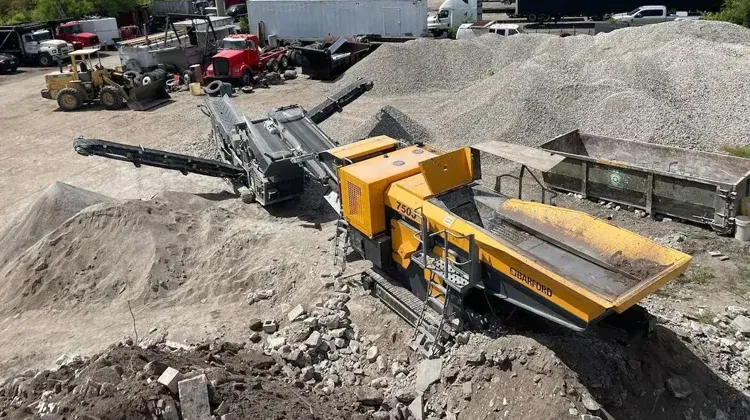
Stone crushers are essential equipment in mining, quarrying, cement manufacturing, aggregate production, and construction waste recycling industries. In a modern crushing plant, the selection of crushing equipment directly influences production efficiency, final aggregate quality, maintenance costs, and long-term operational profitability.
Different crushing machines are designed for different materials and production requirements. Some crushers are more suitable for processing high-hardness rocks under heavy-duty working conditions, while others are designed to produce high-quality aggregates with excellent particle shape for construction and infrastructure projects.
For many mining companies, quarry operators, and cement plant investors, choosing the right crusher is not simply about purchasing a machine. It is about building a stable, efficient, and cost-effective production system capable of operating continuously under demanding industrial conditions.
The most commonly used crushing equipment in the mining and aggregate industries includes:
- Britador de mandíbulas
- Britador de cone
- Britador de impacto
- Triturador de martelo
- Mobile Stone Crusher Plant
This article explains the working principles, suitable materials, advantages, disadvantages, and application scenarios of each crusher type, helping you choose the most suitable crushing solution for your project.
Quick Comparison of Different Types of Stone Crushers
| Crusher Type | Main Application | Suitable Material Type | Key Advantages |
|---|---|---|---|
| Britador de mandíbulas | Primary Crushing | Hard and abrasive rocks | Large feed opening, reliable structure, stable operation |
| Britador de cone | Secondary and Fine Crushing | Extremely hard materials | Low operating cost, high automation, excellent wear resistance |
| Britador de impacto | Aggregate Production and Recycling | Medium-hard materials | Superior particle shape, flexible output size |
| Triturador de martelo | Soft Stone Crushing | Brittle and low-hardness materials | Large crushing ratio, simplified production process |
In practical applications, crushing equipment is usually selected according to material hardness, production capacity, final product requirements, and investment budget.
1. Jaw Crusher – A Reliable Solution for Primary Crushing
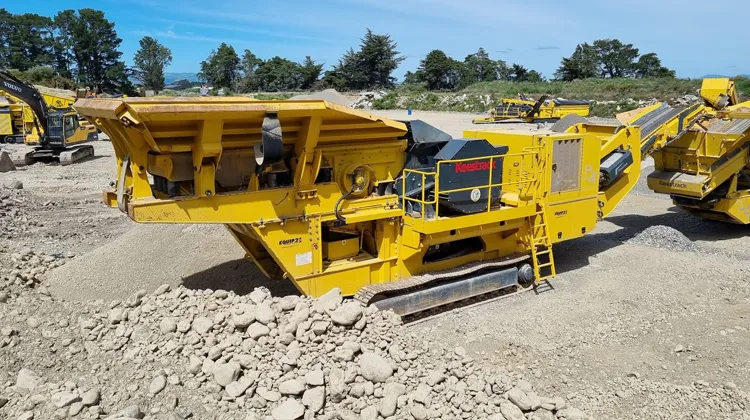
Working Principle of Jaw Crusher
A jaw crusher uses compressive force to crush materials. During operation, the movable jaw periodically moves toward the fixed jaw, compressing large rocks into smaller sizes.
Because of its strong crushing capability and simple mechanical structure, the jaw crusher has become one of the most widely used primary crushing machines in mining and quarry industries.
Suitable Materials for Jaw Crusher
Jaw crushers are particularly suitable for hard and highly abrasive materials, including:
- Granito
- Basalto
- Minério de ferro
- River stone
- Quartz stone
These materials often cause severe wear on ordinary crushing equipment. However, jaw crushers can maintain stable performance under heavy-duty working conditions.
Advantages of Jaw Crusher
Reliable Structure for Long-Term Industrial Operation
Jaw crushers have been used in industrial crushing applications for decades. Their structure is relatively simple, but extremely durable and reliable.
Since the number of core components is relatively limited, the machine has a lower failure rate compared with more complex crushing systems. This makes jaw crushers highly suitable for mining projects that require continuous production over long operating hours.
Excellent Adaptability to Hard and Abrasive Materials
When processing granite, basalt, and iron ore, many crushing machines experience rapid wear and unstable production performance. Jaw crushers, however, use compressive crushing force, which provides better resistance to wear and improved operational stability.
As a result, jaw crushers are commonly used in hard rock crushing plants and metal mining projects.
Large Feeding Capacity
Jaw crushers can process large feed materials, typically ranging from 500 mm to 1500 mm. This makes them highly effective for the first stage of crushing.
Lower Maintenance Cost
Compared with highly automated crushing systems, jaw crushers are easier to maintain and usually require lower maintenance costs.
Disadvantages of Jaw Crusher
Although jaw crushers are highly effective for primary crushing, they also have some limitations.
The final particle shape is usually less uniform compared with cone crushers or impact crushers. In most aggregate production lines, jaw crushers are combined with secondary crushing equipment to achieve better final product quality.
In addition, jaw crushers generally produce higher noise levels during operation.
Common Applications of Jaw Crusher
- Primary crushing in mining plants
- Quarry crushing production lines
- Cement raw material processing
- Construction waste pre-crushing
2. Cone Crusher – High-Efficiency Equipment for Secondary and Fine Crushing

Working Principle of Cone Crusher
A cone crusher crushes materials through continuous compression between the mantle and concave. The moving cone rotates eccentrically inside the fixed cone, gradually reducing the size of the material.
Cone crushers are mainly used for secondary and tertiary crushing stages, especially in hard rock processing projects.
Suitable Materials for Cone Crusher
Cone crushers are ideal for extremely hard and highly abrasive materials, such as:
- Minério de ferro
- Copper ore
- Granito
- Basalto
- River pebble
These materials require crushing equipment with strong wear resistance and stable operating performance.
Advantages of Cone Crusher
Superior Aggregate Shape for High-Standard Construction Projects
One of the most important advantages of cone crushers is their ability to produce aggregates with more uniform particle size and lower flaky particle content.
For infrastructure projects such as highways, bridges, railways, and high-strength concrete production, aggregate quality directly affects construction performance. Cone crushers are widely used in these industries because they can produce aggregates that meet strict engineering standards.
Lower Operating Cost in Large-Scale Production
Although cone crushers usually require a higher initial investment, their wear parts often have a longer service life.
In large mining projects and aggregate production plants, this helps reduce long-term operating costs and maintenance frequency.
High Automation and Intelligent Control
Modern hydraulic cone crushers are equipped with advanced automation systems, including hydraulic cavity clearing, overload protection, and intelligent monitoring systems.
These technologies improve production efficiency while reducing manual operation and downtime.
Continuous Crushing Capability
Cone crushers are designed for continuous heavy-duty operation, making them highly suitable for large-scale industrial crushing plants.
Disadvantages of Cone Crusher
Cone crushers have a more complex structure compared with jaw crushers and hammer crushers.
The initial investment cost is relatively high, and the machine is generally not suitable for sticky or high-moisture materials, which may affect crushing efficiency.
Common Applications of Cone Crusher
- Hard rock crushing plants
- Aggregate production lines
- Metal ore processing
- Large mining projects
3. Impact Crusher – An Ideal Choice for Aggregate Production and Recycling

Princípio de funcionamento do britador de impacto
An impact crusher uses high-speed rotating blow bars to strike materials. The material repeatedly collides with impact plates until it reaches the desired particle size.
Unlike jaw crushers and cone crushers, which mainly rely on compressive force, impact crushers use impact energy for crushing.
Suitable Materials for Impact Crusher
Impact crushers are suitable for medium-hard and softer materials, including:
- Calcário
- Concrete waste
- Construction debris
- Cement clinker
They are particularly popular in aggregate production and recycling industries.
Advantages of Impact Crusher
Excellent Particle Shape for High-Quality Aggregates
One of the biggest advantages of impact crushers is their ability to produce cubic-shaped aggregates with smoother edges.
In concrete production, road construction, and commercial aggregate processing, particle shape plays an important role in final construction quality. Compared with traditional compressive crushing equipment, impact crushers are more effective in producing high-quality aggregates.
Flexible Control of Final Product Size
Operators can adjust the gap between blow bars and impact plates according to different production requirements, allowing greater flexibility in controlling final product size.
Efficient Solution for Construction Waste Recycling
Impact crushers are widely used in recycling projects because they can efficiently process concrete waste, asphalt waste, and demolition materials.
Easier Transportation and Installation
Compared with some heavy-duty crushing equipment, impact crushers are relatively lightweight and easier to transport and install.
Disadvantages of Impact Crusher
Impact crushers are not ideal for extremely hard or highly abrasive materials.
When processing hard rocks such as granite or basalt, blow bars may wear quickly, increasing maintenance costs and replacement frequency.
Common Applications of Impact Crusher
- Limestone crushing plants
- Aggregate production lines
- Construction waste recycling projects
- Cement clinker crushing
4. Hammer Crusher – A Cost-Effective Solution for Soft Material Crushing

Working Principle of Hammer Crusher
A hammer crusher combines impact force and shearing force to crush materials. During operation, high-speed rotating hammers strike the material repeatedly until it reaches the target size.
In many applications, hammer crushers can achieve single-stage crushing.
Suitable Materials for Hammer Crusher
Hammer crushers are suitable for brittle and lower-hardness materials, including:
- Calcário
- Carvão
- Gesso
- Shale
These materials can be crushed efficiently with relatively low energy consumption.
Advantages of Hammer Crusher
Simplified Crushing Process
For medium-soft materials, hammer crushers can directly crush large feed materials into the required final size, reducing or even eliminating secondary crushing stages.
This helps simplify the production process and reduce investment costs.
Large Crushing Ratio
Hammer crushers can process relatively large materials while achieving significant size reduction in a single crushing stage.
Lower Energy Consumption
Compared with multi-stage crushing systems, hammer crushers may reduce overall energy consumption in certain applications.
Simple Structure and Easy Maintenance
The overall machine structure is relatively simple, making maintenance and operation easier for small and medium-sized crushing plants.
Disadvantages of Hammer Crusher
The hammer heads wear relatively quickly, especially when processing abrasive materials.
In addition, hammer crushers are not suitable for high-hardness rocks, and the precision of final particle size control is relatively limited.
Common Applications of Hammer Crusher
- Limestone crushing
- Coal crushing plants
- Cement production lines
- Small quarry projects
5. Mobile Stone Crusher Plant – A Flexible and Efficient Crushing Solution
As infrastructure construction and construction waste recycling industries continue to expand worldwide, mobile crushing plants are becoming increasingly popular among contractors and mining companies.
Main Features of Mobile Crusher Plants
A mobile stone crusher plant integrates multiple systems into a single mobile platform, including:
- Crushing system
- Screening system
- Conveying system
- Intelligent control system
This integrated design allows the equipment to be quickly transported and deployed at different job sites.
Common Application Scenarios
- Construction waste recycling projects
- Temporary quarry operations
- Remote mining areas
- Highway construction projects
- Urban demolition projects
Advantages of Mobile Crusher Plants
High Mobility and Flexible Operation
Mobile crushing plants can move quickly between different working sites without requiring complex foundation construction.
This makes them especially suitable for temporary projects and recycling operations.
Reduced Infrastructure Investment
Because less civil engineering work is required, mobile crusher plants can significantly reduce installation and infrastructure costs.
Faster Production Startup
Compared with traditional stationary crushing plants, mobile crushers can be installed and commissioned much faster.
Better Environmental Performance
Modern mobile crushing plants are often equipped with dust suppression systems and noise reduction technology, helping companies meet stricter environmental regulations.
How to Choose the Right Stone Crusher for Your Project
Selecting the right crushing equipment requires a comprehensive evaluation of several important factors.
1. Material Hardness
Different materials require different crushing solutions.
- Granite, basalt, and iron ore: Jaw Crusher + Cone Crusher
- Limestone, coal, and gypsum: Impact Crusher or Hammer Crusher
- Construction waste: Impact Crusher or Mobile Crusher Plant
2. Production Capacity Requirements
Large mining projects usually require high-capacity crushing systems capable of continuous industrial operation.
Smaller quarry projects may focus more on equipment investment cost and operational flexibility.
3. Final Aggregate Quality Requirements
For projects that require high-quality aggregates with excellent particle shape, cone crushers and impact crushers are generally better choices.
4. Maintenance and Wear Part Cost
Different crushing machines have different wear part lifespans and maintenance requirements.
Por exemplo:
- Cone crusher liners usually offer longer wear life
- Impact crusher blow bars may wear faster
- Hammer crusher hammers require regular replacement
5. Mobility Requirements
For projects that require frequent relocation, mobile crushing plants provide greater flexibility and lower installation costs.
Comparison Between Stationary Crushing Plants and Mobile Crushing Plants
In modern aggregate production and mining industries, customers often need to decide between stationary crushing plants and mobile crushing plants.
A stationary crushing plant is usually designed for long-term production projects with stable production requirements. These plants generally offer higher production capacity and are suitable for large-scale mining operations and permanent quarry projects.
Mobile crushing plants, on the other hand, are designed for flexibility and rapid deployment. They are widely used in temporary crushing projects, urban construction waste recycling, road construction, and remote mining areas where transportation and installation conditions are limited.
Advantages of Stationary Crushing Plants
- Higher overall production capacity
- Better suitability for long-term industrial projects
- Lower operating cost in large-scale production
- More flexible equipment configuration options
Advantages of Mobile Crushing Plants
- Faster installation and commissioning
- Lower infrastructure investment
- Easier transportation between project sites
- Better adaptability for temporary projects
For many contractors and recycling companies, mobile crusher plants have become an increasingly attractive solution due to their operational flexibility and lower setup requirements.
Common Stone Crushing Production Line Configurations
Different materials require different crushing process designs. In practical industrial applications, crushing equipment is often combined into complete crushing and screening systems.
Granite Crushing Production Line
Granite is a hard and abrasive material that requires high-strength crushing equipment.
A typical granite crushing plant configuration includes:
- Alimentador vibratório
- Britador de mandíbulas
- Britador de cone
- Tela vibratória
- Sand Making Machine
This configuration is widely used in highway construction, railway projects, and high-grade concrete aggregate production.
Limestone Crushing Production Line
Limestone is relatively softer compared with granite, making it suitable for impact crushing.
A common limestone crushing configuration includes:
- Alimentador vibratório
- Britador de mandíbulas
- Britador de impacto
- Tela vibratória
This production line is widely used in cement plants and aggregate processing projects.
Construction Waste Recycling Plant
Construction waste recycling projects usually require flexible and mobile crushing solutions.
O equipamento típico inclui:
- Britador de mandíbulas móvel
- Britador de impacto móvel
- Mobile Screening Plant
These systems can process concrete waste, asphalt waste, bricks, and demolition materials efficiently.
Maintenance Tips for Stone Crushers
Proper maintenance plays an important role in extending equipment lifespan and reducing unexpected downtime.
Regular Inspection of Wear Parts
Wear parts such as jaw plates, cone liners, blow bars, and hammer heads should be inspected regularly.
Timely replacement of worn components can prevent equipment damage and maintain stable production efficiency.
Lubrication System Maintenance
Proper lubrication is essential for bearings and rotating components.
Operators should regularly check lubrication systems and ensure that lubrication oil meets equipment requirements.
Monitor Vibration and Noise
Abnormal vibration or unusual noise may indicate internal component wear or mechanical problems.
Early detection can help avoid major equipment failures.
Keep the Feeding System Stable
Uneven feeding may reduce crushing efficiency and increase equipment wear.
Using vibrating feeders and maintaining stable material flow can improve overall crushing performance.
Why High-Quality Crushing Equipment Matters
In mining and aggregate production industries, crushing equipment often operates under extremely demanding conditions. Equipment reliability directly affects production continuity, operating cost, and project profitability.
Low-quality crushing machines may lead to:
- Frequent equipment downtime
- Higher maintenance costs
- Increased wear part consumption
- Lower aggregate quality
- Reduced production efficiency
High-quality crushing equipment, however, can provide:
- Stable long-term operation
- Better energy efficiency
- Lower maintenance frequency
- Maior capacidade de produção
- Improved final product quality
For industrial projects, choosing reliable crushing equipment is often more important than simply selecting the lowest equipment price.
Future Development Trends in the Stone Crushing Industry
With the continuous growth of global infrastructure construction, mining investment, and recycling industries, crushing equipment technology is evolving toward:
- Intelligent automation systems
- Energy-efficient crushing equipment
- Mobile crushing solutions
- Environmentally friendly production lines
- High-efficiency crushing technology
More customers are now paying greater attention to production efficiency, operating costs, automation levels, and environmental performance.
Perguntas frequentes
Which crusher is best for granite?
Jaw crushers combined with cone crushers are widely considered the most effective solution for granite crushing because they can handle high-hardness materials efficiently.
Which crusher is best for limestone?
Impact crushers and hammer crushers are both commonly used for limestone processing due to their excellent crushing performance on medium-soft materials.
Are mobile crusher plants worth investing in?
Yes. Mobile crushing plants provide greater operational flexibility, lower infrastructure costs, and faster installation, especially for recycling projects and temporary crushing operations.
How can crusher maintenance costs be reduced?
Choosing high-quality wear parts, performing regular maintenance inspections, and selecting suitable crushing equipment for the material can significantly reduce maintenance costs.
Conclusão
As mining, infrastructure construction, and recycling industries continue to expand worldwide, the demand for reliable and efficient stone crushing equipment is increasing rapidly.
Different types of crushers offer different advantages depending on material characteristics, production requirements, and operational conditions. Jaw crushers remain one of the most reliable solutions for primary crushing, cone crushers are highly effective for hard rock secondary crushing, impact crushers are ideal for producing high-quality aggregates, and hammer crushers provide cost-effective solutions for softer materials.
At the same time, mobile crushing plants are becoming increasingly important because of their flexibility, rapid deployment capability, and lower infrastructure requirements.
When selecting crushing equipment, companies should evaluate not only the initial investment cost, but also long-term production efficiency, maintenance requirements, wear part lifespan, and operational stability.
A well-designed crushing solution can significantly improve production performance, reduce operating costs, and create greater long-term value for mining, quarrying, and aggregate production projects.
If you are looking for crushing equipment solutions for granite, limestone, iron ore, aggregate production, or construction waste recycling, our team can provide professional recommendations and customized production line solutions according to your material type, capacity requirements, and project budget.


 Portuguese
  English
  Russian
  Arabic
  Vietnamese
  Spanish
  French
  Japanese
  Chinese