


As global industries continue to evolve toward higher performance and greater efficiency, tungsten has emerged as one of the most critical strategic metals. It plays an indispensable role in sectors such as aerospace, mining, electronics, energy storage, and precision manufacturing.
Among all tungsten-bearing minerals, wolframite is one of the most important commercial sources. However, due to its relatively low ore grade and complex mineral associations, efficient wolframite processing has become a key challenge for mining operators.
For companies looking to improve profitability, understanding how to optimize tungsten ore beneficiation and maximize recovery is no longer optional—it is essential.
1. Exploring the World of Wolframite
What is Wolframite?
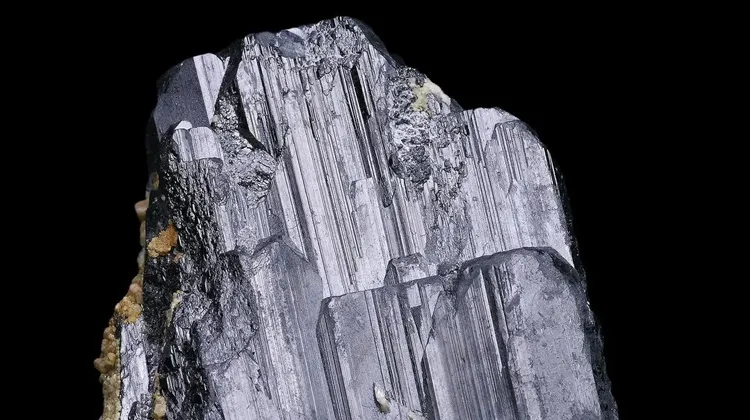
Wolframite is an iron-manganese tungstate mineral with the chemical formula (Fe, Mn)WO₄. It represents a solid solution between ferberite (iron-rich) and hübnerite (manganese-rich), and it is widely recognized as one of the primary sources of tungsten extraction worldwide.
In commercial mining, wolframite is often preferred over other tungsten minerals due to its relatively higher processing efficiency under gravity and magnetic separation methods.
Physical and Chemical Properties of Wolframite
Understanding the physical characteristics of wolframite is essential for designing an efficient processing plant. Key properties include:
- A dark black to brownish-black color with a sub-metallic luster
- A Mohs hardness of approximately 4 to 4.5, making it moderately hard but still crushable
- A high specific gravity ranging from 7.1 to 7.5, which makes gravity separation highly effective
- Weak magnetic properties, enabling its recovery through high-intensity magnetic separation
- An extremely high melting point of around 3,410°C, which contributes to tungsten’s excellent heat resistance
These characteristics directly influence the selection of beneficiation methods and equipment in a tungsten processing plant.
Global Distribution of Tungsten Resources
Tungsten resources are highly concentrated geographically, with a few countries dominating global production. China leads both in reserves and annual output, followed by Vietnam and Russia. In recent years, several African countries such as Rwanda and the Democratic Republic of Congo have also become important suppliers to the global market.
This concentration creates both opportunities and risks, as supply chain disruptions can significantly impact global tungsten prices.
Tungsten Price Trends and Market Demand
Between 2018 and 2025, tungsten prices have shown a generally upward trend, although short-term fluctuations are common due to market dynamics. The main drivers behind this growth include:
- Increasing demand from electric vehicles and renewable energy systems
- Expansion of high-performance cutting tools and wear-resistant materials
- Strategic stockpiling by governments and industrial users
As a result, investing in efficient tungsten ore processing technology has become a priority for mining companies seeking long-term stability.
2. Wolframite Processing Flow

Desafios de Processamento
Unlike high-grade metal ores, wolframite deposits typically contain less than 1.5% WO₃. In addition, they are often associated with other minerals such as quartz, sulfides, and iron oxides.
This means that a well-designed mineral processing flow sheet is critical to achieving high recovery rates while keeping operating costs under control.
Step-by-Step Wolframite Processing
1. Crushing
The run-of-mine ore is first reduced in size using jaw crushers and impact crushers. The goal is to achieve a particle size below 15 mm, which is suitable for subsequent grinding and separation processes.
Efficient crushing not only improves downstream performance but also reduces energy consumption in the grinding stage.
2. Grinding
Grinding is typically carried out using rod mills rather than ball mills in order to minimize over-grinding. Excessive fine particles, often referred to as “slimes,” can lead to significant tungsten losses during separation.
By maintaining a controlled particle size distribution, operators can significantly improve recovery efficiency.
3. Gravity Separation
Due to the high density of wolframite, gravity separation remains one of the most effective and economical methods. Equipment commonly used includes jig separators, shaking tables, and spiral chutes.
This stage is usually responsible for recovering a large portion of the tungsten content at a relatively low cost, making it a cornerstone of tungsten beneficiation.
4. Strong Magnetic Roughing
Wolframite exhibits weak magnetic properties, which allows it to be separated using high-intensity magnetic separators. At around 1.3 Tesla, optimal recovery can be achieved during the roughing stage.
This step helps concentrate tungsten minerals while discarding non-magnetic gangue materials.
5. Flotation Desulfurization
In many deposits, sulfide minerals such as pyrite are present and must be removed. Flotation is used to separate these unwanted components, improving the purity of the tungsten concentrate.
This step is particularly important for producing high-quality downstream products.
6. Weak Magnetic Iron Separation
Iron-bearing minerals can be recovered through low-intensity magnetic separation. This not only improves the quality of the tungsten concentrate but also allows for the recovery of valuable iron by-products.
7. Strong Magnetic Tungsten Separation
A second stage of high-intensity magnetic separation is used to further upgrade the tungsten concentrate. With proper optimization, WO₃ grades can exceed 60%, meeting industrial requirements.
8. Dewatering and Drying
The final concentrate is processed through thickening, filtration, and drying systems. Proper moisture control is essential for transportation, storage, and further refining.
9. Scrap Tungsten Recycling
In addition to primary mining, recycling has become an increasingly important part of the tungsten supply chain. Recovering tungsten from scrap materials such as cutting tools and industrial waste offers several advantages:
- Lower production costs
- Impacto ambiental reduzido
- Improved resource efficiency
As sustainability becomes a global priority, tungsten recycling technologies are expected to play a larger role in the industry.
3. How to Maximize the Value of Tungsten Ore

Maximizing the value of tungsten ore requires a combination of technical expertise and strategic planning.
First, improving recovery rates through optimized process design can significantly increase overall profitability. Even a small percentage gain in recovery can translate into substantial financial returns.
Second, investing in advanced mineral processing equipment ensures higher efficiency, lower downtime, and more consistent product quality.
Third, automation and digital control systems allow operators to monitor and adjust processing parameters in real time, reducing human error and improving operational stability.
Finally, adopting environmentally sustainable practices helps companies comply with international regulations while enhancing their brand reputation in the global market.
4. What is Tungsten Used For?

From Ore to Intermediate Products
After beneficiation, wolframite concentrate is typically converted into Ammonium Paratungstate (APT), which serves as the primary intermediate product in the tungsten value chain. APT is then processed into tungsten powder or other derivatives depending on the final application.
Key Industrial Applications
Tungsten is widely used across multiple industries due to its unique properties such as high hardness, density, and heat resistance.
In the field of cemented carbides, tungsten is used to manufacture cutting tools, drill bits, and wear-resistant components that are essential for mining and construction.
In aerospace and energy industries, tungsten-based superalloys are used in turbine blades, rocket components, and nuclear reactors due to their ability to withstand extreme temperatures.
In electronics, tungsten is commonly used in filaments, electrodes, and semiconductor components, where reliability and conductivity are critical.
Additionally, tungsten is an effective material for radiation shielding, making it suitable for medical imaging and nuclear applications.
It is also used as a catalyst in various chemical processes, particularly in petrochemical and organic synthesis industries.
5. Our Wolframite Processing Solutions
As an experienced supplier of mining and mineral processing equipment, we provide comprehensive solutions tailored to different types of tungsten ore deposits.
Our services include complete processing plant design, customized equipment manufacturing, EPC turnkey solutions, and ongoing technical support. We work closely with clients to ensure that each project achieves optimal performance and long-term reliability.
Whether you are developing a new mine or upgrading an existing plant, our team can help you improve efficiency, reduce costs, and maximize your return on investment.
Conclusão
Wolframite processing is more than just a technical procedure—it is a strategic approach to unlocking the full economic potential of tungsten resources.
By combining advanced beneficiation technologies, efficient equipment, and sustainable practices, mining companies can significantly enhance their competitiveness in the global market.
As demand for tungsten continues to grow, those who invest in optimized processing solutions will be best positioned for long-term success.
FAQ About Wolframite Processing and Tungsten Ore Extraction
1. What is the difference between wolframite and scheelite?
Wolframite and scheelite are the two main sources of tungsten. Wolframite is an iron-manganese tungstate mineral with high density and weak magnetic properties, making it suitable for gravity and magnetic separation. Scheelite, on the other hand, is a calcium tungstate mineral and is typically processed using flotation methods. The choice of processing method depends largely on the mineral characteristics.
2. What is the typical grade of wolframite ore?
The grade of raw wolframite ore is usually quite low, often below 1.5% WO₃. To achieve a commercially viable product, multiple beneficiation stages are required to increase the tungsten concentration.
3. What is the most common method for wolframite processing?
The most widely used method is a combination of gravity separation and magnetic separation. Gravity separation is used for initial concentration due to the high density of wolframite, while magnetic separation is applied to further improve the concentrate grade.
4. Why is a rod mill preferred over a ball mill in tungsten processing?
Rod mills are preferred because they produce a more uniform particle size and reduce over-grinding. Excessive fine particles can result in tungsten losses during the separation process, which negatively affects recovery rates.
5. What grade can tungsten concentrate reach after processing?
With an optimized processing flow, tungsten concentrate can typically reach a WO₃ grade of over 60%, which meets industrial and commercial requirements.
6. How can the recovery rate of tungsten ore be improved?
Improving recovery involves optimizing the entire beneficiation process, including proper equipment selection, precise control of grinding size, and efficient use of gravity and magnetic separation technologies.
7. Why is tungsten recycling important?
Tungsten recycling helps reduce production costs, conserve natural resources, and minimize environmental impact. As sustainability becomes increasingly important, recycled tungsten is playing a growing role in the global supply chain.
8. What industries use tungsten the most?
Tungsten is widely used in industries such as mining, aerospace, electronics, energy, and manufacturing. It is essential for producing cutting tools, high-temperature alloys, electrical components, and radiation shielding materials.


 Portuguese
  English
  Russian
  Arabic
  Vietnamese
  Spanish
  French
  Japanese
  Chinese