



Graphite is a non-metallic mineral composed mainly of carbon. In addition to being used for writing, it offers electrical conductivity, thermal conductivity, lubricity and high-temperature resistance. These properties make graphite important in batteries, electrodes, refractories, nuclear reactors and friction materials.
This article answers eight interesting questions about graphite uses and explains the material properties behind them.
Graphite: A Must-Have Stone for Writers
The word “graphite” comes from the Greek word “graphein,” meaning “to write.”
People discovered long ago that natural graphite was soft enough to leave a dark mark on paper and other surfaces. It was therefore used for writing, drawing and marking before its chemical composition was fully understood.
In the 16th century, a high-quality natural graphite deposit was discovered in England. At the time, people mistakenly believed the black mineral was a form of lead and called it “black lead.”
Scientists later confirmed that graphite was made from carbon rather than metallic lead. However, the name “lead pencil” remained in common use.
1. Why Are Pencils Containing Graphite Called Lead Pencils?
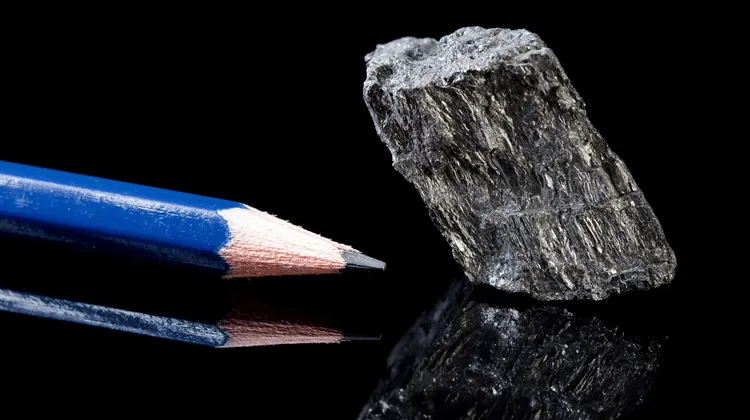
Modern pencil cores do not normally contain metallic lead. They are made from a mixture of graphite powder and clay.
Graphite has a layered crystal structure. Carbon atoms are strongly connected within each layer, while the attraction between separate layers is relatively weak.
When a pencil moves across paper, thin graphite particles separate from the pencil core and become trapped between the paper fibers. These particles form the familiar dark writing mark.
Pencil manufacturers can adjust hardness by changing the ratio of graphite to clay. A higher graphite content normally produces a softer pencil with a darker mark. A higher clay content creates a harder pencil with a lighter mark.
The term “lead pencil” is therefore a historical name. Graphite, rather than lead, is the material that produces the writing.
2. Why Are Electrodes Made of Graphite?
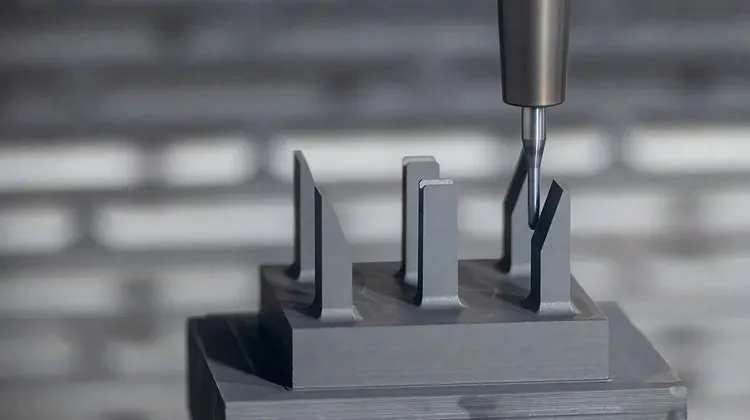
Graphite conducts electricity because some electrons in its crystal structure can move along the carbon layers. It also remains relatively stable at high temperatures, making it suitable for industrial electrodes.
During electric arc furnace steelmaking, graphite electrodes carry powerful electric currents and create an arc that melts scrap metal. Many metals would soften or melt rapidly under these conditions, while properly manufactured graphite electrodes can continue operating.
Graphite also has relatively low thermal expansion and can tolerate rapid temperature changes. These properties help reduce cracking and deformation during furnace operation.
Graphite is also one of the most widely used anode materials in lithium-ion batteries. During charging, lithium ions enter the spaces between graphite layers. During discharge, the ions leave the graphite structure.
Graphite offers mature manufacturing technology, stable cycle performance and competitive production costs. It is therefore widely used in batteries for electric vehicles, consumer electronics and energy-storage systems.
3. Why Is Graphite Used in Nuclear Reactors?
In some nuclear reactors, high-purity graphite is used as a neutron moderator.
Nuclear fission releases fast-moving neutrons. Certain nuclear fuels maintain a controlled chain reaction more effectively when these neutrons move at lower speeds.
Carbon atoms in graphite can slow the neutrons through repeated collisions without absorbing too many of them. This allows graphite to help maintain and control the nuclear reaction.
Graphite also provides high-temperature resistance and thermal conductivity. Depending on the reactor design, it may perform structural support and heat-transfer functions.
Nuclear-grade graphite is very different from ordinary industrial graphite. It must have extremely high purity, while elements that readily absorb neutrons must be strictly controlled. The material must also meet demanding requirements for density, strength and dimensional stability.
Graphite is not the nuclear fuel itself. Its primary role is to control neutron speed and support stable reactor operation.
4. Can Graphite Be Turned into Diamond?

Graphite and diamond are both made from carbon, but their carbon atoms are arranged differently.
In graphite, carbon atoms form flat layers, which makes the material relatively soft. In diamond, carbon atoms form a strong three-dimensional network, giving diamond its exceptional hardness.
Synthetic diamonds can be produced from graphite through the high-pressure, high-temperature process, commonly known as HPHT.
During production, graphite is exposed to extremely high pressure and temperature. Metals such as iron, nickel or cobalt may be added as catalysts. Under controlled conditions, the carbon atoms rearrange and gradually form diamond crystals.
Simply heating ordinary graphite will not produce a diamond. The process requires specialized equipment, accurate temperature and pressure control, and suitable crystal-growth conditions.
Synthetic diamonds are used in jewelry, cutting tools, grinding materials, drill bits, precision machining and thermal-management products.
5. Why Can Graphite Be Used as a Lubricant?
Graphite’s lubricating properties come from its layered structure.
The carbon atoms within each graphite layer are strongly bonded, but the forces between separate layers are weaker. When two mechanical surfaces move against each other, the graphite layers can slide and reduce friction.
Unlike liquid oils, graphite is a solid lubricant and does not flow away easily. It can perform well in certain high-temperature, heavy-load and low-speed environments where conventional lubricating oils may be unsuitable.
Graphite lubricants can be used in high-temperature bearings, forging molds, die-casting equipment, mining machinery, locks and precision mechanisms.
However, graphite does not provide the same lubrication under every condition. Humidity, particle size, purity and formulation can all affect performance.
Industrial lubricants therefore normally use graphite powder that has been carefully ground, classified and formulated rather than untreated graphite ore.
6. Why Is Graphite a Good Refractory Material?
Graphite provides high-temperature stability, thermal conductivity, thermal-shock resistance and chemical stability. These properties make it an important refractory material in steel, glass, foundry and non-ferrous metal industries.
Materials inside high-temperature equipment must withstand continuous heat, rapid temperature changes and contact with molten metals or slags.
If heat is not distributed effectively, large temperature differences may create thermal stress and cause cracking. Graphite transfers heat efficiently and has relatively low thermal expansion, helping reduce structural damage caused by temperature changes.
Common graphite refractory products include graphite crucibles, magnesia-carbon bricks, alumina-carbon bricks, furnace linings, continuous-casting components and high-temperature sintering molds.
Natural flake graphite is particularly valuable in many refractory products. Large, well-preserved flakes can improve thermal conductivity, thermal-shock resistance and resistance to slag penetration.
Graphite processing plants should therefore avoid unnecessary crushing and grinding that could damage valuable coarse flakes.
7. How Is Graphene Made from Graphite?
Graphite consists of many graphene layers stacked together. Graphene is a two-dimensional material made from a single layer of carbon atoms.
One of the earliest well-known production methods was mechanical exfoliation. Researchers repeatedly peeled graphite with adhesive tape until single-layer or few-layer graphene was obtained.
This method can produce high-quality graphene, but the output is too low for large-scale production.
Modern graphene production may use liquid-phase exfoliation, oxidation and reduction, electrochemical exfoliation or chemical vapor deposition.
Liquid-phase exfoliation uses ultrasound or high shear to separate graphite layers dispersed in a liquid. The oxidation and reduction route first converts graphite into graphite oxide, which is then separated and reduced. Electrochemical exfoliation uses ions to enter the spaces between graphite layers and push them apart.
Chemical vapor deposition does not directly peel graphene from graphite. Instead, it grows a graphene film on a metal surface, such as copper.
Graphene offers excellent electrical conductivity, thermal conductivity, mechanical strength and a large surface area. It has potential applications in batteries, supercapacitors, sensors, thermal materials and advanced composites.
8. What Are the Benefits of Adding Graphite to Brake Linings?

Brake pads and brake linings must balance friction, wear resistance, heat dissipation, noise and braking comfort. Graphite can be added as a functional component to improve this balance.
Graphite provides controlled lubricity, helping prevent friction between the brake pad and disc from becoming excessively high. This may reduce vibration, sharp braking noise and uneven wear.
Its thermal conductivity also helps transfer frictional heat away from the contact area, reducing the risk of local overheating and performance loss.
Graphite may also support the formation of a stable friction film on the brake surface. This can make braking smoother and improve friction stability at elevated temperatures.
However, adding more graphite does not always improve brake performance. If the graphite content is too high, excessive lubrication may reduce braking force.
Manufacturers must therefore choose the graphite type and dosage according to vehicle type, operating temperature and the overall friction-material formulation.
What Are Some Other Common Graphite Uses?
Graphite can be used as a recarburizer in steelmaking and foundry production to adjust the carbon content of molten steel and iron.
Natural flake graphite can also be chemically treated and expanded at high temperature. The resulting expanded graphite is used in flexible graphite seals, high-temperature gaskets and fire-resistant products.
Fine graphite powder may be added to coatings, plastics and composite materials to improve electrical conductivity, antistatic performance and heat transfer.
Graphite is not a major ingredient in ordinary cement, but it can be used in conductive concrete, electromagnetic-shielding materials, self-sensing cement composites and selected high-temperature construction products.
Do Different Graphite Uses Require Different Products?
Different applications require different graphite properties.
Graphite used in pencils should provide a fine texture and stable color. Refractory-grade graphite needs suitable fixed-carbon content, controlled ash and preserved flake size. Battery anode graphite requires high purity, consistent particle size and strict impurity control.
Nuclear-grade graphite requires extremely high purity and stability. Graphite used in brake linings and lubricants must provide controlled particle size, thermal performance, dispersion and lubricating behavior.
Graphite processing should therefore not focus only on producing the finest powder or the highest possible purity. The product specification should be based on its final application.
For many refractory and expandable graphite products, coarse natural flakes are more valuable. Excessive grinding can destroy the flake structure and reduce the value of the final concentrate.
How Is Natural Graphite Ore Processed?
Natural graphite ore normally contains quartz, mica, feldspar and other gangue minerals. Crushing, grinding and flotation are used to increase the fixed-carbon content.
The ore is first reduced in size using crushing equipment. Because graphite flakes can be damaged by strong mechanical impact, the crushing circuit should avoid unnecessary overcrushing.
Grinding is used to liberate graphite from gangue rather than to make all particles as fine as possible. Flake graphite plants often use staged grinding and staged flotation so that liberated coarse flakes can be recovered before entering additional grinding stages.
Graphite has natural hydrophobic properties, making flotation a common beneficiation method. Graphite particles attach to air bubbles and enter the froth concentrate, while most gangue minerals remain in the slurry.
The concentrate is then thickened, filtered and dried. High-purity graphite, battery materials and electronic applications may require additional chemical purification, thermal purification, fine grinding or particle classification.
How Should Graphite Processing Equipment Be Selected?
Graphite processing equipment should be selected according to ore type, feed grade, liberation size, target purity and final application rather than production capacity alone.
A plant producing refractory or expandable graphite should protect coarse flakes and minimize excessive grinding. A plant producing lubricants, conductive coatings or friction materials requires more accurate control of fine-powder size and classification.
A typical graphite processing line may include concasseurs à mâchoires, concasseurs à cône, broyeurs à boulets, flotation cells, thickeners, filters, dryers, grinding mills and air classifiers.
Mineralogical analysis and beneficiation testing should be completed before the final process design. Graphite deposits can differ greatly in mineral composition and liberation characteristics. Directly copying equipment from another plant may result in flake damage, higher energy consumption or unstable concentrate quality.
Conclusion
Graphite is more than a writing material used in pencils. It is an important carbon material for modern industry.
It can be used in electrodes, battery anodes, nuclear reactors, refractories, lubricants and brake linings. It can also be processed into synthetic diamond or separated into graphene.
Each application requires different levels of purity, particle size, flake structure and impurity control. An efficient graphite processing plant should therefore be designed around the final product requirements.
Crushing, grinding, flotation, dewatering, drying, purification and classification equipment should improve concentrate quality while minimizing overgrinding and valuable flake loss.
Foire aux questions
Is graphite a metal?
No. Graphite is a non-metallic mineral composed mainly of carbon, although it provides good electrical and thermal conductivity.
Do pencil cores contain lead?
Modern pencil cores normally contain graphite and clay rather than metallic lead. The name “lead pencil” comes from an early misunderstanding of graphite.
What is the relationship between graphite and diamond?
Both graphite and diamond are made from carbon, but their atoms are arranged differently. Graphite can be converted into synthetic diamond under high-pressure and high-temperature conditions.
Why does graphite conduct electricity?
Some electrons within the graphite structure can move along the carbon layers, allowing the material to conduct electrical current.
Can natural graphite be used directly in lithium-ion batteries?
Natural graphite normally requires beneficiation, purification, spheroidization, classification and surface treatment before it can be used as a battery anode material.
Should graphite always be ground as finely as possible?
No. The required particle size depends on the final application. Excessive grinding increases energy consumption and may damage valuable coarse graphite flakes.


 French
  English
  Russian
  Arabic
  Vietnamese
  Spanish
  Portuguese
  Japanese
  Chinese