



Cement is essential to buildings, roads, bridges and other infrastructure, but its production is also a major source of industrial carbon dioxide emissions. Unlike many manufacturing sectors, cement plants release CO₂ not only by burning fuel but also through the chemical conversion of limestone into clinker.
This means that switching to cleaner electricity or improving equipment efficiency alone cannot fully decarbonize cement production. The industry must combine efficient clinker manufacturing, lower-carbon fuels, clinker substitution, renewable electricity, process optimization and carbon capture.
For most existing cement plants, the practical route begins with reducing energy waste and clinker consumption. More capital-intensive technologies can then be introduced to address the emissions that remain.
Why Does Cement Production Generate So Much CO₂?
CO₂ emissions from cement manufacturing can be divided into three main categories:
| Emission source | How emissions are produced | Main reduction options |
|---|---|---|
| Process emissions | Calcium carbonate in limestone releases CO₂ during calcination | Lower clinker use, alternative raw materials, new binders and CCUS |
| Fuel emissions | Kilns and calciners burn fuel to produce high-temperature heat | Thermal efficiency, alternative fuels, biomass and low-carbon heat |
| Indirect emissions | Grinding, fans, conveying systems and other equipment consume electricity | Efficient equipment, waste heat recovery, renewable power and advanced controls |
Process emissions from limestone calcination account for the majority of direct emissions at many cement plants. This is why fuel switching alone cannot bring the industry close to zero emissions.
1. Improving Cement Kiln efficacité énergétique
Improving thermal efficiency is often one of the most practical ways for an existing cement plant to reduce CO₂ emissions. When less fuel is required to produce each tonne of clinker, combustion-related emissions fall accordingly.
Modern production lines use multistage cyclone preheaters and precalciners to heat raw meal and complete much of the calcination before the material enters the rotary kiln. At an existing plant, attention should be given to preheater heat transfer, false air, cyclone pressure drop, calciner combustion and kiln-exit gas temperature.
The clinker cooler also has a major influence on overall heat consumption. An efficient grate cooler rapidly cools hot clinker while recovering heated air for use as secondary and tertiary combustion air. Poor air distribution, unstable clinker-bed control or low heat recovery forces the kiln system to consume more fuel.
Typical efficiency measures include:
- Optimizing the heat balance between the preheater, calciner and rotary kiln;
- Reducing false air in the kiln inlet, preheater and raw mill circuits;
- Improving burner design and fuel injection;
- Increasing clinker cooler heat recovery;
- Installing efficient fans, motors, separators and variable-frequency drives;
- Generating electricity from kiln and cooler waste heat.
Energy-efficient equipment must be supported by stable operation. Frequent kiln stops, coating problems, unstable flames and fluctuating raw meal chemistry can quickly offset the expected savings.
2. Replacing Fossil Fuels with Alternative Fuels
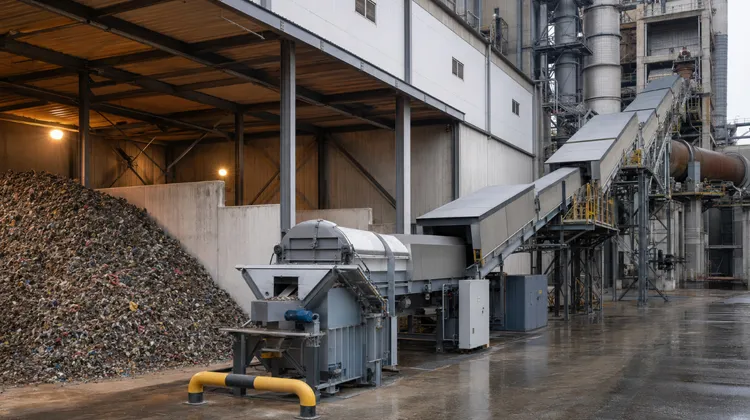
Cement kilns require a continuous supply of high-temperature heat. Replacing part of the coal or petroleum coke with suitable alternative fuels can therefore reduce fuel-related emissions.
Processed waste tires, solid recovered fuel, selected plastics, industrial residues, agricultural waste and certain types of biomass can be used when they meet the plant’s technical and environmental requirements.
The high temperature and long residence time inside a cement kiln make it possible to co-process certain materials that cannot be economically recycled. However, alternative fuel use involves much more than feeding waste into a kiln. Calorific value, moisture, particle size, chlorine, sulfur and heavy-metal content must all be controlled.
Higher substitution rates may change the flame profile, increase chlorine circulation, contribute to preheater build-up or affect clinker quality. A reliable system therefore requires fuel preparation, storage, metering, stable dosing and emission monitoring. The feeding point—such as the main burner or calciner—must also match the fuel’s combustion characteristics.
The actual carbon benefit should be evaluated against the fuel’s fossil carbon content, preparation energy, transport distance and the treatment method it replaces.
3. Reducing the Clinker-to-Cement Ratio
Clinker production is the most carbon-intensive stage of cement manufacturing. Reducing the amount of clinker required for each tonne of cement is consequently one of the most effective ways to lower the product’s carbon footprint.
Ground granulated blast-furnace slag, fly ash, natural pozzolans, limestone and calcined clay can replace part of the clinker. These materials may be interground with clinker or ground separately and blended to produce lower-carbon cement.
The future availability of conventional supplementary cementitious materials is not guaranteed. Fly ash depends on coal-fired power generation, while blast-furnace slag depends on the iron and steel industry. Both supply chains are changing. Limestone and calcined clay are more widely available in many regions and are becoming increasingly important clinker substitutes.
Clinker reduction cannot be managed through a blending percentage alone. Producers must evaluate early and later strength, setting time, water demand, durability and performance in the intended application. Grinding circuits may also require adjustments to separator efficiency, particle-size distribution and the individual fineness of each component.
4. Optimizing Raw Materials and Calcination
Cement producers can reduce process emissions by replacing part of the virgin limestone with suitable decarbonated or lower-carbon raw materials.
Potential materials include quality-controlled fines from recycled concrete, selected industrial by-products and calcium-bearing residues. Because some of these materials have already undergone chemical conversion, reheating them may release less process CO₂ than heating fresh limestone.
Using locally available by-products can also reduce quarrying and divert material from landfill. However, alternative raw materials may introduce chlorine, alkalis, sulfur, heavy metals or other trace elements.
Before regular use, a cement plant should conduct chemical analysis, burnability testing and clinker-quality trials. The long-term effects on the preheater, kiln operation, refractory lining and stack emissions must also be assessed.
5. Reducing Electricity Consumption in Grinding and Conveying
Raw grinding, cement grinding, fans, compressed-air systems, conveyors and separators are among the largest electricity consumers in a cement plant. Electricity-related emissions may be lower than calcination and fuel emissions, but reducing specific power consumption remains an immediate and measurable opportunity.
Efficient vertical roller mills, roller-press finish grinding and combined grinding systems generally offer lower power consumption than some traditional ball mill circuits. Improving separator efficiency, controlling circulating load and avoiding overgrinding can further reduce electricity use while maintaining cement performance.
Variable-frequency drives, high-efficiency motors, optimized fan impellers, lower-resistance ductwork and compressed-air leak management can reduce auxiliary consumption.
Where plant conditions permit, waste heat recovery from kiln and cooler exhaust gases can produce electricity on site. Solar power and other renewable electricity sources can further reduce the indirect emissions associated with purchased power.
6. Using Digital Control to Stabilize Production
Digital systems do not directly remove the chemical emissions from calcination, but they can keep a production line closer to its most efficient operating condition.
Advanced process control can continuously adjust kiln speed, raw meal feed, fuel input and airflow based on kiln inlet conditions, temperature, oxygen concentration, pressure, free lime and clinker cooler performance. A stable kiln reduces overburning, off-specification clinker, unplanned shutdowns and unnecessary grinding.
Online analyzers, condition monitoring and predictive maintenance can also identify refractory problems, declining fan efficiency, abnormal vibration, conveying failures and preheater blockages before they cause a major interruption.
For a large cement line, preventing a serious unplanned shutdown can avoid substantial fuel waste and production loss. The objective is not simply to install more sensors, but to use reliable data to manage energy consumption, product quality and carbon emissions together.
7. Capturing CO₂ from Cement Plant Exhaust Gas
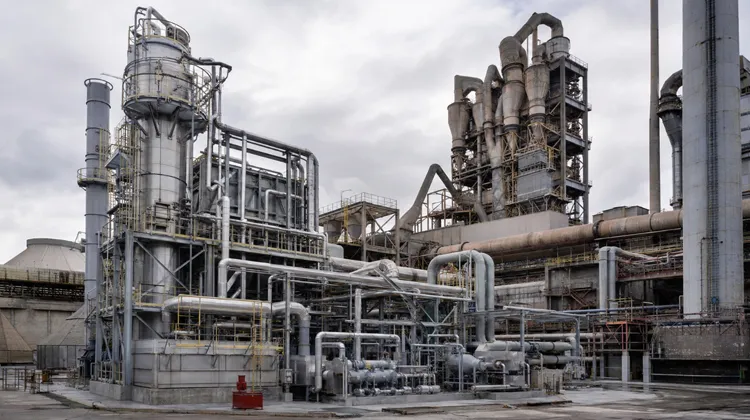
Even after improving efficiency, switching fuels and reducing clinker content, limestone calcination continues to release CO₂. Carbon capture, utilization and storage is therefore expected to play a major role in addressing the cement industry’s residual process emissions.
Technologies such as amine-based absorption, oxyfuel combustion and calcium looping can separate CO₂ from kiln exhaust gas. The captured gas is then purified and compressed before being transported to permanent geological storage or used in building materials, synthetic fuels and other products.
CCUS projects face several practical challenges. These include high capital cost, additional heat and electricity demand, limited space at existing plants, and the need for CO₂ transport and storage infrastructure. If the capture system is powered by carbon-intensive energy, its net reduction will also be smaller.
A capture facility should therefore be integrated with the kiln system, waste heat recovery, power supply and regional transport network. It should not be treated as an isolated end-of-pipe installation.
8. Extending Carbon Reduction Beyond the Cement Plant
Cement decarbonization does not end at the plant gate. Better concrete mix design, accurate batching, consistent quality control and reduced over-specification can lower the amount of cementitious material required per cubic metre of concrete.
At the design stage, engineers can optimize concrete strength, structural geometry, slab systems and service life while meeting safety and durability requirements. After demolition, concrete can be processed into recycled aggregate or suitable alternative raw material and returned to the construction-material supply chain.
Concrete also absorbs some atmospheric CO₂ through natural carbonation during its service life and after demolition. However, this process is gradual and should not be used as a substitute for active emission reductions during manufacturing.
A Practical Decarbonization Roadmap for Cement Plants
No single strategy is suitable for every cement plant. Raw material availability, fuel supply, production-line configuration, product standards, electricity sources and regional infrastructure all influence the appropriate solution.
The first step should be to establish a reliable emissions baseline. The plant should know its thermal consumption per tonne of clinker, power consumption per tonne of cement, clinker factor and direct CO₂ intensity.
The next step is to address false air, inefficient fans, poor cooler heat recovery, unstable combustion and inefficient grinding. Alternative fuels, low-clinker products and renewable electricity can then be introduced as the necessary supply chains and quality controls are established.
For the remaining calcination emissions, the plant can evaluate carbon capture requirements, including flue-gas composition, energy demand, available space, transport distance and access to permanent storage.
| Implementation stage | Main measures | Project focus |
|---|---|---|
| Short term | Energy efficiency, stable operation, false-air reduction and improved heat recovery | Often suitable for maintenance and retrofit programs |
| Medium term | Alternative fuels, lower clinker factor, waste heat power and renewable electricity | Requires dependable fuel and material supply chains |
| Long term | Large-scale CCUS, kiln electrification and new binder systems | Requires major investment and supporting infrastructure |
How Should Cement Plants Measure Progress?
Annual plant emissions alone may not show whether operational efficiency has improved, because total production can change from year to year. More useful performance indicators include:
- Direct CO₂ emissions per tonne of clinker;
- CO₂ emissions per tonne of cement or cementitious product;
- Thermal energy consumption per tonne of clinker;
- Electricity consumption per tonne of cement;
- Clinker-to-cement ratio;
- Alternative fuel thermal substitution rate;
- Share of renewable electricity;
- Quantity of CO₂ captured and permanently stored.
The same data can support product carbon footprints and environmental product declarations. However, calculations should use a clearly defined and consistent boundary so that genuine emission reductions are not confused with emissions transferred to another part of the supply chain.
Conclusion
Reducing CO₂ emissions from cement manufacturing does not depend on one machine, one fuel or one breakthrough technology. It requires coordinated improvements across raw materials, clinker production, grinding, electricity use and final cement products.
Today, kiln-system efficiency, clinker substitution, suitable alternative fuels and lower electricity consumption are among the most practical measures for many cement plants. As low-carbon power, calcined clay and carbon capture become more widely available, the industry will be able to address a larger share of its remaining emissions.
A successful decarbonization project must balance emission reduction with production stability, cement quality, environmental compliance, material availability and project economics. Considering these factors as part of one integrated plant strategy allows cement producers to reduce their carbon footprint without compromising reliable operation.
FAQ
Why is the cement industry difficult to decarbonize?
Most direct cement emissions are not produced solely by burning fuel. They are also released when limestone is chemically converted into clinker. Even a kiln powered entirely by low-carbon energy would still produce calcination emissions. Clinker substitution, alternative raw materials and carbon capture are therefore required.
What is the fastest way to reduce emissions at an existing cement plant?
For many plants, improving kiln efficiency, reducing false air, stabilizing combustion and increasing cooler heat recovery can deliver relatively quick results. These measures can lower both fuel costs and specific emissions, although the actual potential depends on the plant’s current performance.
Can alternative fuels affect clinker quality?
Yes. Poorly controlled fuel composition, particle size, calorific value or feeding rate can affect the flame, burning conditions and clinker quality. Appropriate fuel preparation, dosing, combustion-system design and online monitoring help manage these risks.
Does reducing clinker content weaken cement?
Not necessarily. Properly selected and processed slag, fly ash, limestone, natural pozzolans and calcined clay can provide the required performance while meeting applicable standards. Results depend on material reactivity, fineness, mixture design, curing conditions and the intended application.
Does waste heat recovery reduce cement plant CO₂ emissions?
Waste heat recovery generates electricity from kiln and cooler exhaust heat, reducing purchased electricity and its associated indirect emissions. It does not, however, eliminate the process emissions released by limestone calcination.
Can carbon capture alone make cement production net zero?
Carbon capture is important for residual process emissions, but it requires substantial investment, low-carbon energy and access to CO₂ transport and permanent storage. A more efficient strategy is to reduce emissions through energy efficiency, clinker substitution and cleaner energy before using CCUS for the remaining unavoidable emissions.


 French
  English
  Russian
  Arabic
  Vietnamese
  Spanish
  Portuguese
  Japanese
  Chinese