


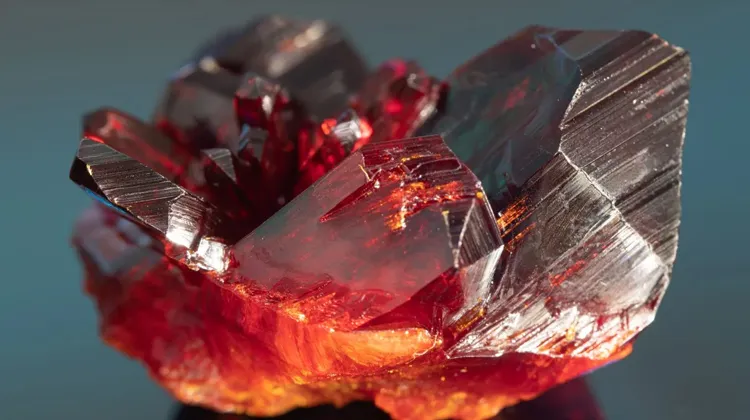
Garnet is one of the oldest and most fascinating minerals used by humans. Many people know garnet as a red gemstone used in jewelry, but in reality, garnet is much more than that. Different types of garnet can appear in green, orange, yellow, purple, brown, and even extremely rare blue colors.
Besides its value in gemstones and jewelry, garnet is also an important industrial mineral widely used in abrasive blasting, waterjet cutting, filtration systems, mining, cement plants, and heavy industrial production lines.
Because of its hardness, wear resistance, and stable chemical properties, industrial garnet has become an essential material in modern manufacturing and infrastructure industries.
This article explains what garnet is, its colors and types, historical significance, industrial applications, mining process, and why garnet continues to play an important role in both jewelry and heavy industry.
What Is Garnet?

Garnet is a group of silicate minerals commonly found in metamorphic rocks and igneous rocks. The name “garnet” comes from the Latin word “Granatum,” meaning pomegranate, because early garnet crystals resembled pomegranate seeds in both shape and color.
Although red garnet is the most familiar variety, not all garnets are red. In fact, garnet exists in a surprisingly wide range of colors depending on its chemical composition.
Because of its beauty, durability, and industrial performance, garnet has been valued for thousands of years in both decorative and industrial applications.
Not All Garnets Are Red
Why Garnet Has Different Colors
The color of garnet depends mainly on the mineral’s chemical composition. Different metallic elements inside the crystal structure create different colors and optical effects.
例如:
- Garnets containing calcium are often green.
- Garnets rich in iron, aluminum, or manganese are usually red or reddish brown.
- Orange garnets contain manganese-rich compositions.
- Rare blue garnets can display color-changing effects.
Some garnets even change color under different lighting conditions. Under sunlight they may appear green or blue-green, while under incandescent light they may look purple or reddish. This rare optical phenomenon makes certain garnets highly valuable in the gemstone market.
Among all garnet varieties, vivid green garnets are considered some of the most valuable.
Garnet Is Not Just One Mineral
Many people think garnet is a single mineral, but it is actually a large mineral family divided into two major series:
- Aluminum Series
- Calcium Series
Each series contains several important garnet varieties with different colors and properties.
Aluminum Series Garnets
Pyrope Garnet
Pyrope garnet typically ranges from deep red to almost black colors. Because of its rich appearance, it has long been popular in jewelry.
This type of garnet is often associated with classic dark red gemstones.
Almandine Garnet
Almandine is the most common garnet variety found worldwide.
It usually appears red-brown or dark reddish black and is also the most widely used industrial garnet because of its high hardness and excellent abrasive performance.
Industrial almandine garnet is commonly used in:
- Abrasive blasting
- Waterjet cutting
- Grinding materials
- Surface preparation
Spessartine Garnet
Spessartine garnet is known for its bright orange to orange-red colors.
Because of its vivid appearance, it is highly valued in the jewelry industry.
Calcium Series Garnets
Grossular Garnet
Grossular garnet comes in many colors, including green, yellow, and brown.
One famous green variety is Tsavorite, which is considered one of the most expensive green gemstones in the world because of its brilliant color and rarity.
Andradite Garnet
Andradite garnet includes Demantoid garnet, a rare green gemstone that can sometimes be even more valuable than diamonds due to its exceptional brilliance and rarity.
Uvarovite Garnet
Uvarovite garnet is usually bright green, but its crystals are often very small, which limits its use in jewelry.
Even so, collectors highly appreciate its vibrant natural color.
Garnet Is Known as the Stone of Love
For centuries, garnet has symbolized passion, loyalty, friendship, and protection.
In many cultures, garnet was believed to protect travelers and strengthen emotional relationships.
Historically, many famous figures were connected with garnet jewelry and ornaments, including:
- Johann Wolfgang von Goethe
- Odysseus from Greek mythology
- Marie Antoinette
Because of its symbolic meaning, garnet is now recognized as the gemstone for the second wedding anniversary.
Today, garnet remains popular in jewelry because it combines beauty, durability, and deep cultural meaning.
Garnet Is the Birthstone of January

Garnet is widely recognized as the birthstone of January.
Traditionally, people believed garnet could:
- Bring good luck
- Provide protection
- Remove negative energy
- Promote safety during travel
Because of these meanings, garnet has remained one of the most popular traditional gemstones throughout history.
Other well-known birthstones include:
- February — Amethyst
- March — Aquamarine
- April — Diamond
- May — Emerald
- June — Pearl
- July — Ruby
- August — Peridot
- September — Sapphire
- October — Opal
- November — Topaz
- December — Turquoise
Garnet Is One of the Oldest Gemstones in History

Garnet has been used for thousands of years and is considered one of the oldest gemstones known to humanity.
Archaeologists discovered garnet necklaces and amulets in ancient Egyptian tombs, showing that garnet was already highly valued in ancient civilizations.
In ancient Greece and Rome, garnet was often carved into seal rings used to stamp important documents.
Unlike many gemstones that require heavy treatment or enhancement, garnet is naturally beautiful and usually does not require complex processing. This helps keep its cost relatively affordable compared with many other gemstones.
As a result, garnet remains extremely popular in modern jewelry.
Physical Properties of Industrial Garnet
Besides its gemstone value, garnet is also an important industrial mineral because of several outstanding physical properties.
High Hardness
Most industrial garnets have a Mohs hardness between 6.5 and 8.0, making them highly effective abrasive materials.
Because garnet particles remain sharp during operation, they provide efficient cutting and grinding performance.
Excellent Wear Resistance
Industrial garnet performs well under high-friction conditions and has a long service life compared with many traditional abrasive materials.
This helps reduce material consumption and maintenance costs in industrial production lines.
稳定的化学性质
Garnet is chemically stable and does not easily react with acids or alkalis under normal industrial conditions.
Because of this, garnet is widely used in harsh industrial environments such as:
- 水泥厂
- 采矿作业
- Steel mills
- Shipyards
Environmentally Friendly Material
Compared with silica sand, garnet produces less dust and contains very low levels of free silica.
This makes garnet a safer and more environmentally friendly abrasive material for industrial applications.
Industrial Applications of Garnet
Abrasive Blasting
One of the largest industrial uses of garnet is abrasive blasting.
Garnet blasting media is widely used for:
- Rust removal
- Paint removal
- Surface cleaning
- Metal preparation before coating
Industries that commonly use garnet blasting include:
- Steel fabrication
- Shipbuilding
- Oil and gas pipelines
- Heavy equipment manufacturing
Because garnet particles are strong and durable, they clean surfaces efficiently without causing excessive damage.
Waterjet Cutting
Garnet is one of the most important abrasive materials used in waterjet cutting machines.
When mixed with high-pressure water, garnet particles create a powerful cutting stream capable of cutting:
- 钢
- Stone
- Ceramic
- Glass
- Composite materials
Waterjet garnet is highly valued because it produces:
- Precise cuts
- Smooth edges
- Low heat generation
- Minimal material deformation
Grinding and Polishing
Garnet is commonly used in:
- Sandpaper
- Abrasive wheels
- Polishing compounds
Its hardness and durability make it suitable for precision surface finishing.
Water Filtration
Certain garnet materials are also used in industrial water filtration systems because of their high density and stability.
Garnet filtration media helps remove:
- Sediment
- Heavy particles
- Impurities
from water treatment systems.
Garnet Mining and Processing
Geological Sources of Garnet
Garnet is commonly found in:
Metamorphic Rocks
Such as:
- 片麻岩
- Mica schist
Igneous Rocks
Including:
- 花岗岩
- Basalt-related formations
Major Garnet Producing Countries
Important garnet-producing regions include:
- 南非
- 澳大利亚
- 巴西
- Sri Lanka
- 印度
These countries contain large garnet deposits used for both gemstone and industrial purposes.
Garnet Processing Flow
Before garnet can be used in industrial applications, it must go through several processing stages.
粉碎
Large garnet ore is first crushed into smaller particles using crushing equipment.
研磨
The crushed material is then ground into finer particles suitable for industrial use.
Beneficiation and Flotation
Separation processes such as beneficiation and flotation are used to remove impurities and improve garnet purity and quality.
After processing, industrial garnet products are graded according to particle size and application requirements.
Garnet in Cement and Heavy Industry
In cement plants and heavy industrial production lines, equipment is constantly exposed to:
- High wear
- 灰尘
- Abrasive materials
- Continuous operation
Because of its excellent abrasive performance, garnet is widely used in equipment cleaning, maintenance, and surface preparation.
For example, garnet blasting materials are commonly used for:
- Cleaning steel structures
- Removing corrosion
- Preparing equipment surfaces before coating
Compared with traditional blasting materials, garnet can improve cleaning efficiency while reducing dust pollution.
Why Garnet Matters in Modern Industry
Modern industries increasingly require materials that offer:
- High efficiency
- Long service life
- Environmental protection
- Better surface treatment quality
Garnet meets these requirements because it combines strong abrasive performance with excellent environmental advantages.
As global manufacturing and infrastructure projects continue to grow, industrial garnet demand is expected to remain strong in:
- Mining industry
- 水泥制造
- Steel processing
- Shipbuilding
- Infrastructure construction
结论
Garnet is far more than a traditional red gemstone. It is a diverse mineral family with a long history, rich cultural meaning, and important industrial value.
From ancient jewelry and royal ornaments to modern abrasive blasting and waterjet cutting systems, garnet has remained one of the most useful and versatile minerals in human history.
Because of its hardness, wear resistance, chemical stability, and environmental advantages, garnet continues to play a critical role in mining, cement plants, heavy industry, and precision manufacturing worldwide.
常问问题
1. Is garnet a natural mineral or a man-made material?
Garnet is a naturally occurring mineral that forms under high temperature and pressure conditions inside the Earth over millions of years.
2. Why is garnet preferred over silica sand in abrasive blasting?
Many industries prefer garnet because it produces less dust, offers better recycling performance, and is safer for workers compared with traditional silica sand.
3. Can garnet be recycled after industrial use?
Yes. Industrial garnet can often be recycled several times depending on the application and operating conditions, which helps reduce material costs and waste.


 Chinese
  English
  Russian
  Arabic
  Vietnamese
  Spanish
  French
  Portuguese
  Japanese