



干式球磨机
- 研磨能力: 1-150 t/h (customized based on client needs)
- 饲料尺寸: 10-100 mm
- 输出精细度: 45-300 μm (adjustable)
- Speed: 12-18 rpm
应用:Dry ball mills are widely used in industries such as cement, mining, ceramics, and chemicals, primarily for grinding materials with low moisture content like clinker, ores, and pigments. They are ideal for processing dry and brittle materials, ensuring efficient and uniform grinding results.
Dry Ball Milling Process
The dry ball milling process is a highly efficient and environmentally friendly system specifically designed to grind dry materials into fine powders. The entire process operates in a water-free environment, with its core principle being the precise integration of impact crushing and air classification. Its workflow can be divided into four distinct stages.
Feeding and Pre-crushing: Raw materials that have undergone primary crushing and rigorous drying (typically with particle sizes controlled below 25 mm) are continuously and uniformly fed into the ball mill inlet via an automated system comprising bucket elevators and vibrating feeders. The core of this stage lies in precisely controlling feed rate and stability—excessively fast feeding can cause mill blockages, while excessively slow feeding reduces grinding efficiency. Stable feeding is the cornerstone for the efficient operation of the entire process.
Grinding and Pulverization: Upon entering the uniformly rotating grinding cylinder, the material commences its core pulverization journey. The cylinder interior is divided into multiple compartments, each equipped with high-chromium alloy steel balls of varying specifications and corrugated liners. As the cylinder rotates, the steel balls are elevated to a certain height before cascading down in a waterfall-like motion, exerting immense impact crushing force on the material. Simultaneously, the relative sliding and rolling between ball layers perform fine grinding and abrasion on the material. Through this combined impact and grinding action, the material is progressively and efficiently ground to the target fineness.
Classification and Discharge: The ground powder is conveyed to the discharge end by the airflow generated from the induced draft fan. In modern dry grinding systems, the high-efficiency dynamic classifier serves as the core component of this stage. By skillfully balancing centrifugal force and airflow, it acts as an “intelligent arbiter,” promptly separating qualified fine powder that meets the required fineness while precisely returning undersized coarse particles back into the mill for re-grinding. This closed-circuit design significantly enhances grinding efficiency and ensures uniformity in the final product’s particle size.
Product Collection and Dust Removal: Qualified fine powder exiting the classifier enters a high-efficiency pulse-jet baghouse dust collector via airflow. Here, the final step of the entire process occurs: gas-solid separation. Filter bags capture and collect the finished fine powder, which is then conveyed to the finished product silo. Purified clean air is directly discharged into the atmosphere, achieving dust-free, low-emission production throughout the entire process. This fully meets the stringent environmental requirements of modern industry.
- Wet Ball Mill VS Dry Ball Mill
- Advantages of Dry Ball Mill
Selecting the appropriate ball mill type is crucial for optimizing production efficiency, controlling costs, and ensuring final product quality. Drawing on years of engineering expertise, Lafa provides a detailed comparison of the core differences between wet and dry ball mills, helping you choose the most suitable grinding solution based on specific material characteristics, process requirements, and production environment.
Process Principle Differences
- Wet Ball Mill: Water or other liquids are used as grinding media, and materials are ground into a uniform slurry in a liquid-phase environment. The addition of liquid reduces friction in the mill, optimizing the grinding process, preventing over-grinding, and improving efficiency.
干式球磨机: Operates in a completely dry environment, with air flow assisting in the grinding process to reduce materials into fine powder. It is suited for materials that should not come into contact with water.
Suitable Application Scenarios
- 湿式球磨机: Wet processing is ideal for processes that require slurry, such as metal ore flotation and leaching. It is particularly suitable for materials that are prone to generating dust or those that are inherently wet. Wet ball mills help enhance grinding efficiency and ensure uniform particle size distribution.
干式球磨机: Dry processing is mainly used for materials that require no water, such as certain ores, ceramic materials, and production lines requiring dry powder as the final product. It is particularly useful in water-scarce regions or for materials that cannot be exposed to moisture.
投资和运营成本
- 湿式球磨机: Wet ball mills require additional equipment for water supply, concentration, and filtration, resulting in higher initial investment costs. Operational costs are also higher due to water treatment and waste water management.
干式球磨机: The system for dry ball mills is simpler, leading to lower initial investment. However, dry milling requires efficient dust collection systems, which add to energy consumption and operating costs. Dry mills don’t have water treatment expenses, making them more cost-effective in certain scenarios.
Environmental and Maintenance Characteristics
- 湿式球磨机: Wet processing produces almost no dust, making it environmentally friendly. However, waste water needs to be treated, and equipment is more susceptible to corrosion. Maintenance focuses on corrosion protection and ensuring smooth liquid circulation.
干式球磨机: Dry milling produces dust, requiring dust collection equipment to meet environmental regulations. These systems require regular maintenance to ensure efficient operation. Dry mills’ maintenance focuses on sealing systems and dust collection devices.
Output Effect Differences
- 湿式球磨机: Wet grinding typically results in finer particle size distribution, with water aiding in the grinding process and preventing over-grinding. The slurry formed helps prevent agglomeration of fine particles, resulting in uniform, fine product.
干式球磨机: The fineness of dry grinding mainly depends on the precision of the classifier. While dry mills can process dry materials, their efficiency in producing ultra-fine powder is lower compared to wet milling.
Dry ball mills are designed for efficient grinding of dry materials, offering low operating costs and simple maintenance. With excellent dust control and high throughput capacity, they are ideal for industries like cement, ceramics, and mining, where dry material processing is required.Why is the dry ball mill considered the mainstream choice in the cement industry?
High-Efficiency Dry Material Grinding
Dry ball mills are specifically designed for grinding dry materials without requiring additional liquids. This makes them ideal for processing moisture-sensitive materials or applications demanding dry end products, such as cement production.
Simple System Design
Dry ball mills feature straightforward construction, stable operation, and easy component disassembly with minimal auxiliary systems. They eliminate the need for water supply, filtration, or concentration systems, resulting in simpler maintenance, easier operation, and lower costs.
Suitable for Heat-Sensitive Materials
Dry ball mills are highly suitable for processing materials sensitive to moisture or heat, preventing potential damage during grinding. They are particularly well-suited for chemicals or materials that may react adversely with water.
应用范围广泛
Dry ball mills are widely used in industries such as cement, ceramics, and mining. They are highly suitable for processing materials requiring dry powder as the final product, such as powders for chemical processes or dry cement powder.
Dust Control Capability
Dry ball mills can be equipped with dust collection systems, ensuring a clean and safe working environment by minimizing dust generation during the grinding process.
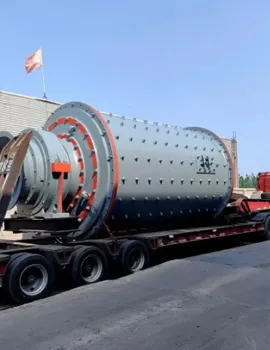
相关产品


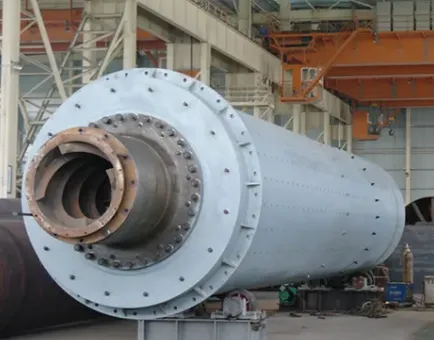
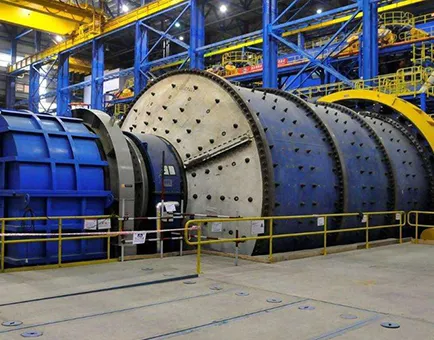

This is primarily determined by their process compatibility and cost-effectiveness. Modern cement production widely adopts the new dry process, where all stages from raw material preparation to clinker grinding are conducted in a dry state. The dry powder raw materials and cement produced by dry ball mills or vertical mills are highly suitable for subsequent homogenization, storage, and transportation. They eliminate the need for additional dewatering steps, resulting in lower energy consumption and higher efficiency across the entire production line.
Absolutely. As an EPC engineering contractor, Lafa’s core strength lies in delivering turnkey solutions. We offer full lifecycle services—from material testing and process design to equipment manufacturing, installation commissioning, personnel training, and spare parts supply—ensuring your project achieves smooth startup and meets performance targets.
We primarily achieve precise control of fineness through an efficient dynamic classifier. Integrated at the mill outlet or as a standalone unit, the classifier functions like an “intelligent sieve.” It utilizes airflow and centrifugal force to separate qualified fine particles, while unqualified coarse particles are returned to the mill for further grinding. By infinitely adjusting the classifier’s rotational speed or airflow volume, the final product’s fineness can be easily and continuously regulated—a highly convenient process.
It is generally not recommended. Dry ball mills are designed to process dry materials (typically requiring moisture content below 1%-2%). If the material is damp, it tends to adhere to the grinding media and liners, causing a significant drop in grinding efficiency and potentially clogging the ventilation grate, which disrupts normal production. For materials with slightly higher moisture content, we recommend installing pre-drying equipment first.
The lifespan of a dry ball mill depends on factors such as maintenance, operating conditions, and material being processed. With proper care, it can last for many years, typically 10-20 years or more.
 Chinese
  English
  Russian
  Arabic
  Vietnamese
  Spanish
  French
  Portuguese
  Japanese