



湿式球磨机
- 容量: 1-150 t/h (customized based on client needs)
- 饲料尺寸: ≤25 mm
- 排放尺寸: 45-300 μm
- 旋转速度: 15-22 r/min (adjustable based on equipment model, load, and material characteristics)
应用: Wet ball mills are used for grinding metal and non-metal ores like gold, silver, copper, phosphate, and iron ores. They are ideal for wet materials, efficiently separating ores while ensuring product quality. Widely used in mining, chemical, and other industries.
What is a Wet Ball Mill?
Wet ball mills serve as core grinding equipment in mineral processing, cement production, and industrial powder manufacturing. Unlike dry grinding methods that rely on airflow, wet ball mills uniquely utilize water or other liquids as grinding media. Materials and liquid are mixed in a specific ratio within a rotating cylinder to form a “slurry.” Wear-resistant steel balls loaded into the cylinder are lifted to a certain height by rotation and then dropped, exerting intense impact and fine grinding forces on the particles in the slurry. This progressively breaks them down to micron-level fineness.
Ultimately, particles reaching the target fineness flow with the water through the discharge end’s grate plate, smoothly overflowing as a uniform suspension slurry ready for direct pumping to subsequent processes (such as flotation, leaching, or sintering). Coarse particles failing to meet specifications are retained by the grate plate, undergoing recirculated grinding within the cylinder to ensure high uniformity in product particle size.
Working Principle of Wet Ball Mill Machine
The operating principle of wet ball mills relies on the uniform rotation of the grinding chamber driven by a motor. Inside the chamber, grinding steel balls, materials, and water are thoroughly mixed. During rotation, the mixture is lifted to a certain height before being released, creating intense impact forces on the materials. Simultaneously, the sliding and rolling motion between layers of steel balls provides fine grinding action. Water serves not only as a transport medium but also effectively lowers grinding temperatures, suppresses dust, and enhances grinding efficiency by acting as a grinding aid.
During grinding, qualified fine particles carried by the water flow smoothly pass through the screen plate gaps at the discharge end, forming the desired uniform slurry. Undersized coarse particles are retained by the screen plate and undergo further grinding within the cylinder until they meet the required fineness. This highly efficient classification and discharge mechanism makes the wet ball mill an ideal core equipment for slurry preparation in mineral processing flotation, cement wet production, and industrial mineral processing.

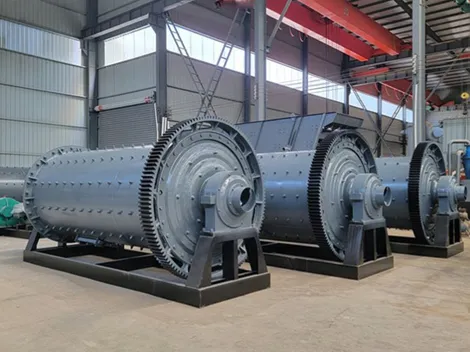
- Advantages of Wet Ball Mill
- Wet Ball Milling Process
- Wet Ball Mill Test
Efficient Grinding for Wet Materials
Wet ball mills are specifically designed for grinding materials with high moisture content. Water acts as a “grinding aid” in the process, effectively wrapping and dispersing material particles to prevent fine powders from re-agglomerating. This not only significantly improves grinding efficiency but also produces finer, more uniform particles, which is crucial for subsequent flotation or chemical reactions, directly improving recovery rates and product quality.Environmentally Friendly
The entire grinding process takes place in a liquid slurry, eliminating dust generation. This creates a cleaner, safer working environment, fully complies with stringent environmental regulations, and avoids raw material loss, achieving green production. Wet ball mills are particularly suited for industries with strict environmental requirements, reducing environmental pollution during the production process.Flexible Operation and Customization
Wet ball mills typically do not require complex auxiliary equipment such as dust collection systems or hot air furnaces, which reduces initial investment and simplifies plant layout. They can handle wet and even sticky materials without the need for additional drying steps, making them versatile for a wide range of applications, especially in mineral processing, cement, and fertilizer industries.Higher Grinding Efficiency
The presence of water helps to reduce friction inside the drum, providing better grinding media and enhancing grinding efficiency. This results in faster material processing and energy savings, making wet ball mills more efficient compared to dry mills. The cooling effect also prolongs the life of the equipment, improving overall performance.Improved Particle Size Distribution
The grinding process in a wet ball mill ensures a more uniform particle size distribution, guaranteeing better consistency and quality of the final product. In mineral processing, the slurry produced can be directly pumped into flotation machines or leaching tanks, ensuring a seamless process. In cement production, wet ball mills directly supply slurry to the wet kiln, ensuring highly uniform raw material composition, which enhances production efficiency and product quality.
The wet ball milli process is a continuous, high-efficiency system integrating feeding, grinding, classification, and collection.
- Feeding and Mixing: In this initial stage, pre-crushed raw materials (typically less than 25 mm in size) are pre-mixed with a measured quantity of water or specific chemical agents in the feed tank. The objective is to form a pumpable, uniformly composed primary slurry. Precise control of the solid-liquid ratio (i.e., slurry concentration) is critical to this stage’s success, as it directly impacts subsequent grinding efficiency and slurry flowability.
- Grinding Stage: The mixed slurry is continuously fed into the uniformly rotating cylinder of a wet grinding ball mill. The cylinder is loaded with abrasion-resistant steel balls of varying sizes serving as grinding media. As the cylinder rotates, the steel balls are lifted to a certain height before being released in a “waterfall” or “cascading” motion, exerting intense impact crushing forces on the material particles within the slurry. Simultaneously, relative sliding between ball layers subjects the material to fine grinding and abrasion. Throughout this process, the water medium plays a crucial role in aiding grinding, cooling, and preventing material adhesion and agglomeration.
- Classification and Discharge: Particles reduced to the target fineness are carried by the water flow through the discharge grate at the outlet end. This grate functions as a preliminary “screener,” allowing only particles of the correct size to pass through. Coarser particles that have not yet met the specifications are retained by the grate within the cylinder, where they continue to undergo cyclic grinding with newly added material until they meet the required standard. This “retaining coarse particles” mechanism ensures high uniformity in the final product’s particle size distribution.
- Slurry Collection and Subsequent Processing: Slurry discharged from the wet grinding ball mill is typically collected in a slurry tank. For more precise particle size control, this slurry is usually pumped to a hydrocyclone group for further fine classification. The underflow from the cyclones (a thick slurry containing coarse particles) may be returned to the ball mill for re-grinding. The overflow (a dilute slurry containing qualified fine particles) constitutes the final product, which is directly conveyed to subsequent core processes such as flotation machines, leaching tanks, or sintering systems, thereby completing the entire grinding preparation process.

We understand that the grinding characteristics of each mineral or material are unique. Generic equipment selection often results in wasted efficiency or insufficient capacity. Therefore, we offer professional wet ball mill testing services. By simulating real-world conditions in a controlled laboratory environment, we obtain critical grinding kinetic data to recommend the optimal ball mill model and power rating while predicting capacity. This ensures your investment returns are maximized from the outset.
Testing Service Process
Step 1: Consultation and Sample Submission
Our technical engineers will engage in in-depth discussions to understand your project requirements, target production capacity, and final product specifications. Please provide representative material samples (approximately 50-100 kg).
Step 2: Laboratory Material Analysis
We conduct comprehensive baseline analysis of your samples, including material hardness (Bond Hardness Index), original particle size distribution, density, pH level, and mineral composition, establishing a scientific foundation for subsequent testing.
Step 3: Simulated Grinding Testing
Using standardized laboratory wet ball mills, we perform batch or continuous grinding tests with grinding media of varying specifications and ratios. We precisely record key parameters including specific energy consumption (kWh/t), grinding efficiency, optimal slurry concentration (solid content), and final product particle size distribution curves.
Step 4: Detailed Testing and Analysis Report
You will receive a comprehensive testing report containing data, analysis, and recommendations. This report not only presents test results but also provides professional equipment selection advice, motor power calculations, projected capacity assessments, and optimized process solutions tailored to your project.

相关产品



Not necessarily. Water is the most commonly used solvent, but for materials that are water-sensitive or require special chemical treatment, specific liquids such as alcohol or dilute acids can also be used. We will recommend the most suitable solution based on the characteristics of your material.
Wet ball milling involves grinding materials with water or another liquid, whereas dry ball milling is done without any liquid. Wet milling improves grinding efficiency, reduces dust, and is ideal for handling materials with high moisture content.
If your material has high moisture content or is sensitive to heat, a wet ball mill is ideal. On the other hand, if your material is dry and does not generate dust, a dry ball mill may be a better option.
Yes, wet ball mills can be customized to suit specific industry needs, including the required particle size, production capacity, and material handling. Our engineers can help design the most efficient solution based on your requirements.
Wet ball mills are widely used in industries such as mining, cement production, chemical processing, and ceramics. They are commonly used for grinding ores, chemicals, and materials for further processing.
 Chinese
  English
  Russian
  Arabic
  Vietnamese
  Spanish
  French
  Portuguese
  Japanese