



旋转球磨机
- 容量: 1 – 60 T/H
- 喂食量: ≤ 25 毫米
- 输出精细度: 60-400目
- 电机功率: 18 – 710 kW
- 旋转速度: 15 – 30 r/min
- 应用: Rotary ball mill is widely used for grinding metal ores, non-metallic ores, cement clinker, coal, and chemical raw materials. It is also suitable for industries such as refractories, metallurgy, glass, and sand making. You can utilize it in coarse grinding, fine grinding, or regrinding processes to achieve stable and efficient grinding results.
What is a Rotary ball mill?
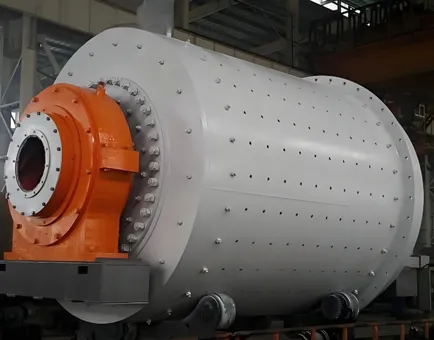
Rotary ball mills are versatile grinding equipment that pulverize materials through the rotation of a cylindrical chamber. You can feed various solid materials into the rotating cylinder. The grinding media inside—such as steel balls or ceramic balls—are continuously lifted and dropped by the rotation, subjecting the material to impact, friction, and shear forces to grind it to the desired fineness. With its mature design and stable operation, it can process materials of varying characteristics—hard or soft, dry or wet—making it one of the most commonly used grinding devices in the mining, cement, and chemical industries.
You can select different cylinder sizes, rotational speeds, and grinding media based on production requirements, making the rotary ball mill suitable for coarse grinding, fine grinding, and regrinding processes. Whether processing metal ores, cement clinker, refractory materials, or chemical raw materials, it delivers stable, efficient, and controllable grinding results for your production. It serves as the core equipment for building high-capacity grinding systems.
Rotary Ball Mill Structure and Working Principle
In grinding systems, the operational mode and structural design of the Rotary Ball Mill often determine overall production capacity and energy efficiency performance. Its stable operating characteristics, mature design philosophy, and broad applicability make it a key piece of equipment in numerous production lines. Understanding its working principles and structure will help you gain a more comprehensive understanding of why this equipment maintains long-term reliable performance in industries such as mining, cement, and chemicals.
Core Structural Components
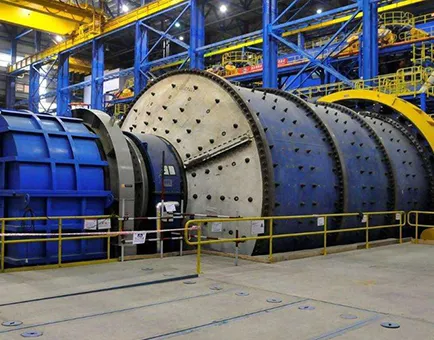
The rotary ball mill features a modular heavy-duty design, primarily comprising a transmission system, rotating cylinder, grinding system, and support structure. The transmission system incorporates a large-capacity reducer and powerful motor, achieving smooth power transfer via either peripheral gearing or center drive. The rotating cylinder is rolled from high-quality steel plates and lined internally with replaceable high-manganese steel liners, effectively protecting the cylinder and enhancing grinding efficiency. The grinding system incorporates alloy steel balls of multiple specifications and proportions, achieving optimal impact and grinding effects through scientific grading design. The support device utilizes fully automatic self-aligning roller bearings or sliding bearings to ensure stable operation under heavy loads.
System Operating Principle
During operation, the motor drives the cylinder to rotate at a constant speed via a reduction gear. As the cylinder rotates, the internal grinding media undergoes regular motion under the combined effects of friction and centrifugal force: the media rises along the cylinder wall to a certain height, then falls in a parabolic trajectory, generating powerful impact crushing. Simultaneously, relative sliding between layers of media creates continuous grinding action. Material is continuously fed from the inlet end. Under the combined action of the grinding media, it is progressively pulverized and moves toward the discharge end with the material flow. Powder meeting the required fineness is discharged after screening through the grate plate, completing the continuous grinding process. The entire system maximizes energy utilization efficiency through precise speed control and optimized media ratio.

- Advantages of Rotary Ball Mill
Rotary ball mill demonstrates significant advantages in mining, cement, and chemical production due to its highly efficient and stable grinding capabilities, broad applicability, and reliable structural design.
Exceptional Production Efficiency
Our rotary ball mills feature an advanced continuous operation design enabling 24/7 uninterrupted production. Through optimized grinding chamber structure and material flow pathways, processing capacity is significantly enhanced, with individual units achieving output of 10-150 tons per hour. This effectively meets diverse large-scale production demands, ensuring your production line maintains peak efficiency.
Reliable Operational Performance
Constructed with heavy-duty cylinder structures and special alloy materials, key components undergo specialized heat treatment for over 50% improved wear resistance. The fully automated lubrication system ensures all moving parts maintain optimal working conditions, delivering an average mean time between failures exceeding 10,000 hours for robust continuous production support.
Outstanding Economic Benefits
Through optimized transmission systems and grinding media ratios, our rotary ball mills reduce energy consumption by 25% compared to traditional ball mills. Modular design simplifies daily maintenance, cutting maintenance time by 40%. A standardized spare parts system effectively lowers inventory costs, delivering significant economic benefits to customers.
Flexible Process Adaptability
The rotary ball mill supports both dry and wet grinding processes, allowing flexible selection based on material properties. By configuring different liner types and adjusting cylinder speed, product fineness can be precisely controlled to meet diverse process requirements—from coarse grinding to ultrafine grinding—accommodating multiple production scenarios.
Intelligent Operation Experience
Equipped with advanced automation control systems and remote monitoring platforms, operators can monitor real-time equipment status from central control rooms or mobile terminals. Intelligent early warning systems detect potential faults proactively, streamlining equipment management and significantly reducing reliance on operator expertise.
Eco-Friendly and Safe Design
The fully enclosed structure ensures dust emission levels remain well below national standards. Multiple noise reduction measures keep workplace noise below 85 decibels. Comprehensive safety protections—including overload safeguards, temperature monitoring, and emergency shutdown devices—provide all-around protection for personnel and equipment.

相关产品



Yes. Rotary Ball Mill’s rotation pattern and liner design reduce material accumulation and improve the grinding effect for sticky, tough, or abrasive ores. This ensures consistent throughput and minimizes downtime.
With its long cylindrical design and optimized grinding media distribution, Rotary Ball Mill can process high-capacity batches continuously. Adjustable feed rate and grinding time allow for precise control over output and fineness.
Yes. Rotary Ball Mill can act as a primary, secondary, or regrinding unit. Its flexibility allows integration into complex grinding circuits and supports different particle size targets without changing equipment.
The greatest advantage of rotary ball mills lies in their continuous operation capability and large-scale processing capacity. Compared to batch ball mills, they enable 24-hour uninterrupted production with a single-unit processing capacity ranging from 10 to 150 tons per hour. This makes them particularly suitable for industrial settings requiring continuous production, such as large-scale mines and cement plants.
Yes. Cylinder size, rotational speed, grinding media type, liner materials, and automation control can all be customized. This ensures the mill perfectly fits your production line and operational goals.
 Chinese
  English
  Russian
  Arabic
  Vietnamese
  Spanish
  French
  Portuguese
  Japanese