



Fluorite is one of the most unique minerals in the world. It is famous not only for its rainbow-like colors, but also for its mysterious ability to glow under ultraviolet light. For centuries, people have admired fluorite as a beautiful gemstone and spiritual crystal, while modern industries value it as an important raw material in cement manufacturing, metallurgy, glass production, ceramics, and chemical processing.
Today, fluorite plays an increasingly important role in global industrial development. From cement plants and rotary kiln systems to steelmaking and mineral processing equipment, fluorite has become a key industrial mineral that supports modern infrastructure and manufacturing.
But what exactly is fluorite? Why does it glow? How does it form in nature? And why is it so valuable in industries such as cement production and mining?
This article explores everything you need to know about fluorite, including its composition, properties, industrial uses, fluorescence, healing meanings, and global market importance.
1. Fluorite Meaning
The name “fluorite” comes from the Latin word “fluere,” which means “to flow.” This name was originally given to fluorite because the mineral was widely used in smelting and metallurgical processes, where it helped reduce the melting temperature of raw materials and improved the flow of molten substances.
Over time, fluorite became even more scientifically important because researchers discovered its glowing behavior under ultraviolet light. In fact, the modern scientific term “fluorescence” was directly derived from fluorite after scientists observed this remarkable optical phenomenon.
Beyond science and industry, fluorite is also highly respected in crystal culture and spiritual traditions. Many people believe fluorite symbolizes mental clarity, confidence, self-love, and emotional balance. Because of its colorful appearance and calming energy, fluorite is often associated with organization, focus, and positive thinking.
2. What Is Fluorite?

Fluorite Composition
CaF2
Fluorite is a naturally occurring mineral mainly composed of calcium fluoride. In its purest form, fluorite is completely colorless and transparent. However, pure fluorite is actually quite rare in nature.
Most fluorite crystals contain small amounts of impurities and trace elements, including yttrium, cerium, iron, silicon, chlorine, and other rare earth elements. These microscopic impurities are responsible for fluorite’s extraordinary range of colors and fluorescence effects.
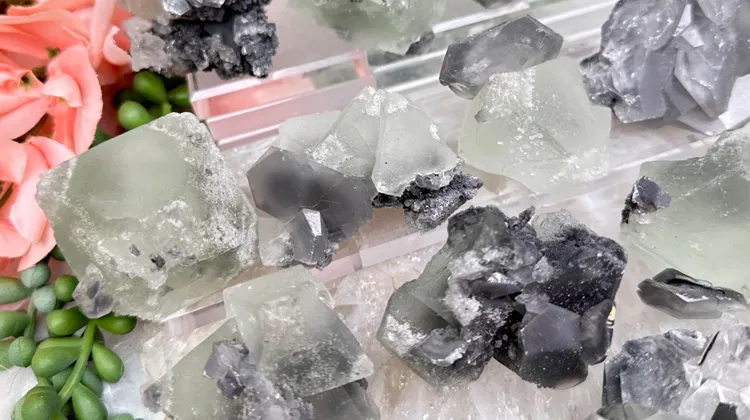
Depending on the geological environment in which the mineral forms, fluorite can appear green, purple, blue, yellow, pink, or even display multiple colors within a single crystal. This incredible color diversity is one of the reasons fluorite is considered one of the most visually striking minerals on Earth.
Fluorite Properties
Fluorite has several distinctive physical and optical properties that make it easy to identify among other minerals.
One of its most noticeable characteristics is its glass-like luster. Well-formed fluorite crystals often appear bright and transparent, with surfaces that reflect light beautifully. The mineral can range from fully transparent to translucent depending on its purity and internal structure.
Fluorite also has what mineralogists call “perfect cleavage.” This means the crystal tends to break along smooth, flat surfaces. While this property creates beautiful geometric crystal shapes, it also makes fluorite relatively fragile compared to harder gemstones.
Its refractive index is approximately 1.434, and its specific gravity is around 3.18, giving it a slightly heavier feel than ordinary stones of similar size.
莫氏硬度
Mohs Hardness =4
On the Mohs hardness scale, fluorite has a hardness of 4. This means it is relatively soft and can be scratched by harder materials, including common steel tools or certain gemstones.
Because of this softness, fluorite requires careful handling and is not usually recommended for everyday jewelry that may experience frequent impacts or abrasion.
Crystal Structure and Forms
Fluorite naturally forms in several beautiful crystal habits. The most common form is the cubic crystal, where the mineral grows into perfect cube-shaped structures with sharp edges and smooth faces.
Fluorite can also form octahedral crystals, granular masses, or compact structures depending on environmental conditions during formation.
These geometric crystal structures make fluorite extremely popular among mineral collectors, museums, and gemstone enthusiasts around the world.
3. How Does Fluorite Form?
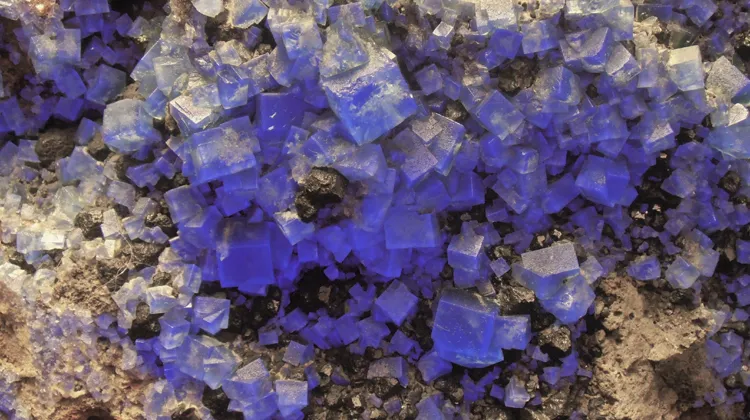
Fluorite is primarily formed through hydrothermal activity deep underground. Hot mineral-rich fluids move through cracks and fractures in rocks, and as these fluids cool, fluorite crystals gradually develop over long geological periods.
Hydrothermal veins containing fluorite are often associated with valuable metallic ores such as lead, zinc, and silver deposits. This is why fluorite is frequently found in major mining regions around the world.
In addition to hydrothermal veins, fluorite can also occur in limestone formations, granite, pegmatites, and certain metamorphic rocks such as marble.
The exact conditions during crystal growth strongly influence the final color, transparency, and fluorescence of the fluorite specimen. Even fluorite mined from different regions within the same country may show completely different appearances.
Fluorspar Reserves and Major Producers
Fluorite, also known industrially as fluorspar, is mined in many parts of the world. The major fluorite-producing countries include:
- 中国
- 墨西哥
- 南非
- 俄罗斯
- Spain
- 美国
Mexico possesses some of the world’s largest known fluorite reserves, while China remains the largest producer and exporter of fluorite globally.
As global demand for cement, steel, aluminum, and chemical products continues increasing, fluorite has become an increasingly important strategic mineral resource.
4. Fluorite Is More Beautiful Than a Rainbow
One of the most extraordinary things about fluorite is its incredible color diversity. Unlike many gemstones that only display one or two colors, fluorite can naturally contain multiple colors within a single crystal.
Pure fluorite itself is colorless. However, during crystal growth, defects and microscopic spaces develop inside the crystal structure. These spaces can trap different elements such as iron, magnesium, copper, and rare earth ions.
As light interacts with these impurities, stunning colors begin to appear. Some fluorite crystals display soft green tones, while others show deep purple, ocean blue, golden yellow, or even layered rainbow patterns.
Rainbow fluorite is especially admired because different colors often appear together in transparent bands, creating a visual effect that resembles a frozen rainbow inside the crystal.
This natural beauty is one of the reasons fluorite is often described as one of the most colorful minerals in the world.
5. Why Does Fluorite Glow?
Fluorite is famous for its mysterious glowing effect, which has fascinated people for centuries. In ancient Chinese legends, glowing stones known as “night pearls” were believed to emit light in darkness. Some historians believe certain descriptions may actually have referred to fluorescent minerals like fluorite.
Scientifically, fluorite can display two different glowing phenomena: fluorescence and phosphorescence.
Fluorescence
Fluorescence occurs when fluorite is exposed to ultraviolet light, heat, or cathode rays. The crystal absorbs invisible energy and immediately releases it as visible light.
This glowing behavior is caused by trace rare earth elements such as yttrium, europium, and samarium replacing calcium atoms inside the crystal structure.
Different fluorite specimens may glow blue, violet, green, or white depending on their chemical composition. However, the glow usually disappears almost instantly after the ultraviolet light source is removed.
Phosphorescence
Some rare fluorite specimens can continue glowing even after the energy source has disappeared. This phenomenon is called phosphorescence.
Unlike fluorescence, phosphorescence stores energy inside the crystal and slowly releases it over time. In dark environments, phosphorescent fluorite can appear surprisingly bright and magical.
This rare glowing effect is one reason fluorite is highly valued among mineral collectors and crystal enthusiasts.
6. Industrial Uses of Fluorite
Although fluorite is admired for its beauty, its industrial value is even more important on a global scale.
Fluorite in Cement Industry
In modern cement manufacturing, fluorite is commonly used as a mineralizer and flux. During clinker production, fluorite helps reduce the temperature required inside 回转窑 systems.
This provides several important industrial advantages.
First, lower clinker formation temperatures reduce fuel consumption, helping cement plants lower energy costs and improve thermal efficiency.
Second, fluorite improves liquid phase formation during the burning process, which can enhance clinker quality and increase production stability.
As a result, fluorite has become an important material in modern cement production systems, especially in large-scale industrial plants focused on energy efficiency and cost reduction.
Because of this growing demand, keywords such as:
- fluorite grinding plant
- cement mineral additive
- 回转窑设备
- mineral processing machinery
have become increasingly important in global industrial markets and Google search trends.
Fluorite in Metallurgy
Fluorite also plays a major role in metallurgy and steelmaking. It is widely used in blast furnaces, steel refining, and aluminum smelting processes.
In these applications, fluorite acts as a flux that lowers melting temperatures and improves slag fluidity. This helps remove impurities more efficiently while improving overall production performance.
High-purity fluorspar is therefore considered an essential industrial mineral in modern metallurgical industries.
Fluorite in Glass and Ceramics
Fluorite is also used in glass manufacturing, ceramics, and optical materials.
In glass production, fluorite helps improve transparency, melting behavior, and surface smoothness. In ceramics, it contributes to better glazing performance and higher-quality finishes.
Certain high-purity fluorite materials are even used in advanced optical applications due to their exceptional light transmission properties.
7. Fluorite Healing Properties
In crystal traditions and spiritual practices, fluorite is often believed to carry calming and balancing energy.
Although these beliefs are not scientifically proven medical treatments, many people use fluorite during meditation, relaxation, or emotional healing practices.
Different fluorite colors are often associated with different meanings and emotional effects.
Clear fluorite is believed to support mental clarity and energetic cleansing. Blue fluorite is associated with calmness and creative thinking. Yellow fluorite is connected with communication and teamwork, while purple fluorite is often linked to focus and spiritual awareness.
Green fluorite is commonly believed to absorb negative energy and stabilize emotions. Pink fluorite is associated with positivity and emotional healing, while rainbow fluorite is thought to combine multiple energies that encourage flexibility, balance, and free thinking.
Some crystal practitioners also believe fluorite may help support the immune system, relieve stress, reduce headaches, and promote emotional well-being.
8. Fluorite Is Fragile Like Glass
Despite its beauty, fluorite is actually a delicate mineral. Because of its relatively low hardness and perfect cleavage, fluorite can crack or scratch easily if handled roughly.
For this reason, fluorite is more commonly used as a carving material or collector gemstone rather than everyday jewelry.
Green and purple fluorite are sometimes mistaken for emeralds or amethysts because of their similar appearance. However, fluorite’s softer hardness and cleavage structure make it easier to identify.
To preserve fluorite jewelry or mineral specimens properly, they should be stored separately from harder gemstones, protected from impacts, and kept away from acidic chemicals or prolonged direct sunlight.
Proper care helps maintain fluorite’s beautiful colors and crystal structure for many years.
结论
Fluorite is far more than a colorful mineral that glows in the dark. It is a fascinating natural material that combines beauty, science, geology, and industrial importance.
From cement manufacturing and mineral processing to steel production, glassmaking, and crystal collecting, fluorite continues to play an essential role in both industry and culture.
As global infrastructure and industrial development continue expanding, the demand for fluorite processing equipment, cement plant solutions, and industrial mineral technologies is expected to grow steadily in the coming years.
FAQ About Fluorite
1. Is fluorite environmentally important in modern industry?
Yes. Fluorite plays an important role in improving industrial energy efficiency, especially in cement production and metallurgy. In cement plants, fluorite can help lower the clinker burning temperature inside rotary kilns, which may reduce fuel consumption and improve thermal efficiency. Because of this, many modern industrial manufacturers consider fluorite an important mineral for supporting more energy-efficient production processes.
2. Why is fluorite called “fluorspar” in industrial markets?
In industrial and mining industries, fluorite is often referred to as “fluorspar.” The term is commonly used when discussing raw fluorite ore, industrial-grade fluorite, and fluorite used for metallurgy, cement production, chemical manufacturing, and mineral processing. While “fluorite” is more frequently used in geology and crystal collecting, “fluorspar” is the preferred term in industrial trade and global commodity markets.
3. Can fluorite lose its color or glow over time?
Under certain conditions, yes. Prolonged exposure to strong sunlight, excessive heat, or harsh chemicals may gradually affect the color intensity and fluorescence of some fluorite specimens. This is especially true for highly transparent or brightly colored fluorite crystals. To preserve their appearance, collectors usually store fluorite in cool, dry environments away from direct sunlight and strong chemical exposure.


 Chinese
  English
  Russian
  Arabic
  Vietnamese
  Spanish
  French
  Portuguese
  Japanese