



In modern cement plants, mining projects, and large-scale infrastructure construction, the design of aggregate and crushing systems is no longer focused only on the output of main products. Instead, more and more project owners and engineering companies are paying close attention to the overall material utilization efficiency of the entire crushing process. Crusher dust is a typical example of a material that has evolved from a simple by-product into an important functional construction material.
With the increasing shortage of natural sand resources, stricter environmental regulations, and growing pressure to reduce project costs while improving construction quality, crusher dust is now widely used in road construction, concrete production, industrial flooring, and backfilling projects all over the world.
This article explains in detail what crusher dust is, how it is produced, what properties it has, and how it can be effectively used in modern cement and construction projects.
1. What Is Crusher Dust?

Crusher dust, also known as quarry dust, stone dust, or crushed stone fines, is the fine material generated during the crushing, shaping, and screening of rocks such as limestone, granite, basalt, and other hard stones. Its particle size is typically in the range of 0–5 mm and it contains a certain proportion of very fine powder particles.
In the past, this material was often considered a low-value by-product or even waste. However, in modern manufactured sand and aggregate production systems, crusher dust has become a well-designed, well-controlled engineered material.
By using proper combinations of crushers, screening systems, and classifiers, the particle size distribution, fineness modulus, and powder content of crusher dust can be precisely adjusted to meet the requirements of different construction applications.
2. Composition and Engineering Properties of Crusher Dust
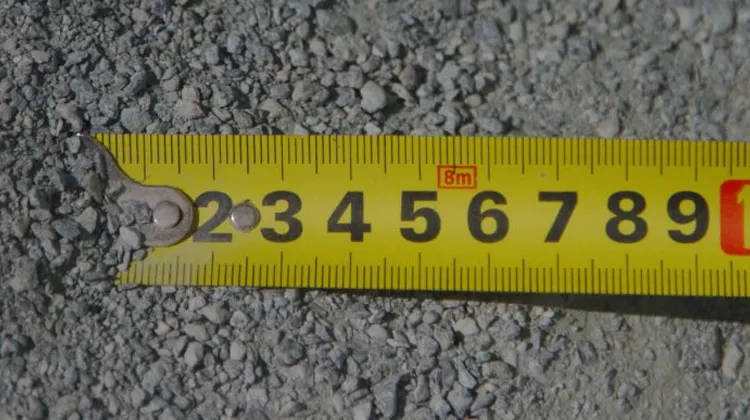
The mineral composition of crusher dust mainly depends on the parent rock. For example, limestone crusher dust is more suitable for cement and concrete systems, while granite or basalt crusher dust is more suitable for high-strength road base layers and industrial ground structures.
From an engineering material perspective, crusher dust has several outstanding characteristics:
First, it usually has a continuous and well-graded particle size distribution. Fine particles can effectively fill the voids between coarser aggregates, which significantly improves the compactness and load-bearing capacity of the structure.
Second, due to the crushing process, the particles are angular rather than rounded. This gives crusher dust a higher internal friction angle and better interlocking performance than natural river sand, which helps form a more stable structural layer after compaction.
In addition, when the powder content is properly controlled, crusher dust may show a certain “weak cementing” behavior under suitable moisture conditions, which is very beneficial for base layers, sub-base layers, and leveling layers.
3. Main Industrial and Construction Applications of Crusher Dust
3.1 Road Construction and Infrastructure Projects
Crusher dust is widely used in highways, industrial park roads, port yards, mining roads, and logistics areas as base layers and sub-base materials. After proper compaction, it can form a dense, stable, and high-strength bearing layer, especially suitable for heavy-load traffic conditions.
In many regions, crusher dust has already been included in standard specifications as a recommended material to partially replace natural sand or graded crushed stone.
3.2 Concrete, Cement Products, and Precast Industry
In concrete mix design, crusher dust can be used as a supplement or partial replacement for natural sand to optimize the overall grading curve. This helps improve concrete density, reduce porosity, and enhance impermeability and durability.
In the production of concrete blocks, paving stones, curbstones, precast panels, and pipes, the reasonable use of crusher dust can not only reduce raw material costs but also improve surface quality and dimensional stability.
3.3 Industrial Flooring and Equipment Foundations
In cement plants, steel plants, ports, warehouses, and logistics centers, crusher dust is widely used for large-area ground leveling and base construction. Its excellent compactability and long-term stability make it a very cost-effective material choice for heavy industrial floors.
3.4 Backfilling, Land Reclamation, and Environmental Projects
Crusher dust is also commonly used in trench backfilling, mine pit backfilling, slope shaping, and solid waste treatment projects. Its easy compaction, good formability, and low settlement characteristics make it highly reliable for such applications.
4. Crusher Dust vs. Natural Sand: A Systematic Comparison
From the perspective of material supply, natural river sand is increasingly restricted by environmental policies, transportation distance, and resource depletion, while crusher dust can be stably and continuously supplied from aggregate production lines.
From the perspective of engineering performance, crusher dust has more angular particles and better controllable grading, which provides better structural stability and compaction performance. However, it also requires more careful control of water content and powder content in mix design and construction.
From the perspective of sustainable development, using crusher dust is essentially a high-value utilization of by-products from crushing systems, which reduces waste, protects natural resources, and supports green mining and low-carbon construction.
5. Overall Engineering and Economic Advantages of Using Crusher Dust
In large cement plants and infrastructure projects, the systematic use of crusher dust can bring significant comprehensive benefits:
It can directly reduce the consumption and procurement cost of natural sand and high-quality aggregates, while at the same time improving the overall utilization efficiency of the aggregate production system.
By optimizing the grading structure, it can also improve the strength, stability, and durability of the final structure, which means lower maintenance costs over the life cycle of the project.
From a project management point of view, it can simplify the material supply chain, reduce the number of material types, and improve construction organization efficiency.
6. Production Process of Crusher Dust and Equipment Support

In modern cement plants and mining projects, the quality of crusher dust is not random. It is controlled through proper process design and equipment selection. Crusher dust is a stable, industrial-grade fine aggregate widely used in concrete, road base layers, and backfill applications.
6.1 Raw Material and Feeding
The quality of crusher dust starts with the raw rock, such as limestone, granite, or basalt. Hoppers and feeders ensure that the material is delivered continuously and consistently into the crushing system, which helps maintain stable particle size and uniform quality of the final product.
6.2 Multi-Stage Crushing
Crusher dust is usually produced through multiple crushing stages:
- Primary crushing: Jaw or gyratory crushers reduce large rocks into manageable sizes
- Secondary crushing: Impact or cone crushers reduce particle size further and improve particle shape
- Tertiary crushing / shaping: VSI or fine crushers optimize particle shape and increase fine material content
Multi-stage crushing allows simultaneous production of coarse aggregates and crusher dust while ensuring angular, consistent particles.
6.3 Screening and Grading
After crushing, material passes through vibrating or high-frequency screens to separate oversized particles and control the crusher dust size range. Closed-circuit screening ensures consistent grading and product quality.
6.4 Powder Classification and Dust Collection
Classifier and dust collection systems control the powder content of crusher dust, ensuring it is not too high or too low to meet different applications such as concrete or road base. Ultra-fine powder collected can also be recycled, improving material utilization.
6.5 Conveying and Storage
Finished crusher dust is transported via belt conveyors or bucket elevators to silos or storage areas, then fed through batching systems to concrete plants or construction sites. Stable conveying and storage ensure product quality and efficient use on-site.
6.6 Automation and Process Control
Modern production lines use PLC or DCS systems to monitor crusher load, screening efficiency, and classifier parameters in real time. Automatic adjustments help maintain stable crusher dust quality, improve production efficiency, and reduce energy consumption.
6.7 System Value
A complete crusher dust production system not only provides high-quality, consistent fine aggregate, but also:
- Improves resource utilization
- Reduces production costs
- Meets different specifications for cement, concrete, and road construction
For engineering companies and EPC contractors, having a full crusher dust system demonstrates technical strength and project capability.
7. Conclusion: The Strategic Value of Crusher Dust in the Modern Construction Materials Industry
With the continuous development of the cement, mining, and infrastructure industries toward large-scale, intensive, and green production, crusher dust is no longer just a simple by-product. It has become an indispensable functional material in modern aggregate systems.
For companies that have engineering design capabilities, equipment manufacturing capabilities, and EPC project implementation experience, providing systematic crusher dust solutions is not only a way to help customers reduce costs and improve quality, but also a strong demonstration of their overall technical strength.


 Chinese
  English
  Russian
  Arabic
  Vietnamese
  Spanish
  French
  Portuguese
  Japanese