


滑动轴承
Plain bearings, also known as sliding bearings, are fundamental mechanical components that support motion through sliding contact. They are widely used in low-speed, heavy-load, shock-load, and harsh operating environments where high load capacity, durability, and tolerance to misalignment are required.
We offer a comprehensive range of sliding bearing solutions, including radial and angular contact spherical plain bearings, spherical plain thrust bearings, rod end bearings, bushings, and bearing strips. Through optimized material selection, wear-resistant design, and precision manufacturing, our sliding bearings deliver stable performance and long service life, while supporting OEM customization and replacement applications across various industries.

Radial spherical plain bearings are designed to support heavy radial loads while allowing angular misalignment, making them suitable for applications with shaft deflection or installation inaccuracies.
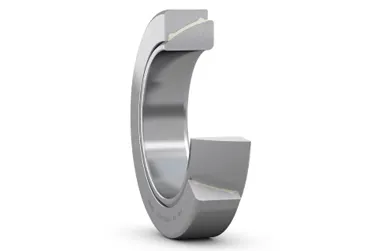
Angular contact spherical plain bearings can accommodate combined radial and axial loads and are used in applications requiring stable performance under complex loading conditions.
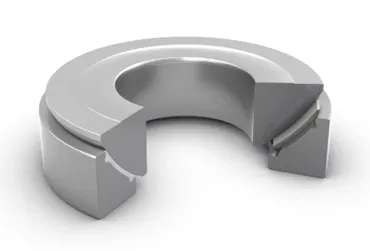
Spherical plain thrust bearings are designed to carry axial loads and allow limited angular misalignment. They are commonly used in low-speed, heavy-load, and shock-load applications.

Rod end bearings combine a spherical plain bearing with a threaded rod end, offering excellent articulation and self-aligning capability for linkage systems in machinery and automation equipment.


Thrust washer rings are used to support axial loads and provide stable thrust bearing surfaces in low-speed or intermittent operating conditions.

Sliding bearing strips and sheets can be cut and formed to suit specific equipment designs. They are ideal for large sliding surfaces and special structures requiring wear-resistant or self-lubricating materials.
Why Choose Sliding Bearings
In many low-speed, heavy-load, and demanding operating conditions, sliding bearings offer clear advantages over rolling bearings. Choosing the right sliding bearing can significantly improve equipment stability, reduce maintenance requirements, and extend service life.
High Load Capacity
Sliding bearings distribute loads over a larger contact area, making them suitable for heavy radial and axial loads as well as shock conditions.
Suitable for Harsh Environments
Sliding bearings perform well in dusty, wet, or high-temperature environments where rolling bearings may be more vulnerable.
Self-Aligning and Misalignment Tolerance
Spherical plain and rod end bearings can accommodate misalignment and shaft deflection, reducing uneven wear.
Simple Structure and Low Maintenance
With fewer moving parts, sliding bearings require minimal maintenance and can be designed as self-lubricating or maintenance-free solutions.
Flexible Design for Custom Applications
Sliding bearings allow flexible design in terms of size, material, and structure, making them ideal for OEM and custom equipment solutions.
Typical Applications of Sliding Bearings
Sliding bearings are widely used in various industrial equipment due to their high load capacity, wear resistance, and ability to operate under demanding conditions. They are particularly suitable for low-speed, heavy-load, and shock-load applications.
Typical applications include:
Articulated joints, slewing mechanisms, and support structures in construction machinery
Heavy-duty transmission and support systems in mining and metallurgical equipment
Steering, lifting, and linkage mechanisms in port and marine equipment
Guiding and supporting components in hydraulic systems and industrial drives
Oscillating and reciprocating motion components in automation and mechanical linkage systems
With proper selection and material design, sliding bearings help ensure stable operation and extended service life across a wide range of applications.
Plain bearings are ideal for low-speed, heavy-load, shock-load, and harsh operating conditions where rolling bearings may not perform reliably.
Sliding bearings operate through sliding contact and offer high load capacity, while rolling bearings use rolling elements and are better suited for high-speed applications.
Spherical plain bearings provide self-aligning capability, allowing them to compensate for misalignment and angular movement in mechanical systems.
Depending on the material and design, plain bearings may require lubrication or can be designed as self-lubricating or maintenance-free bearings.
Common materials include bronze, steel-backed composite materials, bimetal materials, and self-lubricating composites.
Yes. We offer customized plain bearing solutions based on drawings, samples, or specific operating conditions.
Plain bearings are widely used in construction machinery, mining and metallurgical equipment, marine applications, hydraulic systems, and industrial automation.
Proper selection, correct installation, suitable lubrication, and regular inspection help extend the service life of sliding bearings.
 Chinese
  English
  Russian
  Arabic
  Vietnamese
  Spanish
  French
  Portuguese
  Japanese