


Whether you are a hobbyist gold prospector or an industrial mining equipment buyer, black sand is a critical material for gold recovery. Black sand is not only a key indicator of placer gold deposits but also contains dense minerals that allow gold to naturally settle. Understanding how to efficiently extract gold from black sand can significantly increase recovery rates, optimize mining operations, and reduce costs. This guide provides a complete overview of black sand gold recovery methods, industrial equipment selection, and process optimization, helping you maximize gold recovery from black sand.
What is Black Sand?
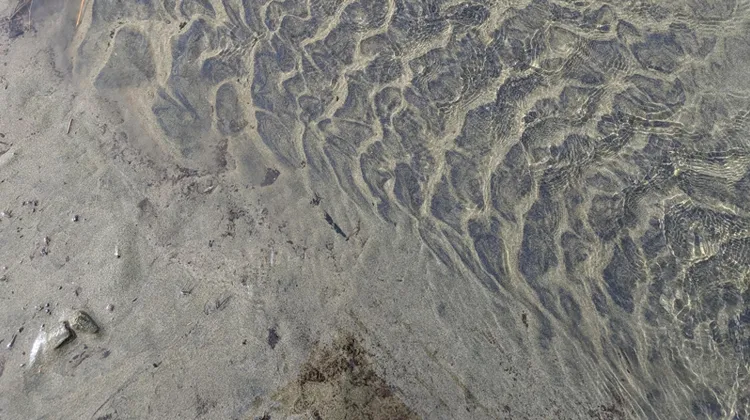
Black sand is one of the most common mineral mixtures found in placer gold deposits. It is typically composed of magnetite, hematite, ilmenite, garnet, rutile, and zircon, which are all high-density minerals. Black sand is frequently found in rivers, beaches, and alluvial deposits, and it often coexists with gold.
In many gold panning or mining operations, black sand concentrates are the last remaining material after lighter sediments have been washed away. This occurs because in natural sedimentary environments, both gold and black sand minerals have high specific gravity, causing them to settle together.
Due to the abundance of fine heavy minerals and the typically micro-sized nature of gold particles, extracting gold from black sand can be challenging. Efficient recovery requires a combination of physical separation, gravity concentration, magnetic separation, and centrifugal separation, along with the selection of appropriate mining equipment.
Why Gold is Found in Black Sand
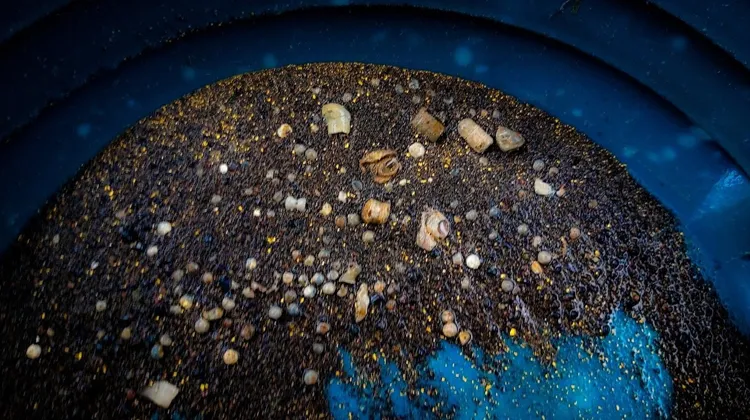
Gold has a high density of approximately 19.3 g/cm³, much heavier than most black sand minerals, which range from 4.5 to 5.5 g/cm³. During sedimentation, the dense gold particles naturally settle along with black sand minerals, forming gold-rich concentrates.
Black sand can also help protect fine gold particles during recovery, reducing losses and improving efficiency. This co-deposition phenomenon makes black sand an essential target for both small-scale prospectors and industrial miners.
Composition of Black Sand
| Mineral | Density (g/cm³) | 特征 |
|---|---|---|
| 磁铁矿 | 5.1 | Strongly magnetic, removable by magnetic separation |
| 赤铁矿 | 5.3 | Non-magnetic heavy mineral |
| 钛铁矿 | 4.7 | Heavy mineral often associated with gold |
| 石榴石 | 4.0–4.2 | Non-magnetic, high-density mineral |
| 金红石 | 4.2–4.3 | Fine, high-density mineral |
| 锆石 | 4.6–4.7 | Stable, abrasion-resistant mineral |
The high density and mineral composition of black sand allow it to carry and concentrate gold in placer deposits.
Methods to Extract Gold from Black Sand

Extracting gold from black sand requires a combination of carefully designed separation processes because gold particles are usually extremely fine and mixed with heavy minerals such as magnetite, hematite, ilmenite, and garnet. Unlike ordinary sand processing, black sand gold recovery requires specialized equipment and optimized processing techniques to achieve high recovery rates.
The most effective way to recover gold from black sand is usually a multi-stage separation process that combines gravity concentration, magnetic separation, centrifugal recovery, and fine mineral separation. Each method targets different particle sizes and mineral characteristics, ensuring maximum gold recovery.
The main methods for extracting gold from black sand include:
Gravity separation
磁选
Centrifugal separation
Shaking table concentration
Flotation (for ultra-fine gold)
Chemical extraction (when necessary)
Using a combination of these techniques can significantly improve recovery efficiency and reduce gold loss.
1. Gravity Separation for Black Sand Gold Recovery
Gravity separation is the most widely used method for extracting gold from black sand. This method works by exploiting the significant density difference between gold and other minerals.
Gold has a density of approximately 19.3 g/cm³, while most black sand minerals have densities between 4.0 and 5.5 g/cm³. This large density difference allows gravity-based equipment to efficiently concentrate gold particles.
Gravity separation is typically used as the primary recovery stage and can recover most of the coarse and medium-sized gold particles.
Common Gravity Separation Equipment
| 设备 | 应用 | 优势 |
|---|---|---|
| Sluice Box | Primary recovery | 简单且成本低廉 |
| Jig Machine | Medium particle recovery | Stable performance |
| 螺旋滑槽 | Continuous separation | Low maintenance |
| Gold Trommel | Washing and classification | High throughput |
Sluice boxes and jigs are commonly used in small and medium mining operations, while spiral chutes and trommel systems are suitable for continuous industrial processing.
Advantages of Gravity Separation
Gravity separation offers several important benefits:
No chemical reagents required
Environmentally friendly process
Low operating cost
High recovery for coarse gold
Simple equipment structure
Limitations of Gravity Separation
Although gravity separation is highly effective for coarse gold, its efficiency decreases when processing fine gold particles smaller than 0.1 mm. These fine particles can easily be trapped in black sand concentrates.
For this reason, gravity separation is usually followed by more precise recovery methods such as shaking tables or centrifugal concentrators.
2. Magnetic Separation of Black Sand
Magnetic separation is an essential step in black sand gold processing because black sand usually contains a large proportion of magnetic minerals, especially magnetite.
Magnetite and other magnetic minerals can form more than 50% of black sand concentrates, making it difficult to separate gold effectively without magnetic removal.
Magnetic separation reduces the volume of concentrate and increases gold purity before final recovery.
Magnetic Separation Process
典型步骤包括:
Dry or wet feeding of black sand concentrate
Magnetic minerals are attracted by the magnetic field
Non-magnetic material containing gold is collected separately
Final concentrate proceeds to fine recovery stage
Types of Magnetic Separators
| 类型 | Field Strength | 应用 |
|---|---|---|
| Low-Intensity Magnetic Separator | 1000–3000 Gauss | Removing magnetite |
| Medium-Intensity Magnetic Separator | 3000–6000 Gauss | Removing weak magnetic minerals |
| High-Intensity Magnetic Separator | 6000–15000 Gauss | Fine mineral separation |
Removing magnetic minerals significantly improves the efficiency of downstream equipment.
Benefits of Magnetic Separation
Reduces concentrate volume
Improves gold purity
Enhances recovery efficiency
Low operating cost
Simple operation
3. Centrifugal Separation for Fine Gold Recovery
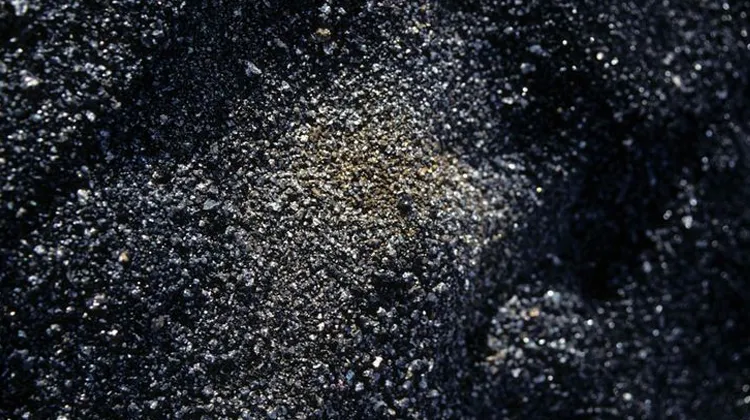
Centrifugal concentration is one of the most effective technologies for recovering fine and ultra-fine gold from black sand.
This method uses high rotational speed to generate centrifugal force many times stronger than gravity. Dense gold particles are forced outward and trapped in the concentrate zone, while lighter minerals are washed away.
Centrifugal concentrators are widely used in modern gold processing plants because they provide very high recovery rates for fine gold.
Advantages of Centrifugal Concentrators
Excellent recovery for particles smaller than 0.1 mm
High processing efficiency
Automated operation
Stable performance
Suitable for industrial use
典型应用
Centrifugal concentrators are particularly suitable for:
Beach sand gold deposits
River placer gold deposits
Fine gold recovery
Tailings recovery
Black sand concentrates
In many modern processing plants, centrifugal concentration is considered the best method for recovering fine gold from black sand.
4. Shaking Table Separation
Shaking tables are precision gravity separation machines designed for final-stage gold recovery from black sand concentrates.
They use a combination of vibration, water flow, and deck inclination to separate minerals based on density and particle size.
Gold particles move to one side of the table while lighter minerals move to the opposite side, producing a high-grade gold concentrate.
Shaking Table Separation Results
| Product | 描述 |
|---|---|
| Gold Concentrate | High-purity gold product |
| Middlings | Reprocessable material |
| Tailings | Waste material |
Shaking tables are particularly effective for recovering fine gold particles between 0.02 mm and 2 mm.
Advantages of Shaking Tables
High separation accuracy
Visible separation process
Adjustable parameters
Low energy consumption
High gold purity
Shaking tables are commonly used as the final recovery stage in black sand processing plants.
5. Flotation for Ultra-Fine Gold Recovery
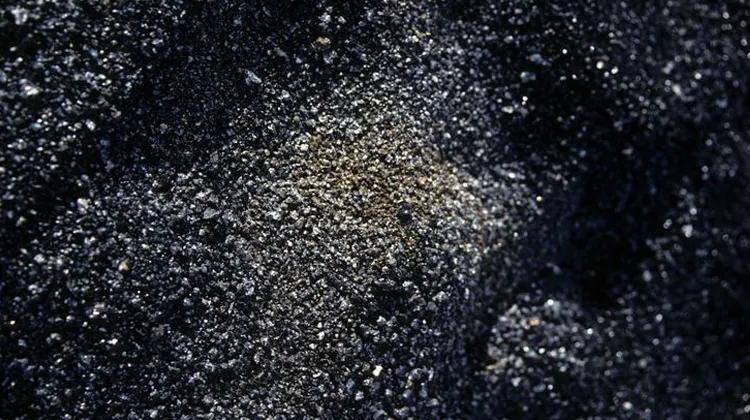
Flotation is sometimes used when gold particles are extremely fine and cannot be efficiently recovered by gravity methods.
This process uses chemical reagents to make gold-bearing particles attach to air bubbles, allowing them to float and be collected.
Flotation is typically used only in special cases because it requires more complex equipment and higher operating costs.
Flotation Applications
Flotation is suitable for:
Gold particles smaller than 0.02 mm
Sulfide-associated gold
Complex mineral mixtures
Tailings reprocessing
6. Chemical Methods for Gold Extraction
Chemical extraction methods are used when physical separation cannot recover enough gold.
最常用的方法包括:
Cyanide leaching
Mercury amalgamation (limited use)
Chlorination
Chemical extraction is typically used in industrial operations and requires strict environmental controls.
Comparison of Gold Recovery Methods
| 方法 | 粒径 | Recovery Rate | 成本 | Recommended Use |
|---|---|---|---|---|
| 重力分离 | >0.1毫米 | 高的 | 低的 | Primary recovery |
| 磁选 | All sizes | 中等的 | 低的 | Concentrate cleaning |
| Centrifugal Separation | 0.02–0.1 mm | 非常高 | 中等的 | Fine gold recovery |
| 振动台 | 0.02–2 mm | 高的 | 低的 | Final recovery |
| 浮选 | <0.02 mm | 高的 | 高的 | Ultra-fine gold |
| Chemical Extraction | <0.01 mm | 非常高 | 高的 | Special cases |
Why Multi-Stage Processing is Necessary
No single method can recover all gold from black sand. The most efficient recovery systems combine multiple techniques.
A typical optimized process includes:
Screening → Gravity Separation → Magnetic Separation → Centrifugal Concentration → Shaking Table → Gold Concentrate
This combination provides:
Maximum recovery rate
Minimal gold loss
运行稳定
Industrial scalability
Equipment for Black Sand Gold Recovery
| 设备 | 功能 | Stage |
|---|---|---|
| 振动屏幕 | Particle size classification | Pretreatment |
| Sluice Box | Rough gold recovery | 基本的 |
| Jig Machine | Gravity concentration | 基本的 |
| 磁选机 | Remove magnetic minerals | Secondary |
| 振动台 | Fine gold recovery | Final |
| Centrifugal Concentrator | Ultra-fine gold recovery | Final |
Tips to Improve Gold Recovery

Control Particle Size: Crushing black sand to 0–2 mm improves gravity separation efficiency.
Multi-Stage Processing: Combining gravity, magnetic, shaking table, and centrifugal methods maximizes recovery.
Control Water Flow: Proper flow prevents gold loss while maintaining processing capacity.
Reduce Mineral Interference: Remove magnetic and high-density non-gold minerals to improve concentrate quality.
常问问题
1. Does black sand always contain gold?
Black sand does not always contain gold, but it is one of the strongest natural indicators of placer gold deposits. Black sand is composed of heavy minerals such as magnetite, hematite, ilmenite, and garnet, which have similar deposition characteristics to gold.
In rivers, beaches, and alluvial environments, gold particles settle together with black sand because of their high density. For this reason, prospectors often focus on areas where black sand accumulates, as these locations have a higher probability of containing gold.
However, the gold content in black sand varies significantly depending on the geological environment, and laboratory testing or sampling is usually required to determine economic value.
2. What is the easiest way to get gold from black sand?
The easiest way to extract gold from black sand is by using gravity separation methods, such as gold panning or sluice boxes. These methods rely on the density difference between gold and other minerals and do not require complex equipment or chemicals.
For small-scale operations, manual gold panning is often sufficient to recover visible gold particles. For larger-scale processing, equipment such as sluice boxes, jig machines, or shaking tables can significantly improve recovery efficiency.
Gravity separation is widely considered the most practical and cost-effective approach for recovering gold from black sand.
3. What is the best method for fine gold recovery from black sand?
Fine gold recovery from black sand is best achieved using centrifugal concentrators and shaking tables. Fine gold particles are often smaller than 0.1 mm and can be difficult to recover using traditional gravity methods alone.
Centrifugal concentrators generate high centrifugal force that allows very small gold particles to be separated from black sand minerals. Shaking tables are then used as a final stage to produce a high-grade gold concentrate.
Combining these two methods typically produces the highest recovery rates for fine gold in black sand deposits.
4. How do you separate gold from magnetite in black sand?
Gold can be separated from magnetite using magnetic separation followed by gravity concentration.
Magnetite is strongly magnetic and can be removed using a magnetic separator or even a simple hand magnet. After removing magnetic minerals, the remaining concentrate contains less interference and allows gold to be recovered more efficiently.
This process reduces the volume of black sand and improves the purity of the gold concentrate.
5. What equipment is needed to recover gold from black sand?
The equipment required depends on the scale of operation, but a typical black sand gold recovery system may include:
Vibrating screens for size classification
Sluice boxes for rough recovery
Jig machines for gravity concentration
Magnetic separators for removing magnetite
Shaking tables for fine gold recovery
Centrifugal concentrators for ultra-fine gold recovery
Using multiple types of equipment together usually provides the best recovery results.
6. Can very fine gold be recovered from black sand?
Yes, very fine gold can be recovered from black sand using advanced recovery methods. Fine gold particles often require specialized equipment such as centrifugal concentrators, shaking tables, or flotation systems.
Fine gold recovery is one of the biggest challenges in black sand processing because very small particles can easily be lost during washing or separation.
Modern recovery equipment can achieve very high recovery rates even for ultra-fine gold particles.
7. Is chemical treatment necessary to extract gold from black sand?
In most cases, chemical treatment is not necessary for black sand gold recovery because gold can usually be separated using physical methods such as gravity and magnetic separation.
However, chemical extraction methods such as cyanide leaching may be used when gold particles are extremely fine or locked inside other minerals.
Chemical methods are generally more expensive and require environmental protection measures, so physical separation is preferred whenever possible.
8. How much gold can be found in black sand?
The gold content in black sand varies widely depending on the deposit. Some black sand may contain only trace amounts of gold, while rich placer deposits can contain economically significant quantities.
Gold concentration is usually measured in grams per ton (g/t). Even small concentrations can be profitable when processed at large scale using efficient equipment.
Sampling and testing are the most reliable ways to determine gold content.
9. Why is gold difficult to extract from black sand?
Gold extraction from black sand is difficult because black sand contains large amounts of heavy minerals with similar physical properties to gold.
These heavy minerals can trap fine gold particles and make separation more complicated. In addition, gold particles in black sand are often extremely small and require precise processing methods.
Using a combination of gravity separation, magnetic separation, and centrifugal concentration can significantly improve recovery efficiency.
10. What is the most efficient black sand gold processing method?
The most efficient method for processing black sand is a multi-stage recovery system that combines several separation techniques.
A typical efficient process includes:
Screening and classification
Gravity separation
磁选
Centrifugal concentration
Shaking table separation
This type of system can recover both coarse and fine gold particles while minimizing losses.


 Chinese
  English
  Russian
  Arabic
  Vietnamese
  Spanish
  French
  Portuguese
  Japanese