



The global cement industry witnessed a major change in 2025 when FLSmidth Cement officially became Fuller® Technologies following its acquisition by Pacific Avenue Capital Partners.
At first glance, the announcement may appear to be a simple corporate rebranding. However, the transition represents something much larger. It marks the separation of one of the world’s most established cement technology businesses from its former parent company and the revival of a historic brand that has been associated with cement engineering for more than a century.
For cement producers, EPC contractors, equipment suppliers, and plant operators, the key questions are not only why FLSmidth chose to divest its cement business, but also what this change means for the future of cement technology, plant modernization, and industry competition. This article explores the history behind the transition and examines its potential impact on the global cement sector.
FLSmidth Cement Rebranded As Fuller Technologies
On November 5, 2025, Pacific Avenue Capital Partners announced that the former FLSmidth Cement business would operate under a new identity: Fuller® Technologies.
The acquisition was far more comprehensive than a simple transfer of ownership. It included decades of accumulated intellectual property, process technologies, manufacturing capabilities, engineering expertise, global service operations, and customer support infrastructure. In practical terms, Fuller Technologies inherits the knowledge, experience, and installed equipment base that made FLSmidth Cement one of the most influential names in the cement industry.
This distinction is important because many industry professionals initially assumed that the rebranding signaled the creation of a completely new company. In reality, Fuller Technologies continues to build upon the same technological foundation that has supported cement plants around the world for generations.
For existing customers, the transition is designed to provide continuity rather than disruption. The engineering expertise, service capabilities, and technical support systems that customers have relied on remain part of the organization.
The Legacy of FLSmidth in Global Cement Manufacturing
Few companies have had a greater influence on modern cement production than FLSmidth.
For more than 140 years, the company played a central role in shaping the technologies that define today’s cement manufacturing process. Its solutions have been used throughout the entire production chain, from raw material preparation and crushing to clinker production, cement grinding, quality control, storage, and dispatch.
Over the decades, FLSmidth developed a reputation not only as an equipment supplier but also as a technology partner capable of designing complete production lines and improving plant performance. The company’s technologies are estimated to be operating in more than 1,400 cement plants worldwide, representing a significant share of global cement production capacity.
This extensive installed base helped establish FLSmidth as a trusted partner for producers seeking higher efficiency, improved reliability, and long-term operational performance.
As cement manufacturing evolved, the company also became increasingly involved in process automation, digital monitoring, and quality control systems. These developments enabled cement plants to improve consistency while reducing energy consumption and operating costs.
The Fuller Brand: A Return to American Cement Engineering Heritage
Although Fuller Technologies is a new corporate identity, the Fuller name itself is deeply rooted in the history of the cement industry.
The original Fuller Company was founded in the United States and became one of the country’s most respected industrial engineering firms. Headquartered in Pennsylvania’s Lehigh Valley region, an area long associated with cement production and heavy industry, Fuller played a significant role in the development of equipment used throughout cement manufacturing facilities.
Many industry veterans still recognize the Fuller name through technologies that have remained in operation for decades. Among the most well-known examples is the Fuller-Kinyon® pump, a pneumatic conveying system that became widely adopted for handling cement and powdered materials. The technology demonstrated the company’s ability to solve practical operational challenges while improving plant efficiency.
When FLSmidth acquired Fuller Company in 1990, many of these technologies were integrated into the broader FLSmidth Cement portfolio. Although the Fuller name gradually became less visible, its engineering heritage continued to influence products and solutions used throughout the global cement industry.
The reintroduction of the Fuller brand therefore represents more than a marketing decision. It reconnects the business with a historical identity that has long been respected by cement professionals around the world.
Why Did FLSmidth Sell Its Cement Business?
One of the most frequently discussed questions following the announcement is whether FLSmidth’s decision to sell its cement division reflects weakness in the cement market.
The answer is no.
The divestment was primarily driven by corporate strategy rather than poor business performance.
Beginning in 2023, FLSmidth initiated a long-term transformation designed to position the company as a pure-play mining technology provider. Management concluded that concentrating resources on mining would allow the company to focus on a sector offering stronger long-term growth opportunities and higher profit margins.
Compared with the cement industry, mining generally generates greater recurring revenue through aftermarket services, maintenance contracts, and long-life equipment support. Mining assets often operate for decades and require continuous technical assistance, creating predictable revenue streams that investors typically value highly.
The cement industry, while still essential and profitable, faces different market dynamics. New greenfield cement projects have become less common in many regions, while producers increasingly prioritize efficiency improvements, sustainability initiatives, and modernization projects over large-scale capacity expansion.
As a result, FLSmidth determined that separating the cement business would allow both organizations to pursue strategies better aligned with their respective markets.
Why the Acquisition Makes Sense for Pacific Avenue Capital Partners
From an outside perspective, some observers questioned why a private equity firm would invest in a mature industrial sector such as cement.
However, the modern cement industry is undergoing significant transformation.
Plant operators around the world are facing growing pressure to reduce carbon emissions, improve energy efficiency, increase the use of alternative fuels, and adopt digital technologies that enhance operational performance. These challenges create substantial demand for engineering expertise, modernization projects, and aftermarket services.
Pacific Avenue Capital Partners appears to recognize this opportunity.
As an independent company focused exclusively on cement, Fuller Technologies can direct its resources toward solving industry-specific challenges without competing internally for investment capital or management attention. This independence may allow faster decision-making and greater flexibility when responding to customer needs.
The strategy reflects confidence that the future growth of the cement sector will come less from building entirely new plants and more from helping existing facilities become cleaner, more efficient, and more productive.
A Timeline of FLSmidth’s Cement Legacy
The history of FLSmidth provides important context for understanding the significance of the transition to Fuller Technologies.
In 1887, the company secured its first major cement-related contract, marking the beginning of its involvement in the industry.
Just two years later, in 1889, FLSmidth established its first manufacturing facility in Aalborg, Denmark, creating the foundation for future technological development.
A major milestone occurred in 1899 with the commercialization of rotary kiln technology. This innovation became one of the most important developments in modern cement manufacturing and contributed significantly to the industry’s industrialization.
By 1957, during the company’s seventy-fifth anniversary, equipment and technologies supplied by FLSmidth were associated with approximately forty percent of global cement production, highlighting its position as an industry leader.
The following decades saw continuous investment in engineering innovation, including advancements in process control, automation, and quality management systems. These developments helped cement producers achieve higher productivity while maintaining consistent product quality.
In 1990, FLSmidth acquired the Fuller Company, bringing together two influential names in cement engineering.
Another strategic shift occurred in 2002 when the company sold Aalborg Portland, reinforcing its transformation from a cement producer into a technology and equipment supplier.
The company’s focus increasingly shifted toward mining after major acquisitions in 2021, including assets from ThyssenKrupp’s mining business and selected mining technologies from Sandvik. These investments further supported the company’s long-term mining strategy and ultimately paved the way for the separation of the cement division.
The establishment of Fuller Technologies in 2025 represents the latest chapter in this long history of industrial transformation.
What Does This Mean for Existing Cement Plant Owners?
For many plant operators, the most immediate concern is whether the transition will affect ongoing operations, equipment support, or spare parts availability.
Fortunately, there is little indication that customers should expect significant disruption.
Because the acquisition includes technical expertise, intellectual property, engineering resources, and service infrastructure, Fuller Technologies remains positioned to support existing installations throughout their operational lifecycle.
This is particularly important for facilities operating critical assets such as 回转窑, 熟料冷却器, 立式辊磨机, 球磨机, preheaters, and automated process control systems. These assets often remain in service for decades and require reliable technical support to maintain performance and minimize downtime.
For plant owners, continuity of service is often more important than changes in corporate branding. As long as technical expertise remains available and aftermarket support continues, most customers are unlikely to experience significant operational impact.
What Does This Mean for the Future of the Global Cement Equipment Market?
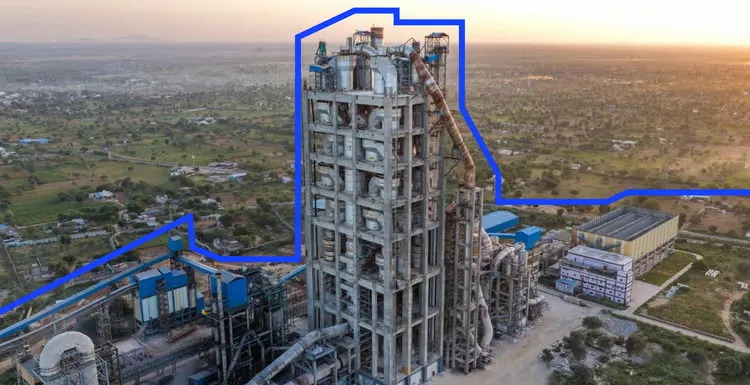
The emergence of Fuller Technologies also reflects broader trends reshaping competition within the global cement equipment industry.
In recent years, cement producers have become increasingly focused on reducing production costs while meeting stricter environmental requirements. As a result, purchasing decisions are no longer based solely on equipment specifications or initial investment costs.
Instead, producers are evaluating technologies based on their ability to improve thermal efficiency, reduce electrical consumption, lower carbon emissions, and support long-term operational reliability.
This shift is creating new opportunities for equipment suppliers capable of delivering comprehensive solutions rather than standalone machinery.
Technologies related to alternative fuels, waste heat recovery, digital process optimization, predictive maintenance, and energy-efficient grinding systems are expected to attract growing investment throughout the coming decade.
As competition intensifies, the industry’s leading suppliers will likely be those capable of combining traditional engineering expertise with modern digital and sustainability-focused solutions.
Our Perspective on the Industry Transition
From the perspective of companies serving cement producers worldwide, the rebranding itself is less significant than the strategic direction that follows.
Plant operators are ultimately focused on maintaining reliable production, controlling operating costs, and meeting increasingly demanding environmental targets. Whether equipment is supplied under the FLSmidth name or the Fuller Technologies name, customers will continue to evaluate suppliers based on performance, service quality, and long-term value.
The more important question is how effectively the newly independent Fuller Technologies can respond to emerging industry challenges, particularly in areas such as decarbonization, plant modernization, and digital transformation.
If the company successfully leverages its engineering heritage while accelerating innovation, it has the potential to remain one of the most influential technology providers in the global cement sector.
结论
The transition from FLSmidth Cement to Fuller Technologies marks a significant moment in the evolution of the global cement industry.
While the change is rooted in a corporate restructuring strategy, it also represents the revival of a historic engineering brand with deep connections to cement manufacturing. Supported by decades of technical expertise, a global installed equipment base, and a renewed focus on serving cement producers, Fuller Technologies enters the market with a strong foundation.
For cement plant owners, the transition is expected to provide continuity in technology and support. For the broader industry, it reflects a growing emphasis on modernization, sustainability, and operational efficiency.
As the cement sector continues to evolve, the success of Fuller Technologies will likely be measured not by its new name, but by its ability to help producers meet the challenges of a rapidly changing industrial landscape.


 Chinese
  English
  Russian
  Arabic
  Vietnamese
  Spanish
  French
  Portuguese
  Japanese