



White cement is widely used in architectural decoration, precast concrete products, landscape projects, and high-end building materials due to its high whiteness, excellent aesthetic performance, and versatility.
However, without a clear understanding of its properties, types, proper usage, construction process, and maintenance, problems such as discoloration, uneven appearance, or insufficient strength may occur.
This article provides a comprehensive and practical guide to white cement, covering everything from basic knowledge to application and long-term maintenance, helping you achieve consistent and high-quality results in real projects or production.
1. 什么是白水泥?
White cement is a special type of cement produced from raw materials with very low iron and manganese content.
Through strict control of raw material selection, clinker burning, and grinding processes, white cement achieves a bright, clean white appearance.
Compared with ordinary Portland cement, white cement:
Focuses more on appearance and decorative performance
Requires higher production and quality control standards
Has a higher production cost
Is mainly used for decorative and non-structural applications
For these reasons, white cement is widely regarded as a premium material for decorative construction and high-end concrete products.
2. Properties and Core Application Areas of White Cement
White cement is a specialized construction material known for its distinct physical, aesthetic, and performance characteristics, which make it fundamentally different from ordinary Portland cement.
了解 properties of white cement and how they relate to its core application areas is essential for selecting the right material and achieving optimal results in decorative and architectural projects.
2.1 Key Properties of White Cement
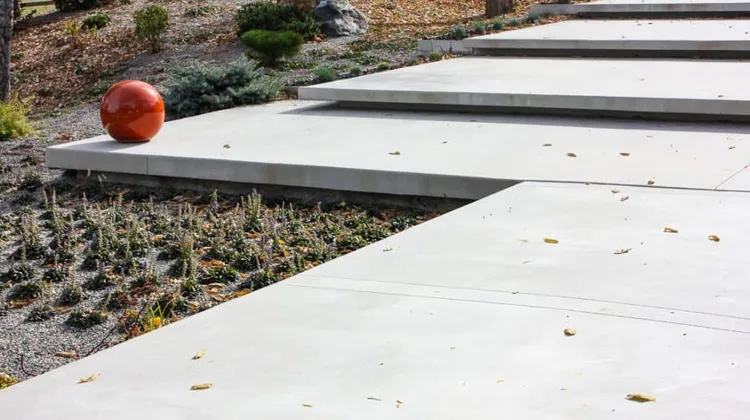
2.1.1 High Whiteness and Bright Appearance
One of the most important properties of white cement is its high degree of whiteness, achieved by using raw materials with extremely low iron and manganese content.
This characteristic makes white cement the preferred choice for applications where visual quality, surface uniformity, and color purity are critical.
From an aesthetic perspective, high whiteness:
Enhances architectural appearance
Improves light reflection on surfaces
Provides a clean base for further surface treatments
From a practical perspective, white cement’s brightness allows for:
Accurate color control in colored concrete
Reduced color variation in precast products
These features are especially important in white cement decorative applications 和 architectural concrete finishes.
2.1.2 Excellent Decorative and Coloring Performance
白色水泥 superior compatibility with inorganic pigments, making it ideal for producing colored decorative mortar and concrete.
Unlike grey cement, white cement does not interfere with pigment color, resulting in brighter, more consistent tones.
This property is widely valued in:
Architectural façade design
Decorative wall finishes
Terrazzo and artificial stone production
As a result, white cement is commonly used in customized decorative building materials 和 high-end architectural projects.
2.1.3 Stable Mechanical Strength and Setting Behavior
Despite its decorative focus, white cement provides reliable mechanical performance, , 包括:
Sufficient compressive strength
Predictable setting time
Good surface integrity after curing
When properly mixed and applied, white cement can meet the performance requirements of:
Decorative concrete structures
Precast architectural elements
Non-load-bearing construction components
This balance between aesthetic quality and structural reliability is one of the key advantages of white cement.
2.1.4 High Sensitivity to Raw Materials and Process Control
White cement is more sensitive than grey cement to:
Raw material impurities
Inconsistent kiln operation
Improper grinding and storage conditions
Even small variations can affect whiteness, strength, and final appearance.
Therefore, strict quality control and stable production processes are critical in white cement manufacturing and application.
For industrial users, this means that advanced cement production equipment and precise mixing systems play a vital role in maintaining consistent product quality.
2.2 Core Application Areas of White Cement
2.2.1 Architectural and Decorative Construction
White cement is widely used in 建筑装饰 due to its clean appearance and excellent surface finish.
Typical applications include:
Exterior and interior wall plastering
Decorative façade layers
Architectural moldings and profiles
These applications benefit from white cement’s high whiteness, smooth texture, and color stability, making it suitable for both modern and classical architectural styles.
2.2.2 Precast Concrete and Decorative Concrete Products
In the precast industry, white cement is commonly used to manufacture:
White concrete panels
Architectural cladding elements
Decorative blocks and tiles
Precast applications demand:
Uniform color across batches
Stable strength development
Consistent surface quality
White cement, when produced and mixed under controlled conditions, meets these requirements effectively, making it a preferred material for precast architectural concrete.
2.2.3 Artificial Stone, Terrazzo, and Surface Finishing Materials
White cement serves as a key binder in:
Terrazzo flooring systems
Artificial marble and stone products
Polished decorative surfaces
Its bright color enhances the visual impact of aggregates and pigments, resulting in high-end decorative finishes commonly used in commercial buildings, hotels, and public spaces.
2.2.4 Landscape Architecture and Artistic Applications
White cement is also widely applied in:
Sculptures and artistic installations
Landscape elements and garden features
Urban public art projects
Its excellent moldability and fine surface detail allow designers and artists to achieve complex shapes and smooth finishes, making it a popular material in landscape and artistic construction.
2.3 Relationship Between Properties and Applications
The widespread use of white cement in decorative and architectural fields is directly linked to its core properties:
High whiteness → Decorative façades and artistic surfaces
Color compatibility → Colored concrete and terrazzo
Stable strength → Precast and decorative concrete elements
Process sensitivity → High-end, controlled production environments
Understanding this relationship helps engineers, manufacturers, and contractors choose white cement more effectively and apply it correctly in different scenarios.
3. Common Uses of White Cement

White cement is primarily used in applications where appearance, surface quality, and color consistency are critical.
Unlike ordinary grey cement, white cement is chosen not for structural mass construction, but for decorative, architectural, and value-added building materials.
了解 common uses of white cement helps contractors, designers, and manufacturers select the right material and apply it more efficiently.
3.1 Decorative Mortar and Architectural Finishes
One of the most common uses of white cement is in decorative mortar and surface finishing.
It is widely applied in:
Interior and exterior wall plastering
Architectural façade finishes
Decorative surface coatings
White cement provides a smooth texture, clean appearance, and uniform color, making it suitable for high-end residential and commercial buildings.
3.2 Precast Concrete and Architectural Elements
White cement is extensively used in the precast concrete industry, where visual consistency is essential.
Typical applications include:
White concrete panels
Architectural cladding elements
Decorative precast blocks and components
In these applications, white cement allows manufacturers to achieve consistent color across different production batches, especially when combined with controlled mixing and production systems.
3.3 Terrazzo, Artificial Stone, and Decorative Flooring
White cement serves as a key binder in:
Terrazzo flooring systems
Artificial marble and artificial stone products
Polished decorative concrete surfaces
Its bright color enhances the appearance of aggregates and pigments, resulting in high-quality decorative flooring widely used in hotels, shopping malls, airports, and public buildings.
3.4 Landscape Architecture and Artistic Applications
Due to its excellent moldability and fine surface finish, white cement is commonly used in:
Sculptures and artistic installations
Landscape features and garden elements
Urban public art projects
These applications benefit from white cement’s ability to capture fine details and complex shapes.
3.5 Specialized and Customized Building Materials
White cement is also used in the production of:
Customized decorative building components
High-end architectural concrete products
DIY and design-oriented building materials
In such cases, white cement adds aesthetic value and product differentiation, rather than structural strength alone.
4. Types of White Cement

White cement is available in several types, each designed to meet specific performance and application requirements.
Choosing the right type of white cement is essential for achieving both technical performance and visual quality.
4.1 Ordinary White Portland Cement
Ordinary white Portland cement is the most widely used type.
Key characteristics:
Balanced strength and workability
Stable setting time
Suitable for general decorative applications
Typical uses:
Wall plastering
Decorative mortar
General architectural finishes
This type offers good performance at a reasonable cost, making it ideal for most standard decorative projects.
4.2 High-Strength White Cement
High-strength white cement is designed to provide higher early and final compressive strength.
Key characteristics:
Faster strength development
Shorter demolding time
生产效率提高
Typical uses:
Precast concrete components
Architectural panels
Factory-produced decorative elements
It is commonly used in industrialized precast production lines.
4.3 Rapid-Hardening White Cement
Rapid-hardening white cement features a short setting and hardening time, making it suitable for projects with strict time constraints.
Key characteristics:
Quick setting
Early usability
Reduced construction time
Typical uses:
Fast-track construction projects
Repair and renovation works
Because of its rapid setting behavior, careful planning and skilled application are required.
4.4 Special White Cement
Special white cement includes varieties such as:
Low-alkali white cement
Sulfate-resistant white cement
Key characteristics:
Improved durability
Better performance in aggressive environments
Typical uses:
Humid or chemically aggressive environments
Projects with higher durability requirements
5. How to Use White Cement Properly

Proper use of white cement is critical to achieving optimal visual quality and technical performance.
This includes correct material selection, accurate proportioning, controlled mixing, and proper curing.
5.1 Recommended Mixing Ratios for White Cement
The mixing ratio varies depending on the application.
The table below provides general reference values commonly used in practice.
| 应用 | White Cement : Sand | Water–Cement Ratio | 笔记 |
|---|---|---|---|
| Wall plastering | 1 : 2–3 | 0.4–0.5 | Good workability and surface smoothness |
| Flooring | 1 : 2 | 0.35–0.45 | Higher strength and abrasion resistance |
| Precast elements | 1 : 1.5 | 0.3–0.4 | Controlled water for strength and color consistency |
⚠️ Important:
Excess water can lead to:
Reduced compressive strength
Surface discoloration or yellowing
Poor durability
5.2 Proper Mixing and Application Guidelines
| Process Step | Best Practice | Purpose |
|---|---|---|
| Raw material selection | Use clean aggregates and water | Maintain whiteness and strength |
| Mixing | Dry-mix first, then add water gradually | Ensure uniform color and consistency |
| 设备 | Use mechanical mixers when possible | Reduce segregation and color variation |
| 应用 | Apply evenly, avoid overworking | Prevent cracks and surface defects |
| Curing | Keep moist, protect from sunlight | Preserve appearance and durability |
Using professional mixing and batching equipment is especially important for batch or industrial-scale production, where consistency directly affects product quality.
6. White Cement Construction Process
The construction process of white cement plays a critical role in determining the final appearance, surface quality, and long-term durability of the finished product.
Because white cement is more sensitive to contamination, water control, and curing conditions than grey cement, a standardized and well-controlled construction process is essential.
Below is a complete step-by-step white cement construction process, suitable for decorative construction, precast applications, and architectural finishing works.
Overview of the White Cement Construction Process
| Stage | Main Purpose | Key Control Points |
|---|---|---|
| Surface preparation | Ensure proper bonding | Cleanliness, moisture control |
| Material mixing | Achieve uniform color and strength | Accurate proportioning, clean equipment |
| 应用 | Form the designed shape and thickness | Even placement, controlled working time |
| Surface finishing | Improve appearance and texture | Proper timing, avoid contamination |
| Curing and protection | Develop strength and preserve whiteness | Moisture retention, environmental control |
6.1 Surface Preparation
Surface preparation is the foundation of successful white cement application.
Any dust, oil, rust, or loose particles can lead to poor adhesion, discoloration, or surface defects.
最佳实践:
Remove dust, oil, and contaminants from the substrate
Repair cracks or weak areas before application
Pre-wet the surface to prevent rapid water absorption
Proper surface preparation improves bond strength and helps maintain uniform color.
6.2 Material Mixing
Uniform mixing is essential for achieving consistent whiteness and mechanical performance.
Key considerations:
Use clean aggregates and potable water
Dry-mix white cement and sand first
Add water gradually to control workability
Use mechanical mixers for better consistency
For batch or industrial production, professional mixing and batching equipment significantly reduces color variation and segregation.
6.3 Application and Placement
During application, white cement mortar or concrete should be placed evenly and efficiently.
最佳实践:
Apply material according to the designed thickness
Avoid excessive reworking, which may cause segregation
Maintain a steady working rhythm, especially for rapid-hardening white cement
Controlled application ensures a smooth surface and uniform appearance.
6.4 Surface Finishing
Surface finishing directly affects the visual quality of white cement products.
Finishing methods may include:
Troweling for smooth surfaces
Texturing for decorative effects
Mold finishing for precast components
Finishing should be performed at the appropriate setting stage to avoid surface tearing, discoloration, or uneven texture.
6.5 Curing and Early-Stage Protection
Proper curing is especially important for white cement to ensure strength development and color stability.
Curing guidelines:
Keep the surface moist for at least 24–48 hours
Avoid direct sunlight, strong wind, and dust
Prevent mechanical impact during early hardening
Good curing practices help prevent cracking, surface discoloration, and long-term durability issues.
Detailed White Cement Construction Workflow
| Step | 描述 | Quality Impact |
|---|---|---|
| Surface cleaning | Remove dust, oil, and loose materials | Improves adhesion and appearance |
| Pre-wetting | Control substrate absorption | Prevents uneven setting |
| Controlled mixing | Accurate ratios and clean equipment | Uniform color and strength |
| Even application | Consistent thickness and placement | Smooth finish, fewer defects |
| Timely finishing | Finish at correct setting stage | High-quality surface texture |
| 适当的固化 | Moisture and environmental control | Long-term durability and whiteness |
Why a Standardized Process Matters
White cement is widely used in decorative and architectural applications, where defects are highly visible and difficult to repair.
A standardized construction process helps to:
Reduce color variation and surface defects
Improve construction efficiency
Ensure consistent quality across different projects or production batches
For manufacturers and contractors, process control combined with suitable equipment is a key factor in achieving reliable and repeatable results.
7. Common Problems When Using White Cement
Can White Cement Replace Ordinary Cement?
No. White cement is mainly designed for decorative purposes and is not cost-effective for structural construction.
Why Does White Cement Turn Yellow?
Common causes include:
Impurities in water or aggregates
Contaminated tools or equipment
Improper curing or prolonged exposure to sunlight
8. Maintenance of White Cement Products
8.1 Early-Stage Maintenance
Keep the surface moist for the first 24–48 hours
Avoid vibration, impact, or heavy loads
8.2 Routine Maintenance
Clean surfaces regularly
Prevent oil, dirt, and pigments from penetrating the surface
8.3 Preventing Discoloration and Aging
Avoid long-term exposure to polluted environments
Apply transparent protective sealers when necessary
9. How to Choose High-Quality White Cement
When selecting white cement, consider the following factors:
白度指数
Strength grade
产品一致性
Manufacturer’s production capability and technical support
For large-scale or industrial applications, stable production equipment and mature manufacturing processes are especially important.
结论
White cement is a premium building material that places high demands on material quality, equipment, process control, and construction management.
Only through proper selection, accurate mixing, standardized application, and effective maintenance can its decorative value and performance be fully realized.
For manufacturers and contractors working with white cement products, reliable cement production and mixing equipment plays a crucial role in ensuring consistent quality and long-term competitiveness.


 Chinese
  English
  Russian
  Arabic
  Vietnamese
  Spanish
  French
  Portuguese
  Japanese