



Hydraulic cement is a broad category of cementitious material that reacts chemically with water and can set, harden, and gain strength in air or under water. Portland cement, blended cement, and many rapid repair cements are hydraulic cements.
The term “hydraulic” does not mean that the material is only intended for wet locations. It means that water is an essential part of the hardening reaction. Once water is added, cement particles begin to hydrate and form solid products that bind sand, aggregate, and other materials into a durable mass.
How Does Hydraulic Cement Work?
Hydraulic cement works through hydration. When cement is mixed with the correct amount of water, reactive mineral components begin to form new solid hydration products. These products gradually fill space between particles and bind aggregate or filler into a continuous hardened structure.
Hydration continues over time, allowing strength to develop after placement. Proper curing is therefore important. Excessive early moisture loss, very low temperatures, too much mixing water, or disturbance after placement can reduce final strength and durability.
Portland cement and most blended cements are hydraulic. Because they form stable hydration products through a chemical reaction with water, they can set and harden in damp conditions and, when properly designed and placed, under water.
Hydraulic Cement vs. Non-Hydraulic Cement
The main difference between hydraulic and non-hydraulic cement is the hardening mechanism.
Non-hydraulic materials, such as certain air lime products, harden mainly by reacting with carbon dioxide in the air. They generally need access to air and are not suitable for long-term wet or submerged conditions.
Hydraulic cement hardens through a chemical reaction with water and does not depend on carbon dioxide from the air. This makes it suitable for concrete, mortar, foundations, underground work, damp locations, and general structural applications.
| 特征 | Hydraulic Cement | Non-Hydraulic Material |
|---|---|---|
| Main hardening mechanism | Hydration reaction with water | Primarily hardens through carbonation in air |
| Can harden in damp conditions | Yes | Usually not suitable |
| Can harden under water | Yes, under suitable conditions | Usually no |
| Common examples | Portland cement, blended cement, some repair cements | Air lime products |
| Typical uses | Concrete, mortar, foundations, roads, and repair work | Selected masonry, plaster, and traditional building work |
Common Types of Hydraulic Cement
Portland Cement
Portland cement is one of the most widely used hydraulic cements. It is used in concrete, precast components, mortar, industrial floors, roads, and general construction because it is widely available and suitable for many applications.
Blended Cement
Blended cement combines cement with suitable mineral constituents such as slag, fly ash, limestone, or pozzolanic materials. Depending on the formulation, blended hydraulic cement can improve long-term strength, durability, workability, or clinker efficiency. The exact performance should always be selected for the project conditions.
Rapid-Setting and Rapid-Repair Cement
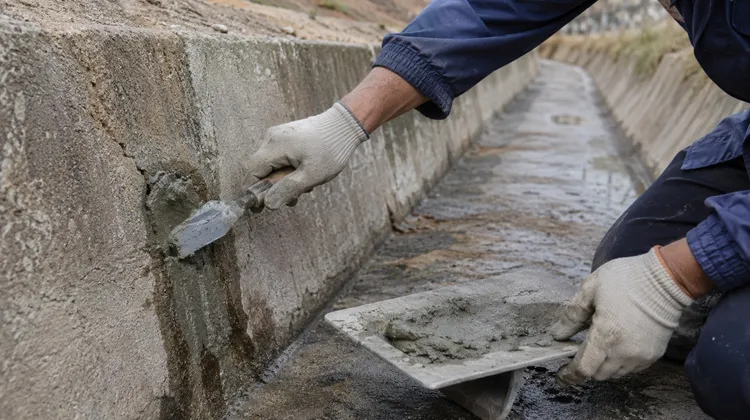
Rapid repair cement is used where downtime must be reduced, such as floor holes, equipment foundations, local leakage repairs, roadway patches, and urgent maintenance work. These materials normally have a shorter setting time, so water addition, mixing time, and working time must be controlled carefully.
Masonry and Mortar Cement
Masonry and mortar cements are designed for masonry mortars and plastering applications. Their important properties often include workability, water retention, bond, and application performance. They are not automatically suitable for structural concrete and should be selected according to their intended use.
Where Is Hydraulic Cement Used?
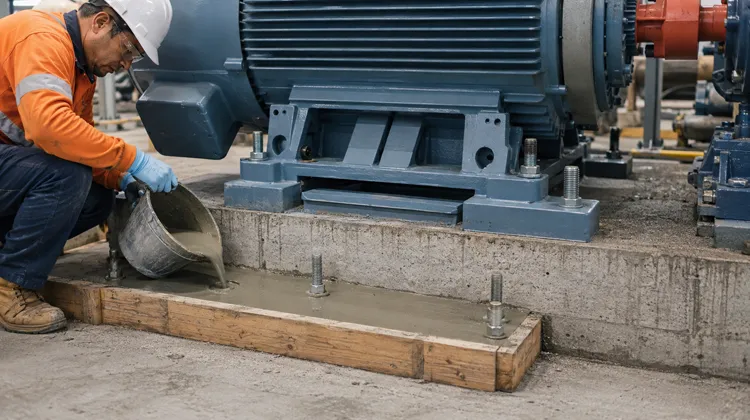
Hydraulic cement is used in projects that require strength, durability, and moisture resistance. Typical applications include:
- Concrete structures for buildings, industrial facilities, bridges, and roads;
- Mortar for brickwork, blockwork, and plastering;
- Basements, foundations, equipment bases, and retaining structures;
- Water tanks, drainage channels, damp areas, and selected hydraulic structures;
- Concrete floors, precast products, and industrial buildings;
- Repairs to cracks, holes, local leakage points, and damaged edges.
In cement equipment projects, hydraulic cement is commonly used for equipment foundations, anchor-bolt grouting, plant floors, conveyor supports, and local structural repairs. Each application may require different strength, flow, shrinkage control, chemical resistance, or temperature performance. Material selection should not be based on the term “hydraulic cement” alone.
Main Benefits of Hydraulic Cement
The key benefit of hydraulic cement is its ability to harden under moist conditions and form cement-based materials with useful strength and durability. This makes it appropriate for a wide range of construction and industrial applications.
Hydraulic cement can also be combined with sand, aggregate, fibers, admixtures, and supplementary cementitious materials to produce mortars, grouts, and concrete with different properties. Mix design and construction methods can be adjusted to balance strength, flowability, setting time, and durability.
Important Considerations When Using Hydraulic Cement

Hydraulic cement does not mean that more water is always better. Excess water increases porosity and can reduce hardened strength and durability. Control the water-to-cement ratio according to the product instructions, and do not add water simply to make the mix easier to place.
Surface preparation is also important. Remove oil, loose material, dust, and standing water from the application area. For repair or grouting work, confirm the substrate condition, interface preparation method, and curing requirements before placement.
Hydraulic cement needs appropriate curing while it hardens. Hot, windy, or dry conditions can cause rapid moisture loss and increase cracking risk. Cold weather can delay setting and strength development. For project work, curing procedures should match the climate, construction schedule, and material instructions.
How to Choose the Right Hydraulic Cement
Start by identifying the application. General concrete and mortar work may use an appropriate portland or blended cement, while equipment foundations, grouting, and fast repairs may require high-strength, non-shrink, or rapid-setting materials.
When requesting a quotation or technical recommendation, provide:
- The intended use, such as structural concrete, mortar, grouting, or repair;
- Required strength, setting time, and working time;
- Whether the area is damp, underground, chemically exposed, or subject to major temperature changes;
- Substrate condition, repair depth, and application area;
- Requirements for flowability, non-shrink performance, fast opening, or chemical resistance;
- Applicable local standards and project acceptance criteria.
This information helps identify a better-matched cement or cement-based material and reduces the risk of later construction problems.
结论
Hydraulic cement is a class of cementitious material that sets and hardens through a chemical reaction with water. Portland cement and most blended cements are hydraulic cements, providing the foundation for concrete, mortar, foundations, repairs, and industrial construction.
Understanding how hydraulic cement works helps project teams select suitable materials, control mixing water, and plan curing correctly. For every application, material properties, substrate condition, installation method, and environmental conditions should be considered together.
常见问题解答
Is portland cement a hydraulic cement?
Yes. Portland cement sets and hardens through hydration, which makes it a hydraulic cement.
Can hydraulic cement harden under water?
Yes. With an appropriate mix design and placement method, hydraulic cement can continue to hydrate and harden in damp conditions and under water.
Is hydraulic cement the same as rapid-setting cement?
Not exactly. Rapid-setting cement is often a hydraulic material, but hydraulic cement is a broader category that also includes portland cement and blended cement.
Can hydraulic cement be used to repair cracks?
Small cracks and holes can be repaired with suitable cement-based repair materials. Remove loose material first, then choose the repair method based on crack width, depth, movement, and whether water is present.


 Chinese
  English
  Russian
  Arabic
  Vietnamese
  Spanish
  French
  Portuguese
  Japanese