



Fiber cement is a composite building material made with a cement-based binder, reinforcing fibers, and mineral fillers. It is commonly manufactured as siding, cladding panels, flat sheets, soffit boards, roofing sheets, and interior substrate boards for wet areas.
Fiber cement is sometimes confused with ordinary cement board, drywall, or wood siding. Its defining feature is that reinforcing fibers improve the toughness and stability of a cement-based material while preserving the moisture resistance, weather resistance, and noncombustible character associated with cement products.
What Is Fiber Cement Made Of?

Formulations vary by manufacturer and product type, but modern non-asbestos fiber cement commonly contains:
- Portland cement or another cement-based binder;
- Cellulose fibers, synthetic fibers, or other non-asbestos reinforcing fibers;
- Silica sand, limestone powder, or other mineral fillers;
- Water, pigments, and small amounts of performance additives.
The cement provides hardness and structural strength. Fibers help improve toughness and resistance to cracking, while mineral fillers support dimensional stability, surface texture, and manufacturing performance. After forming, sheets are commonly pressed, cured, surface treated, and cut to the required size.
Modern fiber cement generally refers to non-asbestos products. For older building materials, appearance alone cannot confirm the composition. If asbestos-containing material is suspected, testing and handling should be carried out by qualified professionals.
Where Is Fiber Cement Used?

Fiber cement is widely used because it offers good weather resistance and can be manufactured in many shapes and finishes. Exterior siding, vertical panels, façade cladding, rainscreen panels, soffits, and trim boards are among its most common applications.
Certain fiber cement boards are also used as interior substrates in bathrooms, kitchens, laundry rooms, and other wet areas before tile or another finish is installed. Some products are used in roofing underlayments, partitions, utility rooms, and light industrial buildings.
Not every fiber cement board is suitable for every application. Exterior cladding sheets, interior substrate boards, roofing sheets, and fire-rated wall components have different performance requirements. Always select the product, thickness, fastening method, and installation system for the intended use.
Main Benefits of Fiber Cement
Good Moisture and Weather Resistance
Unlike ordinary wood, fiber cement does not rot when exposed to moisture and does not provide a food source for termites or other insects. When used as exterior cladding, it can perform well under sun, rain, and temperature changes when joints, flashing, drainage, and installation details are properly designed.
Noncombustible Cement-Based Material
Fiber cement is cement based and is not easily ignited. However, fire ratings depend on the specific board, thickness, wall assembly, local code, and test standard. The term “fiber cement” alone should not be used as proof of a specific fire rating.
Flexible Appearance Options
Fiber cement can be manufactured with smooth surfaces, wood-grain textures, stone-like finishes, or large-format modern panels. It may be factory finished or field painted, offering a wide range of design choices for residential siding and commercial façades.
Good Dimensional Stability
Properly manufactured and cured fiber cement sheets are generally resistant to warping and distortion. However, moisture, temperature, storage conditions, joint spacing, and fastening methods still affect performance. Correct handling and installation remain essential.
Limitations to Consider
Fiber cement is not a zero-maintenance material. Exterior installations should still be inspected periodically for coating damage, failed sealant, open joints, flashing problems, and fastener condition, especially in coastal, high-moisture, freeze-thaw, or high-sunlight environments.
Compared with vinyl siding, fiber cement is usually heavier and may require more labor to carry, cut, and install. Cutting, drilling, and sanding can generate silica-containing dust, so installers should use suitable cutting methods, dust control, and personal protective equipment.
Incorrect installation can also create problems. Inadequate expansion gaps, unsuitable fasteners, unprotected edges, or poor drainage details may contribute to water exposure, coating damage, or localized cracking.
Fiber Cement vs. Other Building Materials
| 特征 | Fiber Cement | Wood Siding | Vinyl Siding | Standard Drywall |
|---|---|---|---|---|
| Typical use | Exterior cladding, panels, wet-area substrates | Exterior and interior finishes | Residential exterior cladding | 室内干燥区域 |
| Moisture resistance | Good with proper installation | Lower; needs protection and maintenance | Good | Not suitable for prolonged moisture |
| Combustibility | Cement based and generally noncombustible | Combustible | Can deform under heat | Depends on the board and wall system |
| Insect resistance | Good | Can be affected by insects | Not affected by insects | Not applicable |
| Main maintenance | Coating, joints, flashing, and fasteners | Painting, decay, and insect control | Joints, warping, and impact damage | Moisture damage prevention |
| 安装 | Heavier; requires correct cutting and fastening | Easy to work with but higher maintenance | Lightweight and quick to install | Not for exterior use |
Compared with vinyl siding, fiber cement generally has a harder surface and can achieve a more wood-like or masonry-like appearance. Compared with wood, it offers stronger resistance to moisture-related decay and insect damage. The best choice still depends on budget, architectural style, climate, installation capability, and maintenance expectations.
How to Choose the Right Fiber Cement Product
Start by defining the application: exterior siding, soffit, rainscreen cladding, interior wet-area substrate, roofing, or a utility area. Then confirm whether the product is designed for that use and whether its thickness, dimensions, finish, and installation system are suitable.
Climate should also be considered. Coastal projects may need corrosion-resistant fasteners and accessories. Freeze-thaw regions require attention to durability of the panel and complete wall system. High-humidity areas need effective ventilation, drainage, and edge protection.
When requesting a quotation, provide the building application, drawings, installation height, required panel dimensions, surface finish, color requirement, estimated quantity, and applicable local standards. This information helps suppliers recommend a more suitable product and installation approach.
Installation and Maintenance Tips
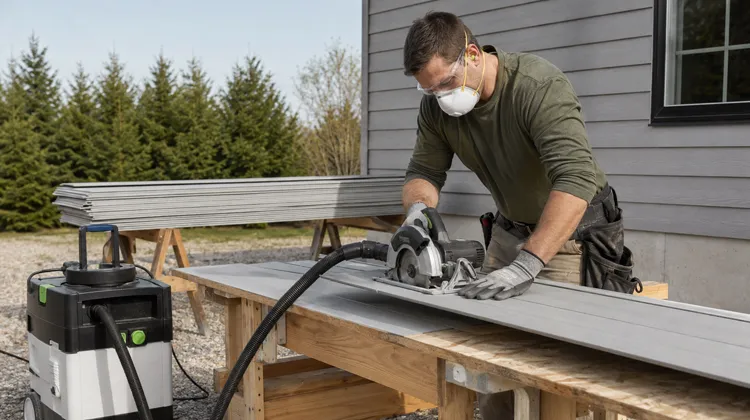
Store fiber cement boards in dry conditions and protect their edges from impact and prolonged water exposure. Use compatible fasteners and maintain the specified joint spacing and clearances during installation.
All penetrations, joints, terminations, windows, doors, and transitions should have appropriate flashing and water-management details. The long-term performance of a cladding system depends not only on the panel, but also on the substrate, ventilation cavity, fasteners, sealants, and drainage design.
Routine maintenance should include checking for coating damage, aging sealant, loose flashing, impact damage, moisture entry, and edge cracking. Small repairs made early are usually more economical than replacing boards after larger damage develops.
结论
Fiber cement is a durable cement-based composite material used for siding, façade panels, trim, and wet-area substrate boards. It combines the weather and moisture resistance of cement with fiber reinforcement that improves toughness and dimensional stability.
For any project, the decision should involve more than the panel price. The local environment, product application, complete installation system, dust-control measures during cutting, and future maintenance requirements all influence long-term performance.
常见问题解答
Is fiber cement the same as cement board?
Not exactly. Fiber cement is a cement-based material reinforced with fibers, which can improve toughness, dimensional stability, and workability. Different cement boards may have different compositions and intended uses.
Does fiber cement rot?
Fiber cement does not rot like wood and is not a food source for termites. However, standing water, improper installation, or severely damaged coatings can still cause issues at edges, joints, and fasteners.
Can fiber cement board be used in a bathroom?
Fiber cement substrate boards designed for wet-area use can be used in bathrooms. Choose a board specifically intended for interior wet areas and install it as part of a suitable waterproofing and tile system.
Can fiber cement be painted?
Many fiber cement products can be field painted. Confirm the condition of the board, primer requirements, edge treatment, and the manufacturer’s coating instructions before painting.


 Chinese
  English
  Russian
  Arabic
  Vietnamese
  Spanish
  French
  Portuguese
  Japanese