


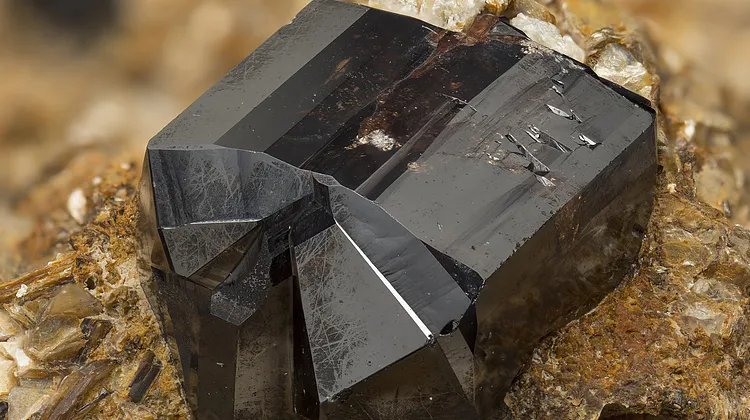
Cassiterite is the world’s primary source of tin and one of the most important minerals in modern metal manufacturing industries. As global demand for electronics, solder materials, renewable energy equipment, and industrial alloys continues increasing, efficient cassiterite processing has become more important than ever.
However, cassiterite ores are often complex and difficult to process because they may contain sulfide minerals, iron impurities, tungsten minerals, and fine-grained gangue materials. Recovering high-grade tin concentrate therefore requires a carefully designed beneficiation process that balances recovery efficiency, operating cost, and concentrate quality.
This guide explains the complete cassiterite processing flow, key beneficiation methods, important processing considerations, and the equipment commonly used in modern tin ore processing plants.
1. What Is Cassiterite?

Cassiterite is the most important tin-bearing mineral used for industrial tin production worldwide.
Its chemical composition is:
SnO2
In nature, cassiterite commonly appears in black, brown, dark brown, or reddish-brown colors and usually has a metallic or adamantine luster. One of its most important physical properties is its extremely high density compared with surrounding gangue minerals.
The specific gravity of cassiterite generally ranges between:
6.8−7.1
This density difference is the main reason why gravity separation remains one of the most effective methods for cassiterite recovery.
Cassiterite deposits are commonly associated with quartz, feldspar, sulfide minerals, tungsten minerals, and iron-bearing minerals. Because of these complicated mineral associations, cassiterite beneficiation plants often require combined processing technologies rather than relying on a single separation method.
Another important characteristic of cassiterite is its brittleness. During grinding operations, cassiterite particles can easily become excessively fine, creating tin slimes that are difficult to recover through traditional beneficiation equipment. For this reason, particle size control is one of the most critical factors in successful cassiterite processing.
2. Important Considerations for Cassiterite Processing
Efficient cassiterite beneficiation requires much more than simply installing crushing and separation equipment. The entire production process must be carefully designed according to ore characteristics, impurity distribution, liberation size, and final concentrate requirements.
A properly designed processing plant can significantly improve tin recovery while reducing unnecessary mineral losses and operating costs.
Ore Testing Before Plant Design
Before selecting equipment or building a cassiterite processing plant, detailed mineralogical testing is essential.
Different cassiterite deposits may vary greatly in ore hardness, gangue composition, sulfide content, magnetic impurity levels, and mineral liberation size. Without proper laboratory analysis, it is extremely difficult to determine the most effective beneficiation route.
Professional ore testing helps engineers evaluate:
- Tin grade distribution
- 矿石硬度
- Sulfide mineral content
- Iron impurity levels
- Optimal grinding fineness
- 合适的选矿技术
These results form the foundation for designing the entire processing system.
Skipping ore testing may lead to low concentrate quality, unstable recovery rates, excessive power consumption, and unnecessary equipment investment. In many mining projects, early-stage mineral testing directly determines long-term plant profitability.
Multi-Stage Crushing and Grinding
Cassiterite is highly brittle and sensitive to overgrinding.
If the ore is ground too aggressively, large quantities of ultra-fine tin particles may be generated. These fine particles are extremely difficult to recover through conventional gravity separation systems and may result in serious tin losses.
For this reason, modern cassiterite processing plants commonly adopt:
- Multi-stage crushing
- Stage grinding
- Stage beneficiation systems
Instead of reducing the ore to extremely fine particles in a single step, the ore is processed gradually to minimize slime generation and improve mineral liberation efficiency.
Proper grinding control not only improves recovery rates but also reduces unnecessary energy consumption during milling operations.
Combined Beneficiation Processes
Cassiterite ores are often associated with multiple impurity minerals that cannot be removed through a single beneficiation process.
Modern processing plants therefore commonly combine:
- Gravity separation
- 浮选分离
- 磁选
into one integrated beneficiation flow.
Each separation method targets different mineral characteristics. Gravity separation recovers high-density cassiterite particles, flotation improves fine-particle recovery and sulfide removal, while magnetic separation removes magnetic impurities such as iron and tungsten-bearing minerals.
This combined approach helps processing plants achieve both higher recovery rates and better concentrate purity.
Tailings Recovery and Utilization
In many traditional tin processing plants, tailings still contain valuable unrecovered tin particles.
Modern cassiterite beneficiation plants increasingly focus on tailings recovery technologies to maximize resource utilization and reduce mineral waste.
Reprocessing tailings can improve total tin recovery while reducing environmental pressure associated with mining waste disposal.
Tailings recovery has become especially important as global tin ore grades continue declining and mining companies seek to improve the economic value of existing resources.
Rational Reagent Usage
Flotation reagents play a critical role in cassiterite beneficiation efficiency.
However, excessive or improper reagent usage may negatively affect flotation stability, concentrate quality, and environmental performance.
Modern beneficiation plants increasingly prefer:
- High-efficiency flotation reagents
- Low-toxicity chemical systems
- Environmentally friendly reagent combinations
Proper reagent management helps improve separation efficiency while reducing operating costs and environmental impact.
3. A Complete Cassiterite Processing Line
A modern cassiterite processing plant usually includes six major beneficiation stages:
- Washing
- 粉碎
- Gravity separation
- 研磨
- 浮选分离
- 磁选
Each stage has a specific role in improving tin recovery and concentrate quality.
4. Washing Cassiterite

Some cassiterite ores contain large amounts of clay, mud, and sticky materials that may negatively affect downstream beneficiation efficiency.
If these impurities are not removed before crushing and separation, they can reduce screening performance, block processing equipment, and interfere with gravity separation operations.
The washing stage is therefore extremely important for high-clay cassiterite ores.
During this process, ore materials are cleaned to remove surface mud and fine impurities before entering the crushing system.
Commonly used washing equipment includes:
- Sand washers
- Spiral sand washing machines
Spiral sand washers are widely used because they provide stable washing performance while minimizing valuable mineral loss.
Effective ore washing improves downstream processing efficiency and helps maintain stable plant operation.
5. Crushing Cassiterite
After washing, cassiterite ore enters the crushing stage.
Modern cassiterite processing plants usually adopt a two-stage crushing system consisting of coarse crushing and fine crushing.
Primary crushing is commonly completed using jaw crushers. These machines can efficiently process large ore blocks while maintaining stable throughput.
After coarse crushing, the material enters secondary crushing systems that typically use cone crushers.
The purpose of secondary crushing is to further reduce ore particle size and prepare the material for gravity separation and grinding operations.
In most processing plants, the final crushed particle size is controlled below:
20 mm
Reasonable crushing design helps reduce grinding energy consumption while minimizing unnecessary overcrushing.
6. Gravity Separation of Cassiterite
Gravity separation is the most important beneficiation method for cassiterite recovery because cassiterite has much higher density than surrounding gangue minerals.
After crushing, the ore usually enters gravity separation equipment to recover coarse cassiterite concentrate before fine grinding begins.
One of the most commonly used gravity separation machines is the jig separator.
Jigging systems separate minerals according to density differences through pulsating water flow. Heavy cassiterite particles settle differently from lighter gangue minerals, allowing effective separation.
Gravity separation offers several major advantages:
- High recovery efficiency
- Low energy consumption
- Relatively simple operation
- Environmentally friendly processing
Coarse cassiterite particles can often be recovered efficiently during this stage, reducing unnecessary grinding and minimizing fine tin losses.
7. Grinding Cassiterite
After gravity separation, middlings and rough concentrates usually require additional grinding to achieve better mineral liberation.
The purpose of grinding is to separate remaining cassiterite particles from gangue minerals more completely.
常用研磨设备包括:
- 球磨机
- 棒材轧机
Because cassiterite is brittle and sensitive to overgrinding, grinding systems must be carefully controlled.
Many modern plants adopt stage grinding systems, allowing partially liberated cassiterite particles to be recovered early before unnecessary fine grinding occurs.
Proper grinding control directly affects flotation efficiency, concentrate grade, and total recovery performance.
8. Flotation Separation of Cassiterite
Flotation is mainly used for recovering fine cassiterite particles and removing associated sulfide minerals.
In many complex ores, gravity separation alone cannot effectively recover very fine tin particles or separate cassiterite from sulfide impurities.
During flotation, various chemical reagents are added to modify mineral surface properties and improve separation selectivity.
These reagents may include:
- 收藏家
- 镇静剂
- Regulators
The flotation process is especially effective for:
- Fine cassiterite particles
- Sulfide-associated tin ores
- Complex polymetallic ores
Modern flotation systems can significantly improve total tin recovery rates when properly integrated with gravity separation systems.
9. Magnetic Separation of Cassiterite
Some cassiterite ores contain magnetic minerals such as iron-bearing minerals, tungsten minerals, and titanium minerals.
Magnetic separation is therefore used to improve concentrate purity by removing magnetic impurities.
High-intensity magnetic separators are commonly used because they can effectively separate weak magnetic minerals from cassiterite concentrate.
In most processing plants, magnetic separation is used as a final purification stage after gravity separation and flotation.
This process helps improve concentrate grade and ensures the final tin concentrate meets smelting and industrial requirements.
10. Why Modern Cassiterite Plants Use Combined Beneficiation Systems
Modern cassiterite processing plants rarely rely on a single beneficiation method because ore compositions are becoming increasingly complex.
Instead, they combine:
- Washing
- 粉碎
- Gravity separation
- 研磨
- 浮选
- 磁选
into one integrated processing system.
Combined beneficiation technologies allow plants to improve recovery rates, reduce fine tin losses, adapt to different ore conditions, and maintain more stable concentrate quality.
As global tin ore grades continue declining, integrated beneficiation systems are becoming increasingly important for modern mining operations.
结论
Cassiterite beneficiation is a complex process that requires careful control of crushing, grinding, gravity separation, flotation, and magnetic separation systems.
Because cassiterite ores often contain fragile mineral structures and complicated impurities, successful processing depends on minimizing overgrinding while maximizing tin recovery efficiency.
Modern cassiterite processing plants are increasingly adopting integrated beneficiation technologies, intelligent control systems, and environmentally friendly processing methods to improve concentrate quality and long-term operational efficiency.


 Chinese
  English
  Russian
  Arabic
  Vietnamese
  Spanish
  French
  Portuguese
  Japanese