



Have you ever picked up a shiny rock and wondered whether it was real gold or just “fool’s gold”? Pyrite is the mineral most commonly mistaken for gold by beginners and collectors. In this guide, you’ll learn how to identify pyrite in 2 minutes, along with its history, chemical properties, industrial uses, and processing methods, so you can finally understand the truth behind “fool’s gold.”
1. Fool’s Gold Is Not Real Gold
Pyrite earned the nickname “fool’s gold” because it has deceived countless people throughout mining history. The mineral’s brassy yellow color, reflective metallic surface, and glittering crystals often make it appear similar to gold, especially when sunlight reflects off its surface.
However, despite the visual similarity, pyrite differs greatly from gold in several important ways:
Gold is a precious metal, while pyrite is an iron sulfide mineral
Gold is soft and malleable, while pyrite is hard and brittle
Gold occurs as irregular nuggets or flakes, while pyrite forms well-defined crystals
During early exploration periods in Europe and North America, inexperienced miners frequently believed they had discovered gold deposits when they were actually looking at pyrite. This misunderstanding contributed to the popular name “fool’s gold.”
In the early days of mineral exploration, prospectors often relied solely on visual inspection. Without modern testing tools, it was easy to mistake pyrite for gold-bearing ore.
Today, however, geologists and mineral collectors can quickly identify pyrite using simple mineral identification techniques, including hardness tests, streak tests, and density comparisons.
2. The True Face of Fool’s Gold
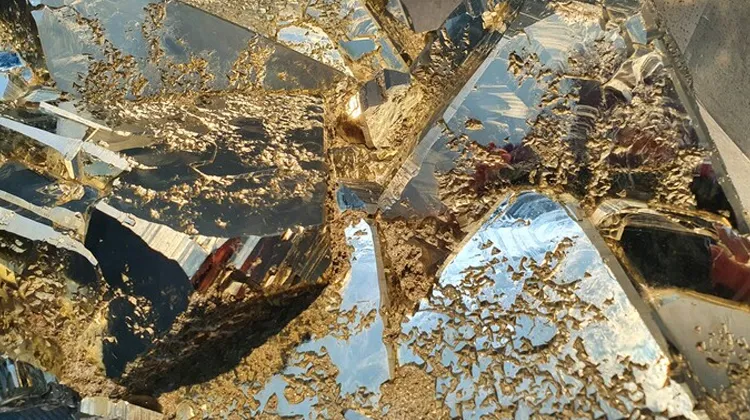
To properly understand fool’s gold, it is important to examine the scientific properties of pyrite.
Pyrite is an iron disulfide mineral with the chemical formula FeS₂. It is one of the most common sulfide minerals found in the Earth’s crust and occurs in many geological environments, including sedimentary rocks, hydrothermal veins, and metamorphic formations.
化学成分
Pyrite consists primarily of:
Iron (Fe): 46.67%
Sulfur (S): 53.33%
This chemical composition distinguishes pyrite from gold, which is a pure native metal element (Au).
Crystal Structure
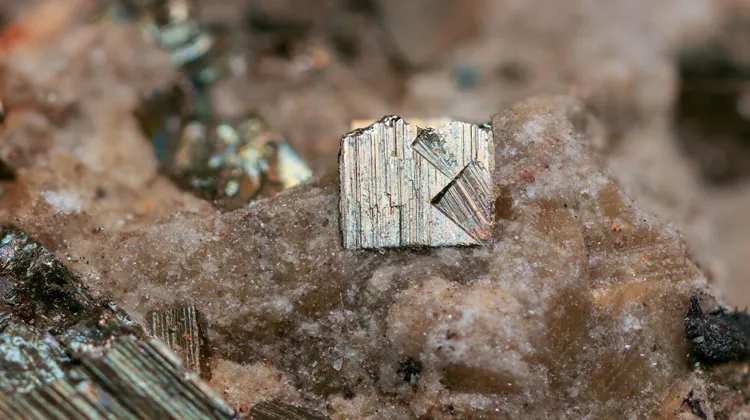
Pyrite is famous for its beautiful geometric crystals. It commonly forms:
Cubic crystals
Octahedral crystals
Pyritohedral crystals
These crystal shapes are one of the easiest visual indicators when identifying pyrite in the field.
硬度
Pyrite has a Mohs hardness of 6–6.5, meaning it is significantly harder than gold.
This hardness difference allows geologists to perform quick scratch tests to differentiate the two minerals.
密度
Pyrite has a density of approximately 4.9–5.1 g/cm³, which is much lower than gold’s density of 19.3 g/cm³.
This means that gold feels noticeably heavier than pyrite, even when both samples are the same size.
Brittleness
Unlike gold, which is extremely ductile and can be hammered into thin sheets, pyrite is brittle and fractures easily.
If struck with a hammer, pyrite will shatter into fragments, while gold will simply flatten.
3. Pyrite Gets Its Name from Greek

名称 pyrite 源自希腊语 “pyr,” meaning fire.
This name was given to the mineral because pyrite produces bright sparks when struck against steel or another hard surface. Ancient civilizations discovered that pyrite could be used as a fire-starting tool, making it an important mineral for survival and early technology.
Before the invention of modern lighters and matches, people used pyrite to ignite tinder and start fires. When struck with metal, pyrite generates sparks capable of lighting dry materials.
Because of this property, pyrite was widely used in:
Early fire-making tools
Flintlock firearms
Traditional fire-starting kits
This historical use explains why pyrite was valued long before modern mining techniques emerged.
4. The Historical Stories of Pyrite
Throughout history, pyrite has played an interesting role in mining exploration.
One of the most famous stories involves 17th-century English explorer John Smith. According to historical accounts, Smith once shipped a cargo of “golden rocks” back to London, believing they contained valuable gold ore.
However, when the rocks were analyzed, they turned out to be nothing more than common pyrite, which had very little economic value at the time.
Stories like this were not uncommon during the early days of mineral exploration. Prospectors frequently misidentified minerals because they lacked proper geological knowledge.
During various gold rush periods, including those in North America and Australia, many inexperienced miners believed they had discovered gold when they had actually found pyrite.
These historical mistakes helped cement pyrite’s reputation as the classic “fool’s gold.”
Today, however, mineral identification techniques make it easy to avoid such confusion.
5. How to Tell Gold from Pyrite

Distinguishing gold from pyrite is relatively simple when using a few basic mineral tests.
Density Test
Gold is one of the densest natural metals, while pyrite is significantly lighter.
Gold density: ~19.3 g/cm³
Pyrite density: ~5 g/cm³
This means that a piece of gold will feel much heavier than pyrite of the same size.
Hardness Test
Gold is a very soft metal, with a Mohs hardness of around 3.
Pyrite, by contrast, has a hardness of 6–6.5, meaning it can scratch glass and resist scratching from most coins.
Color Comparison
Although both minerals appear yellow, their colors differ subtly.
Gold typically shows a rich yellow color with slight reddish tones, while pyrite often appears brassy yellow with a greenish tint.
Streak Test
这 streak test is one of the most reliable field identification methods.
When scratched across an unglazed porcelain plate:
Gold leaves a yellow streak
Pyrite leaves a greenish-black streak
Crystal Shape
Gold typically forms irregular nuggets, flakes, or grains, while pyrite commonly forms cubic crystals with sharp edges.
Using these simple tests, geologists and hobbyists can quickly identify fool’s gold in the field.
6. Is Pyrite Worth Any Money?

Although pyrite is often dismissed as fool’s gold, it still has several important economic and industrial uses.
Gold-Bearing Pyrite
Some pyrite deposits actually contain microscopic particles of gold, known as invisible gold.
In these cases, pyrite can be processed in gold mines to recover valuable precious metals.
Industrial Sulfur Production
Pyrite has historically been used as a major source of sulfur, which is essential for producing:
Sulfuric acid
Fertilizers
Chemical products
Paper manufacturing materials
Glass and Pigment Industry
Ground pyrite can be used as a coloring agent in glass manufacturing and other industrial materials.
Jewelry and Decorative Use
Polished pyrite crystals are also used in decorative jewelry, mineral collections, and ornamental stones.
Large, well-formed pyrite crystals can be quite valuable among mineral collectors.
7. Can Iron Be Extracted from Pyrite?
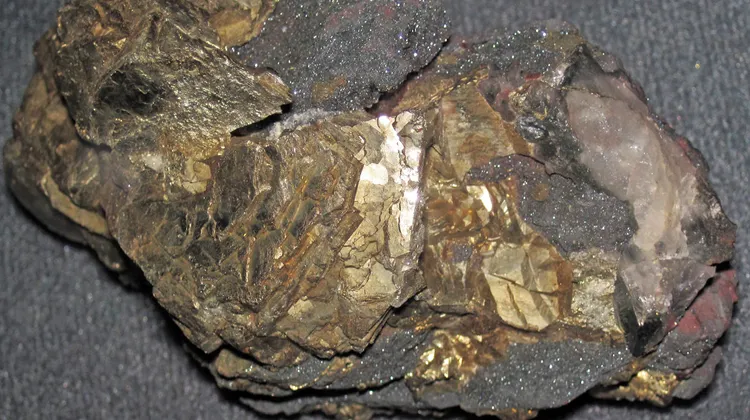
Although pyrite contains a large percentage of iron, it is rarely used as an iron ore.
This is because pyrite also contains large amounts of sulfur, which can produce sulfur dioxide pollution during smelting.
Instead, the iron and steel industry relies primarily on:
Hematite (Fe₂O₃)
Magnetite (Fe₃O₄)
These minerals provide higher iron content and fewer environmental complications.
As a result, pyrite is typically processed for sulfur recovery rather than iron production.
8. How Is Pyrite Processed?
Modern mining operations use several mineral processing techniques to separate pyrite from surrounding rock.
重力分离
Because pyrite is relatively dense, gravity separation methods are commonly used.
典型设备包括:
螺旋式浓缩器
摇晃桌子
Jig separators
These machines exploit the density difference between pyrite and waste rock.
浮选
For fine-grained pyrite ores, flotation is the most effective method.
Flotation uses chemical reagents and air bubbles to selectively separate pyrite particles from other minerals.
This technique is widely used in:
Sulfur recovery plants
Gold processing operations
Sulfide ore beneficiation
Combining gravity separation and flotation can significantly improve pyrite recovery efficiency.
9. Quick Tips to Identify Pyrite in 2 Minutes
If you encounter a shiny yellow mineral in the field, use these quick checks:
1️⃣ Check the weight — gold feels much heavier than pyrite.
2️⃣ Examine the crystal shape — pyrite often forms cubes.
3️⃣ Perform a streak test using porcelain.
4️⃣ Test the hardness by scratching the surface.
5️⃣ Observe the color tone carefully.
With these simple methods, even beginners can identify fool’s gold quickly and confidently.
10. 结论
Pyrite is not real gold, but it has scientific, historical, and industrial value. By understanding its chemical composition, physical properties, and quick identification techniques, you can:
Avoid being fooled by fool’s gold
Make accurate decisions in mineral collecting or mining
Recognize its industrial and decorative potential


 Chinese
  English
  Russian
  Arabic
  Vietnamese
  Spanish
  French
  Portuguese
  Japanese