


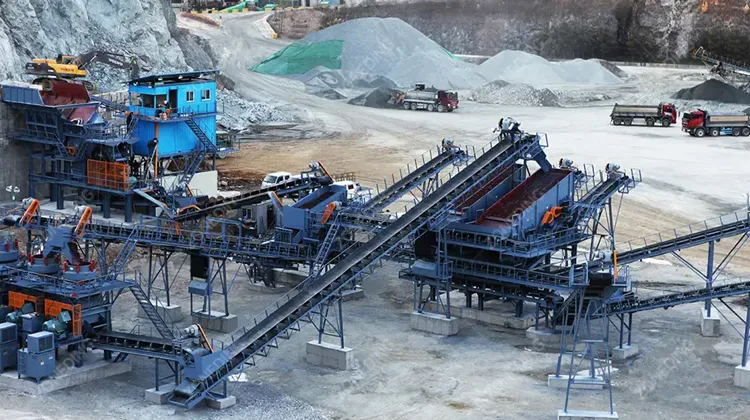
Granite is one of the most important hard rock materials used in mining, construction, aggregate production, highways, railways, and cement manufacturing. Because of its high compressive strength, durability, and resistance to weathering, granite is widely used in concrete production, road construction, railway ballast, and high-grade infrastructure projects.
However, although granite offers excellent structural performance, it is also one of the most challenging materials to process. Compared with softer rocks such as limestone, granite is significantly harder and far more abrasive. If the crushing equipment is not properly selected, the production line may suffer from excessive wear, unstable output, high maintenance costs, and frequent downtime.
For this reason, building an efficient and reliable granite crusher solution has become increasingly important for mining companies, aggregate producers, and cement plant operators.
This article explains the characteristics of granite, recommended crushing equipment, production processes, plant configurations, and key considerations for selecting the right granite crushing system.
Understanding the Characteristics of Granite
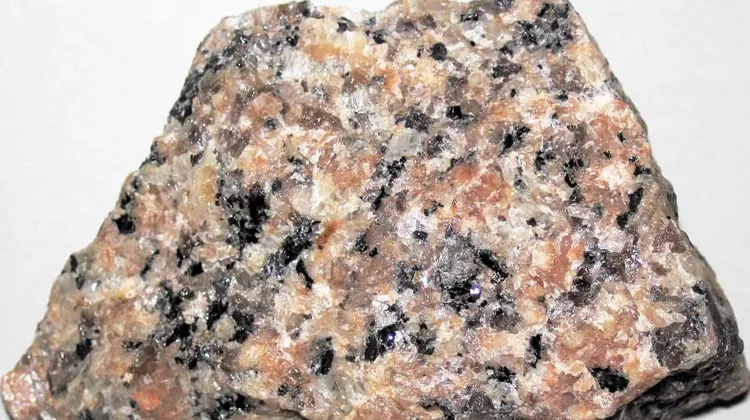
Before selecting crushing equipment, it is essential to understand the physical characteristics of granite, because these factors directly influence equipment performance, wear-part lifespan, and long-term operating costs.
Why Is Granite Difficult to Crush?
Granite is classified as a hard rock material with a Mohs hardness of approximately 6 to 7. Compared with medium-hard or soft rocks, granite requires much stronger crushing force to achieve efficient size reduction.
In many aggregate plants, operators notice that ordinary crushing equipment experiences several problems when processing granite, including:
- Rapid wear of crusher components
- Increased replacement frequency of wear parts
- Reduced crushing efficiency
- Higher power consumption
- Inconsistent aggregate shape
In large-scale mining operations, crushers often run continuously for long periods under heavy loads. If the equipment does not provide sufficient durability and wear resistance, production interruptions may occur frequently, which can significantly reduce overall profitability.
This is why selecting a professional granite crusher machine is critical for hard rock crushing applications.
How Granite Composition Affects Equipment Lifespan
Granite mainly consists of quartz, feldspar, and mica. Among these minerals, quartz has extremely high hardness and strong abrasiveness.
During the crushing process, quartz continuously impacts and rubs against internal crusher components, accelerating wear on:
- Jaw plates
- Liners
- Rotor components
- 轴承
As a result, many ordinary crushers have relatively short service life when processing granite.
Professional hard rock crushing equipment usually uses:
- High-manganese steel
- High-chromium alloy materials
- Wear-resistant composite liners
- Hydraulic protection systems
to improve durability and reduce maintenance frequency.
In large mining projects, the lifespan of wear parts directly affects long-term operating costs. Although premium crushing equipment may require higher initial investment, it often provides much better economic performance over time.
Why Efficient Granite Crushing Matters

As global infrastructure development continues to grow, the demand for high-quality construction aggregates is increasing rapidly. Modern highway, railway, bridge, and commercial building projects require aggregates with strict specifications for shape, grading, and strength.
If aggregate quality is unstable, it may directly affect concrete performance and overall construction quality. Because of this, more companies are paying attention to the overall efficiency of crushing plants rather than focusing only on equipment purchase prices.
An efficient granite crushing plant can provide several important benefits.
First, properly configured crushing systems significantly improve production efficiency. Stable and continuous crushing operations allow producers to process larger volumes of material within the same time period.
Second, advanced crushing equipment can reduce energy consumption. In large aggregate plants, electricity costs represent a major part of operating expenses, so energy-efficient equipment helps reduce long-term production costs.
In addition, high-quality crushers improve aggregate shape and particle consistency. In premium aggregate and manufactured sand production, cubical particle shape directly increases product value and market competitiveness.
For modern mining companies, efficient rock crushing solutions are no longer just mechanical equipment — they are a key factor in overall business profitability.
Recommended Granite Crushers for Different Crushing Stages
Primary Crushing Stage: Why Jaw Crushers Remain the Preferred Choice
In granite crushing plants, jaw crushers are typically used during the primary crushing stage.
Because granite feed materials are large and extremely hard, primary crushers must provide:
- Large feed openings
- Powerful crushing force
- Heavy-duty structural design
- Excellent impact resistance
Jaw crushers use compressive crushing principles, where the movable jaw periodically compresses material against the fixed jaw to reduce large rocks into smaller sizes.
One of the biggest advantages of jaw crushers is their simple structure and reliable operation. They can handle hard rock applications continuously for long operating hours without major performance fluctuations.
In many mining projects, jaw crushers operate for more than ten hours per day, making durability and operational stability extremely important.
Modern hydraulic jaw crushers also allow operators to adjust discharge settings more efficiently, improving production flexibility and reducing maintenance complexity.
Secondary and Tertiary Crushing: Why Cone Crushers Are Better for Granite
After primary crushing, granite materials require secondary and tertiary size reduction.
For this stage, cone crushers are widely considered the most suitable equipment for hard rock processing.
Unlike traditional impact crushers, cone crushers use the lamination crushing principle. In simple terms, materials inside the crushing chamber are compressed between multiple layers of rocks, producing more uniform crushing results.
This crushing method offers several major advantages.
First, lamination crushing reduces wear on crusher components. Because rocks interact with each other during crushing, direct impact on metal parts becomes lower.
Second, cone crushers provide much higher efficiency when processing hard and abrasive materials such as granite.
In addition, cone crushers produce better aggregate shape, which is extremely important for high-grade construction applications.
Many customers often compare:
圆锥破碎机 vs 冲击式破碎机
Although impact crushers can produce attractive particle shapes for soft materials, their blow bars wear out very quickly when processing granite.
As a result, maintenance costs increase significantly, and production interruptions become more frequent.
Compared with impact crushers, cone crushers usually provide better long-term economic performance for granite crushing plants.
This is why cone crushers have become core equipment in modern aggregate production lines.
Sand Making Stage: How VSI Crushers Improve Manufactured Sand Quality
As natural river sand resources continue to decline, manufactured sand production is becoming increasingly important worldwide.
In modern construction projects, high-quality manufactured sand plays a critical role in concrete performance.
VSI crushers use high-speed centrifugal impact technology to reshape and finely crush stone materials.
Compared with traditional sand-making equipment, VSI crushers improve:
- Particle shape
- Sand grading
- Fine material consistency
- Flakiness reduction
In high-grade concrete production, more rounded and uniform sand particles improve both workability and strength.
For this reason, VSI crushers are now considered essential equipment in modern sand making plants.
Typical Granite Crushing Plant Configuration
A complete granite crushing plant involves much more than just crushers.
Modern crushing systems usually include multiple supporting machines to ensure stable and efficient production.
For example, vibrating feeders distribute materials evenly into the crushers, preventing unstable feeding conditions that may reduce production efficiency.
Vibrating screens classify aggregates into different sizes to meet various market requirements.
Belt conveyors connect the entire production line and improve overall automation efficiency.
In addition, environmental protection has become increasingly important in mining operations. Therefore, dust collection systems and noise reduction technologies are now essential components in modern aggregate crushing plants.
With proper equipment configuration, producers can improve productivity while also meeting environmental regulations.
How to Choose the Right Granite Crusher
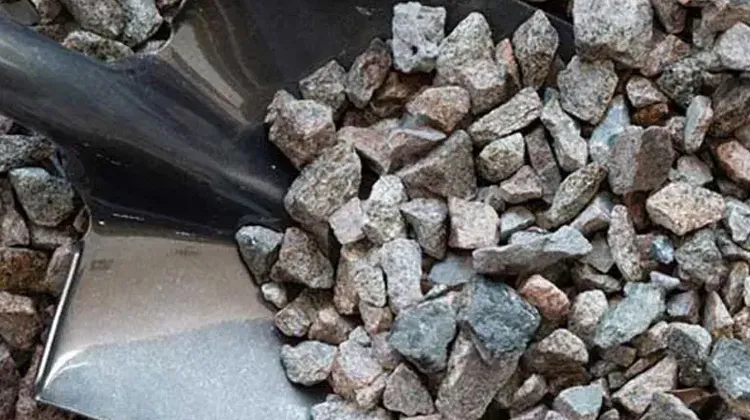
Crusher selection depends on several important factors, including:
- Production capacity
- Rock hardness
- Final product specifications
- Site conditions
- 能源消耗
- Maintenance requirements
Large mining operations usually focus more on stability and automation because unexpected downtime may cause major economic losses.
Meanwhile, smaller aggregate plants may prioritize investment cost and maintenance convenience.
For this reason, the best granite crusher solution is not necessarily the cheapest equipment, but rather a complete system designed for long-term stable production.
结论
As global infrastructure development continues to expand, the demand for high-quality aggregates and manufactured sand will continue growing.
For highly abrasive and hard materials such as granite, building a stable, efficient, and cost-effective crushing plant is essential for improving business competitiveness.
Based on extensive industry experience, the combination of:
Jaw Crusher + Cone Crusher
is widely recognized as the most reliable and cost-effective solution for granite crushing applications.
In this configuration:
- Jaw crushers perform primary crushing
- Cone crushers handle secondary and tertiary crushing
- VSI crushers produce premium manufactured sand
This solution not only improves productivity but also reduces maintenance costs and delivers high-quality aggregate products for mining, construction, and cement industries.
As automation and environmental technologies continue advancing, efficient granite crusher solutions will play an increasingly important role in the future of the mining and aggregate industries.
常问问题
1. How often should a granite crusher be inspected?
To keep the crushing plant running efficiently, granite crushers should be checked regularly, including wear parts, lubrication systems, and bearing conditions. Many mining operations perform daily inspections and scheduled maintenance to reduce unexpected downtime.
2. What is the difference between stationary and mobile granite crushing plants?
Stationary crushing plants are more suitable for large-scale and long-term mining projects because they offer higher capacity and more stable performance. Mobile crushing plants are better for temporary projects that require flexible transportation and faster installation.
3. How can dust be reduced in a granite crushing plant?
Dust control is important in granite crushing operations. Modern crushing plants often use dust collection systems, water spraying equipment, and enclosed conveyors to reduce dust pollution and improve the working environment.


 Chinese
  English
  Russian
  Arabic
  Vietnamese
  Spanish
  French
  Portuguese
  Japanese