


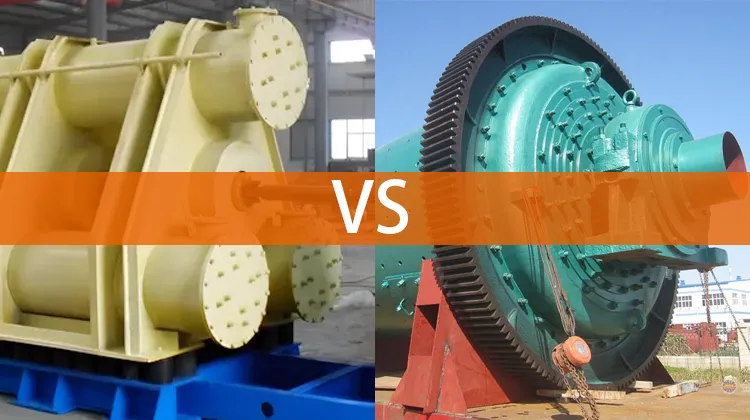
1. Introduction: Why Fine Grinding Matters in Modern Industry
In today’s industrial landscape, fine grinding is no longer just a size reduction process—it is a critical step that directly influences product quality, process efficiency, and overall production cost.
By reducing particle size to a finer scale, manufacturers can:
- Increase the specific surface area of materials
- Enhance chemical reactivity in downstream processes
- Improve solubility, dispersion, and product consistency
Because of these advantages, fine grinding is widely applied in industries such as cement production, mineral processing, advanced ceramics, battery materials, and chemical manufacturing.
When it comes to selecting grinding equipment, two technologies are frequently compared: the vibration milling machine and the 球磨机.
Although both are widely used in industrial grinding applications, their working principles, performance characteristics, and ideal use cases differ significantly. Understanding these differences is essential for making an informed investment decision.
2. Understanding the Working Principles of the Two Machines
Vibration Milling Machine
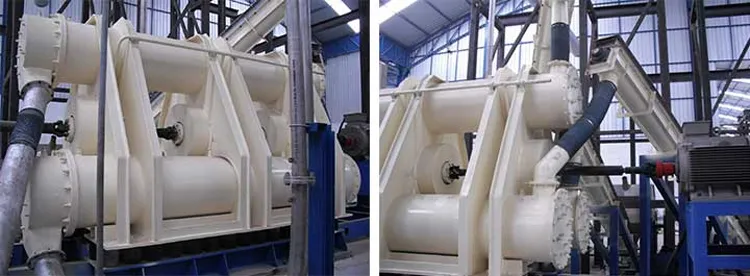
A vibration milling machine operates by generating high-frequency oscillations within a grinding chamber. These vibrations cause the grinding media (such as steel or ceramic balls) to move rapidly and collide with the material from multiple directions.
Unlike conventional grinding systems, the vibration mill combines impact force and friction force simultaneously, resulting in a much higher number of effective collisions per unit time.
This mechanism makes it particularly suitable for applications requiring:
- Ultra fine particle size
- Uniform particle distribution
- Rapid grinding cycles
Ball Mill Machine
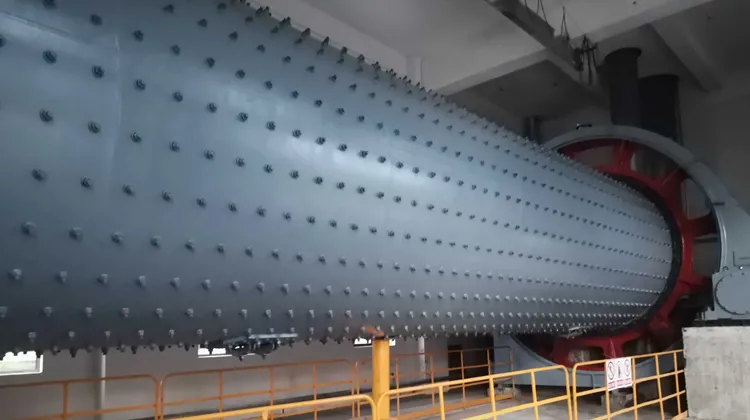
A ball mill, on the other hand, relies on a rotating cylindrical shell to perform grinding. As the cylinder rotates, the grinding media is lifted and then cascades or tumbles down, impacting the material below.
This process creates a continuous grinding environment characterized by:
- Repetitive impact and rolling motion
- Stable operation over long production cycles
- Scalability for large industrial applications
While the ball mill may not achieve the same level of fineness as a vibration mill, it remains one of the most reliable and widely used grinding solutions in heavy industries.
3. Why a Comparative Analysis is Essential for Equipment Selection
In real-world production scenarios, there is no “one-size-fits-all” solution. Choosing between a vibration mill and a ball mill requires careful evaluation of multiple factors.
A poorly matched grinding system can result in:
- Excessive energy consumption
- Inconsistent particle size distribution
- Increased maintenance frequency
- Higher long-term operational costs
By comparing these two machines in detail, manufacturers can better align their equipment choice with specific production goals, whether that means maximizing efficiency, reducing costs, or achieving ultra-fine particle sizes.
4. Vibration Milling Machine: Performance, Advantages, and Limitations
One of the main reasons vibration milling machines are gaining popularity is their ability to deliver high grinding efficiency within a relatively short processing time.
主要优势包括:
- Significantly higher grinding efficiency compared to traditional mills
- Narrow and more controllable particle size distribution
- Flexibility for both dry and wet grinding processes
- High throughput in compact equipment design
However, these advantages come with certain trade-offs.
Potential limitations:
- Higher noise levels during operation
- Increased wear due to high-frequency vibration
- Faster consumption of grinding media
- Relatively higher maintenance requirements
Because of these characteristics, vibration mills are commonly used in industries that demand precision, such as advanced ceramics, pharmaceutical materials, pigments, and battery components.
5. Ball Mill Machine: Strengths and Practical Considerations
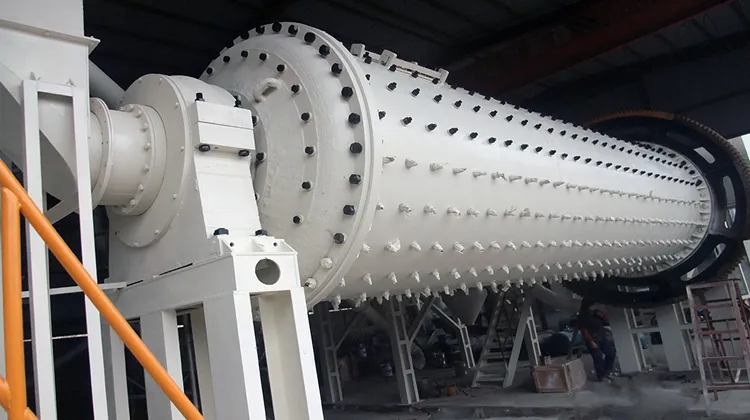
The ball mill continues to be a cornerstone in industrial grinding due to its simplicity and proven reliability.
Its main strengths include:
- Straightforward structure and easy operation
- Lower maintenance complexity compared to high-energy mills
- Strong adaptability to a wide range of materials
- Capability to handle large-scale production
At the same time, it is important to recognize its limitations.
Challenges associated with ball mills:
- Lower energy efficiency compared to modern grinding technologies
- Longer grinding time to achieve fine particle sizes
- Heat generation during operation, which may affect sensitive materials
- Less precise control over ultra-fine particle distribution
Despite these drawbacks, ball mills remain the preferred choice in applications such as cement grinding, mining operations, and bulk material processing, where stability and scalability are more important than extreme fineness.
6. Head-to-Head Comparison: Key Factors That Influence Decision-Making
| 范围 | Vibration Milling Machine | Ball Mill Machine |
|---|---|---|
| 研磨效率 | High (2–5× higher in many cases) | 缓和 |
| Final Particle Size | Ultra-fine (<10 μm) | 20–200 μm |
| 粒度分布 | Narrow and uniform | Wider distribution |
| 能源消耗 | Lower per ton | Higher overall |
| Equipment Cost | Higher initial investment | Lower initial cost |
| Maintenance Cost | Higher (due to wear) | 降低 |
| Noise Level | 更高 | 降低 |
| Throughput | High in compact design | High in large-scale systems |
| Application Focus | High-value fine materials | Bulk industrial materials |
When comparing a vibration milling machine and a ball mill machine, several key factors should be evaluated together rather than in isolation:
- Material characteristics: hardness, brittleness, and moisture content
- Target particle size: whether ultra-fine or standard fine grinding is required
- Processing time: speed versus consistency
- Energy consumption: both per ton and total operational cost
一般来说:
- Vibration mills perform better in ultra-fine grinding and high-efficiency scenarios
- Ball mills perform better in large-scale, continuous, and cost-sensitive operations
7. How to Choose the Right Grinding Equipment for Your Application
Selecting the right grinding solution depends on aligning machine capabilities with production requirements.
You should consider:
- The physical and chemical properties of the material
- The desired fineness and particle distribution
- 生产能力要求
- Energy consumption targets
- Maintenance capabilities and budget
Practical guidance:
- If your goal is to produce ultra-fine powder with high added value, a vibration milling machine is typically the better choice.
- 如果你的首要任务是 stable operation, lower investment, and large-scale throughput, a ball mill machine may be more suitable.
8. Conclusion: Choosing the Right Technology for Long-Term Efficiency
Both vibration milling machines and ball mill machines play important roles in industrial grinding.
- Vibration mills offer superior performance in ultra-fine grinding and energy efficiency
- Ball mills provide unmatched reliability for large-scale and continuous operations
As industries continue to move toward higher precision, energy efficiency, and advanced material processing, vibration milling technology is expected to gain increasing attention.
However, the best choice ultimately depends on your specific production goals, material characteristics, and long-term operational strategy.
Frequently Asked Questions About Fine Grinding Equipment
1. How long does it typically take to achieve fine grinding results?
The grinding time depends on several factors, including material hardness, initial particle size, and the desired fineness. In general, high-energy systems can significantly reduce processing time, while conventional grinding setups may require longer operation cycles. Optimizing parameters such as media size and feed rate can also improve efficiency.
2. What is the typical lifespan of grinding media in industrial mills?
Grinding media lifespan varies based on material type, operating conditions, and mill design. In high-intensity grinding environments, media tends to wear faster due to frequent collisions. Regular monitoring and timely replacement are essential to maintain consistent product quality and avoid contamination.
3. How can I reduce contamination during the grinding process?
To minimize contamination, it is important to select appropriate grinding media materials (such as ceramic or high-purity alloys) and ensure proper lining of the grinding chamber. Additionally, controlling moisture, feed uniformity, and cleaning cycles can help maintain product purity, especially in sensitive industries.
4. What are the common mistakes when selecting grinding equipment?
Some common mistakes include:
- Focusing only on initial equipment cost rather than total lifecycle cost
- Ignoring material characteristics such as hardness or abrasiveness
- Underestimating maintenance requirements
- Choosing equipment without considering future capacity expansion
Avoiding these issues can significantly improve long-term performance and ROI.
5. Can grinding systems be customized for specific applications?
Yes, most industrial grinding solutions can be customized based on specific process requirements. Customization may include chamber design, liner materials, automation systems, and integration with upstream and downstream equipment. Tailored solutions often lead to better efficiency and product consistency.
6. How does temperature affect the grinding process?
Temperature can have a significant impact on grinding performance. Excessive heat may alter material properties, reduce efficiency, or even cause agglomeration in fine powders. In some cases, cooling systems or controlled environments are used to maintain stable processing conditions.
7. What role does feed size play in grinding efficiency?
Feed size is a critical factor in determining grinding efficiency. Smaller and more uniform feed materials generally result in faster and more consistent grinding. Pre-crushing or pre-processing steps are often recommended to improve overall system performance.
8. Is automation important in modern grinding systems?
Yes, automation plays an increasingly important role in modern grinding operations. Automated systems can help control process parameters, reduce human error, improve consistency, and optimize energy consumption. This is especially valuable in large-scale or high-precision production environments.
9. How do I evaluate the total cost of ownership for grinding equipment?
The total cost of ownership includes not only the initial purchase price but also:
- 能源消耗
- Maintenance and spare parts
- Downtime and productivity loss
- Labor and operational costs
A comprehensive evaluation helps ensure better long-term investment decisions.
10. What are the future trends in fine grinding technology?
Emerging trends include:
- Increased focus on energy efficiency
- Development of ultra-fine and nano-scale grinding solutions
- Integration of intelligent control systems
- Greater demand for environmentally friendly processing
These trends are shaping the next generation of industrial grinding equipment.


 Chinese
  English
  Russian
  Arabic
  Vietnamese
  Spanish
  French
  Portuguese
  Japanese