


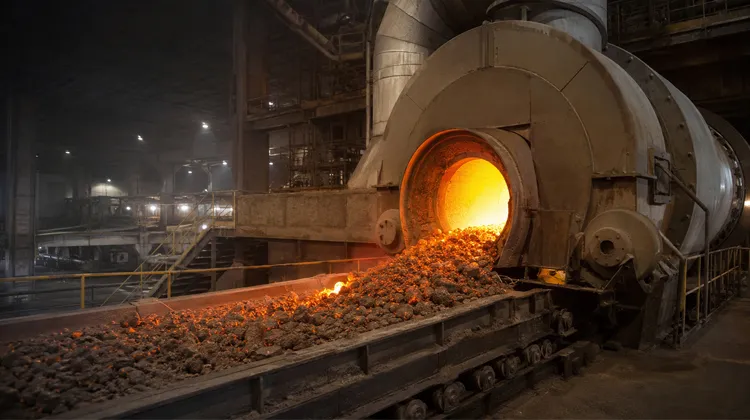
Cement manufacturing is a continuous process that includes raw material proportioning, raw meal grinding, clinker burning, clinker cooling, cement grinding, and finished product handling. A disturbance at any stage can affect clinker quality, cement strength, setting time, soundness, energy consumption, and plant output.
Understanding common cement production defects helps producers respond before a minor process deviation becomes a quality claim, excessive fuel use, unplanned shutdown, or equipment problem. This article explains the most frequent clinker and cement quality defects, their likely causes, and practical ways to control them.
1. High Free Lime in Clinker
Free lime, also called free CaO, is one of the most important indicators of clinker burning quality. High free lime means that part of the calcium oxide has not fully reacted with silica, alumina, and iron oxide to form stable clinker minerals.
When excessive free lime remains in clinker, cement soundness may be affected. The unreacted lime can hydrate after cement hardens, causing delayed expansion. In serious cases, this may contribute to cracking or surface defects in mortar and concrete.
Typical causes include unstable raw meal chemistry, a high lime saturation factor, insufficient raw meal fineness, inadequate burning-zone temperature, short residence time in the kiln, or unstable combustion and airflow. The correct response is not simply to raise kiln temperature. Operators should review raw meal composition, kiln feed rate, kiln speed, fuel combustion, and burning-zone conditions together.
2. Underburned Clinker
Underburned clinker is produced when the material does not receive sufficient or uniform heat in the sintering zone. It may appear light in color, porous, poorly nodulized, or chemically incomplete. High free lime is often associated with underburning.
This clinker quality problem can reduce cement strength and create instability during cement grinding. Common reasons include poor flame development, inconsistent fuel calorific value, inadequate secondary-air temperature, low calcination efficiency, excessive kiln feed fluctuations, or unstable kiln draft.
Plants should monitor flame shape, fuel fineness, kiln inlet oxygen, calciner performance, clinker mineralogy, and feed consistency. Stable kiln operation and balanced combustion control are usually more effective than aggressive temperature changes.
3. Overburned Clinker and Poor Grindability
Overburning occurs when clinker remains under excessive heat or stays too long in the burning zone. Overburned clinker is often darker, denser, and harder than normal clinker. Its mineral crystals can grow too large, reducing clinker reactivity.
Although overburned clinker may appear fully burned, it can be difficult to grind. This increases cement mill power consumption and may reduce strength development even when the cement reaches the target fineness.
High burning-zone temperature, low kiln speed, low feed rate, an excessively long flame, and poor burner adjustment are common causes. The goal should be to achieve complete burning without overheating the clinker. Stable thermal conditions and appropriate kiln loading are essential for clinker quality and energy efficiency.
4. Uneven Clinker Nodulization
Well-produced clinker should have relatively consistent nodules and a stable mineral composition. When clinker contains excessive dust, many oversized nodules, or widely varying particle sizes, cooling and grinding performance can suffer.
Poor nodulization may result from weak raw meal homogenization, kiln feed fluctuations, unstable material movement, uneven heat distribution, or unsuitable liquid-phase conditions inside the kiln. Excessive fine clinker can increase dust losses, while oversized clinker raises crushing load and makes cement mill feeding less stable.
Improvement starts with better raw material preblending and raw meal homogenization. Plants should also maintain stable kiln feed chemistry, control burning conditions, and inspect the burner, clinker cooler, and conveying equipment regularly.
5. Kiln Rings, Abnormal Coating, and Material Build-Up
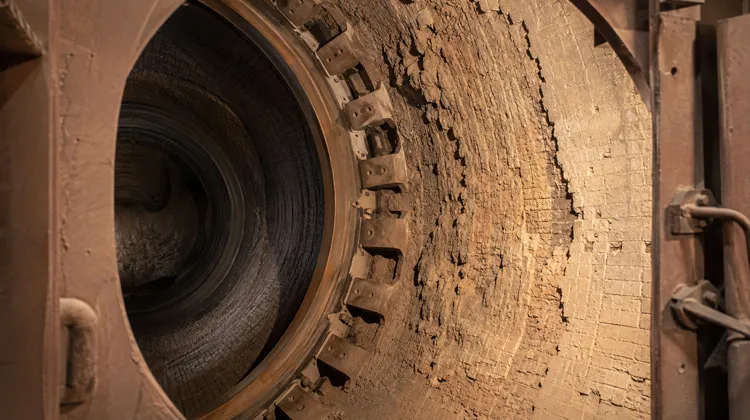
A stable kiln coating protects refractory lining and supports a consistent burning zone. However, excessive kiln rings, hard coatings, and material build-up can restrict material flow, reduce kiln output, and eventually cause a shutdown.
These problems are often related to alkali, sulfur, and chlorine cycles in the pyroprocessing system. They can also be influenced by coal ash chemistry, localized overheating, reducing conditions, poor airflow, and burner settings. Build-up in the preheater, calciner, riser duct, and kiln inlet can develop for similar reasons.
Mechanical cleaning may remove the immediate blockage, but it does not solve the underlying cause. A long-term solution requires analysis of raw materials and fuel, volatile cycles, combustion conditions, temperature profile, and, where needed, bypass operation or process adjustments.
6. Poor Clinker Cooling Efficiency

After leaving the 回转窑, clinker must be cooled quickly and evenly. Efficient clinker cooling recovers heat for the process and helps preserve clinker mineral reactivity.
If clinker cooling is insufficient, the clinker discharge temperature remains high. This can affect mineral properties and increase the thermal load on clinker conveyors, storage systems, and cement grinding equipment.
低的 熟料冷却器 efficiency may be caused by worn grate plates, uneven air distribution, an unsuitable clinker bed depth, air leakage, grate misalignment, red-hot clinker entering the cooler, or major variation in clinker size. Regular inspection of grate plates, air chambers, fans, seals, and bed-depth control helps maintain effective cooling.
7. Low Cement Strength
Low cement strength is one of the most serious cement quality problems because it directly affects customer confidence and concrete performance. It may appear as low 3-day strength, poor 28-day strength, or significant variation between production batches.
The cause is not always in the cement mill. Unstable clinker mineral composition, underburned clinker, incorrect gypsum addition, low-activity supplementary materials, insufficient cement fineness, poor separator efficiency, and moisture exposure during storage can all reduce strength.
A proper investigation should include clinker quality, SO₃ content, Blaine fineness, residue, gypsum and additive dosage, mill ventilation, separator performance, and storage conditions. For blended cement, the activity and consistency of fly ash, slag, limestone, or other supplementary materials must also be verified.
8. Abnormal Setting Time, False Set, and Flash Set
Cement setting time is critical for concrete workability and construction scheduling. Cement that sets too quickly gives contractors less working time, while cement that sets too slowly can delay project progress.
False set is a temporary and reversible stiffening of cement paste. It can often be corrected by further mixing without adding water. Flash set is rapid, irreversible stiffening and is a more serious issue.
These defects are commonly associated with gypsum quality, gypsum dosage, clinker aluminate content, cement mill temperature, and storage conditions. High cement grinding temperature can dehydrate gypsum and form hemihydrate or anhydrite, increasing the risk of false set.
To control setting behavior, producers should maintain consistent gypsum quality and addition rates, prevent excessive mill temperatures, and verify cement performance through regular laboratory testing.
9. Poor Cement Soundness
Poor cement soundness means that cement may expand abnormally after hardening. High free lime is a major cause, but excessive magnesium oxide, unstable raw material chemistry, and insufficient burning control may also contribute.
Some soundness problems may not be obvious immediately after production, yet they can create serious risks in finished concrete. Cement producers should closely control free CaO in clinker, MgO in raw materials and clinker, soundness test results, and long-term quality trends.
How to Prevent Cement Manufacturing Defects
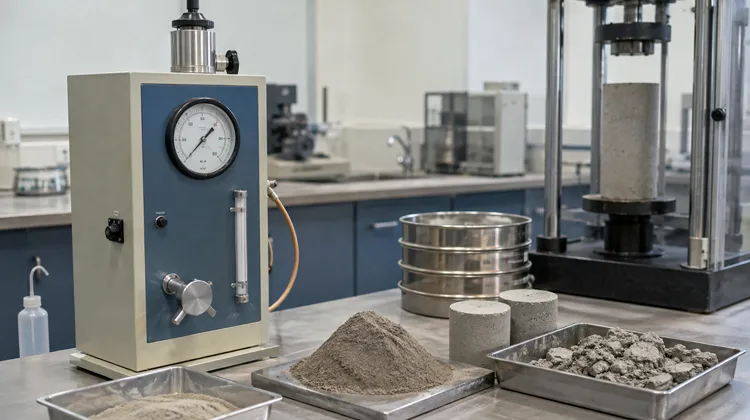
Preventing defects in cement production requires a coordinated control system rather than a single operational adjustment.
Raw materials, fuels, gypsum, and supplementary cementitious materials should be monitored for consistent quality. Online analyzers, laboratory testing, and process automation can help identify changes in raw meal chemistry, kiln conditions, clinker quality, and cement performance early. Reliable operation of the rotary kiln, preheater, calciner, clinker cooler, cement mill, separator, and conveying equipment is equally important.
When a quality problem occurs repeatedly, plant teams should analyze laboratory results together with process data and equipment operating records. Identifying the exact source of the deviation prevents repeated adjustments that may create larger instability elsewhere in the production line.
结论
Common defects in cement production are rarely isolated events. Clinker quality variation, unstable kiln conditions, poor cooling performance, and inconsistent cement grinding can influence one another and eventually appear as low strength, abnormal setting time, poor soundness, or higher operating costs.
By stabilizing raw materials, optimizing clinker burning and cooling, maintaining equipment, and using continuous quality data to guide production decisions, cement plants can reduce defects and achieve more reliable, efficient operation.
常见问题解答
Why does high free lime affect cement quality?
High free lime can hydrate after cement hardens and create delayed expansion. This may reduce cement soundness and, in severe cases, contribute to cracking in mortar or concrete.
Is low cement strength always caused by the cement mill?
No. Low strength can be caused by clinker quality, burning conditions, gypsum dosage, supplementary material activity, cement fineness, separator efficiency, or poor storage conditions.
How can underburned and overburned clinker be identified?
Underburned clinker is often more porous and may contain high free lime. Overburned clinker is usually denser, harder, and more difficult to grind. Chemical testing and clinker microscopy provide the most reliable evaluation.


 Chinese
  English
  Russian
  Arabic
  Vietnamese
  Spanish
  French
  Portuguese
  Japanese