


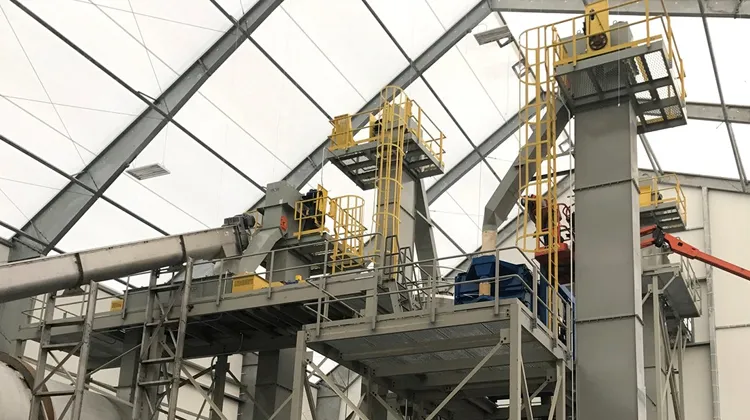
In cement plants and compound fertilizer production lines, bucket elevators are essential for vertical material conveying. Their reliability directly affects production continuity, equipment efficiency, and maintenance costs.
Among various designs, the bushed roller dual plate chain sprocket system is widely used in heavy-duty environments due to its strength, durability, and stable performance.
1. Importance of Bucket Elevators in Industrial Applications
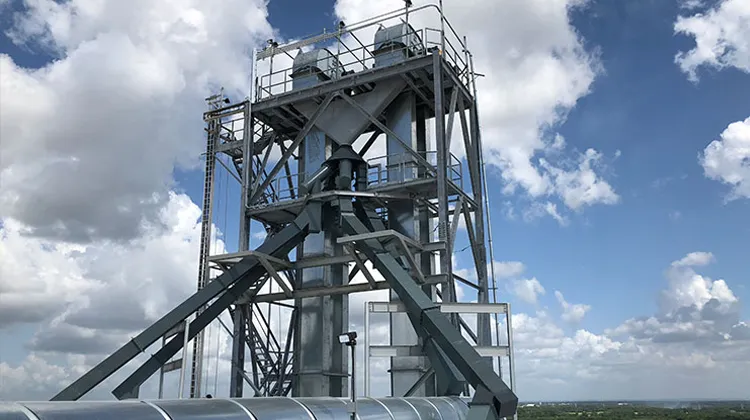
Role in Cement Grinding Plants
In cement grinding stations, bucket elevators are responsible for transporting clinker, raw materials, and finished cement. These materials are highly abrasive and often handled at elevated temperatures. As a result, the elevator system must maintain stable performance under continuous operation. Any failure in the conveying system can disrupt the entire production line, leading to significant downtime and cost losses.
Role in Compound Fertilizer Production Lines
In fertilizer plants, bucket elevators handle granular and powdered materials that require smooth and consistent lifting. Uneven conveying can lead to material segregation or process instability. Therefore, the design must ensure both stability and precision.
System-Level Importance
From a process perspective, bucket elevators act as a vertical connection between different production stages. Their reliability directly influences the efficiency of upstream and downstream equipment, making them a critical component in plant design.
2. Common Types of Bucket Elevators
TH Ring Chain Bucket Elevator
This type is commonly used in medium-load applications. Its structure is relatively simple and cost-effective, but under high-load or abrasive conditions, the chain tends to wear faster, resulting in shorter service life.
TGD Steel Cord Belt Bucket Elevator
This design is suitable for high lifting heights and large capacities. The belt ensures smooth operation, but it requires strict alignment and is sensitive to environmental factors such as temperature and dust.
NE/NSE Plate Chain Bucket Elevator
The NE plate chain bucket elevator is the preferred choice for heavy-duty applications. It offers high load capacity, excellent wear resistance, and stable operation, especially in cement and mining industries.
3. Dual Plate Chain Bucket Elevator Design

The dual plate chain bucket elevator is designed for heavy-duty conveying conditions where high load capacity and long-term stability are required. Compared with single-chain systems, it focuses on balanced load distribution, improved structural rigidity, and better wear resistance.
3.1 Structural Configuration
The system uses two parallel chains installed on both sides of the elevator. Buckets are fixed between the chains through pins, forming a symmetrical structure.
This layout ensures that the load is evenly distributed, which helps prevent bucket tilting and improves overall operational stability.
3.2 Load Distribution
With two chains sharing the load, the tensile force on each chain is reduced. This lowers stress concentration and improves fatigue resistance.
As a result, the system performs more reliably when handling heavy or dense materials such as clinker and limestone.
3.3 Chain Link Design
Each chain link consists of plates, pins, bushings, and rollers. These components work together to provide both strength and flexibility.
The roller structure reduces friction during movement, while precise machining ensures smooth articulation and minimizes wear.
3.4 Bucket Stability
Buckets are supported from both sides, which makes them more stable compared to single-chain designs.
This reduces the risk of material spillage and ensures consistent conveying, especially when handling uneven or bulk materials.
3.5 Adaptability to Harsh Conditions
Dual plate chain systems are suitable for high-temperature and high-abrasion environments.
Their robust structure allows stable operation even under dusty conditions, which is common in cement and mining industries.
3.6 Sprocket Matching
The chain must match the sprocket tooth profile precisely to ensure smooth engagement.
Proper matching reduces impact forces, lowers wear, and extends the service life of both the chain and sprocket.
3.7 Operational Stability
During start-up and operation, the dual-chain design distributes forces more evenly.
This reduces vibration and mechanical stress, resulting in smoother operation and longer equipment life.
4. Components and Material Engineering
Chain Plates
Chain plates are typically made from heat-treated 45# steel. This material provides a good balance between strength and toughness, allowing the chain to withstand high tensile forces without cracking.
Pins and Bushings
Pins and bushings are precision components that enable smooth articulation between chain links. Made from 40Cr alloy steel, they offer excellent wear resistance and fatigue strength, which is critical for long-term operation.
Rollers
Rollers are hardened to reduce friction between the chain and guiding components. By converting sliding friction into rolling friction, they significantly reduce wear and improve efficiency.
Sprockets
Sprockets are usually manufactured from ZG310-570 cast steel and undergo quenching and tempering treatment. This ensures high surface hardness while maintaining core toughness.
Tensioning Device
The tensioning system is installed at the bottom of the elevator. Its function is to maintain proper chain tension, ensuring stable engagement between the chain and sprocket. Proper tension prevents slippage, misalignment, and uneven bucket movement.
5. Sprocket Design for Dual Plate Chains
Tooth Profile Matching
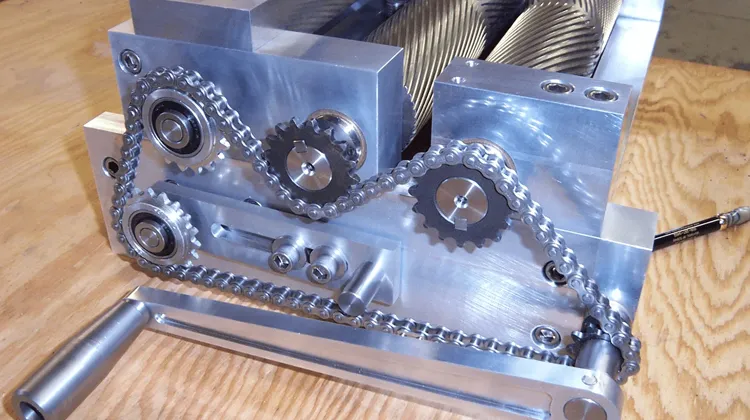
The sprocket tooth profile must precisely match the chain pitch. Accurate matching ensures smooth engagement and minimizes impact loads, which are a major cause of wear.
Material and Heat Treatment
High-strength alloy steel combined with proper heat treatment improves resistance to wear and impact. This is especially important in abrasive environments such as cement plants.
Diameter and Number of Teeth
Larger sprockets reduce the bending angle of the chain, thereby lowering stress concentration. This helps extend the service life of both the chain and sprocket.
Installation and Alignment
Proper alignment is critical for system performance. Misalignment can lead to uneven wear, increased vibration, and premature failure of components.
6. Advantages of Dual Plate Chain Bucket Elevators
High Load Capacity
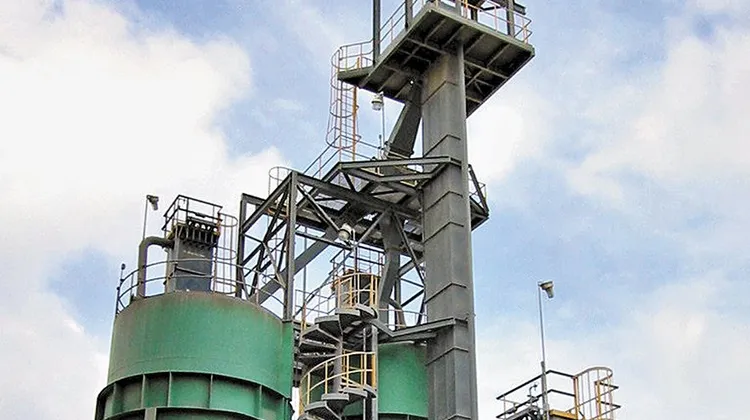
The dual-chain structure increases load capacity by more than 30%, making it suitable for handling heavy and dense materials.
Stable Operation
The symmetrical design ensures synchronized movement, reducing vibration and preventing bucket deviation during operation.
Long Service Life
Compared to ring chain systems, dual plate chain systems can last two to three times longer under similar working conditions.
Easy Maintenance
Damaged components such as chain links or buckets can be replaced individually, reducing maintenance time and cost.
Safety Features
These systems are often equipped with backstop devices and anti-derailment mechanisms, ensuring safe operation even under abnormal conditions.
7. Single Plate Chain Bucket Elevator Design
应用范围
Single plate chain elevators are suitable for light-duty applications, such as handling fly ash or fine powders. These materials impose lower mechanical stress on the system.
Structural Simplicity
The system uses a single central chain, making it lighter and easier to manufacture. This also reduces initial investment costs.
Performance Limitations
Under heavy loads, single-chain systems may experience instability, including swinging and misalignment. Therefore, they are not recommended for heavy-duty applications.
8. Single vs Dual Chain Comparison
Cost and Maintenance
Single chain systems are more economical and easier to maintain. However, their performance is limited under demanding conditions.
Strength and Stability
Dual chain systems offer higher strength and better alignment, making them more suitable for heavy-duty operations.
Application Suitability
The choice between single and dual chain depends on material characteristics, load requirements, and operating conditions.
9. Installation and Tensioning Best Practices
Alignment Control
Accurate alignment between sprockets and chains is essential for even load distribution. Poor alignment can cause localized wear and reduce system lifespan.
Pre-Tension Adjustment
Proper pre-tension ensures stable operation. Insufficient tension may cause slipping, while excessive tension can increase mechanical stress.
Lubrication Strategy
Lubrication reduces friction and wear. Depending on operating conditions, grease or oil bath lubrication can be used to maintain optimal performance.
结论
The design of bucket elevator chain and sprocket systems is a critical factor in ensuring reliable and efficient material handling.
Bushed roller dual plate chain sprockets provide a durable and high-performance solution for heavy-duty applications in cement and fertilizer industries.
By combining proper design, material selection, and installation practices, operators can significantly improve system performance and reduce long-term maintenance costs.
常问问题
1. What is the difference between NE and NSE bucket elevators?
NE bucket elevators are widely used standard models for general heavy-duty conveying, while NSE bucket elevators are an upgraded version with higher capacity, better sealing performance, and improved efficiency. NSE types are more suitable for modern large-scale cement plants.
2. How do I choose the right bucket elevator for my material?
Selection mainly depends on material characteristics such as density, abrasiveness, particle size, and moisture content. For heavy and abrasive materials like clinker, a dual plate chain bucket elevator is usually recommended for better durability and stability.
3. What is the typical service life of a dual plate chain bucket elevator?
Under proper design, installation, and maintenance, a dual plate chain system can operate reliably for several years. Its service life is generally 2–3 times longer than traditional ring chain systems in similar working conditions.
4. What are the common causes of chain wear in bucket elevators?
Chain wear is usually caused by poor lubrication, misalignment, excessive load, or abrasive materials. Regular inspection and proper maintenance can significantly reduce wear and extend service life.
5. How often should bucket elevator chains be maintained?
Maintenance frequency depends on operating conditions, but regular inspection is recommended. Key checks include chain tension, lubrication condition, and sprocket wear to ensure stable performance.
6. Can bucket elevator sprockets be customized?
Yes, sprockets can be customized based on chain type, pitch, material, and working conditions. Proper customization ensures better matching with the chain and improves overall system efficiency.
7. What materials are best for bucket elevator chains and sprockets?
High-strength alloy steels such as 45# steel and 40Cr are commonly used for chains, while sprockets are often made from cast steel with heat treatment. These materials provide good wear resistance and mechanical strength.
8. What safety features should a bucket elevator include?
A reliable bucket elevator should include backstop devices, anti-derailment systems, and proper sealing to ensure safe operation and prevent material leakage or mechanical failure.


 Chinese
  English
  Russian
  Arabic
  Vietnamese
  Spanish
  French
  Portuguese
  Japanese